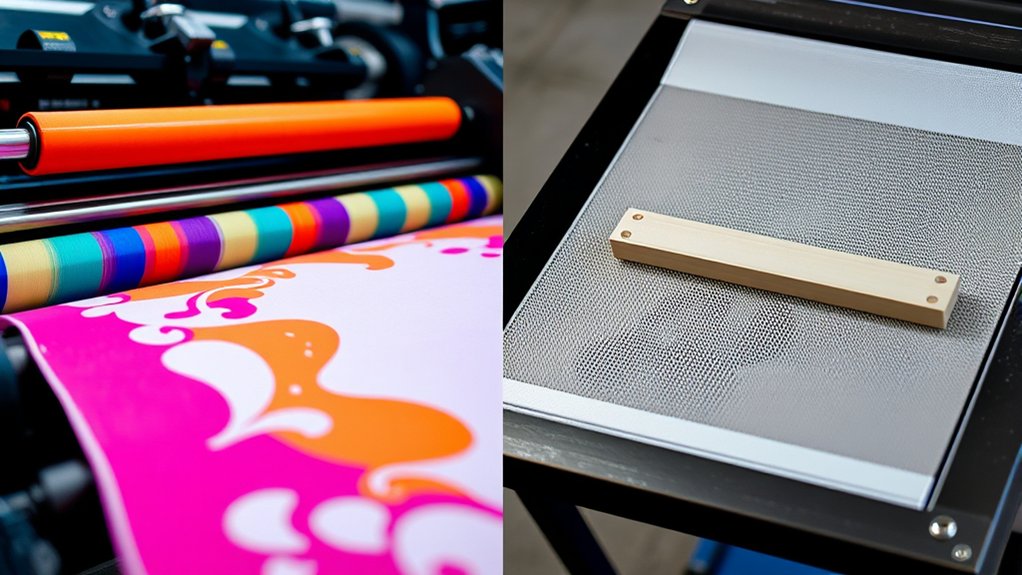

If you’re deciding between rotary printing vs screen printing, understanding their strengths is key.
Rotary printing excels at producing smooth, continuous patterns with consistent vibrancy, making it ideal for large, fast runs on thin, stretchy fabrics.
On the other hand, screen printing is perfect when you want bold, textured designs with lasting color on heavier textiles.
Each method offers a different balance of speed, cost, and detail.
Rotary printing speeds through mass production, while screen printing relies on vibrant, durable layers.
Curious how their qualities stack up for your project? You’re about to find out.
Key Takeaways
- Rotary printing is ideal for high-speed, large-volume production with fine, continuous patterns and consistent color vibrancy.
- Screen printing excels in bold, durable designs with vibrant, opaque colors and works well on heavier textiles.
- Rotary printing requires higher upfront costs but lowers per-unit expenses for mass production, while screen printing suits smaller batches.
- Screen printing allows for texture and color layering and often uses eco-friendly inks, supporting sustainable practices.
- Choosing between methods depends on fabric type, design complexity, production scale, print durability, and environmental considerations.
How Rotary Printing Works and When to Choose It
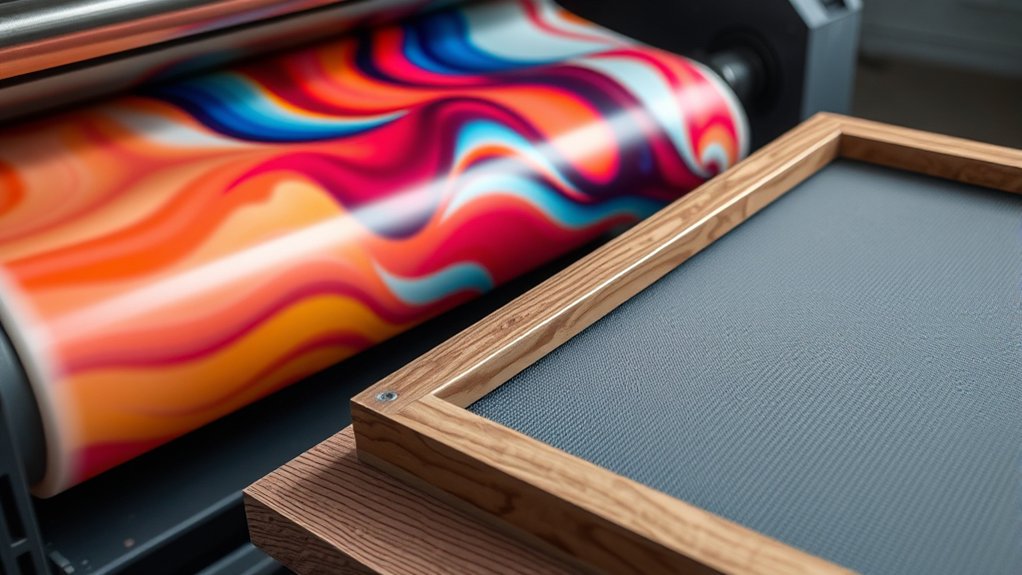
When you watch rotary printing in action, you’ll notice a continuous roll of fabric moving swiftly beneath a series of engraved cylinders, each applying vibrant inks with pinpoint accuracy. The process relies on seamless ink application as the cylinders rotate, transferring detailed patterns directly onto the material.
You’ll see how the precision of the engraved rollers guarantees consistent color saturation and sharp designs, making rotary printing ideal for large runs. This method works best when you need high-speed production with intricate, repeatable patterns on textiles.
If your project demands efficiency combined with vivid, durable prints, rotary printing is the smart choice. Its continuous motion and exact ink application reduce waste and speed up output, perfect when quality and quantity matter.
How Screen Printing Works and When to Use It
You push ink through a fine mesh stencil, layer by vibrant layer, to create bold, lasting designs with screen printing. This method shines when you want sharp colors on fabrics, posters, or signs, especially in smaller runs or limited palettes.
Let’s explore how this tactile process brings your artwork to life and when it’s the best choice for your project.
Screen Printing Process
Engage with the screen printing process, and you’ll see a vibrant dance of ink and mesh that brings designs to life. You start by stretching a fine mesh screen over a frame, then coat it with a light-sensitive emulsion.
Once it dries, you expose the screen to light through your design, hardening the emulsion except where your image blocks it. You’ll then wash away the unhardened parts, creating a stencil.
When you apply ink types—water-based, plastisol, or specialty inks—you push them through the open mesh areas using a squeegee. Each stroke deposits vivid layers onto your substrate.
Mastering screen printing techniques lets you achieve sharp, durable prints ideal for bold, graphic artwork. This process thrives on precision and creativity, turning your vision into tactile, colorful reality.
Ideal Use Cases
Although screen printing demands careful setup, it excels at producing vibrant, long-lasting designs that pop on fabric, paper, and other materials. You’ll find its ideal applications in apparel, where bold colors and durability are essential. Think sports jerseys or branded t-shirts.
Specific industries like promotional merchandise, signage, and textiles also rely on screen printing for sharp, detailed images that withstand wear. When you need thick ink layers or work with specialty inks like metallic or fluorescent, screen printing shines.
It’s perfect for medium to large runs where consistent quality matters. So, if you want eye-catching, tactile prints with rich color saturation, screen printing is your go-to method for reliable, high-impact results across diverse materials and industries.
Print Quality and Material Compatibility: Comparing Both Methods
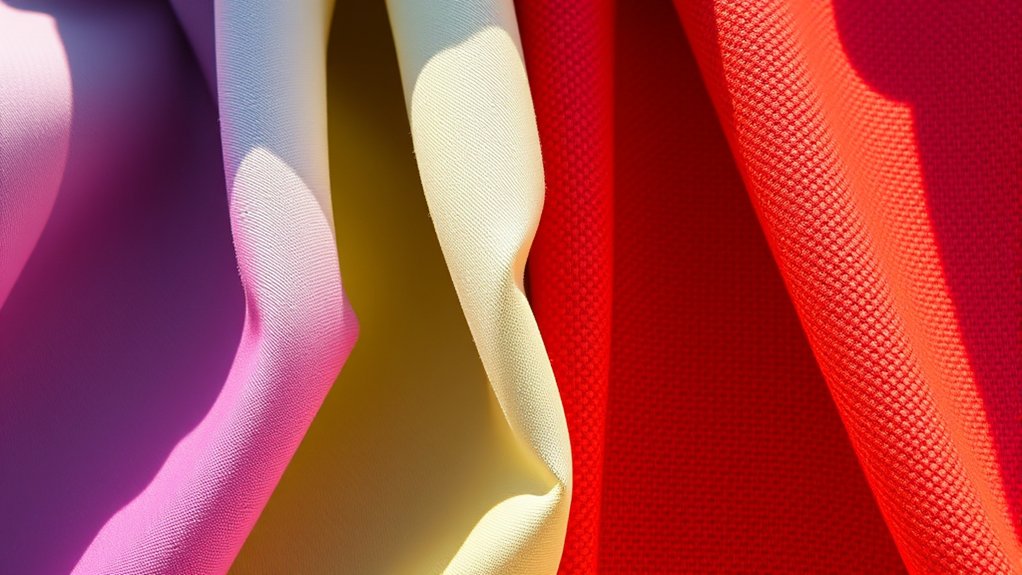
Print quality stands as the cornerstone when choosing between rotary and screen printing, each method bringing unique strengths to the table. When you opt for rotary printing, expect smooth gradients and consistent color vibrancy across large runs, perfect for detailed designs on flexible materials.
Screen printing, on the other hand, excels in delivering bold, opaque colors with exceptional print durability, especially on thicker fabrics.
Consider these factors to match your project needs:
- Material compatibility: rotary suits thin, stretchy fabrics; screen dominates on heavier textiles
- Print durability: screen printing offers longer-lasting prints under wear and washing
- Color vibrancy: rotary printing shines with subtle color blends; screen printing pops with solid hues
Speed and Production Volume: Which Printing Method Is Faster?
Beyond the vivid colors and material choices, speed often determines which printing method fits your project’s timeline and scale. When you need rapid turnaround and high production volume, rotary printing shines with its continuous roll-to-roll process, maximizing printing speed and production efficiency.
It effortlessly churns out thousands of prints per hour, ideal for large-scale runs. On the other hand, screen printing, with its intricate stencil process, slows you down but offers precise layering for smaller batches.
While screen printing demands setup time for each color, rotary presses keep ink flowing seamlessly. So, if your priority is blazing fast output without sacrificing volume, rotary printing is your go-to.
But for projects where detail and texture trump sheer speed, screen printing still holds its ground.
Cost Comparison: Which Method Costs Less?
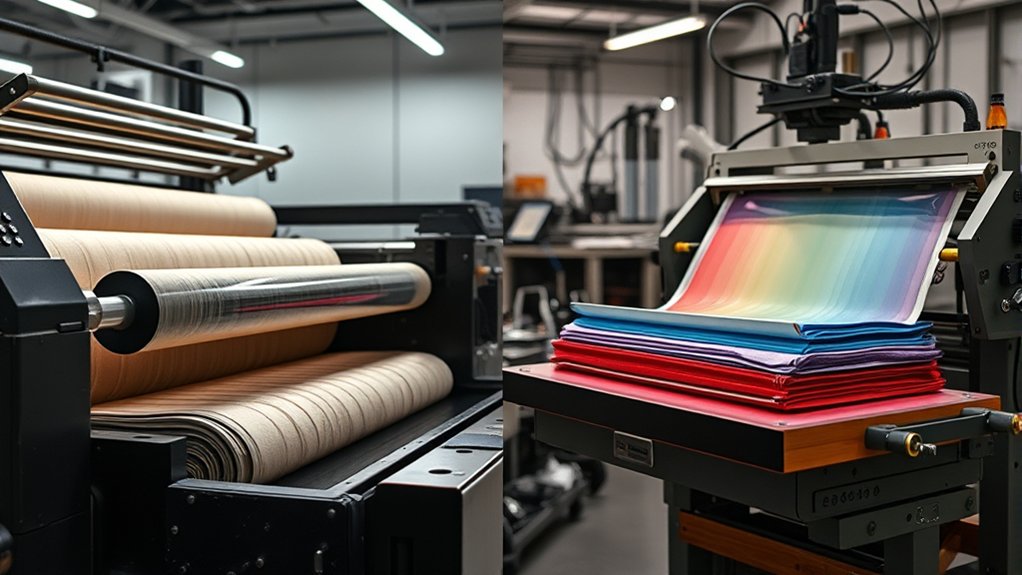
When weighing your options between rotary and screen printing, understanding the cost dynamics can save you both money and headaches. A sharp cost analysis reveals that rotary printing often demands higher upfront investment due to complex machinery, yet it shines in large-scale runs where per-unit costs plummet. Screen printing, on the other hand, suits smaller batches with lower initial expenses but can escalate costs as volume grows.
Consider these budget considerations:
Key budget factors include setup costs, production scale, and material waste in rotary versus screen printing.
- Setup costs: rotary’s automated setup vs. screen’s manual stencil prep
- Production scale: rotary excels in mass production, screen favors limited runs
- Material waste: rotary minimizes waste with continuous rolls, screen may generate more scrap
Design and Color Limits in Rotary Vs Screen Printing
You’ll notice rotary printing shines with seamless, continuous patterns but struggles with intricate details, while screen printing captures sharp, complex designs with ease.
When it comes to color, rotary limits you to fewer shades per run, whereas screen printing lets you layer vibrant hues for richer visuals. Understanding these differences helps you pick the right method to bring your design vision to life.
Design Complexity Constraints
Although both rotary and screen printing offer vibrant results, they differ greatly in handling design complexity and color variety. When you look at design flexibility, screen printing allows intricate patterns and fine details with ease, letting complexity scale up without losing sharpness. On the other hand, rotary printing favors smoother, continuous designs but struggles with tiny details.
Consider these key points:
- Screen printing excels at layering multiple colors and complex shapes.
- Rotary printing handles repetitive, bold designs more efficiently.
- Complexity scaling is limited in rotary printing by the cylinder’s physical engraving.
Color Range Capabilities
Because color vibrancy and range define the visual impact of your print, understanding the color capabilities of rotary versus screen printing is essential. Rotary printing excels in delivering continuous gradients and subtle shifts, offering impressive color depth that suits complex, multicolored designs.
Its ability to blend hues smoothly creates vivid, lifelike images with exceptional color vibrancy. Screen printing, on the other hand, thrives in bold, solid colors. It provides intense color saturation and sharp edges but limits the number of colors you can use efficiently, often up to six.
If you want rich, layered tones with seamless changes, rotary printing is your go-to. But for striking, vibrant blocks of color with maximum punch, screen printing delivers unmatched clarity and impact. Your choice hinges on the visual effect you aim to achieve.
How to Pick the Best Printing Method for Your Project
Choosing the best printing method for your project starts with understanding the unique strengths of rotary and screen printing. Focus on your printing applications and project requirements to guide your decision. Think about:
- Detail complexity: Rotary excels at fine, continuous patterns; screen printing handles bold, vivid designs.
- Production volume: Rotary suits large runs with speed; screen printing is ideal for smaller batches or special effects.
- Material compatibility: Consider the fabric or substrate; rotary works well on knits, while screen printing adapts to diverse surfaces.
Visualize your project’s end look and feel. If you want vibrant colors with texture, screen printing might be your go-to. For seamless, high-speed production with intricate details, rotary printing often wins. Align these factors with your creative vision to pick the method that truly fits your printing applications and project requirements.
Summary: Choosing Between Rotary and Screen Printing
Now that you’ve weighed the strengths of rotary and screen printing, you’re ready to make a clear choice that fits your project’s vision. If your design demands vibrant, intricate details and you prioritize sustainability practices, screen printing offers precise color layering with minimal waste.
On the other hand, rotary printing excels in speed and consistency, perfect for high-volume runs aligned with current industry trends favoring efficiency. Visualize your end product: do you want sharp, bold textures or smooth, continuous patterns?
Consider the environmental impact. Screen printing often uses eco-friendly inks and less energy, while rotary printing’s automation supports large-scale, cost-effective production. By balancing your creative goals with sustainability and market demands, you’ll confidently select the method that brings your vision to life while honoring evolving industry standards.
Frequently Asked Questions
What Environmental Impacts Do Rotary and Screen Printing Have?
You’ll notice rotary printing uses less ink and energy, boosting sustainability practices, while screen printing creates more waste but offers vibrant detail.
Both demand smart waste management to minimize environmental footprints effectively.
Can Rotary or Screen Printing Be Used on Non-Fabric Materials?
Imagine painting on a canvas. Both rotary and screen printing embrace non fabric applications, letting you imprint vivid designs on plastics, metals, or glass. You’ll love exploring their material compatibility, revealing endless creative possibilities beyond textiles.
Which Printing Method Allows for Easier Customization and Changes?
You’ll find screen printing offers greater customization flexibility, letting you tweak designs quickly and explore design iteration with vibrant details.
Rotary printing’s less adaptable, so for creative changes, screen printing’s your best visual-focused choice.
Are There Specific Industries That Prefer Rotary Over Screen Printing?
You’ll find the textile industry favors rotary printing for its smooth, continuous patterns, while the packaging sector loves its speed and precision. This method paints vivid, detailed images, making your designs pop with flawless consistency every time.
How Do Maintenance Requirements Differ Between Rotary and Screen Printing Machines?
Imagine your rotary machine humming smoothly because you’ve kept up with its precise machine upkeep. Compared to screen printing, rotary’s maintenance costs are lower but require consistent lubrication. Screen printing demands frequent cleaning to prevent clogging.
Conclusion
When deciding between rotary and screen printing, you’ll want to weigh your project’s needs carefully—like choosing the right brush for a masterpiece. Rotary printing shines with speed and large runs, making it ideal for high-volume projects.
Screen printing, on the other hand, dazzles in vibrant colors and intricate details, perfect for designs that demand precision and boldness. Keep your design, budget, and fabric in mind as you make your decision.
Ultimately, understanding the strengths of rotary printing vs screen printing will help you hit the nail on the head. With the right choice, your print will pop just the way you envisioned.