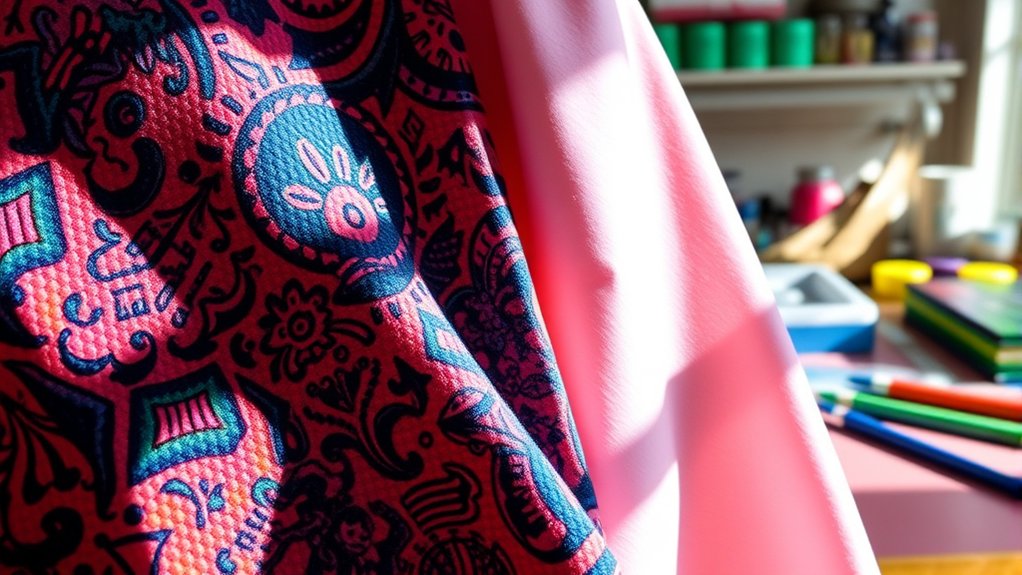

When choosing between screen print transfer vs HTV, it’s important to consider both your design and fabric type.
Screen print transfers excel with intricate, multi-color graphics and offer vibrant durability, making them ideal for lightweight fabrics.
HTV, on the other hand, suits bold, fewer-color designs on cotton or polyester blends, providing a textured, flexible finish.
Screen prints resist cracking better over time, while HTV allows stretch but may peel with extended wear.
Your choice ultimately depends on design detail, fabric, and production volume.
Keep reading to uncover their full strengths and trade-offs.
Key Takeaways
- Screen print transfers excel on detailed, multi-color designs with vibrant, durable ink bonding directly to fabric.
- HTV suits bold, fewer-color designs with a textured, flexible vinyl finish ideal for cotton or polyester blends.
- Screen print transfers offer better wash resistance and resist cracking, while HTV may peel or degrade faster with washing.
- HTV requires vinyl cutting and weeding before heat pressing; screen print transfers need precise heat press settings for ink adhesion.
- Screen print transfers have higher upfront equipment costs but lower cost per unit at scale; HTV is cost-effective for small runs.
Screen Print Transfer Vs HTV: Which Should You Choose?
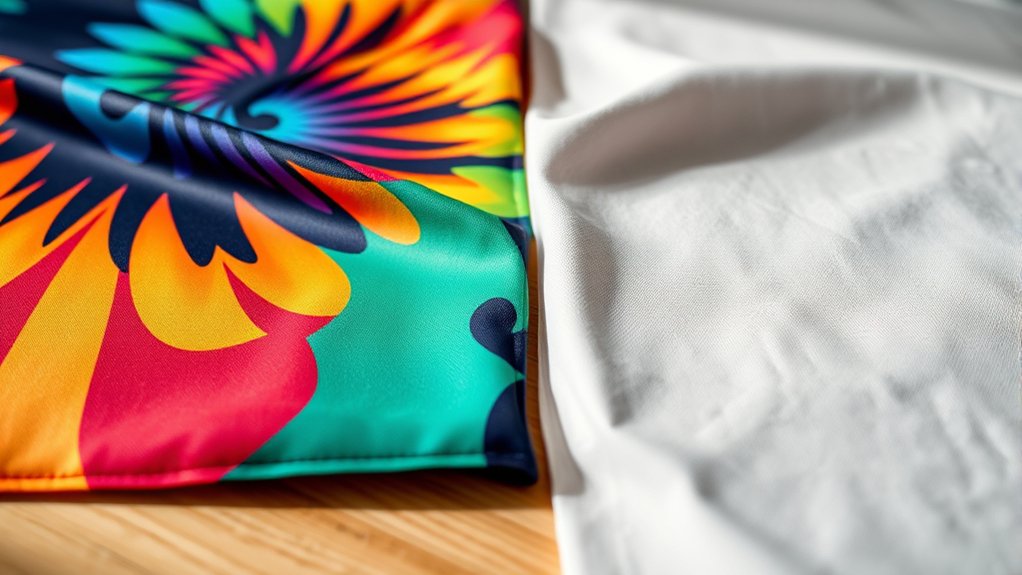
How do you decide between screen print transfer and HTV for your project? First, evaluate project suitability based on fabric type and design complexity. Screen print transfers excel on lightweight materials and detailed, multi-color graphics, delivering vibrant, durable results.
HTV, however, suits bold designs with fewer colors, especially on cotton or polyester blends, offering a textured, flexible finish.
Consider application techniques: screen print transfers require heat press at precise temperature and pressure, guaranteeing ink adheres seamlessly. HTV demands accurate weeding and layering before heat pressing, critical for clean edges and durability.
Your choice hinges on balancing design detail, fabric compatibility, and production scale. By matching these factors with each method’s strengths, you guarantee the best appearance and longevity for your finished product.
How Screen Print Transfers And HTV Work
Though both screen print transfers and HTV rely on heat to bond designs to fabric, they use distinct processes: screen print transfers apply ink through a mesh stencil onto transfer paper before heat pressing, while HTV involves cutting vinyl designs that you weed and then heat press onto the material, creating a raised, flexible texture.
In screen print transfers, the printing process deposits layers of ink precisely, allowing for detailed, multi-color images. You then use a heat press to transfer the ink from paper to fabric, ensuring strong adhesion.
With HTV, the application techniques focus on cutting and weeding vinyl, removing excess material before heat pressing. The heat activates the adhesive backing, fusing the vinyl to the fabric’s surface. Each method’s technical steps influence the final look and feel.
Comparing Durability And Feel Of Screen Print Transfers And HTV
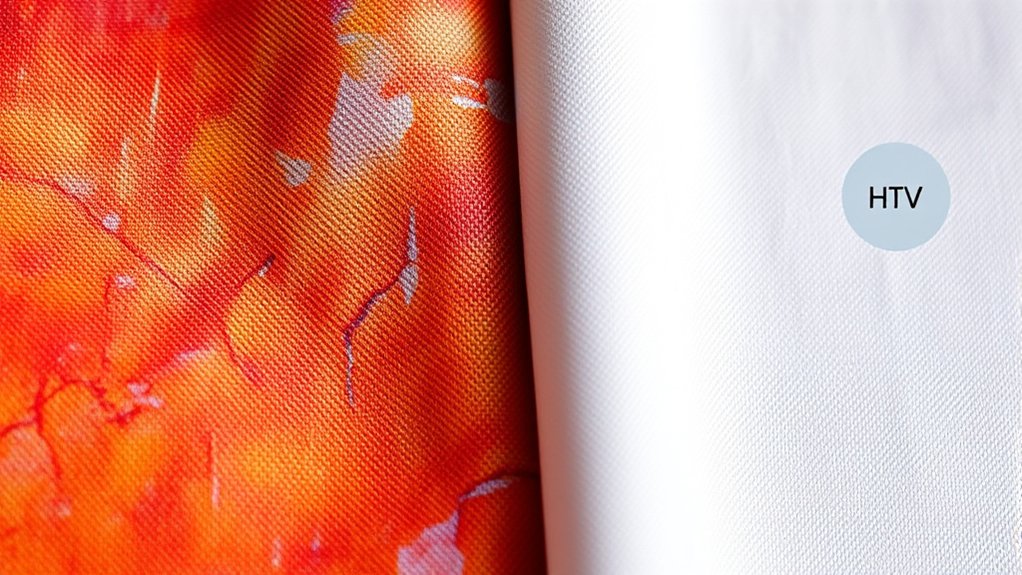
When you choose between screen print transfers and HTV, durability and feel play key roles in the final product’s performance. Understanding the durability comparison and feel differences helps you pick the right method for your project.
Screen print transfers bond ink directly, offering excellent wash resistance but can feel heavier on fabric. HTV uses a flexible vinyl layer, giving a softer, more textured feel but may peel over time with frequent washing. Consider these points:
- Screen print transfers excel in long-term color retention.
- HTV provides a slightly raised, tactile surface.
- Screen prints resist cracking better under stress.
- HTV allows for stretch but may degrade faster.
- Both require proper application for maximum durability.
This durability comparison and feel differences guide you toward the best choice.
Design Options And Color Flexibility For Each Method
Since design complexity and color range directly impact your creative possibilities, understanding the capabilities of screen print transfers and HTV is essential. Screen print transfers excel at handling intricate designs with multiple colors, offering superior color vibrancy through layered inks.
This method lets you achieve smooth gradients and fine details that pop on various fabric colors. In contrast, HTV tends to be more limited in design complexity due to layering constraints, typically supporting fewer colors per design. However, HTV shines in producing solid, vibrant hues with a clean, matte or glossy finish.
When choosing, consider whether you need elaborate multicolor artwork or bold, simpler graphics. Both methods offer distinct advantages in color vibrancy and design complexity, so aligning your project’s needs with these strengths guarantees ideal results.
Cost And Equipment Needs For Screen Print Transfers And HTV
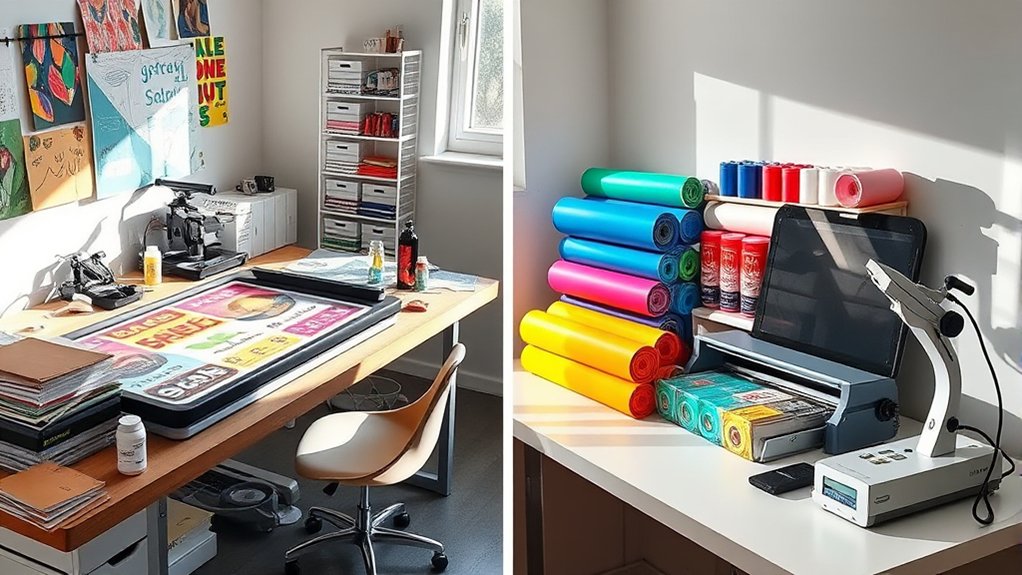
Understanding the cost and equipment requirements for screen print transfers and HTV helps you budget accurately and prepare your workspace efficiently. A detailed cost analysis reveals that screen print transfers demand higher upfront investment due to specialized printing screens and heat presses, while HTV requires less costly vinyl cutters and smaller heat presses.
Equipment comparison highlights differences in maintenance and versatility.
Consider these key points:
- Screen print transfers need screens, plastisol inks, conveyor or swing presses
- HTV requires vinyl cutters, weeding tools, and heat presses
- Initial costs for screen printing are higher but cost per unit decreases with volume
- HTV suits lower volume projects with minimal setup expenses
- Both methods require consistent heat press temperature and pressure control for durability
This cost and equipment comparison guides your investment and operational decisions effectively.
Frequently Asked Questions
Can Screen Print Transfers or HTV Be Used on Non-Fabric Materials?
You can use both screen print transfers and HTV on non fabric applications, but you’ll need to guarantee proper transfer adhesion by selecting compatible materials and adjusting heat press settings for ideal bonding and durability on surfaces like plastics or wood.
How Do Washing Instructions Differ Between Screen Print Transfers and HTV?
You’ll find HTV offers better washing durability, handling frequent washes without fading, while screen print transfers need gentler care. Always check fabric compatibility. HTV suits varied textiles, but transfers require specific fabrics to maintain print quality during washing.
Are There Eco-Friendly Options for Both Screen Print Transfers and HTV?
Yes, you can choose eco-friendly materials for both, like water-based inks for screen print transfers and biodegradable HTV films. Embrace sustainable practices by sourcing responsibly and reducing waste during production to minimize environmental impact.
Can Both Methods Be Customized for Small or One-Off Orders?
You’re in luck. Both methods embrace customization options for even the tiniest order quantities. Screen print transfers suit small runs with vibrant detail, while HTV lets you craft precise, quick designs perfect for one-off creations.
What Are the Best Brands or Suppliers for Screen Print Transfers and HTV?
You’ll find the best suppliers for screen print transfers with brands like Stahls’ and Transfer Express. For HTV, top brands include Siser and Cricut. They offer durability, vibrant colors, and easy application, perfect for your projects.
Conclusion
When deciding between screen print transfers and HTV, remember durability matters: screen print transfers can last up to 50 washes without significant fading, while HTV typically holds up around 30.
If you want vibrant, complex designs with longevity, screen print transfers might be your best bet. But for quick, customizable projects with a softer feel, HTV shines.
Consider your priorities—durability, design complexity, or texture—to choose the right method for your needs. Ultimately, understanding the differences between screen print transfers vs HTV will help you make the best choice for your project.