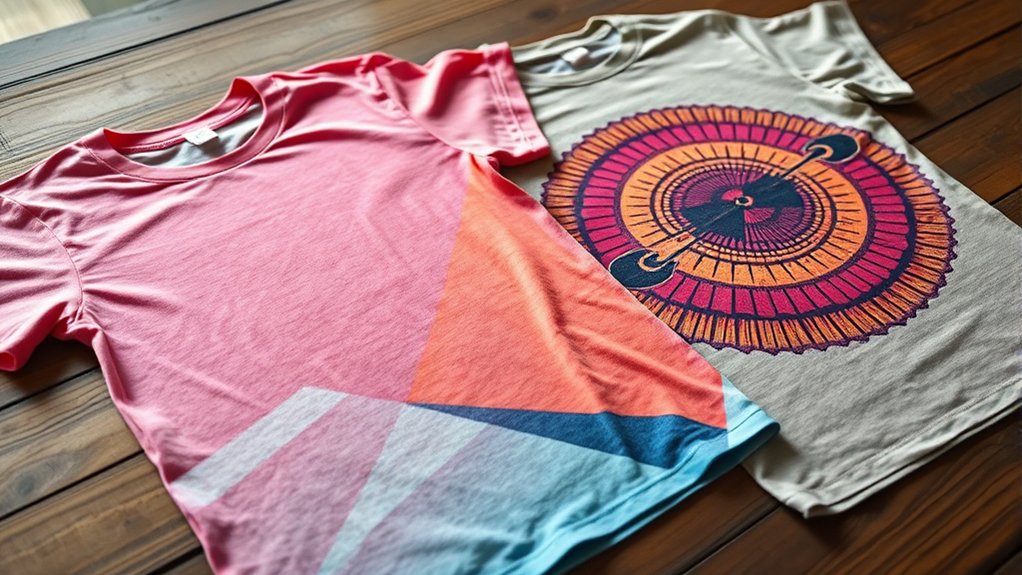

Water based transfer vs screen print is a key consideration when choosing the right printing method for your project.
If you want soft, breathable prints on delicate fabrics, water-based transfer is your go-to—with moderate wash durability and low cracking risk.
For vibrant, long-lasting designs suited to cotton or heavy materials, screen printing offers superior abrasion resistance and opacity.
Water-based transfers cost more upfront but set up faster, making them ideal for small runs.
Meanwhile, screen printing is more cost-effective for bulk orders.
Choosing the best method depends on your fabric, design, and production scale—explore the nuances to optimize your results.
Key Takeaways
- Water-based transfer uses water-based inks applied via heat transfer, offering softer, breathable prints ideal for delicate fabrics.
- Screen printing forces ink through a mesh stencil, producing vibrant, opaque colors with superior abrasion and wash resistance.
- Water-based transfers are faster and cost-effective for small to medium runs; screen printing suits large batches due to lower per-unit costs.
- Screen printing works best on cotton and polyester, while water-based transfers are preferred for delicate or blended fabrics like silk or rayon.
- Water-based transfers have moderate durability with low crack risk; screen printing offers longer-lasting prints with enhanced color vibrancy.
How Water-Based Transfer and Screen Printing Actually Work
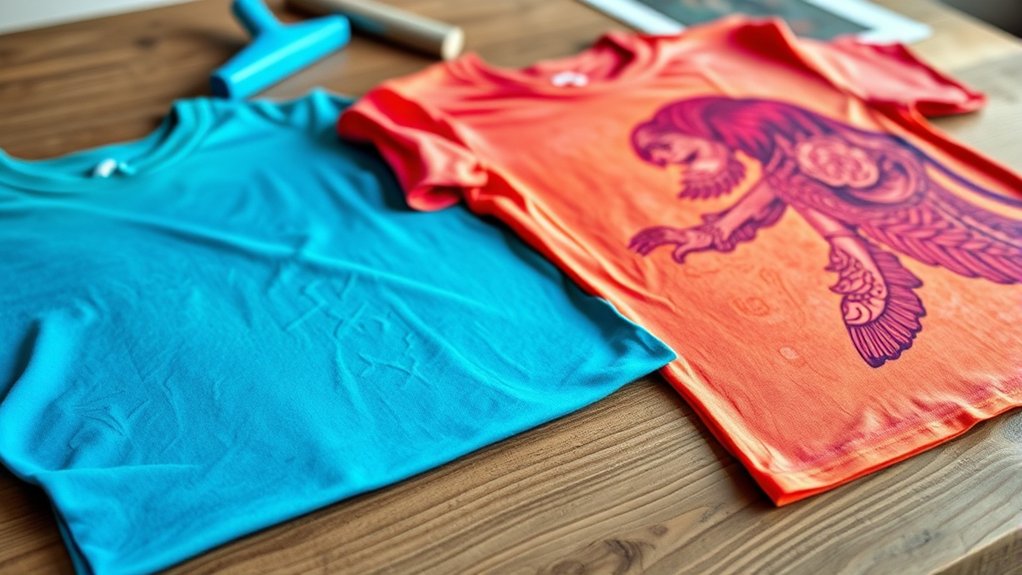
Although both water-based transfer and screen printing aim to apply designs onto fabric, they operate through fundamentally different processes that affect their durability, texture, and visual outcome. In water-based transfer techniques, you print the design onto a special transfer paper using water-based inks.
Then, heat and pressure transfer the ink from the paper to the fabric. This method relies on the ink’s ability to bond with the fabric fibers, promoting superior ink absorption and a softer feel. Conversely, screen printing forces ink through a mesh stencil directly onto the fabric.
The ink sits on the surface initially and requires curing to set properly. Understanding these distinct mechanisms clarifies how each technique interacts with fabric, influencing the final print’s visual clarity and tactile properties.
Water-Based vs. Screen Printing: Quality and Durability Compared
When evaluating water-based transfer and screen printing, you’ll find that each method offers distinct advantages in quality and durability based on ink composition and application technique. Your quality assessment should consider ink vibrancy and fabric integration, while durability factors include wash resistance and crack propensity.
Water-based transfers provide softer prints with excellent breathability but may fade faster. Screen printing delivers vibrant, opaque colors with superior abrasion resistance but can feel heavier.
| Aspect | Water-Based Transfer |
|---|---|
| Ink Vibrancy | Softer, muted |
| Fabric Integration | Deep, breathable |
| Wash Resistance | Moderate |
| Crack Propensity | Low |
| Feel on Fabric | Lightweight, flexible |
Screen printing generally excels in durability, while water-based transfers prioritize comfort without sacrificing quality.
Which Printing Method Works Best on Different Fabrics?
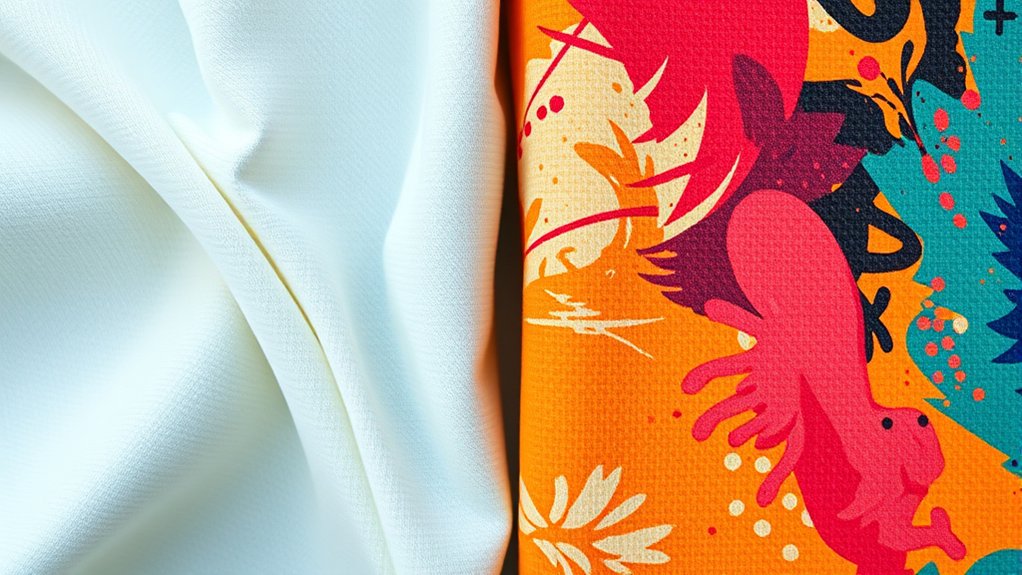
How do you determine the best printing method for various fabric types? You must analyze fabric compatibility and desired print texture.
Water-based transfers excel on delicate or blended fabrics, preserving softness without compromising breathability. Screen printing, by contrast, works well on cotton and polyester, offering vibrant colors and durable prints with a textured feel.
Consider these factors for fabric compatibility and print texture:
- Cotton: Screen printing enhances vibrancy and durability.
- Polyester: Both methods work, but screen printing offers richer textures.
- Blends: Water-based transfers reduce fabric stress and maintain softness.
- Delicate fabrics (silk, rayon): Prefer water-based transfers to avoid damage.
- Heavy fabrics (denim, canvas): Screen printing guarantees lasting, bold prints.
Choose based on fabric type and the texture outcome you want to achieve.
How Cost and Speed Compare for Water-Based Transfer and Screen Printing
Why does the choice between water-based transfer and screen printing often hinge on cost and speed? A detailed cost analysis reveals that water-based transfers typically involve higher initial material expenses but reduce setup time, enhancing speed factors for small to medium runs.
Screen printing demands longer setup but lowers per-unit costs in large batches due to economies of scale.
| Method | Setup Time | Per Unit Cost | Ideal Quantity | Speed Factors |
|---|---|---|---|---|
| Water-Based Transfer | Low | Moderate | Small-Medium | Faster for short runs |
| Screen Printing | High | Low | Large | Efficient for bulk runs |
| Hybrid | Moderate | Variable | Variable | Balances speed & cost |
Understanding these trade-offs helps you optimize production efficiency based on your project’s scale and timeline.
Picking the Right Printing Method for Your Project
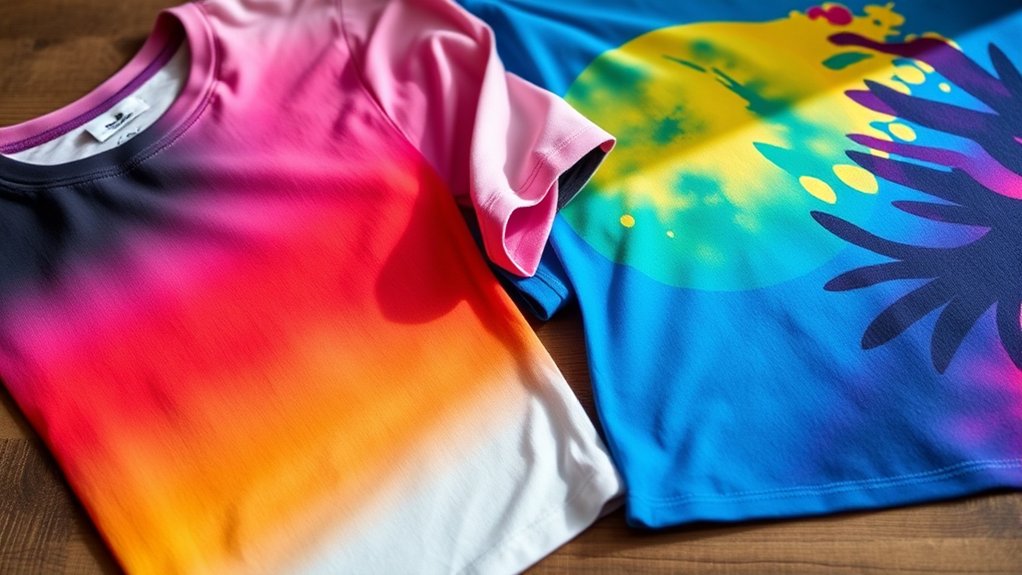
Which printing method suits your project best depends on factors like run size, budget, and desired turnaround time. You need to assess design considerations and project requirements precisely to determine if water-based transfer or screen printing aligns better with your goals.
Choosing the right printing method hinges on run size, budget, and turnaround time.
Evaluate each method’s strengths against your specific needs.
Consider these critical points:
- Complexity and color depth of your design
- Quantity and scalability of the print run
- Fabric type and compatibility with inks
- Cost constraints and budget flexibility
- Required durability and wash resistance
Frequently Asked Questions
Can Water-Based Transfers Be Used for Outdoor Gear and Sportswear?
You can use water-based transfers for outdoor gear and sportswear, but you’ll face durability concerns. Confirm garment compatibility by selecting fabrics that withstand moisture and abrasion to maintain print integrity under demanding conditions.
Are There Environmental Benefits to Choosing Water-Based Transfer Over Screen Printing?
Yes, you’ll gain sustainability advantages by choosing water-based transfers since they use eco friendly materials, reduce chemical waste, and lower energy consumption. This makes your printing process considerably more environmentally responsible and aligned with green production standards.
How Do Water-Based Transfers Affect the Feel of the Fabric Compared to Screen Printing?
You’ll find water-based transfers maintain fabric texture better, feeling softer and less intrusive than screen printing, which often adds a thicker layer. However, screen printing generally offers superior printing durability for long-term wear.
Can Screen Printing Be Combined With Water-Based Transfers for Multi-Effect Designs?
Absolutely, you can combine screen printing with water-based transfers. This hybrid technique enhances design versatility, allowing you to achieve intricate textures and vibrant colors while maintaining fabric softness.
It’s perfect for complex, multi-effect designs demanding technical precision and nuanced detail.
What Are the Best Practices for Storing Garments Printed With Water-Based Transfers?
You should store garments in a cool, dry place away from direct sunlight to guarantee transfer longevity. Avoid folding prints tightly and keep garments in breathable packaging to maintain garment storage quality and prevent transfer cracking or fading.
Conclusion
So, you’re torn between water-based transfers and screen printing—because who wouldn’t want to pick the perfect balance of quality, durability, cost, and speed?
Ironically, the “best” method depends entirely on your fabric choice and project needs. If only one print technique could do it all flawlessly, your job would be much simpler.
Instead, you’ll need to analyze your priorities and accept that printing perfection requires compromise, not magic. When deciding between water-based transfers vs screen print, consider what matters most to your project to choose the ideal approach.