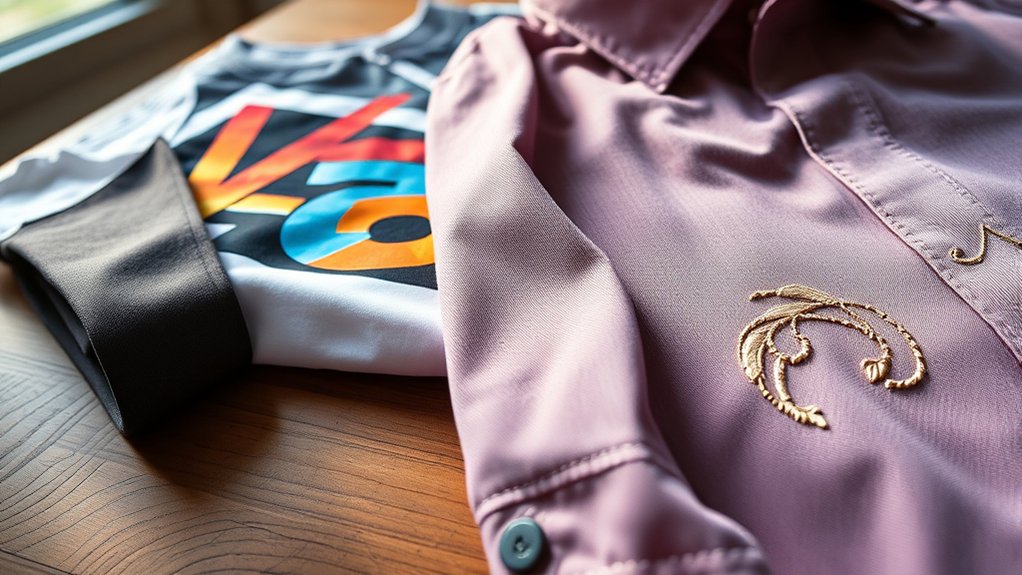

Screen printing vs embroidery for custom shirts offers distinct advantages depending on your design and fabric choice.
With screen printing, you get vibrant, smooth, flat colors—perfect for bold, complex designs on cotton or polyester.
Embroidery, on the other hand, stitches textured, raised patterns into thicker fabrics like polos, providing a classic, durable look.
Screen printing results in a soft, seamless feel, while embroidery adds a tactile edge but may reduce fabric softness.
Cost is another factor to consider. Screen printing is ideal for large, budget-friendly runs, whereas embroidery excels in longevity.
Curious which method fits your style and needs best?
Key Takeaways
- Screen printing offers vibrant, sharp colors ideal for large, complex designs on smooth cotton or polyester fabrics.
- Embroidery adds textured, three-dimensional depth, best suited for thicker fabrics like polos or hoodies.
- Screen printing is generally more cost-effective for large orders, while embroidery has higher initial setup costs.
- Embroidery designs are more durable and resistant to fading or cracking compared to screen printed designs.
- Design style, fabric type, and comfort preferences should guide the choice between screen printing’s smooth finish and embroidery’s textured look.
What Is Screen Printing for Custom Shirts?
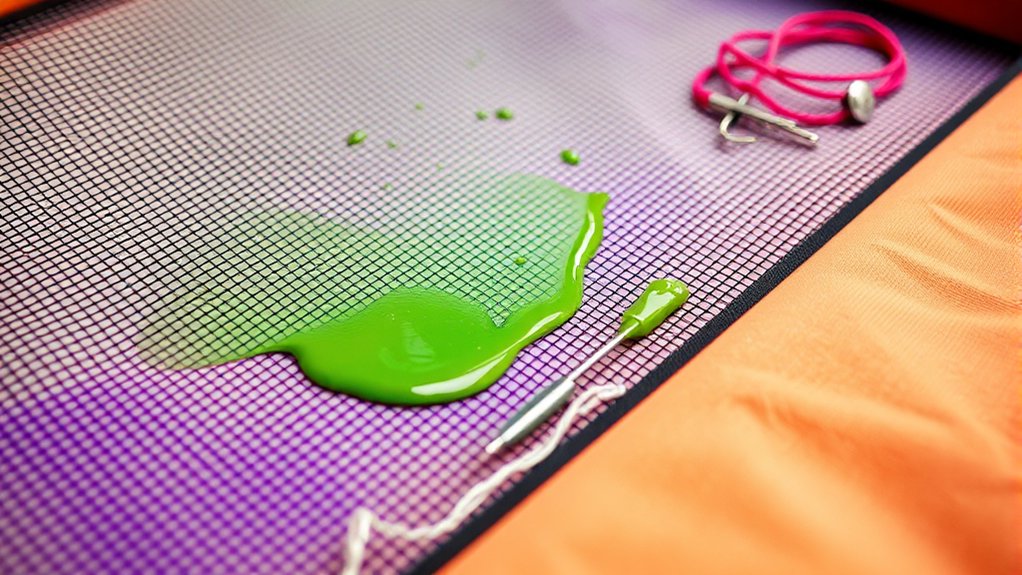
Screen printing for custom shirts is a popular technique that layers vibrant ink directly onto fabric through a fine mesh stencil. When you immerse yourself in the design process, you’ll start by creating bold, crisp artwork that translates well into solid blocks of color.
The magic lies in selecting the right materials: smooth cotton or cotton-blend shirts work best, as they absorb ink evenly, ensuring your design pops with sharp detail. You’ll appreciate how each color applies separately, building a rich, layered effect that feels vivid and durable.
This hands-on method lets you customize every hue and stencil shape, making your shirt truly one-of-a-kind. With careful material selection and a clear design process, screen printing brings your creative vision to life in a way that’s both eye-catching and long-lasting.
What Is Embroidery for Custom Shirts?
Embroidery transforms your custom shirt into a textured work of art by stitching colorful threads directly into the fabric. You’ll notice how embroidery techniques, like satin stitch, fill stitch, and running stitch, combine to create intricate designs that stand out with depth and dimension.
Choosing the right thread types, such as polyester for durability or rayon for a subtle sheen, affects the final look and feel of your design. Embroidery uses layers of thread to build patterns that resist fading and cracking, making your shirt vibrant and long-lasting.
Whether it’s a bold logo or delicate monogram, the careful placement and stitching bring a tactile richness you’ll appreciate every time you wear it. With embroidery, your shirt becomes a personalized masterpiece that truly pops.
How Do Screen Printing and Embroidery Look and Feel?

When you run your fingers over screen printed designs, you’ll notice a smooth, almost painted finish, while embroidery offers a raised, textured feel with intricate thread patterns.
Visually, screen printing bursts with vibrant colors and sharp details, but embroidery brings a classic, dimensional look that stands out. You’ll also want to reflect on how each holds up over time. Screen printing can fade or crack, whereas embroidery stays sturdy but may require gentle care.
Visual Appearance Differences
Although both methods add personality to your custom shirt, they create distinctly different looks and textures. Screen printing offers bold color vibrancy that makes your design pop, especially with smooth, flat surfaces. Embroidery, on the other hand, brings a tactile depth with raised threads that highlight design intricacy through subtle shadowing and sheen.
- Screen printing delivers sharp, vivid colors perfect for complex gradients and fine details.
- Embroidery provides a classic, timeless feel with a textured, three-dimensional look.
- Screen printing suits large, colorful designs, while embroidery excels in elegant, smaller logos.
Texture And Comfort
Because you’ll be wearing your custom shirt for hours, how it feels against your skin matters just as much as how it looks. Screen printing sits flat, blending seamlessly with the fabric’s softness, so you hardly notice the design. It allows great design flexibility, letting intricate colors flow smoothly without changing the shirt’s texture.
Embroidery, on the other hand, adds a tactile dimension. You’ll feel raised stitches creating a textured pattern that stands out visually and physically. While embroidery offers rich depth and a premium hand-crafted vibe, it slightly alters the shirt’s softness, especially if the thread density is high.
Choosing between the two means balancing the smooth comfort of screen printing with the textured charm of embroidery, depending on whether you prioritize fabric softness or a bold, tactile design.
Durability And Maintenance
The way your design feels on the shirt isn’t the only factor to contemplate. How well it holds up over time can make a big difference too. Screen printing offers vibrant colors but can crack or fade if you don’t follow specific care instructions. Embroidery, with its raised threads, weaves durability into the fabric, resisting wear and tear better. However, fabric compatibility matters; delicate fabrics may not suit heavy embroidery.
- Screen printing requires gentle washing to preserve color and prevent peeling.
- Embroidery excels in longevity but can cause slight stiffness where stitched.
- Both need proper drying techniques to avoid shrinking or distortion.
Understanding these nuances helps you pick a design that stays sharp and comfortable wash after wash.
Cost and Durability: Which Method Is Better for Custom Shirts?
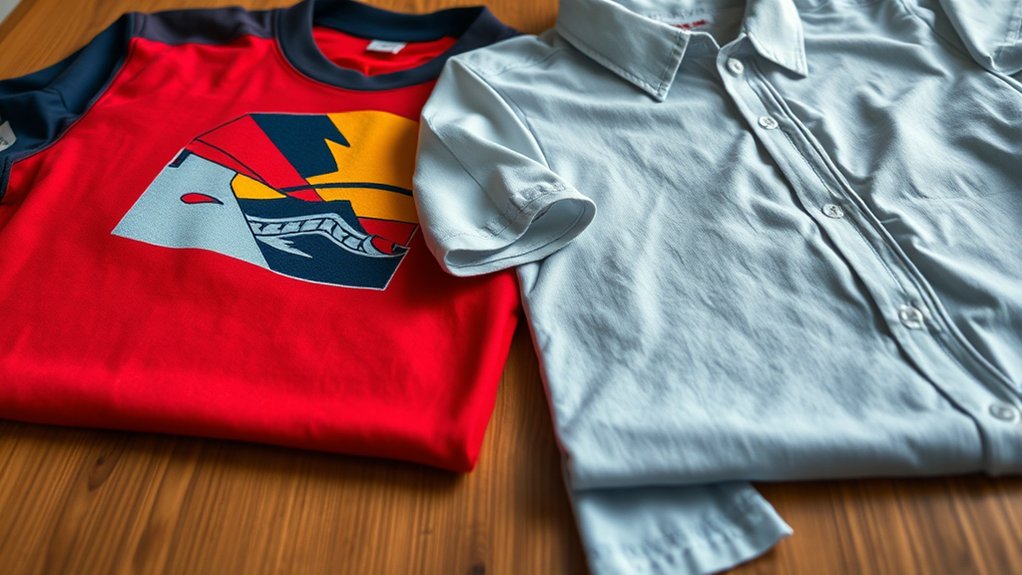
You’ll notice screen printing usually costs less upfront, especially for larger orders, while embroidery demands a higher initial investment with its textured thread work.
When it comes to durability, embroidered designs hold up like armor, resisting peeling and fading through countless washes. On the other hand, screen-printed shirts offer vibrant colors but may start cracking or fading over time.
Initial Investment Comparison
When comparing initial investments for custom shirts, cost and durability often take center stage in your decision-making process. You’ll notice that the initial costs and startup expenses for screen printing are generally lower than embroidery.
Screen printing requires fewer materials upfront, just screens, inks, and a press, making it more accessible if you’re just starting out. Embroidery demands a significant outlay for machines and digitizing software, which can quickly add up.
Consider these startup expenses:
- Screen printing needs minimal equipment and cheaper consumables.
- Embroidery machines require a hefty investment but offer detailed, textured designs.
- Both methods have varying costs depending on order size and complexity.
Longevity and Wear Resistance
Longevity often drives your choice between screen printing and embroidery for custom shirts. When you pick embroidery, you get sturdy stitching that stands up to countless washes, maintaining vibrant color retention and excellent fade resistance.
The threads are woven into the fabric, creating a textured design that resists wear and tear, making your shirt look fresh longer. Screen printing, on the other hand, offers bold, vivid colors initially, but repeated cycles in the wash may dull the print’s brightness and reduce fade resistance over time.
If you want your design to stay sharp and resist fading through heavy use, embroidery is your go-to. But if you prefer a smooth, detailed image and plan lighter wear, screen printing can serve you well before showing signs of wear.
When Should You Use Screen Printing vs Embroidery?
Although both screen printing and embroidery create striking custom shirts, choosing the right method depends on your design’s complexity, texture preferences, and intended use. For custom shirt applications, screen printing excels with intricate, colorful designs that need sharp detail and smooth finishes.
Embroidery adds depth and a tactile feel, perfect for logos or text requiring a premium, durable look.
Consider these scenarios:
- Use screen printing when you want vibrant, detailed artwork or large runs with cost efficiency.
- Choose embroidery for a textured, upscale aesthetic that lasts through heavy wear.
- Opt for screen printing if your design includes gradients or photographic elements, since embroidery suits simpler, bold shapes better.
Tailor your method to your shirt’s purpose, ensuring your design pops exactly how you envision it.
How to Choose Between Screen Printing and Embroidery
Picking between screen printing and embroidery comes down to how you want your design to look and feel on the shirt. If your design preferences lean toward vibrant, smooth colors with fine details, screen printing offers a sleek, flat finish that works beautifully on cotton and polyester fabrics.
On the other hand, if you want a textured, dimensional look that stands out, embroidery adds tactile depth, especially on thicker fabrics like polos or hoodies. Consider fabric choices too—lightweight or stretchy materials might not hold embroidery well, while screen printing adapts easily.
Ultimately, think about your design’s style and the shirt’s fabric; this will guide you to the method that brings your vision to life with the perfect balance of durability, texture, and visual impact.
Tips for Getting the Best Custom Shirt Design
How can you guarantee your custom shirt design truly stands out? Start with strong design inspiration. Draw from bold graphics, nature, or urban art to spark creativity. Next, nail your color selection; vibrant hues pop on screen printing, while embroidery benefits from contrasting threads that add texture.
Start with bold inspiration and perfect your colors to make your custom shirt design truly stand out.
Keep your design simple enough to be clear but detailed enough to captivate.
Here are three tips to get the best custom shirt design:
- Focus on balance: Combine text and images so neither overwhelms the other.
- Choose the right colors: Match your palette to the shirt fabric and printing method.
- Test your design: Preview it on different shirt colors and styles before finalizing.
These steps help you create a striking, memorable custom shirt every time.
Frequently Asked Questions
Can Screen Printing and Embroidery Be Combined on One Shirt?
Yes, you can combine screen printing and embroidery on one shirt to maximize design versatility. You’ll balance vibrant, detailed prints with textured stitching.
Keep in mind cost comparison, as embroidered parts often increase the overall price.
How Long Does It Take to Produce Custom Shirts With Each Method?
You’ll see screen printing’s production timelines often shrink to 3-7 days for large orders, while embroidery takes 7-14 days due to detailed stitching.
Order quantities impact speed; bigger runs speed up screen printing considerably.
Are There Fabric Types That Work Better for One Method Over the Other?
You’ll find fabric compatibility essential: embroidery suits thicker fabrics like denim or fleece, while screen printing thrives on smooth cotton or polyester. Keep design limitations in mind. Fine details work best with printing, bold textures with stitching.
Can Custom Shirts Be Washed Without Damaging the Design?
You can wash custom shirts without damaging the design by using gentle washing techniques like cold water and inside-out washing. These protect design durability, keeping colors vibrant and stitches intact.
This way, your shirt looks fresh and sharp longer.
Which Method Is More Environmentally Friendly?
You’ll find embroidery more eco-friendly since it uses sustainable materials like organic threads, avoiding harmful chemicals.
Screen printing’s eco-friendly inks help, but embroidery’s natural fibers make your shirts greener and longer-lasting.
Conclusion
So, whether you want your shirt to scream vibrant ink or quietly boast stitched sophistication, the choice is yours—because who doesn’t want to debate fabric art like it’s the Renaissance?
Screen printing dazzles with bold colors, while embroidery whispers class with textured threads. Just remember: your shirt won’t judge you, but your style definitely will.
When deciding between screen printing vs embroidery for custom shirts, consider the vibe you want to express. So pick wisely, or just get both and start a mini fashion war in your closet.