
When choosing between Truscene vs aluminum white screen for a window print, understanding their differences is key to selecting the right material for your needs.
Truscene offers superior translucency, sharper image resolution, and excellent UV resistance. This makes it ideal for high-clarity displays exposed to sunlight.
On the other hand, aluminum white screens provide greater structural strength and cost-effectiveness. However, they may suffer from corrosion over time and generally produce less detailed print quality.
Your decision hinges on balancing print precision, durability, and maintenance requirements.
Exploring these detailed differences will help clarify which option suits your specific application best.
Key Takeaways
- Truscene offers superior translucency and color accuracy, enhancing image clarity and vibrancy for high-quality window prints.
- Aluminum White Screen provides a durable, reflective base that boosts color vibrancy but with less fine detail than Truscene.
- Truscene is UV and moisture resistant with flexible durability, reducing maintenance and damage risk in sun-exposed locations.
- Aluminum screens are structurally stronger but rigid, requiring protective coatings and more frequent maintenance to prevent corrosion.
- Installation of Truscene uses adhesive bonding and requires edge sealing, while aluminum screens need rigid frames and mechanical fasteners.
What Is Truscene and How It Works?
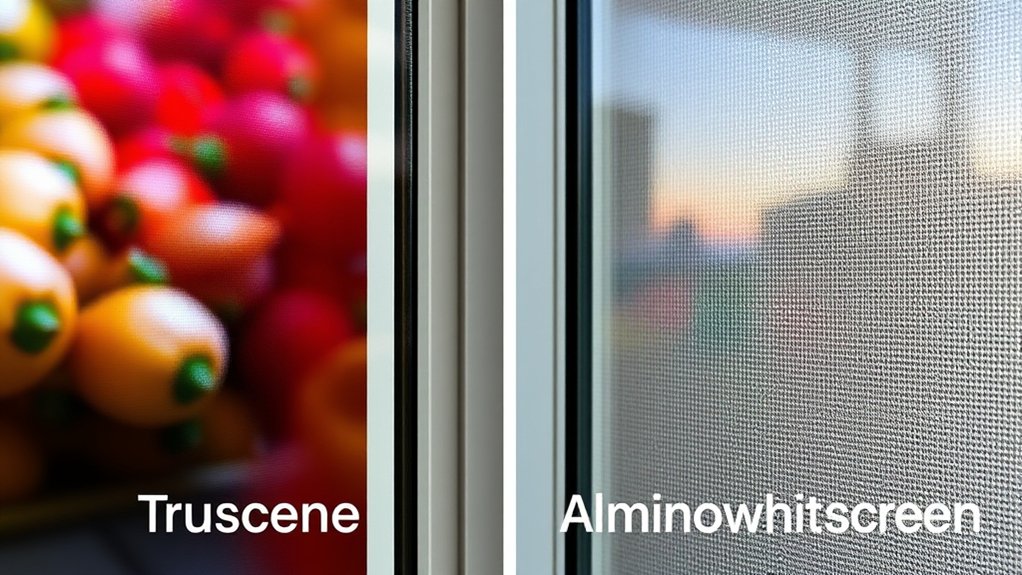
Truscene is a specialized diffusion film designed to optimize light transmission and image clarity on window prints. When you use Truscene technology, the film evenly disperses incoming light, reducing glare and hotspots to deliver a consistent, high-contrast image.
Its micro-structured surface manipulates light at a molecular level, enhancing brightness without sacrificing sharpness. This makes it ideal for screen applications where clarity through glass is critical.
You’ll find that Truscene’s diffusion properties improve viewing angles and maintain color fidelity, ensuring visuals remain crisp from multiple perspectives. By integrating this film into window prints, you can achieve superior image quality in environments with variable lighting, making it a precise solution for retail displays, digital signage, and architectural screens.
What Makes Aluminum White Screens Stand Out
An aluminum white screen offers a unique combination of durability and optical performance that sets it apart in window print applications. You’ll appreciate its resistance to corrosion and environmental wear, which guarantees consistent output over extended use.
Aluminum advantages include its lightweight nature and excellent thermal conductivity, minimizing distortion during high-temperature printing processes. These properties make it ideal for precise screen applications where dimensional stability is critical.
The rigid structure of aluminum screens also helps maintain tension uniformly, reducing print defects and improving registration accuracy. When you need a reliable substrate that balances mechanical strength with optical clarity, aluminum white screens provide a superior solution.
Their compatibility with various inks and substrates further extends their versatility in diverse window print environments.
Print Quality for Window Prints: Truscene Vs Aluminum White Screens
While both Truscene and aluminum white screens deliver high-quality prints, their differing material properties directly impact resolution, color vibrancy, and consistency in window print applications. Understanding these nuances helps you choose the right print technology for your needs.
- Truscene offers superior translucency, enhancing color accuracy by allowing controlled light diffusion behind prints.
- Aluminum white screens provide a reflective base, boosting color vibrancy, especially in natural light.
- The flat surface of aluminum ensures consistent ink adhesion, resulting in sharper resolution.
- Truscene’s flexible substrate can sometimes cause minor variations in print uniformity under certain conditions.
Durability and Weather Resistance Compared
You need to compare the material strength of Truscene and Aluminum White screens to determine which withstands stress better. Consider how each material reacts to prolonged exposure to UV rays, moisture, and temperature fluctuations.
Understanding their resistance to weather impact will help you choose the best screen for long-term window print durability.
Material Strength Comparison
Because material strength directly influences the longevity and performance of window prints, comparing the durability and weather resistance of Truscene and Aluminum White screens is essential. You’ll find that each material’s inherent properties impact its suitability for different environments.
- Material Flexibility: Truscene offers greater flexibility, reducing the risk of cracking under stress, while Aluminum White is rigid but structurally robust.
- Surface Texture: Truscene’s smooth surface enhances print adhesion, whereas Aluminum White’s matte finish resists scratches effectively.
- Tensile Strength: Aluminum White exhibits higher tensile strength, making it more resistant to deformation.
- Impact Resistance: Truscene absorbs impacts better due to its pliability, minimizing damage from sudden force.
Understanding these factors helps you select the best screen for durability without compromising print quality.
Weather Impact Resistance
Although both Truscene and Aluminum White screens withstand environmental exposure, their weather impact resistance varies considerably due to differing material compositions. Truscene, a polymer-based screen, offers superior weather resistance thanks to its UV-stabilized formulation, which resists degradation from prolonged sunlight and moisture.
Its flexibility enhances impact durability, allowing it to absorb shocks without fracturing. Conversely, Aluminum White screens, composed of rigid metal, provide excellent structural strength but are prone to corrosion in humid environments unless treated with protective coatings.
While Aluminum’s hardness grants high impact durability against physical forces, its susceptibility to oxidation can reduce long-term weather resistance. When selecting a screen, you should weigh the trade-offs: Truscene excels in resisting environmental wear and impact deformation, whereas Aluminum White prioritizes rigidity but demands maintenance to preserve weather resistance.
Installing Truscene Vs Aluminum White Screens
When installing Truscene and aluminum white screens, you’ll notice distinct differences in handling and mounting requirements. The installation process demands attention to screen compatibility with your window frame to guarantee ideal adhesion and performance.
- Frame Preparation: Aluminum white screens require a rigid, corrosion-resistant frame, whereas Truscene can flex slightly, needing a more adaptable mounting surface.
- Fastening Method: Truscene often uses adhesive bonding compatible with porous surfaces; aluminum white screens rely on mechanical fasteners or clips.
- Weight Consideration: Aluminum screens are heavier, so secure mounting hardware is essential to prevent sagging or warping.
- Sealing: Truscene’s porous nature demands sealing edges to prevent moisture ingress; aluminum screens typically include integrated seals.
Understanding these factors guarantees effective installation and maximizes screen longevity and print clarity.
How Much Do Truscene and Aluminum White Screens Cost?
Determining the cost of Truscene and aluminum white screens involves evaluating material quality, screen size, and manufacturing complexity. When you perform a cost comparison, you’ll find that Truscene screens generally command a higher price due to their specialized polymer composition and enhanced durability.
Aluminum white screens tend to be more economical, benefiting from widespread availability and simpler fabrication processes. Key pricing factors include thickness, surface finish, and customization requirements. Larger screens exponentially increase material costs for both types, while intricate manufacturing techniques elevate Truscene’s cost more noticeably.
Additionally, Truscene’s advanced light diffusion properties justify its premium pricing in technical applications. Understanding these pricing factors helps you anticipate expenses accurately and assess the value proposition of each screen type before making a purchase decision.
Choosing Between Truscene and Aluminum White Screens
You’ll want to weigh the material durability of Truscene against Aluminum White, as each offers distinct resistance to environmental factors. Consider how print quality varies between the two, especially regarding color vibrancy and opacity on window surfaces.
This comparison will help you select the ideal screen for your specific printing needs.
Material Durability Comparison
Although both Truscene and aluminum white screens offer unique benefits for window printing, their material durability varies considerably under different environmental conditions. You’ll want to evaluate material longevity and maintenance requirements closely to make the best choice.
- Truscene: Exhibits excellent resistance to UV degradation, enhancing material longevity in sun-exposed locations.
- Aluminum White Screen: Offers superior structural strength, resisting warping and physical impacts better than Truscene.
- Maintenance Requirements: Truscene demands less frequent cleaning due to its smooth surface, reducing upkeep time.
- Corrosion Resistance: Aluminum screens require protective coatings to prevent oxidation in humid environments, increasing maintenance frequency.
Print Quality Differences
Beyond durability, the choice between Truscene and aluminum white screens markedly impacts print quality, which directly affects the visual outcome of your window graphics.
Truscene offers superior ink absorption, allowing inks to settle evenly without bleeding, which enhances sharpness and color vibrancy. This results in higher print resolution, delivering crisp, detailed images that maintain clarity even when viewed up close.
Conversely, aluminum white screens have a smoother surface with lower ink absorption, which can cause slight ink pooling and reduced edge definition. While aluminum screens produce bright colors, they may lack the fine detail achievable with Truscene.
When precision and sharpness are critical for your design, Truscene’s enhanced ink absorption and print resolution capabilities make it the preferable choice for high-quality window prints.
Frequently Asked Questions
Can Truscene or Aluminum White Screens Be Recycled?
You can recycle aluminum white screens using standard metal recycling methods due to their durability. Truscene screens require specialized recycling processes because of composite materials, so always check your local recycling guidelines for proper disposal.
Are There Any Health Risks Associated With These Screen Materials?
Worried about health concerns? Both materials exhibit high material safety with minimal risks during normal use.
However, prolonged exposure to dust or fumes during installation could pose minor respiratory issues, so always use proper ventilation and protective gear.
How Do These Screens Affect Natural Light Inside the Building?
You’ll notice natural light varies with screen transparency; Truscene offers higher transparency, allowing more light inside. Aluminum white screens reduce light transmission due to their opacity, affecting brightness and interior ambiance accordingly.
Can These Screens Be Customized With Different Colors or Patterns?
You can envision vibrant hues and intricate designs transforming your windows, as these screens offer custom color options and pattern versatility. This precise customization enhances aesthetics while maintaining functional light diffusion and durability for your space.
What Is the Environmental Impact of Producing Truscene Vs Aluminum Screens?
You’ll find Truscene production involves lower emissions and aligns better with sustainability practices. Aluminum screens require energy-intensive mining and refining, resulting in higher production emissions and a greater environmental footprint overall.
Conclusion
Choosing between Truscene and aluminum white screens is like picking the right lens for your camera—each offers distinct clarity and durability tailored to your needs. Truscene excels in vibrant, high-resolution prints with excellent weather resistance, making it ideal for dynamic outdoor displays.
On the other hand, aluminum white screens provide robust structural support and consistent print quality, ensuring longevity in more demanding environments. These screens are particularly suited for installations requiring a sturdy frame and reliable performance.
When deciding, consider your installation environment, budget, and desired longevity carefully. Ultimately, understanding the difference between Truscene vs aluminum white screen will help guarantee your window print delivers peak performance and visual impact over time.