
If you want vibrant, durable designs, plastisol heat transfers are quick and great for small batches or detailed art, offering bright colors and easy application with minimal setup.
Screen printing bonds ink directly to fabric for a smooth feel and long-lasting results, ideal for large orders and bold designs.
Transfers offer convenience and flexibility; screen printing shines in scale and durability.
Keep exploring to find which method perfectly fits your project’s needs.
Key Takeaways
- Plastisol transfers allow quick application and minimal setup, ideal for small runs and last-minute projects, while screen printing suits large orders with upfront setup.
- Screen printing inks bond directly to fabric, offering smoother feel and longer-lasting durability compared to the slightly raised, stiffer texture of plastisol transfers.
- Plastisol transfers deliver brighter, more vibrant colors and finer design details, whereas screen printing yields deeper but slightly muted hues over time.
- Screen printing is cost-effective for bulk production due to faster print speeds, while plastisol transfers reduce costs in small batches with flexible on-demand use.
- Choose plastisol transfers for intricate, colorful designs and quick turnaround; opt for screen printing for bold designs, high durability, and consistent large runs.
How Do Plastisol Transfers and Screen Printing Actually Work?
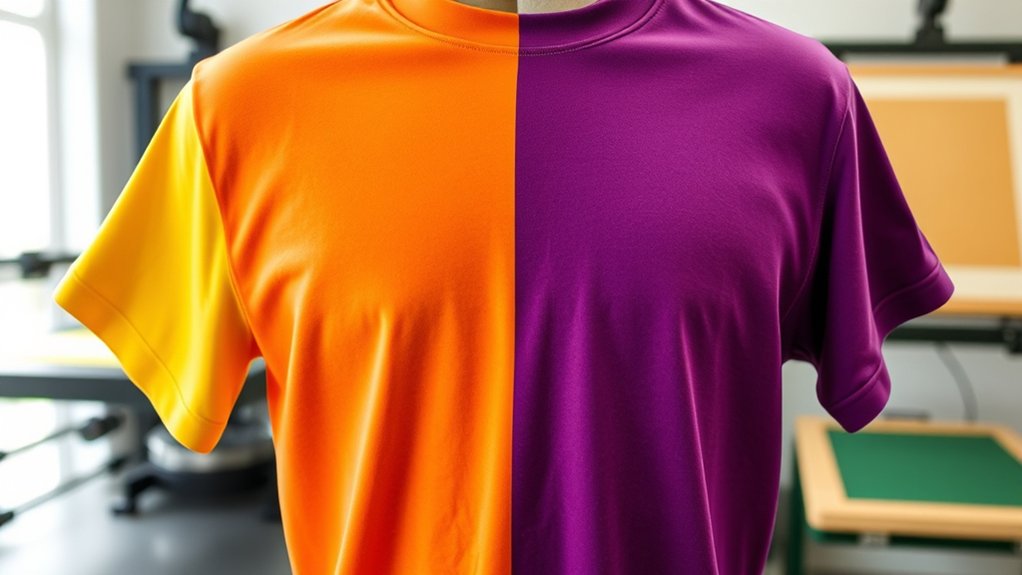
Both plastisol transfers and screen printing start with creating a stencil, but they take different paths to apply ink onto fabric. In screen printing, you push ink directly through the stencil onto the garment using a squeegee. This application technique deposits ink layer by layer, allowing vibrant, durable designs.
Plastisol transfers take a different route: you print the design onto special transfer paper first. Then, using heat and pressure, you transfer the ink from the paper onto the fabric. These transfer methods let you prepare designs in advance and apply them quickly later.
While screen printing inks bond directly with fibers, plastisol transfers rely on a flexible film that adheres to the fabric’s surface. Both methods offer distinct advantages depending on your production needs and desired finish.
Cost and Setup Time: What to Expect With Each Method
Understanding the cost and setup time differences between plastisol heat transfers and screen printing can help you choose the best method for your project. When you perform a cost analysis, plastisol heat transfers often save money on small runs since they require minimal setup. Just print the design onto transfer paper and heat press it onto your garment. This setup efficiency means you can start quickly, with less equipment and labor.
Screen printing, however, demands more upfront time and expense. You’ll need to create screens for each color, which can be time-consuming and costly, especially for complex designs. But once set up, it’s cost-effective for large orders due to faster print speeds per unit. Knowing these factors helps you balance budget and timelines to pick the right process.
Durability and Feel: Plastisol Transfers Vs. Screen Printing

You’ll notice plastisol transfers create a slightly raised texture, while screen printing blends smoothly into the fabric. Over time, screen prints tend to last longer without cracking or fading, maintaining comfort and flexibility.
Understanding these differences helps you pick the best option for durability and feel.
Texture Comparison Overview
Although plastisol heat transfers and screen printing might seem similar at first glance, their textures differ considerably once applied. With plastisol heat transfers, you’ll notice a slightly raised, rubbery texture that feels smooth yet firm. This texture type is great for detailed images and vibrant colors, making it ideal for varied texture applications like logos or small designs.
Screen printing, on the other hand, offers a more integrated feel with the fabric, producing a softer, matte texture that blends seamlessly. Its texture type varies with ink thickness, allowing you to achieve either a subtle or bold tactile effect. Understanding these texture applications helps you choose the right method depending on whether you want your design to stand out or feel part of the garment.
Longevity And Wear
When you wear a garment repeatedly, the durability of its design becomes essential. Plastisol heat transfers offer strong fade resistance, maintaining vibrant colors through numerous washes. Their print lifespan is impressive, especially when applied correctly, resisting cracking and peeling over time.
Screen printing, on the other hand, bonds ink directly to fabric fibers, creating a long-lasting design that can often outlast plastisol transfers. It also provides excellent fade resistance, especially with high-quality inks. However, wear patterns depend on fabric type and care.
While both methods guarantee durability, screen printing generally offers a slightly longer print lifespan under heavy use. Ultimately, your choice depends on how much wear and tear you expect and the specific look you want to preserve in your garment’s design.
Comfort And Flexibility
Because comfort plays an essential role in how you enjoy wearing a garment, it’s important to take into account how plastisol heat transfers and screen printing feel against the skin. Plastisol transfers add a slightly raised layer that can feel less breathable but offer consistent flexibility options.
Screen printing usually feels softer and integrates better with fabric, boosting comfort levels. Your choice impacts how the garment moves with you and how it feels all day.
| Feature | Plastisol Heat Transfers | Screen Printing |
|---|---|---|
| Feel on Skin | Slightly raised, less breathable | Soft, smooth, fabric-like |
| Flexibility Options | Moderate, can crack over time | High, stretches with fabric |
| Comfort Levels | Good for short-term wear | Excellent for all-day comfort |
| Durability | Durable, may stiffen | Durable, remains flexible |
| Ideal Use | Small runs, complex designs | Large runs, simple designs |
Color Vibrancy and Design Detail: Which Looks Better?

You’ll notice plastisol transfers often deliver brighter colors that pop, while screen printing shines with sharper design precision. The texture of each method also affects how details appear.
Smooth plastisol layers can soften edges, whereas screen printing’s ink sits flatter for crisper lines. Let’s compare how these factors influence the final look of your design.
Color Brightness Comparison
Although both plastisol heat transfers and screen printing deliver vibrant results, their color brightness and design detail differ noticeably. When you choose plastisol heat transfers, you’ll notice higher color saturation thanks to the transfer’s thick, pigmented layer, which sits atop the fabric and reflects light vividly. This pigment quality guarantees bright, consistent colors that pop on various garment colors.
On the other hand, screen printing embeds ink directly into the fabric, offering a slightly more muted brightness but excellent durability. While screen printing’s colors may not appear as luminous upfront, their richness deepens over time. Ultimately, if you want immediate, eye-catching brightness and bold hues, plastisol heat transfers excel. But if you prefer a softer brightness that ages well, screen printing serves you better.
Design Precision Differences
When you want sharp, intricate designs with crisp edges, plastisol heat transfers often deliver superior precision thanks to their controlled printing process on a smooth transfer film. This method provides higher print resolution, allowing for exceptional design accuracy, especially in fine details and small text.
You’ll notice that complex graphics retain their clarity and vibrant color boundaries without bleeding. Screen printing, while excellent for bold, simple designs, can struggle with tiny elements due to mesh limitations, which sometimes reduces overall print resolution and sharpness.
If your project demands detailed artwork with precise lines and vibrant hues, plastisol heat transfers give you that edge. Ultimately, your choice hinges on the level of design accuracy you need. Plastisol transfers excel when precision is paramount.
Texture Impact on Detail
While both plastisol heat transfers and screen printing produce vibrant colors, their textures influence how details appear and feel on your garment. Plastisol transfers offer a smooth, consistent finish, which can limit the texture variety but maintain sharp design intricacy.
Screen printing adds tactile depth, letting you feel the ink’s raised texture, enhancing intricate designs with subtle dimension.
Consider these points about texture impact on detail:
- Plastisol transfers provide uniform texture but less tactile variation
- Screen printing allows for layered ink, highlighting design intricacy
- Texture variety in screen printing enhances visual and physical detail
- Plastisol is ideal for complex, multi-color designs without texture distraction
- Screen printing’s texture adds character but may soften fine line clarity
Choose based on whether you prioritize tactile texture or crisp, flat detail.
When Are Plastisol Transfers the Better Pick?
If you need vibrant, detailed designs on a variety of fabrics without the hassle of setting up a full screen printing process, plastisol transfers can be your best bet. Their transfer advantages include quick application, consistent color vibrancy, and the ability to print complex, multi-colored images with sharp detail.
You don’t need specialized printing equipment on-site, making plastisol transfers ideal for small batches, custom orders, or last-minute projects. In application scenarios like promotional items, sportswear, or retail products with varying fabric types, transfers offer unmatched flexibility.
Plus, you can store and ship transfers easily, applying them whenever needed. When speed, versatility, and intricate design are priorities, plastisol transfers give you an efficient, cost-effective solution without compromising quality.
Why Screen Printing Is Still Best for Big Orders
Plastisol transfers shine in versatility and quick turnaround, but screen printing takes the lead once you’re handling large orders. When you focus on bulk production, screen printing offers unmatched order efficiency and lower per-unit costs.
You’ll benefit from faster setup for high-volume runs, durable prints that withstand repeated washes, consistent color vibrancy across all items, economical use of ink spread over thousands of garments, and a streamlined workflow reducing manual labor.
Screen printing’s ability to maintain quality and speed during large-scale projects makes it ideal for businesses aiming to maximize output without compromising on appearance. When your priority is efficiency and volume, screen printing guarantees you meet deadlines and budgets effortlessly.
It’s the smart choice for big orders that demand both precision and pace.
Tips to Help You Pick Between Plastisol Transfers and Screen Printing
Choosing between plastisol heat transfers and screen printing hinges on your project’s specific needs. Consider factors like order size, fabric type, and design complexity. Transfer application offers quick results and flexibility, while screen printing excels in durability and vibrant colors for large runs. Evaluate your budget and timeline to pick the best printing techniques for your goals.
| Factor | Plastisol Heat Transfers | Screen Printing |
|---|---|---|
| Order Size | Small to medium | Large |
| Transfer Application | Quick, easy | Requires setup |
| Design Complexity | Detailed designs possible | Best for bold, simple designs |
| Durability | Moderate | High |
Match your choice to these points for a smooth, efficient printing process.
Frequently Asked Questions
Can Plastisol Transfers Be Applied to Non-Fabric Materials?
You can apply plastisol transfers to various non-fabric surfaces, as their plastisol applications offer impressive non-fabric versatility. Just verify the material tolerates heat, and you’ll get vibrant, durable designs beyond just textiles.
How Environmentally Friendly Are Plastisol Transfers Compared to Screen Printing?
You’d think plastisol transfers scream “eco-friendly,” but their environmental impact isn’t exactly a green dream. Screen printing’s water use sparks sustainability concerns, yet plastisol’s PVC and plastisol inks pose bigger disposal headaches. Choose wisely!
What Equipment Is Needed for Home Use of Plastisol Transfers?
You’ll need a heat press and plastisol transfer paper to get started. The heat press applies firm, even pressure and heat, ensuring your design adheres smoothly to fabrics.
This results in vibrant, durable designs that you can create right at home.
Are There Any Fabric Types That Don’T Work Well With Plastisol Transfers?
You’ll find fabric compatibility limits plastisol transfers; delicate synthetics like nylon or stretch fabrics don’t bond well, reducing transfer durability.
Stick to cotton or cotton blends for vibrant, lasting results that resist cracking and peeling over time.
Can Plastisol Transfers Be Layered for Multi-Color Designs?
Yes, you can layer plastisol transfers for multi-color designs. Just use precise layering techniques and focus on color matching to guarantee vibrant, clean overlaps without smudging, giving your artwork sharp, professional results every time.
Conclusion
Whether you want quick setup with vibrant detail, or long-lasting durability with cost efficiency, knowing how plastisol transfers and screen printing work helps you choose right.
You’ll save time with transfers, save money with screen printing, save effort with vibrant colors, and save wear with lasting prints.
By weighing your project’s size, budget, and design needs, you’ll pick the perfect method—making your custom apparel look sharp, feel great, and last long.
In conclusion, understanding the differences between plastisol heat transfers vs screen printing ensures you select the best option for your custom apparel needs.