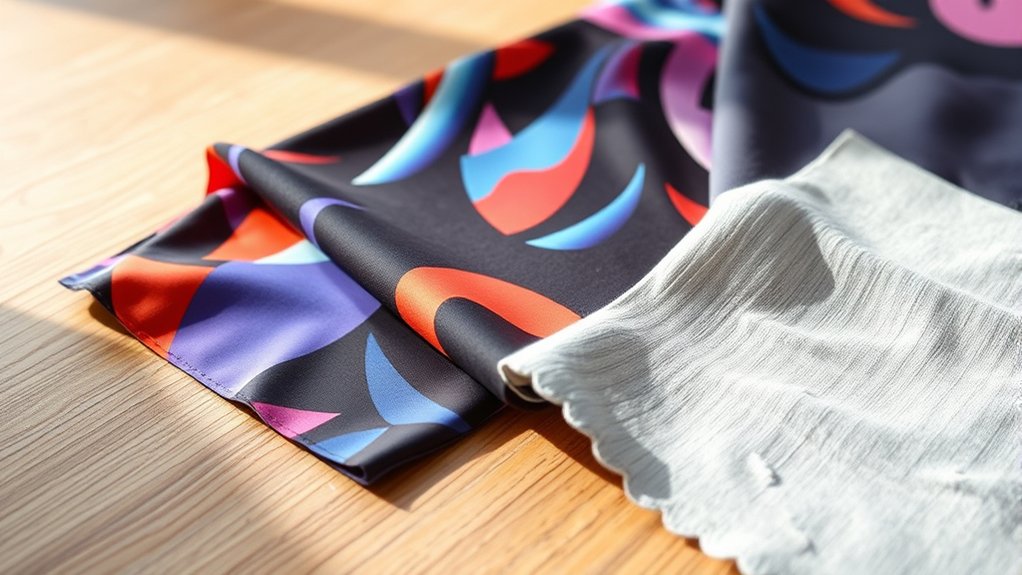

When choosing between HTV vs sublimation vs screen printing, consider your fabric, design, and budget carefully.
HTV works well for cotton blends, offering sharp designs but risks cracking over time.
Sublimation delivers vibrant, long-lasting colors ideal on polyester but doesn’t suit cotton.
Screen printing excels with bold colors and durability, especially on varied fabrics, yet requires more setup.
Each method fits different needs and projects, so if you want to master your best option, there’s more to explore.
Key Takeaways
- HTV cuts vinyl designs applied with heat, ideal for cotton/poly blends, and offers moderate durability but may crack over time.
- Sublimation transfers dye into polyester fibers, producing vibrant, photo-realistic prints with smooth texture and excellent fade resistance.
- Screen printing pushes ink through stencils, providing bold, durable colors especially on cotton, suitable for large, simple designs.
- HTV suits small runs with low setup costs; sublimation requires expensive printers but excels in large-volume polyester prints. Screen printing is cost-effective for bulk orders.
- Material compatibility varies: HTV works on various fabrics, sublimation only on polyester, and screen printing fits many substrates with variable care needs.
Understanding HTV, Sublimation, and Screen Printing
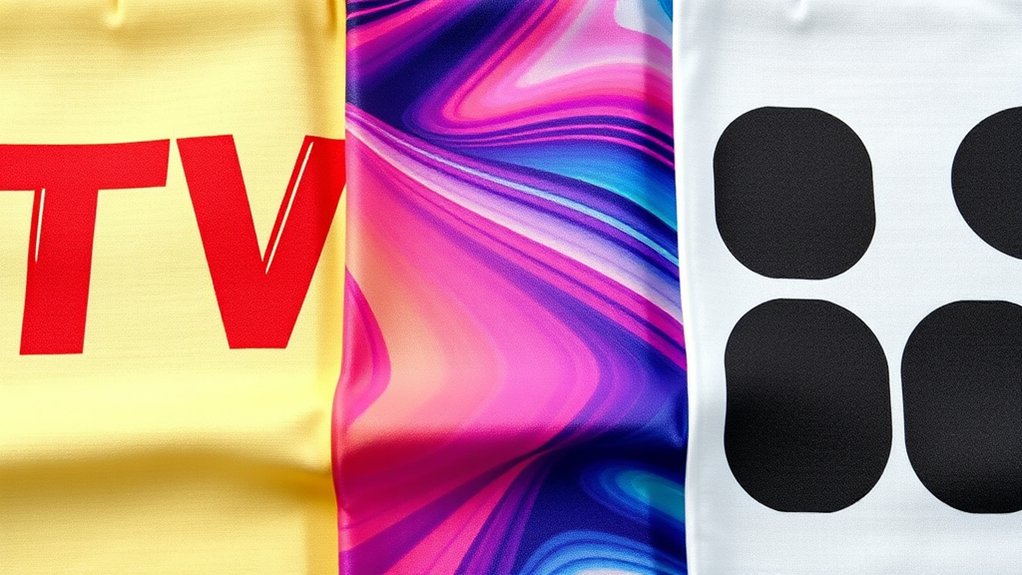
When you plunge into the world of custom apparel, understanding HTV, sublimation, and screen printing is essential to choosing the right method for your project. Heat transfer vinyl (HTV) uses a heat press to bond vinyl designs onto fabric, offering sharp, durable results with minimal equipment.
Sublimation relies on special ink types that turn into gas under heat, embedding vibrant, full-color images directly into polyester fibers. It is perfect for all-over prints. Screen printing pushes ink through stencils onto fabric, ideal for bold, solid colors and larger runs.
Each method uses different ink types and techniques, affecting durability, texture, and application. Knowing these fundamentals helps you decide how your design will look, feel, and last, ensuring your custom apparel truly stands out with style and quality.
Which Printing Method Has the Best Colors and Quality?
You want your prints to pop with vibrant colors that last, so comparing HTV, sublimation, and screen printing is key. Each method offers different levels of durability and sharpness, affecting how your design holds up over time.
Let’s explore which technique delivers the brightest hues and the highest quality finish.
Color Vibrancy Comparison
Although each printing method offers unique strengths, you’ll find that color vibrancy varies considerably between HTV, sublimation, and screen printing. Understanding their differences helps you choose the perfect technique for your project.
- HTV: Offers decent color saturation but often lacks the deep color depth found in other methods, resulting in slightly muted tones on darker fabrics.
- Sublimation: Excels in vibrant, rich color saturation and remarkable color depth by infusing dye directly into the fabric, delivering vivid, lifelike hues. It is ideal for polyester materials.
- Screen Printing: Provides bold, intense color saturation with excellent color depth, especially on cotton, making prints pop with sharpness and brightness.
Ultimately, sublimation leads in color vibrancy on compatible fabrics, while screen printing shines on natural fibers, and HTV suits simpler, less color-intensive designs.
Durability And Print Quality
Since durability and print quality determine how long your design stays vibrant and intact, choosing the right printing method is crucial. Each technique offers unique advantages in design flexibility and material compatibility, impacting how your artwork holds up over time.
| Printing Method | Durability | Print Quality |
|---|---|---|
| HTV | High | Sharp, vibrant |
| Sublimation | Moderate | Smooth, photo-realistic |
| Screen Printing | Very High | Bold, long-lasting |
HTV delivers sharp, vibrant prints with great design flexibility but suits mainly cotton and polyester blends. Sublimation excels in photo-realistic quality on polyester but fades faster on other materials. Screen printing offers the best durability and bold colors, thriving on various fabrics. Knowing these differences helps you pick the method that guarantees your design stays flawless longer.
Durability and Care Requirements for Each Printing Method
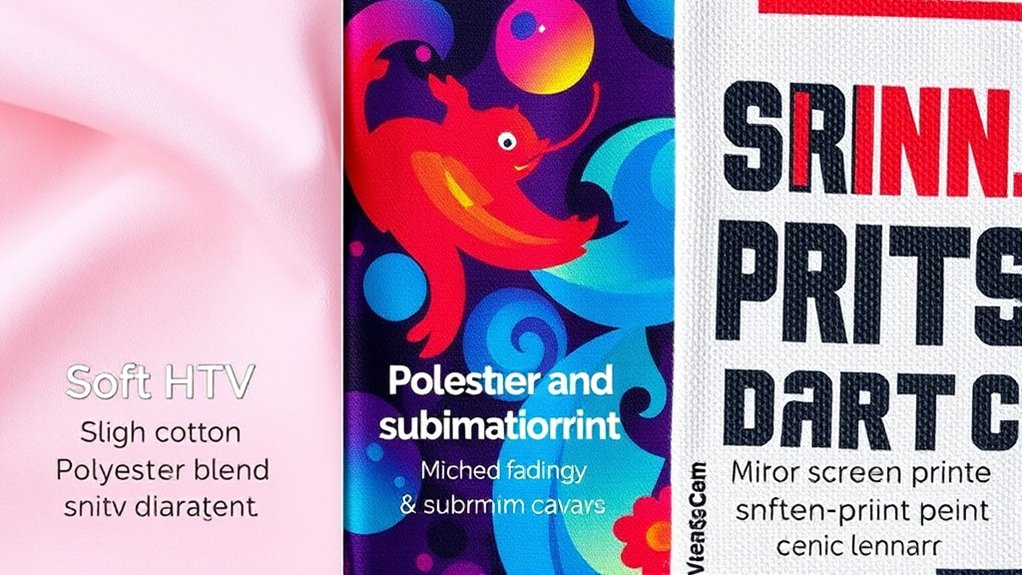
You want your designs to stay vibrant and intact through countless washes, right? Each printing method handles wear and care differently, impacting how long your prints last and what maintenance they need.
Let’s explore how HTV, sublimation, and screen printing stand up to time and laundry.
Longevity of Prints
When you choose a printing method, understanding how long your design will last and how to care for it can save you frustration down the line. Each technique offers different longevity, influenced by factors like print fading and environmental impact.
- HTV prints tend to last well but may crack or peel with heavy wear, especially if exposed to harsh conditions.
- Sublimation infuses ink into fabric, resisting fading and cracking, making it ideal for vibrant, long-lasting designs, particularly on polyester.
- Screen printing creates durable layers that withstand frequent use but can fade faster under intense sunlight or abrasive washing.
Knowing these differences helps you pick a method that suits your needs, balancing durability with environmental considerations for a print that stays fresh and eco-friendly.
Washing and Maintenance
Although each printing method boasts unique durability, their care routines differ markedly to preserve vibrancy and integrity. With HTV, you’ll want to turn garments inside out and wash them in cold water to protect the vinyl layer. Avoid bleach and high heat during drying to prevent cracking.
Sublimation prints, infused into polyester fabric, handle fabric care like a champ. Just use gentle washing techniques with mild detergents and skip fabric softeners to maintain sharp colors.
Screen printing demands a bit more caution; turn items inside out and wash in cold water on a gentle cycle to stop ink from fading or peeling. Ironing directly over prints in any method can cause damage, so always use a cloth barrier or avoid the print area altogether.
Following these tips guarantees your prints stay fresh and lasting.
Best Fabrics and Products for HTV, Sublimation, and Screen Printing
Choosing the right fabric can make or break your design’s impact, especially when working with HTV, sublimation, or screen printing. Each method demands specific fabric compatibility to guarantee vibrant results and durability.
- HTV materials thrive on cotton, polyester blends, and canvas, fabrics that handle heat presses well without warping or melting.
- Sublimation substrates require polyester or polymer-coated surfaces because sublimation dyes bond only with synthetic fibers, offering vivid, permanent prints.
- Screen printing is versatile, working best with cotton, cotton-poly blends, and even nylon, thanks to its ink’s adaptability to various textures.
Picking your fabric with care aligns with your method’s strengths, helping your artwork pop and last through countless washes.
Cost and Setup for HTV, Sublimation, and Screen Printing

Understanding the ideal fabric sets the stage, but knowing how much you’ll invest and prepare for each printing method shapes your project’s feasibility. HTV demands minimal setup costs, just a cutting machine and heat press, making it perfect for small runs or beginners.
Sublimation requires higher equipment requirements: a specialized printer, heat press, and sublimation inks, pushing initial costs up but offering vibrant, durable prints on polyester fabrics.
Screen printing involves the most substantial setup costs and equipment requirements: screens, squeegees, inks, and a press, plus time-intensive preparation. While it excels in bulk orders, the upfront investment can be steep.
How to Choose the Best Printing Method for Your Project
Where do you start when deciding between HTV, sublimation, and screen printing? First, analyze your project requirements and what each method offers. Then, consider who your target audience is and how they’ll use or wear the product. Finally, balance cost with quality to find the best fit.
Here’s how to break it down:
- Design Complexity: Sublimation handles intricate, full-color images best, while screen printing excels with bold, limited colors. HTV is perfect for personalized or small runs.
- Material Compatibility: Sublimation works only on polyester or polymer-coated items; HTV and screen printing suit cotton and blends.
- Durability Needs: Screen printing offers long-lasting prints for heavy wear, HTV is durable but less flexible, and sublimation embeds ink for vibrant, permanent designs.
Tailoring your choice to these factors guarantees your project resonates perfectly with your audience.
Frequently Asked Questions
Can HTV Be Layered With Sublimation or Screen Printing?
You can layer HTV with sublimation or screen printing, but HTV compatibility matters. Apply sublimation first, then HTV, or screen print beneath HTV.
Master layering techniques to avoid peeling and guarantee vibrant, durable designs on your fabric.
Are There Eco-Friendly Options for Each Printing Method?
Think of your printing choices as a garden: you can pick eco-friendly inks and sustainable materials for each method, cultivating a greener world. You’ll find water-based inks, organic HTV, and recycled screens to keep it fresh and clean.
How Long Does Each Printing Process Take per Item?
You’ll find printing speed varies: HTV takes minutes per item, sublimation is faster but depends on item complexity, and screen printing’s setup slows initial prints, yet speeds up massively with bulk orders, balancing time and detail.
Can These Printing Methods Be Used on Dark-Colored Garments?
You can’t use sublimation on dark garments, but HTV and screen printing shine with excellent color contrast and garment compatibility.
HTV sticks well, while screen printing layers vibrant ink, making dark fabric pop brilliantly.
What Equipment Maintenance Is Required for Each Printing Technique?
You’ll clean ink cartridges regularly to avoid clogs, keep your heat press spotless and calibrated, and maintain screens by washing and storing them properly. These steps guarantee vibrant prints and extend your equipment’s life effortlessly.
Conclusion
Choosing between HTV, sublimation, and screen printing is like picking colors on a palette—each shines differently depending on your canvas. HTV offers bold versatility but may lack sublimation’s vibrant, permanent hues. Screen printing delivers durability yet demands setup time.
You’ll weigh cost against quality, fabric compatibility against care needs. Each method brings unique strengths and challenges to the table.
In the end, your perfect print hinges on balancing these contrasts, crafting a result that fits your vision and project like a glove. Understanding the differences between HTV vs sublimation vs screen printing is key to making the best choice for your needs.