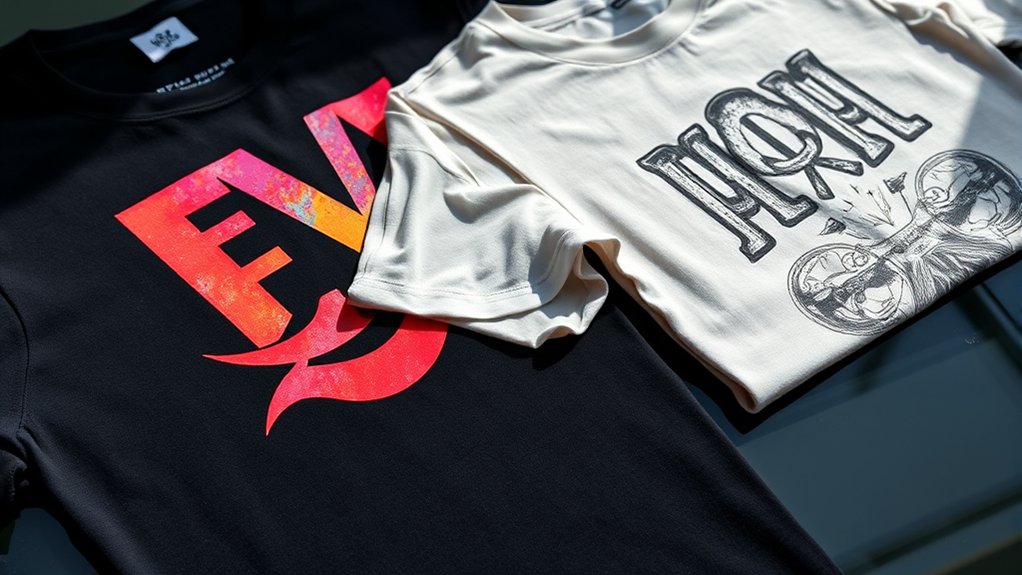

Htv Vinyl Vs Screen Printing is a key consideration when choosing the best method for your fabric designs.
If you need crisp, intricate designs with quick, small-batch production, HTV vinyl is your go-to—its heat-activation guarantees sharp edges and long-lasting color on various fabrics.
For vibrant, large-scale projects, screen printing excels, offering rich saturation and economy of scale despite longer setup.
Each method fits different production needs and durability expectations.
Want to optimize your fabric designs? Exploring their strengths will help you pick the perfect method for your project.
Key Takeaways
- HTV vinyl offers quick setup and customization, ideal for small batches and intricate, multi-color designs with crisp edges.
- Screen printing requires higher initial setup but is cost-effective and efficient for large volume orders with vibrant color saturation.
- HTV vinyl bonds firmly to fabric with heat, maintaining durability over 50+ washes, suitable for various fabric types.
- Screen printing excels in bold graphics and extensive color variation, lasting about 30-40 washes with deep ink penetration.
- Choose HTV vinyl for personalized, detailed projects; prefer screen printing for uniformity, scalability, and visual impact in bulk.
What Is HTV Vinyl and How It Works

HTV vinyl is a heat-activated material that lets you create sharp, durable designs on fabric. You start by cutting your design from a sheet of vinyl types, such as matte, glossy, or flocked.
HTV vinyl enables sharp, durable fabric designs by cutting from matte, glossy, or flocked sheets.
Each vinyl type offers distinct textures and finishes for varied HTV applications. After weeding away excess vinyl, you position the design on your fabric.
Using a heat press or iron, you apply precise heat and pressure, activating the adhesive backing. This bonds the vinyl firmly to the fabric fibers.
The result is a vibrant, long-lasting graphic resistant to washing and wear. HTV’s versatility means you can customize t-shirts, bags, and uniforms with intricate details that screen printing often struggles to replicate.
This method streamlines personalization with high accuracy and minimal setup.
How Screen Printing Works
While both methods create vibrant designs, screen printing works by pushing ink through a fine mesh stencil directly onto fabric. You start by preparing a screen coated with a light-sensitive emulsion, then expose it to a design to create a precise stencil.
Using specialized screen printing techniques, you apply ink layer by layer, ensuring each color is perfectly aligned. This method excels in color blending, allowing smooth shifts and rich, saturated hues.
You control ink thickness and opacity for sharp, durable prints that maintain detail even on textured materials. Each screen corresponds to a specific color, so multi-color designs require multiple screens and precise registration.
Key Factors to Compare: Cost, Setup, and Durability
You’ll want to compare the initial investment costs for each method, as HTV vinyl often requires less upfront spending than screen printing. Consider how production time affects efficiency. Screen printing excels with large batches, while HTV suits smaller runs.
Finally, evaluate durability by examining wear resistance and how each holds up after repeated washes.
Initial Investment Comparison
Because initial investment sets the foundation for your printing projects, understanding the cost, setup complexity, and durability of HTV vinyl and screen printing is essential. HTV vinyl demands lower initial costs; you mainly invest in a heat press and vinyl cutter. Setup is straightforward, letting you start small and scale gradually.
Screen printing requires higher upfront investment in screens, inks, and a press, plus more setup time to prepare stencils. However, its durability shines on bulk runs, offering better investment returns when producing large quantities.
HTV vinyl suits smaller batches or customization, but its layered vinyl may wear faster under heavy use. Screen printing’s robust prints endure repeated washing, making it cost-effective for volume orders. Your choice hinges on balancing initial costs against long-term durability and project scale.
Production Time Efficiency
When managing production time, you need to weigh cost, setup complexity, and durability carefully. In the efficiency comparison between HTV vinyl and screen printing, production speed plays a significant role. HTV vinyl offers quicker setup and faster turnaround for small batches, while screen printing excels in high-volume runs despite longer initial setup.
Consider these key factors:
Setup Time: HTV vinyl requires minimal prep; screen printing demands stencil creation and color separation.
Cost Efficiency: Screen printing lowers cost per unit as volume increases; HTV remains cost-effective for limited runs.
Production Speed: HTV vinyl allows rapid customization; screen printing processes multiple items simultaneously once set up.
Understanding these elements helps you optimize production time without sacrificing quality or budget.
Longevity and Wear Resistance
Although both HTV vinyl and screen printing offer distinct advantages, understanding their longevity and wear resistance is essential for selecting the right method. HTV vinyl excels in wear resistance, maintaining crisp edges and vibrant colors after multiple washes due to its heat-press bonding. Longevity testing shows HTV designs typically withstand 50+ wash cycles without significant degradation.
Screen printing, however, embeds ink into fabric fibers, providing excellent durability but may crack or fade after extended use or harsh laundering. Longevity testing for screen prints varies based on ink and fabric type but generally lasts 30-40 washes before noticeable wear.
If your priority is long-term durability with minimal maintenance, HTV vinyl offers superior wear resistance. For large runs and softer prints, screen printing still delivers solid longevity but may require touch-ups over time.
Design Flexibility: HTV vs Screen Printing

If you want intricate details and vibrant colors, HTV offers unmatched precision with its ability to cut complex shapes and gradients. It excels in handling high design complexity, allowing you to experiment with multiple layers and fine lines. Screen printing, on the other hand, is ideal for larger runs with fewer color options but bold, solid designs.
Consider these aspects of design flexibility:
- HTV supports unlimited color options and gradients, perfect for detailed artwork.
- Screen printing thrives on simple, bold graphics with sharp edges.
- HTV allows for quick customization, while screen printing requires setup for each color.
Choosing between them depends on your design’s complexity and color needs, with HTV providing more versatility for detailed, multi-colored projects.
Which Method Should You Choose?
You’ll want to weigh durability against design flexibility when choosing between HTV vinyl and screen printing. HTV offers sharp, detailed designs with moderate durability, while screen printing excels in longevity and vibrant color layering.
Consider how your project’s lifespan and visual complexity align with each method’s strengths.
Durability Comparison
When comparing durability, HTV vinyl offers strong resistance against cracking and fading, making it ideal for designs that need to withstand frequent washing and stretching. Its excellent fade resistance guarantees your graphics stay vibrant over time. Screen printing, meanwhile, excels in adhering ink deeply into fabric fibers, providing robust durability on compatible materials.
Consider these factors for durability:
- Material compatibility: HTV vinyl suits synthetic and cotton blends; screen printing thrives on natural fibers.
- Wear and tear: HTV vinyl resists stretching better, while screen printing handles abrasion well.
- Longevity: Screen printing generally outlasts HTV on heavy-use garments, but vinyl maintains color intensity longer.
Choose based on your fabric type and how much wear your design will face.
Design Flexibility
Although both HTV vinyl and screen printing offer unique advantages, your choice depends heavily on the complexity and color range of your design. HTV vinyl excels when you need sharp edges and crisp details, especially with limited color variations. It’s ideal for simpler designs or logos requiring precise cuts and layering of a few colors.
Screen printing, however, handles high design complexity better, allowing smooth gradients, fine lines, and extensive color variations without extra production difficulty. If your design demands multiple colors or intricate shading, screen printing delivers superior visual depth. Conversely, HTV is quicker for small runs or custom pieces with fewer colors.
Weigh your design’s complexity and color variations carefully to pick the method that best preserves your artwork’s integrity and vibrancy.
Tips for Combining HTV and Screen Printing in One Design
Since combining HTV and screen printing can create striking multi-textured designs, it’s essential to plan your layout carefully. Use creative layering techniques to decide which elements should pop with vinyl’s thickness and which benefit from screen printing’s smooth finish.
Apply color combination strategies that enhance contrast and cohesion, ensuring your design remains vibrant without clashing.
Focus on these key tips:
- Place screen printing on large, flat areas for smooth gradients and fine details.
- Use HTV for bold shapes or text to add dimension and tactile interest.
- Test heat and curing times to prevent damage or color bleeding between methods.
Advantages of HTV Vinyl
Because HTV vinyl offers exceptional durability and vibrant color options, it stands out as a top choice for custom apparel. You’ll appreciate its precise application techniques, which allow for clean edges and intricate designs without bleeding or blurring.
HTV’s versatility shines through its material compatibility; it adheres well to cotton, polyester, blends, and even nylon, expanding your creative possibilities. The heat-activated adhesive guarantees a strong bond that withstands regular washing and wear.
Additionally, you can layer different HTV colors to create multidimensional effects, enhancing visual impact. This method also reduces setup time and waste compared to traditional printing.
When you prioritize sharp detail, durability, and a wide color palette, HTV vinyl delivers reliable results suited for both small runs and personalized projects.
Advantages of Screen Printing
While HTV vinyl excels in detail and layering, screen printing offers unmatched efficiency and vibrancy for larger runs. You’ll appreciate the screen printing benefits when you need consistent production quality across hundreds or thousands of items.
This method uses stencils and mesh screens to apply thick layers of ink, resulting in bold, durable designs that pop on fabric.
Key advantages include:
- High-speed output ideal for bulk orders, reducing time and cost per unit
- Superior ink opacity and color vibrancy that withstand repeated washing
- Enhanced durability with inks bonding deeply to fabric fibers, ensuring long-lasting prints
For projects demanding uniformity and scalability, screen printing delivers technical precision and visual impact that HTV vinyl can’t match at volume.
Frequently Asked Questions
Can HTV Vinyl Be Used on Non-Fabric Materials?
Yes, you can use HTV vinyl applications on non-fabric projects like wood, metal, or plastic. Just guarantee proper surface preparation and heat settings to achieve strong adhesion and durability for your creative designs.
How Do Washing Instructions Differ Between HTV and Screen Printed Garments?
You should wash HTV garments inside out, cold water, gentle cycle, avoiding bleach to maintain washing durability. Screen printed items tolerate warmer water but still prefer inside out, gentle washing.
Both require air drying for best care instructions.
Are There Any Environmental Concerns With HTV Vinyl or Screen Printing Inks?
Yes, you should consider environmental impact; screen printing inks often contain chemicals needing careful ink disposal.
HTV vinyl produces less waste but isn’t biodegradable, so proper recycling helps minimize ecological harm.
What Is the Typical Turnaround Time for Each Printing Method?
You’ll find HTV vinyl offers a quicker turnaround time due to faster production speed, usually within a day. Screen printing takes longer, often several days, because of setup and drying processes, impacting overall production speed.
Can Screen Printing Be Combined With Embroidery for Mixed-Media Designs?
You absolutely can’t combine screen printing with embroidery unless you want stunning mixed media techniques that boost design versatility.
Layer ink and thread precisely, creating tactile, eye-catching visuals that marry durability with vibrant detail, perfect for standout apparel.
Conclusion
Choosing between HTV vinyl and screen printing boils down to your design demands and durability desires. HTV offers flexible finesse, perfect for personalized, smaller projects, while screen printing shines with sharp, scalable setups ideal for bulk brilliance.
By blending both, you balance boldness and detail, boosting your brand’s brilliance. Remember, mastering materials means maximizing methods—making your merchandise memorable, market-ready, and marvelously made.
Dive deep, decide diligently, and design dynamically! Ultimately, understanding the strengths of HTV vinyl vs screen printing ensures your creations stand out with style and substance.