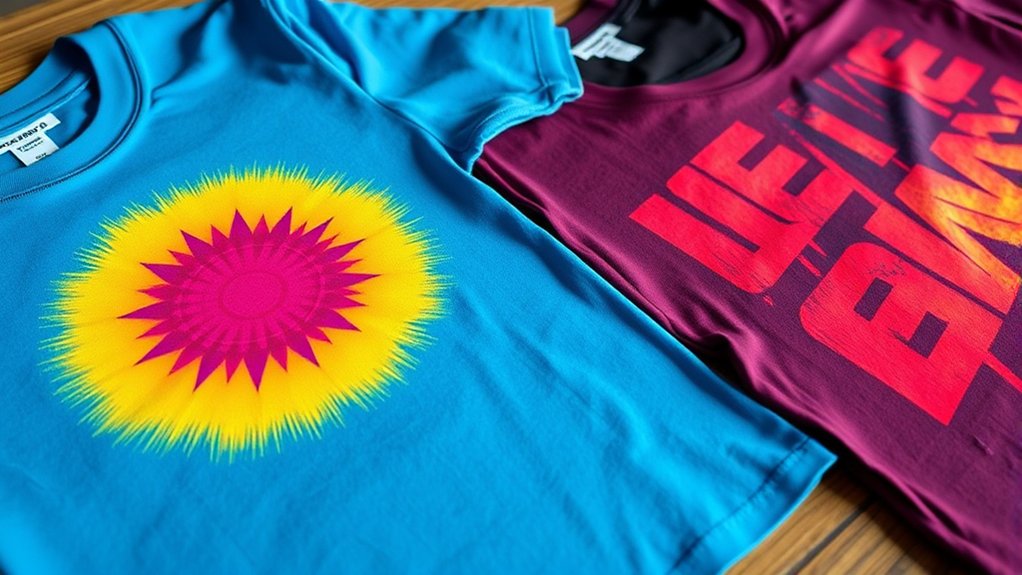

Flex printing vs screen printing is a common debate when choosing the best method for your custom designs.
If you want crisp, vibrant designs with sharp edges and fast turnaround, flex printing uses thin vinyl sheets heat-pressed onto fabric. This technique is perfect for detailed artwork or smaller production runs.
Screen printing, on the other hand, involves layering rich ink through stencils to create bold, textured art that holds up well on cotton fabrics.
It takes longer to set up and has higher upfront costs but delivers durable results.
Your choice depends on factors like design complexity, fabric type, and order quantity.
Stick around to uncover which technique fits your project like a glove.
Key Takeaways
- Flex printing uses vinyl heat-pressed on fabric, ideal for sharp, vibrant images with minimal setup and lower costs than screen printing.
- Screen printing pushes ink through mesh stencils, excels in bold colors and texture, but requires longer setup and higher initial investment.
- Flex printing offers superior durability against cracking and fading, making it perfect for activewear and frequent washing.
- Screen printing suits cotton fabrics for vibrant ink absorption, while flex printing works well on polyester and blends for crisp designs.
- Flex printing is best for small runs and prototypes, whereas screen printing is cost-effective and customizable for large-volume production.
How Flex and Screen Printing Work
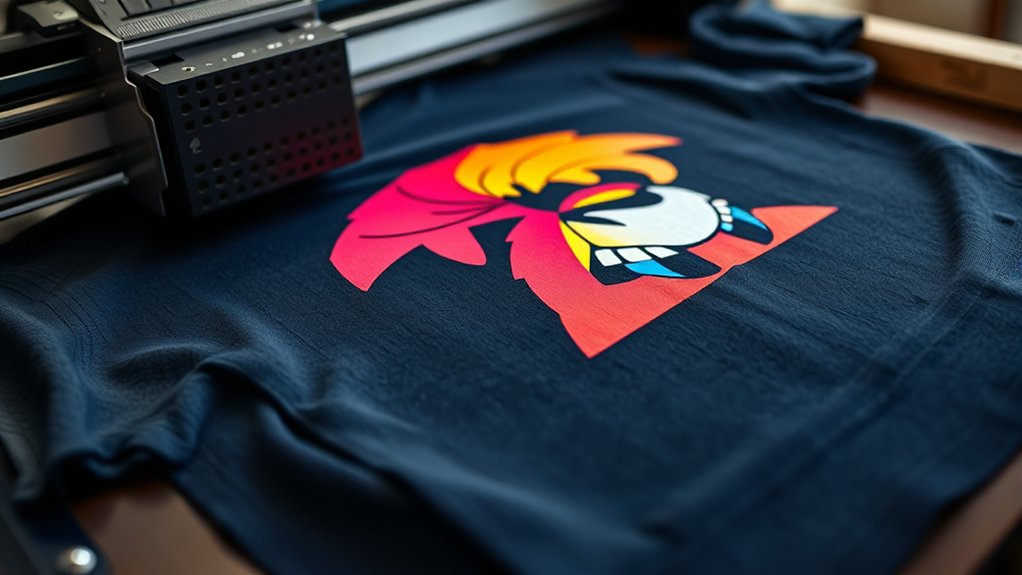
Both flex and screen printing transform your designs into vibrant visuals, but they do it in distinct ways. With flex printing techniques, you cut your design onto a thin, flexible vinyl sheet, then heat-press it onto your fabric. This method offers sharp edges and bold colors, perfect for intricate patterns or small runs.
On the other hand, screen printing applications involve pushing ink through a mesh stencil directly onto your material. Each color requires its own screen, layering inks to build up your design with rich textures and durability. You’ll find flex printing excels in speed and precision, while screen printing brings depth and versatility. Understanding these processes helps you choose the perfect method to bring your artwork to life.
Key Differences Between Flex and Screen Printing
Although flex and screen printing might seem similar at a glance, you’ll notice key differences that affect your final product’s look, feel, and durability. Flex printing offers sharper, more vibrant images with fewer design limitations, making it ideal for intricate details and gradients.
Screen printing, on the other hand, excels at producing rich, opaque colors on various materials but may struggle with fine lines and subtle gradients due to its stencil-based process. When it comes to production speed, flex printing generally moves faster because it uses pre-cut films and a heat press, allowing you to churn out designs quickly.
Screen printing often takes longer, especially for multi-colored prints requiring separate screens. Understanding these distinctions helps you choose the right method to match your design’s complexity and your timeline.
Cost and Setup Time Comparison
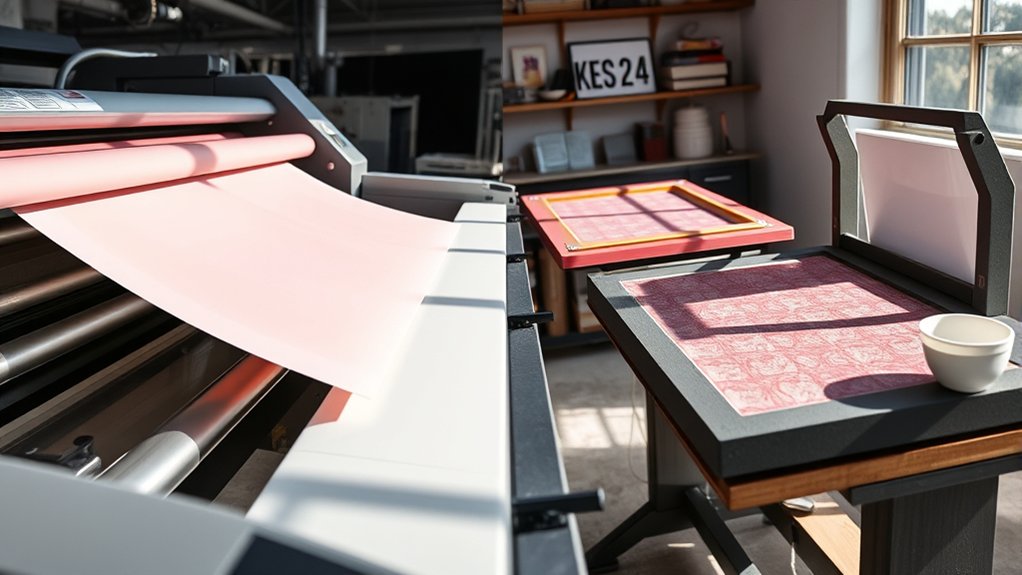
When you’re weighing your options, consider how cost and setup time can shape your project’s overall budget and schedule. Flex printing typically involves lower setup requirements, making it ideal if you want to keep initial costs down and get started quickly.
Screen printing, while offering vibrant results, demands more intricate setup, which can inflate your budget considerations and extend lead times.
| Printing Method | Setup Time | Cost Impact |
|---|---|---|
| Flex Printing | Short (hours) | Lower upfront costs |
| Screen Printing | Longer (days) | Higher upfront costs |
| Both | Efficient for large runs | Cost-effective long term |
Knowing these details lets you pick the best fit for your timeline and wallet.
Durability and Print Quality of Flex and Screen Printing
You want your prints to stand the test of time, showing off vibrant colors without fading or cracking. Flex printing offers smooth gradients that pop, while screen printing delivers bold, rich hues that resist wear.
Let’s explore how each method holds up when it comes to longevity and staying sharp under daily use.
Longevity of Print Results
A vibrant print can breathe life into any fabric, but its true value lies in how long it lasts. When you choose between flex and screen printing, consider the print lifespan carefully.
Flex printing offers a resilient finish, resisting cracking and fading even after multiple washes, so you won’t need to fuss over strict maintenance requirements. Screen printing, while vivid, may gradually lose sharpness and durability if not cared for properly, especially with intricate designs.
You’ll notice flex prints maintaining their crisp edges and bold presence longer, making them perfect for activewear or items exposed to frequent wear. Ultimately, understanding how each method holds up over time helps you pick a print that stays striking, matching your lifestyle without demanding extra upkeep.
Color Vibrancy Comparison
Beyond how long prints last, the way colors pop and hold their brilliance can make all the difference in your design’s impact. Flex printing boasts vibrant color saturation with smooth gradients, thanks to its heat-applied vinyl, making colors appear crisp and bold.
Screen printing, meanwhile, offers exceptional color matching accuracy with its layered ink application, producing rich, deep hues that stand out.
| Aspect | Flex Printing | Screen Printing |
|---|---|---|
| Color Saturation | Bright, solid, uniform | Deep, rich, layered |
| Color Matching | Limited to vinyl palettes | Precise, customizable |
| Visual Impact | Sharp edges, clean lines | Textured, vibrant prints |
Choosing between them depends on whether you want bold uniformity or nuanced color depth.
Resistance to Wear
While both flex and screen printing deliver eye-catching designs, their resistance to wear tells a different story. When you choose flex printing, you get impressive wear resistance thanks to its vinyl-based material that clings tightly to fabric, resisting cracks and fading over time.
This means your design stays sharp and vibrant, even after multiple washes. On the other hand, screen printing uses thicker ink layers that bond deeply with fabric fibers, offering exceptional print longevity and durability.
You’ll notice screen prints maintain their texture and color richness longer under daily wear and tear. So, if you want your design to endure the test of time, both techniques offer durability, but your choice hinges on whether you prioritize a sleek vinyl finish or a textured, time-tested print.
Best Fabrics for Flex and Screen Printing
Choosing the right fabric can make or break your flex or screen printing project. When you pick fabric types like cotton or polyester blends, you create a smooth canvas that grips printing materials beautifully.
Cotton’s natural fibers absorb ink well, making screen printing vibrant and durable. Polyester, on the other hand, pairs perfectly with flex printing, as its smooth surface allows heat-transferred vinyl to stick crisp and clear.
Blends give you the best of both worlds: comfort meets print longevity. Avoid slick or highly textured fabrics; they can distort your design or cause uneven adhesion.
Which Printing Method Is Right for You?
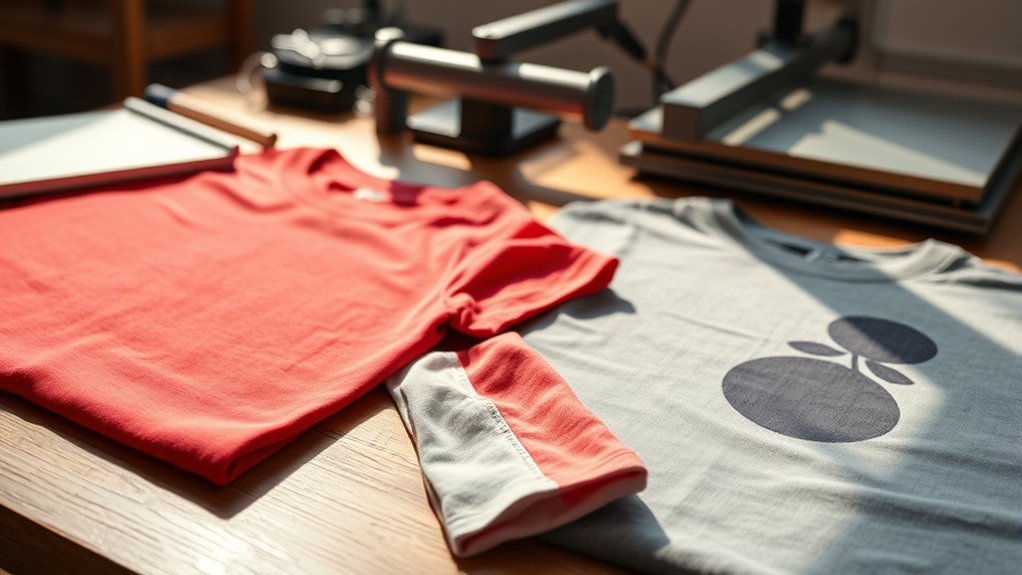
You’re weighing cost efficiency against design flexibility, trying to find the perfect balance for your project. Imagine crisp, vibrant details flowing from your ideas onto fabric without stretching your budget too thin.
Let’s explore how each printing method shapes your creative vision and spending.
Cost Efficiency Comparison
Even if budget constraints loom large, understanding the cost dynamics between flex printing and screen printing can help you make a smarter choice. Flex printing often shines for short runs with lower setup costs, while screen printing rewards you with economies of scale on large orders, a true long term investment.
Assess your budget considerations carefully; the right method can save you money and stress.
| Factor | Flex Printing | Screen Printing |
|---|---|---|
| Setup Cost | Low, quick turnaround | Higher, time-consuming |
| Cost per Unit | Higher for large runs | Lower for bulk orders |
| Durability | Moderate, good for short-term | Very durable, cost-effective over time |
Design Flexibility Options
While both flex printing and screen printing offer unique advantages, understanding their design flexibility can make all the difference in bringing your vision to life. If you crave bold, vibrant colors and intricate patterns that pop, screen printing excels with sharp detail and rich layers. It’s perfect for following current design trends that demand texture and depth.
On the other hand, flex printing shines when you want quick turnaround and versatile customization options, especially with simpler, graphic-focused designs or text. It adapts well to varying materials and smaller runs, letting you experiment without breaking the bank.
Ultimately, your choice depends on how complex your design is and how much customization you need. Knowing this helps you pick the printing method that truly fits your creative goals.
Frequently Asked Questions
Can Flex and Screen Printing Be Combined in One Design?
You can absolutely combine flex and screen printing for design integration, boosting your printing versatility. This lets you layer vivid textures and sharp details, creating a visually striking, multi-dimensional design that truly pops on any fabric.
Are There Environmental Concerns With Flex vs. Screen Printing?
You’ll notice flex printing often uses eco-friendly inks, reducing environmental impact, while screen printing can waste more ink and water. Choosing ink sustainability and minimizing waste helps you paint a greener, cleaner future with every print.
Which Method Is Better for Small Batch Printing?
You might think screen printing suits small batches, but flex printing beats it with better cost efficiency and faster production speed. Its vivid, detailed prints come quickly, saving you time and money without sacrificing quality or vibrancy.
How Do Flex and Screen Printing Affect Fabric Feel?
You’ll notice flex printing adds a smooth, slightly raised texture, enhancing print durability without stiffening fabric feel much. Screen printing, meanwhile, merges ink deeply, preserving fabric texture but sometimes feels heavier, especially with multiple layers.
Can Either Method Print on Non-Textile Materials?
You can use both methods for non textile applications, but flex printing offers greater printing versatility on smooth surfaces like vinyl and plastic.
Screen printing works well too but shines on textured or rigid materials, expanding your creative options.
Conclusion
Choosing between flex and screen printing might feel overwhelming, but don’t let concerns about setup time hold you back. While screen printing takes longer upfront, its vibrant, durable results shine on large orders.
Flex printing, on the other hand, offers speed and sharp detail perfect for smaller runs or intricate designs. By understanding your project’s needs and fabric type, you’ll confidently pick the method that brings your vision to life with crisp, lasting color.
In the end, knowing the strengths of flex printing vs screen printing will help you select the best technique for your specific printing needs.