
When choosing between DTF vs traditional screen printing for small batch custom textiles, you’ll find DTF offers superior design flexibility with faster setup, lower initial costs, and the ability to create complex, multi-color prints without multiple screens.
However, screen printing delivers more durable, colorfast results, especially on cotton-heavy fabrics, though it comes with higher setup expenses.
DTF suits quick, detailed jobs on varied fabrics, while screen printing is more cost-effective for larger runs.
Exploring both methods reveals valuable insights for your project’s needs. This comparison helps you decide the best printing technique based on your specific requirements and budget.
Key Takeaways
- DTF offers lower setup costs and faster production, making it ideal for small batch custom textile printing.
- Screen printing has higher setup time and costs due to separate screens for each color, making it less efficient for small runs.
- DTF supports complex, multi-color designs with quick adjustments, while screen printing favors simpler designs for efficiency.
- Screen printing provides superior durability and color retention, but DTF inks cure quickly and work well on various fabrics.
- For small batches, DTF ensures predictable per-unit pricing and reduces material waste compared to traditional screen printing.
DTF Vs. Screen Printing: Key Differences for Small Batches
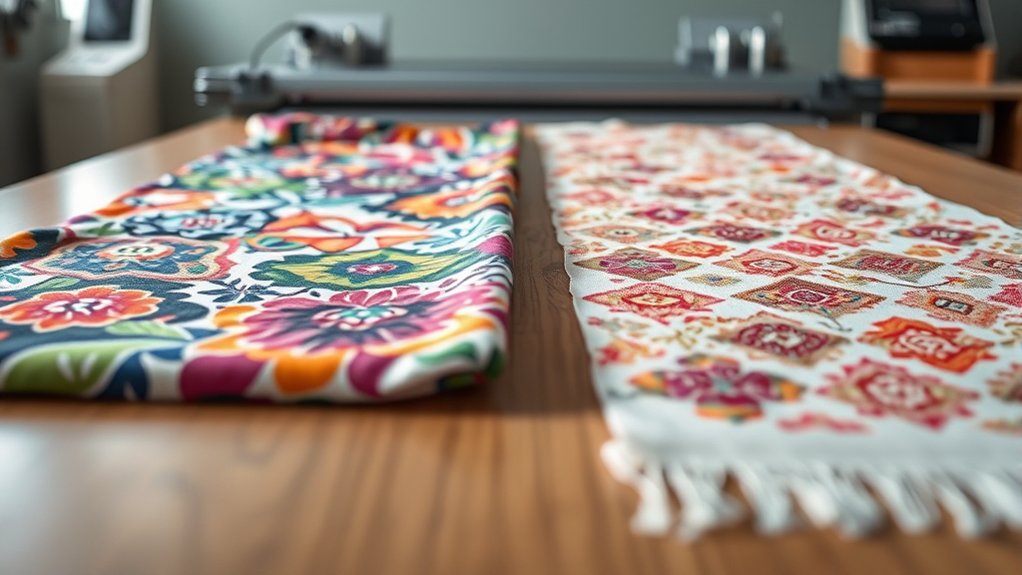
When you’re handling small batches, DTF (Direct to Film) and traditional screen printing differ greatly in setup time, cost, and flexibility. DTF excels in design adaptability, allowing you to print complex, multi-colored images without the need for multiple screens. This reduces your setup time significantly compared to screen printing, where each color requires a separate screen, increasing both preparation and cost.
Regarding printing precision, screen printing offers high durability and sharpness on certain fabrics but can struggle with intricate details in small runs due to stencil limitations. Conversely, DTF provides superior printing precision for fine details and gradients, making it ideal for varied designs in small quantities.
However, you’ll want to reflect on the type of fabric and final use, as each method has distinct performance characteristics tailored to different small-batch needs.
Design Flexibility Advantages of DTF Printing
Although traditional screen printing remains popular, DTF printing offers unmatched design flexibility that can transform how you approach garment customization. With DTF, you gain extensive artwork flexibility, allowing you to replicate complex gradients, fine details, and vibrant color variations without the limitations of screen setup.
Unlike traditional methods, which require separate screens for each color and design alteration, DTF printing enables quick adjustments and seamless integration of multiple colors in a single pass. This capability reduces turnaround time and cost, especially for small batches.
Additionally, DTF supports a wider range of fabric types and printing surfaces, expanding your design customization options. By leveraging DTF’s digital process, you can experiment more freely with intricate designs and personalized artwork, pushing creative boundaries beyond what traditional screen printing can efficiently achieve.
Why Screen Printing Offers Better Durability and Color

When you choose traditional screen printing, you get ink that penetrates deeper into the fabric fibers compared to DTF, resulting in superior durability. This deeper ink embedding guarantees the print maintains its integrity through multiple washes without significant fading.
Consequently, screen printing offers enhanced colorfastness over time, making it ideal for long-lasting, vibrant designs.
Ink Penetration Depth
Because screen printing forces ink through a tightly woven mesh, it achieves deeper penetration into fabric fibers compared to DTF (Direct-to-Film) printing, which primarily deposits ink on the surface. This deeper ink absorption technique enhances fabric integration, resulting in prints that resist cracking and fading.
When evaluating print quality factors, ink penetration depth is critical; it directly influences durability and color vibrancy. In contrast, DTF’s surface-level ink layer can peel or wear off more quickly under stress.
Screen printing’s method guarantees that ink binds within the textile matrix, improving longevity and tactile feel. So, if you prioritize robust, long-lasting prints, understanding these ink absorption differences helps you choose the right technique for small batch custom textiles.
Colorfastness Over Time
Since colorfastness directly impacts how long your prints maintain their vibrancy, understanding why screen printing outperforms DTF in this area is essential. Screen printing uses plastisol or water-based inks that bond deeply with textile fibers, enhancing color retention markedly.
This depth of ink penetration delivers superior fade resistance, especially after repeated washing and exposure to sunlight. Conversely, DTF inks sit more on the fabric’s surface, making them prone to quicker fading and reduced durability over time.
Additionally, screen-printed layers are thicker and more resilient, providing sustained color intensity. When you prioritize longevity and consistent vibrancy in small batch custom textiles, screen printing’s proven capacity for durable color retention and excellent fade resistance makes it the more reliable choice compared to DTF.
Setup and Production Costs for Small Batch DTF Vs. Screen Printing
When comparing initial investments, DTF requires less upfront spending on equipment than traditional screen printing, which demands costly screens and setup materials.
For small batches, your per-unit costs with DTF remain relatively stable, while screen printing’s costs spike due to setup time and materials. Understanding these cost dynamics helps you choose the most efficient method for limited runs.
Initial Investment Comparison
Comparing the initial investment for DTF and traditional screen printing reveals distinct cost structures that directly impact small batch production decisions. When analyzing initial investment factors, you must consider equipment, materials, and setup complexity.
- DTF printers require a single machine and a heat press, reducing upfront spending.
- Screen printing demands multiple screens, exposure units, and inks, increasing setup costs.
- Material costs for DTF include specialized films and powders, while screen printing uses bulk ink and emulsion.
- Training and setup time are shorter for DTF, lowering labor costs during startup.
This cost analysis shows DTF’s initial investment tends to be lower and simpler, making it more accessible for small batch production compared to traditional screen printing’s higher setup expenses.
Per-Unit Production Costs
Understanding the initial investment differences sets the stage for evaluating per-unit production costs, which directly affect profitability in small batch runs. With DTF printing, your setup costs remain minimal since you don’t require screens or extensive preparation.
This results in lower upfront expenses, making per unit pricing more predictable and cost efficient as batch sizes shrink. Conversely, traditional screen printing demands significant setup, creating and aligning screens, which inflates costs for small runs and raises your per-unit price substantially.
Although screen printing benefits from economies of scale in large volumes, it lacks cost efficiency for limited quantities. DTF’s streamlined workflow minimizes labor and material waste, ensuring consistent cost control.
When you compare both methods, DTF offers superior per-unit pricing flexibility and cost efficiency specifically tailored for small batch production.
Turnaround Times: How Fast Can You Get Small Batch Prints?

How quickly can you expect to receive small batch prints using DTF versus traditional screen printing? DTF excels in shorter production timelines, especially for rush orders, while traditional screen printing involves more setup time. Here’s a detailed comparison:
- Setup Time: DTF requires minimal setup, enabling faster job initiation; screen printing demands stencil preparation, extending lead times.
- Print Speed: DTF printers handle small batches swiftly, printing each garment digitally; screen printing presses need manual adjustments per color.
- Drying/Curing: DTF inks cure quickly with heat presses; screen printing relies on conveyor dryers, which may slow throughput.
- Rush Orders: DTF can accommodate last-minute requests better due to flexible digital workflows, whereas screen printing’s fixed setup limits rapid changes.
Best Method for Fabrics and Inks: DTF or Screen Printing?
Which printing method suits your fabric and ink needs best depends on several technical factors. DTF excels in fabric compatibility, working well on cotton, polyester, blends, and even nylon, thanks to its versatile adhesive powder that bonds inks effectively. It uses specialized water-based pigment inks, providing vibrant colors with good wash durability.
Screen printing, however, uses plastisol or water-based inks, each suited for different fabrics. Plastisol adheres best to cotton, while water-based inks penetrate fibers for softness but demand specific fabric types to avoid fading. For intricate designs on diverse textiles, DTF offers more flexibility, while screen printing delivers superior opacity and vibrancy on cotton-heavy fabrics.
Your choice hinges on the fabric type you’re printing on and the ink performance you require, with DTF offering broader compatibility and screen printing excelling in traditional cotton applications.
Choosing the Right Printing Method for Your Small Batch Project
Choosing the right printing method for your small batch project requires evaluating factors such as cost-efficiency, turnaround time, and design complexity. You’ll want to weigh custom design considerations and material compatibility carefully. Here’s how to decide:
- Design Complexity: For intricate, multi-color designs, DTF excels with fine detail, while screen printing may require multiple screens, raising costs.
- Batch Size: Screen printing is more cost-effective for larger runs; DTF suits very small batches or single items.
- Material Compatibility: DTF works well on diverse fabrics, including synthetics; screen printing performs best on cotton or blends.
- Turnaround Time: DTF offers faster setup and production for small batches, whereas screen printing requires longer preparation but scales efficiently.
Frequently Asked Questions
Can DTF Printing Be Done on Dark Fabrics Without a White Underbase?
You can’t do DTF printing on dark fabrics without a white underbase because DTF printing techniques rely on it to prevent dark fabric challenges. This ensures vibrant colors and opacity that would otherwise be lost without that essential layer.
What Environmental Impacts Do DTF and Screen Printing Have?
You’ll find ink production in screen printing uses more water-based inks, reducing toxins, while DTF involves solvent inks needing careful waste management. Both demand efficient waste handling, but DTF’s digital process generally generates less physical waste overall.
Are There Specific Maintenance Needs for DTF Printing Equipment?
You’ll need regular printer care for DTF machines. Clean print heads and rollers to avoid clogs, ensuring equipment longevity.
Compared to screen printing, DTF demands more frequent, precise maintenance to maintain print quality and avoid costly repairs.
How Do Wash Instructions Differ for DTF Versus Screen Printed Garments?
You’ll find DTF prints need gentler washing to preserve wash durability, favoring cold water and mild detergents. Screen prints handle hotter washes better but vary by fabric compatibility. Always follow specific care labels closely.
Can DTF Prints Be Layered or Combined With Other Printing Techniques?
You can definitely layer DTF prints with other techniques, like screen printing, to enhance design complexity. Using precise layering techniques guarantees strong adhesion and excellent print durability. Careful curing is essential to maintain each layer’s integrity.
Conclusion
When deciding between DTF and traditional screen printing for small batches, think of it like choosing the right tool from a toolbox. DTF offers unmatched design flexibility and quicker turnaround, perfect for intricate, colorful projects.
However, screen printing delivers superior durability and vibrant, long-lasting colors, ideal for heavy-duty wear. Consider your fabric type, budget, and timeline carefully.
Choosing the right method guarantees your custom textiles not only look great but stand the test of time. For small batch custom textiles, weighing the pros and cons of DTF vs traditional screen printing is key to the best results.