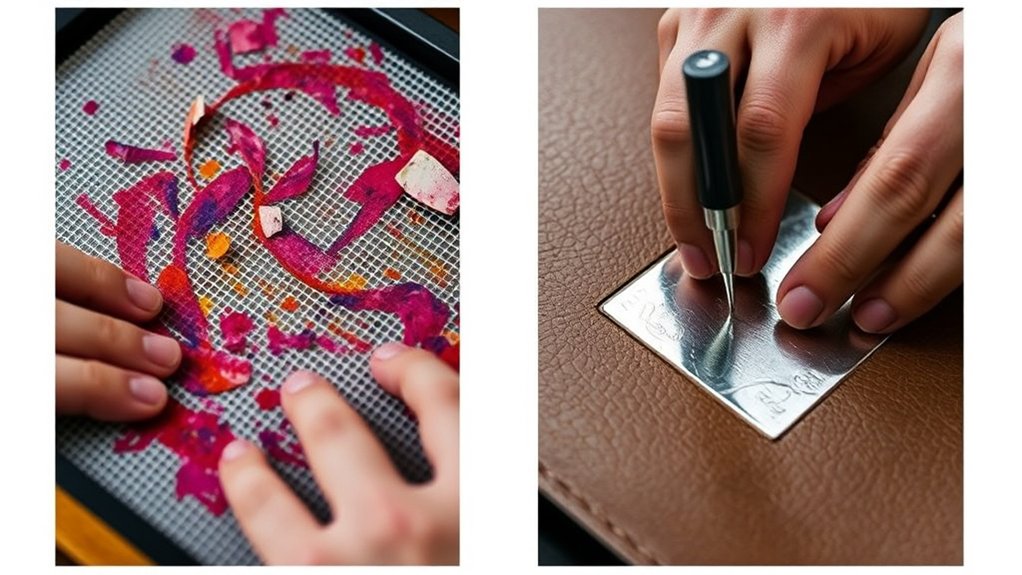

Silk screen printing vs hot stamping offers two distinct methods ideal for different design needs.
Silk screen printing is perfect for vibrant, durable multi-color designs on fabric and flat surfaces. It uses ink pushed through mesh screens to create bold, lasting impressions.
Hot stamping, on the other hand, employs heat and foil to produce sharp, metallic, or glossy finishes. This technique is ideal for luxury branding on leather or coated materials.
Silk screen suits large runs with color variety, while hot stamping excels in quick, high-impact details.
Explore further to see which fits your project best.
Key Takeaways
- Silk screen printing uses ink pushed through a mesh screen for vibrant, durable designs on flat or slightly curved surfaces.
- Hot stamping transfers metallic or glossy foil using heat and pressure, creating a high-impact, tactile finish ideal for luxury branding.
- Silk screen printing offers longer-lasting colors with matte to semi-gloss finishes, while hot stamping provides crisp, metallic effects that may wear off.
- Silk screen printing suits cotton, polyester, plastics, wood, and glass; hot stamping is best for leather, coated paper, heat-resistant plastics, and metals.
- Silk screen printing has lower setup costs and suits large runs; hot stamping has higher initial costs but enables faster, smaller batch production.
Silk Screen Printing Process and Best Uses
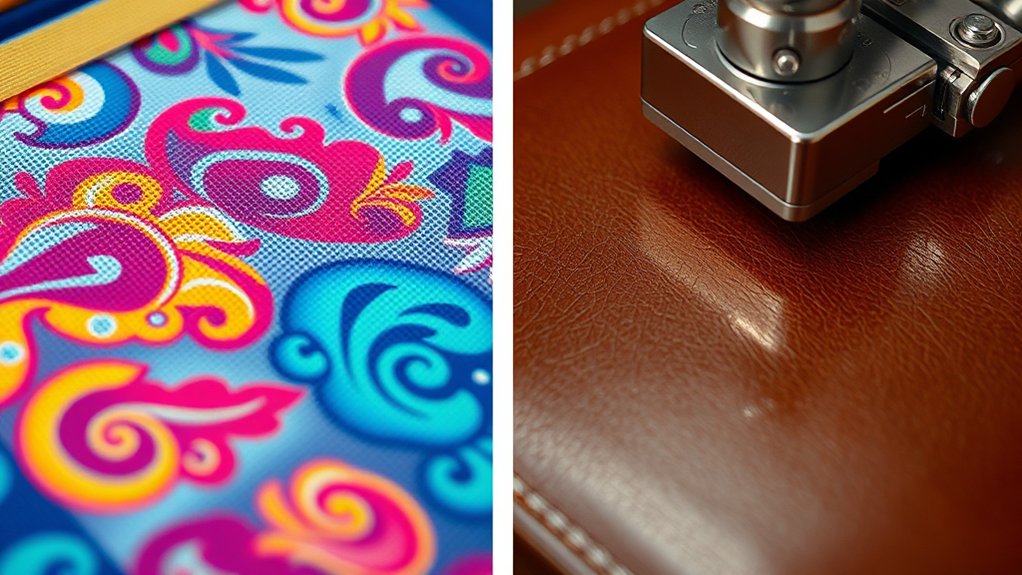
Although silk screen printing has been around for decades, it remains a go-to method for applying vibrant, durable designs onto various surfaces. You’ll appreciate its design versatility, allowing intricate patterns or bold logos on textiles, plastics, glass, and more.
The process pushes ink through a fine mesh screen, where stencils block unwanted areas, ensuring sharp, clean images. With unlimited color options, you can layer multiple inks for vibrant, long-lasting results. This technique excels on flat or slightly curved surfaces and supports both small and large runs efficiently.
When you need precise detail combined with strong adhesion and vivid hues, silk screen printing delivers consistent, professional outcomes. It’s your best choice for custom apparel, signage, and promotional items requiring durability and design flexibility.
Hot Stamping Process and Best Uses
When you need a high-impact finish with metallic or glossy effects, hot stamping offers a precise and durable solution. This process uses heat, pressure, and a foil film to transfer designs onto substrates. You’ll find hot stamping techniques ideal for adding luxury and detail where ink alone can’t achieve the same vibrancy or texture.
Common hot stamping applications include:
- Embossed logos on packaging
- Decorative labels with metallic sheen
- Personalized stationery and invitations
- Branding on leather goods and accessories
- Security features on ID cards and certificates
Durability and Finish: Silk Screen vs Hot Stamping
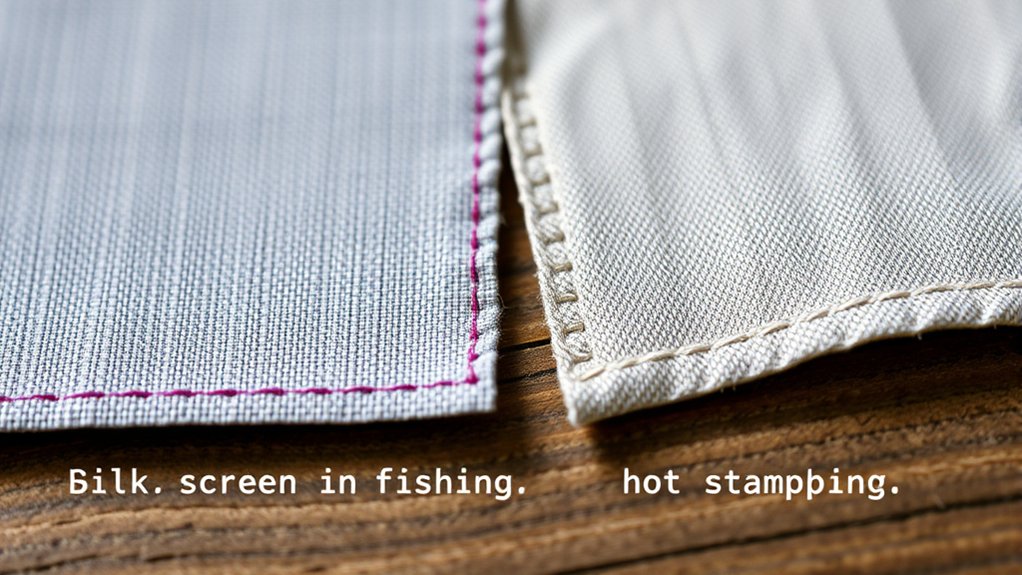
Since both silk screen printing and hot stamping serve distinct purposes, understanding their durability and finish differences helps you choose the right method for your project. Silk screen printing offers superior ink adhesion, ensuring colors remain vibrant even after heavy wear and washing. Its finish is matte to semi-gloss, providing consistent color vibrancy across large surfaces.
Hot stamping, on the other hand, delivers a crisp, metallic or glossy finish with a tactile feel, perfect for premium accents. Its durability depends on the foil quality; well-applied foils resist fading and scratching but may wear off over time on flexible surfaces. Ultimately, if you prioritize long-lasting, bold colors, silk screen printing excels. For striking, reflective finishes with moderate durability, hot stamping stands out.
Best Materials and Products for Each Printing Method
Choosing the right materials for silk screen printing or hot stamping can make all the difference in your final product’s quality and appearance. Silk screen printing excels with diverse ink types and broad substrate compatibility, while hot stamping demands specific foils and heat-compatible surfaces.
Selecting appropriate materials ensures optimal quality and appearance in silk screen printing and hot stamping processes.
For silk screen printing, consider:
- Cotton and polyester fabrics
- Plastics like polypropylene and ABS
- Paper and cardboard
- Wood surfaces
- Glass and ceramics (with special inks)
Hot stamping suits:
- Leather and synthetic leather
- Coated paper and cardstock
- Plastic items with heat-resistant coatings
- Metal sheets with smooth finishes
- PVC and vinyl products
Understanding ink types and substrate compatibility helps you select the ideal method, ensuring durability and vibrant finishes tailored to your product’s material.
Cost and Production Time: Silk Screen vs Hot Stamping
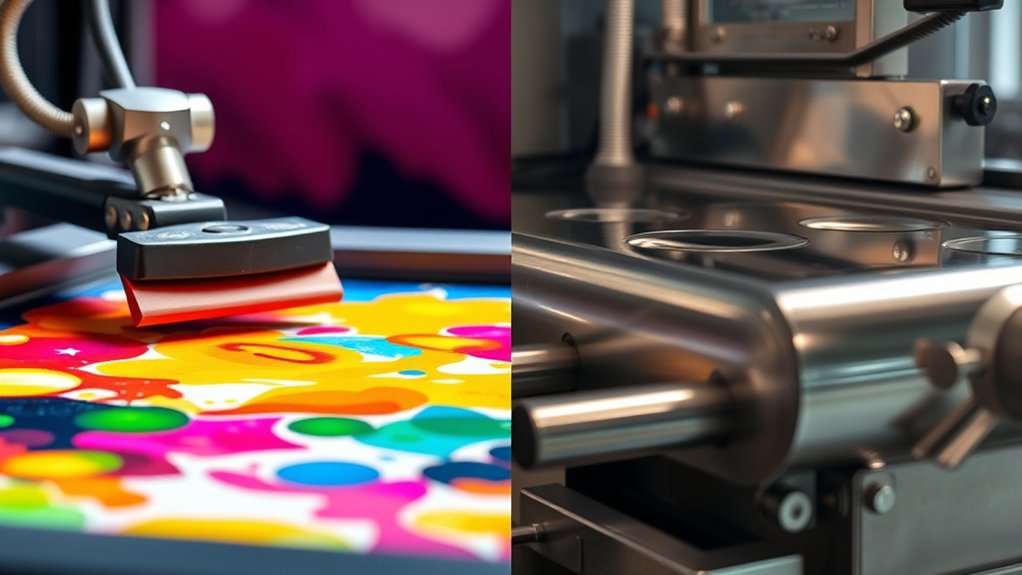
Although both silk screen printing and hot stamping deliver striking results, they differ considerably in cost and production time. When you weigh the cost comparison, silk screen printing typically incurs lower setup expenses, making it ideal for larger runs where production efficiency matters.
However, intricate designs can slow down your workflow due to multiple color layers. Hot stamping demands higher initial costs for dies and machinery but speeds up production with rapid imprinting, especially on smaller, detailed jobs.
If you prioritize quick turnarounds and premium finishes, hot stamping offers better production efficiency despite its upfront investment. Conversely, silk screen printing suits volume-driven projects where cost per unit decreases as quantity rises.
Understanding these trade-offs helps you select the method that aligns with your budget and timeline.
Frequently Asked Questions
Can Silk Screen Printing Be Combined With Hot Stamping on the Same Product?
Yes, you can combine silk screen printing with hot stamping on one product. This boosts design versatility and maintains production efficiency, letting you layer vibrant inks with metallic or textured finishes for a striking, multi-dimensional effect.
What Environmental Impacts Do Silk Screen Printing and Hot Stamping Have?
You’ll see contrasting eco friendly practices: silk screen printing uses water-based inks but generates chemical waste; hot stamping wastes foil materials yet emits fewer solvents.
Effective waste management is key to reducing both processes’ environmental footprints.
Are There Color Limitations for Hot Stamping Compared to Silk Screen Printing?
Yes, hot stamping offers limited color variety compared to silk screen printing. You’ll find silk screen printing provides greater design flexibility with countless vivid hues, while hot stamping relies on metallic or solid foil colors for striking effects.
Which Method Is Better for Small, Detailed Designs?
You’ll find hot stamping excels in design precision and detailed intricacy for small designs, delivering sharp, metallic finishes.
Silk screen printing struggles with fine details but offers vibrant color depth, so choose based on your design’s complexity.
Can Either Method Be Used on Curved or Irregular Surfaces?
You can use silk screen printing on curved surfaces with flexible screens, but irregular shapes challenge it. Hot stamping molds better to curved surfaces, adapting well to irregular shapes, making it ideal for complex contours.
Conclusion
When choosing between silk screen printing and hot stamping, you’re weighing vibrant, versatile layers against sleek, metallic precision. Silk screen excels on varied surfaces with bold colors, while hot stamping delivers sharp, shiny details perfect for luxury finishes.
Think durability versus dazzle—silk screen resists wear, hot stamping gleams but can be delicate. Your project’s material, budget, and timeframe will tip the scale.
In the end, it’s about matching technique to your design’s purpose and style. Choosing the right method depends on whether silk screen printing or hot stamping best suits your creative and practical needs.