
When choosing between screen printing with vinyl vs emulsion, it’s important to consider your design and timeline.
Vinyl works best for simple, bold shapes on smooth surfaces and offers quick setup with no drying time. However, it’s less suited for fine detail.
Emulsion handles complex designs and fabrics but requires more prep and drying time.
Vinyl stencils are more durable for multiple runs, while emulsion suits shorter projects with delicate detail.
Explore these differences to decide which method fits your needs perfectly.
Key Takeaways
- Vinyl stencils offer immediate use and sharp edges without drying or exposure time, ideal for quick, bold designs.
- Emulsion stencils require coating, exposure, and drying, making them suitable for intricate and detailed artwork.
- Vinyl is more durable for multiple runs, while emulsion stencils degrade faster but capture finer detail.
- Vinyl suits smooth surfaces and simpler shapes; emulsion adapts better to diverse fabric textures and complex images.
- Vinyl setup is faster but costlier; emulsion has longer prep time but uses less expensive materials.
Key Differences Between Vinyl and Emulsion Screen Printing Stencils
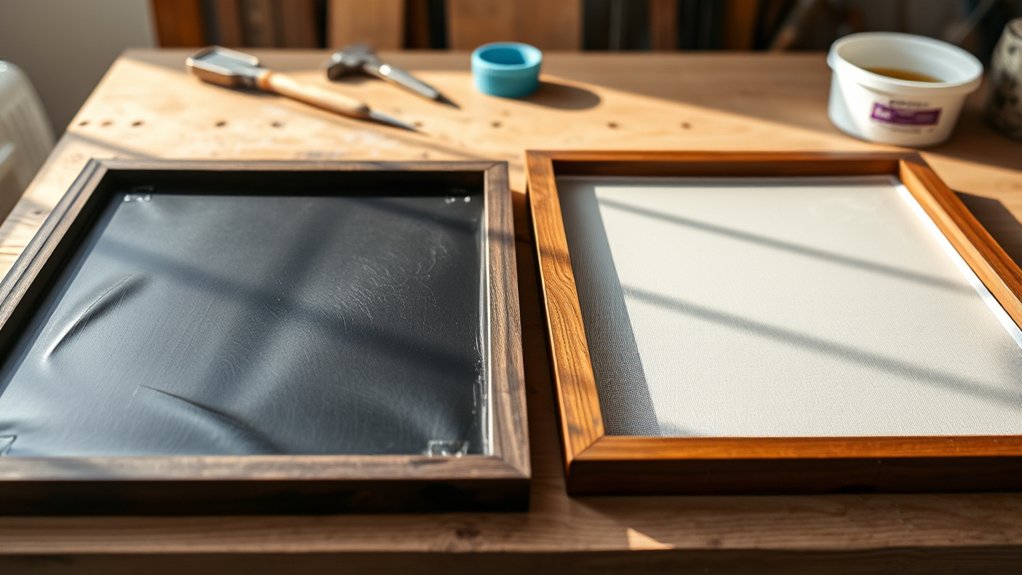
Although both vinyl and emulsion stencils serve to block ink during screen printing, they differ greatly in application, durability, and detail resolution. You’ll find vinyl advantages in its immediate use, as no drying time is needed, and it offers consistent, sharp edges ideal for simple, bold designs.
Vinyl also provides excellent durability, resisting wear through multiple runs. On the other hand, emulsion stencils require coating and exposure, which can be time-consuming and prone to inconsistencies.
Emulsion drawbacks include sensitivity to light and moisture, which can degrade stencil quality over time. While emulsion allows for finer detail, its fragility and setup complexity may hinder efficiency. Understanding these distinctions helps you select the right stencil type based on your production needs.
Which Designs Work Best With Vinyl vs Emulsion?
When deciding which stencil type suits your design, consider the complexity and detail involved. Vinyl works best with simpler designs featuring bold shapes and fewer intricate elements, as its cuttable material limits fine detail reproduction.
Emulsion excels with high design complexity, capturing subtle gradients and delicate lines that vinyl can’t achieve. Material compatibility also plays a key role—you’ll find vinyl ideal for designs on smooth surfaces where the stencil adheres cleanly, while emulsion suits a broader range of fabric textures due to its chemical bonding process.
If your design demands sharp edges and minimal detail, vinyl is efficient. For complex artwork requiring nuanced detail and precision, emulsion is the better choice. Understanding these factors guarantees your final print matches your design intent effectively.
Setup Time and Cost: Vinyl vs Emulsion Compared
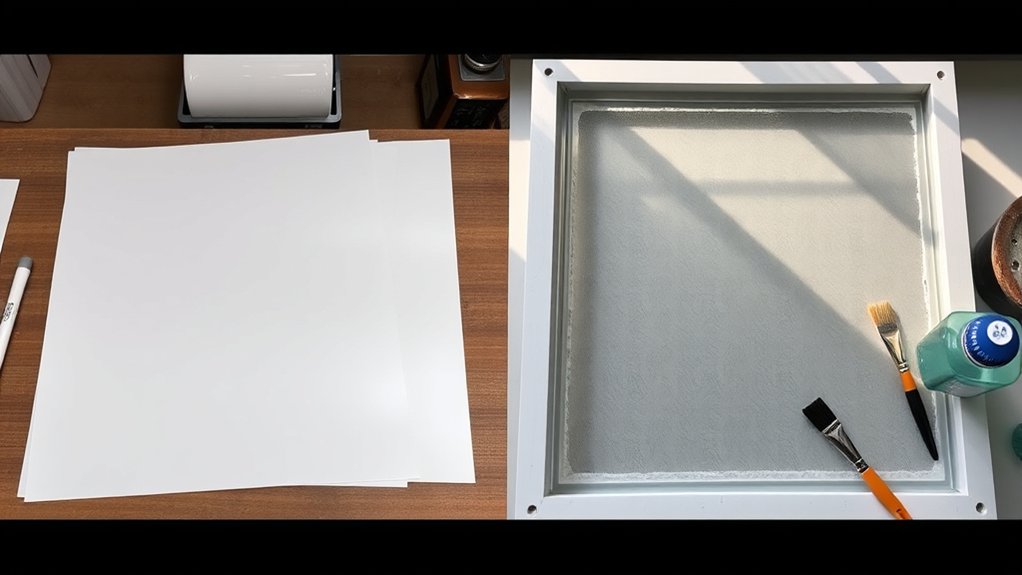
Since setup time and cost directly impact project efficiency, understanding how vinyl and emulsion compare is essential. Vinyl offers higher setup efficiency because you can quickly cut and apply stencils without lengthy drying or exposure times. This reduces downtime and allows you to start printing sooner.
However, vinyl’s material expenses tend to be higher due to the cost of adhesive films and cutting tools. Emulsion requires more preparation: coating the screen, drying, exposing, and washing out, which extends setup time but uses less costly materials.
If you prioritize rapid turnaround and consistent results, vinyl excels despite its upfront costs. Conversely, if minimizing material expenses is critical and you have time for detailed preparation, emulsion remains a cost-effective choice. Your decision hinges on balancing setup efficiency against material expenses for your specific project needs.
Which Stencil Lasts Longer: Vinyl or Emulsion?
How long your stencil lasts can considerably affect your project’s overall cost and workflow. When comparing vinyl and emulsion, durability hinges on both material properties and application techniques.
Vinyl stencils typically boast superior durability because they’re made from a solid, adhesive-backed film that resists wear during multiple print runs. Emulsion stencils, while flexible and capable of capturing fine detail, degrade faster due to chemical breakdown and repeated exposure to water and ink.
Your choice in application techniques also impacts stencil longevity; careful handling and proper curing extend emulsion life, whereas vinyl demands precise cutting and adherence to prevent lifting. Overall, vinyl offers a durability advantage in high-volume or repetitive tasks, but emulsion’s lifespan can suffice for shorter runs or intricate designs.
Understanding this durability comparison helps you plan effectively.
Choosing Between Vinyl and Emulsion Screen Printing for Your Project
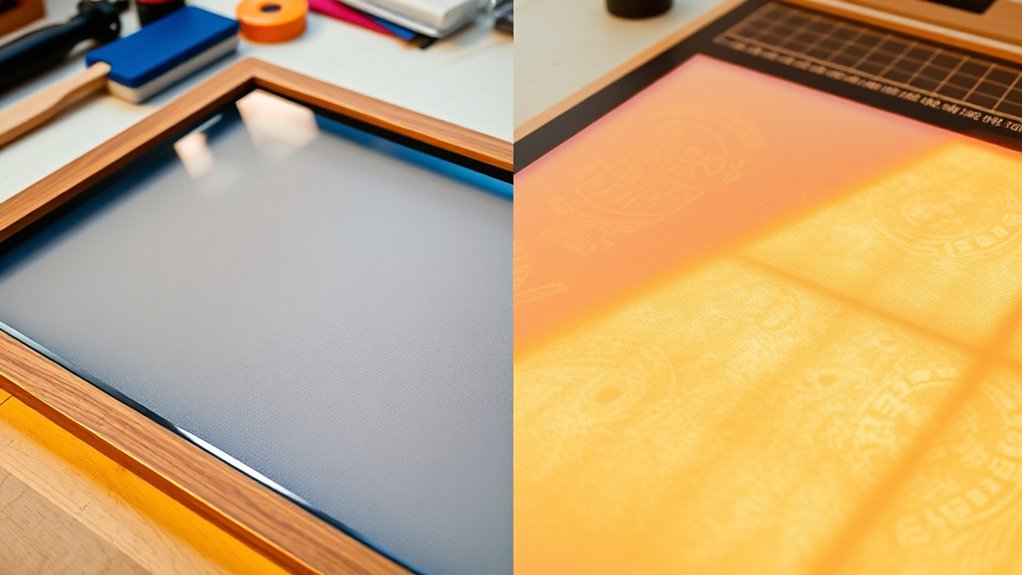
Why choose vinyl over emulsion, or vice versa, for your screen printing project? Your decision hinges on design complexity and material compatibility. Vinyl works best for simple, bold designs and is ideal on smooth surfaces, while emulsion handles intricate details and suits various materials.
| Factor | Vinyl | Emulsion |
|---|---|---|
| Design Complexity | Simple, bold shapes | Detailed, fine lines |
| Material Compatibility | Best on smooth, flat surfaces | Versatile on different textures |
| Durability | Reusable, less durable | Longer-lasting stencils |
Assess your project’s needs carefully; if you need sharp detail and adaptability, emulsion is your go-to. For straightforward designs on compatible materials, vinyl saves time and effort.
Frequently Asked Questions
Can Vinyl and Emulsion Be Combined in One Print?
Yes, you can combine vinyl layering and emulsion compatibility in one print. Just guarantee the vinyl adheres well to the emulsion surface, and carefully align layers to maintain print quality and durability throughout the process.
How Do Environmental Factors Affect Vinyl and Emulsion Durability?
You’ll find durability comparison depends on exposure; vinyl resists moisture and UV better, while emulsion degrades faster under sunlight and humidity.
Understanding environmental impact helps you choose materials that maintain print quality longer in specific conditions.
Are There Health Risks Associated With Vinyl or Emulsion Materials?
When it comes to health concerns, don’t throw caution to the wind. Both vinyl and emulsion materials can emit fumes. You should prioritize material safety by using proper ventilation and protective gear to minimize any risks.
What Cleaning Methods Are Best for Vinyl Vs Emulsion Screens?
You should use gentle cleaning supplies like mild soap and water for vinyl screens, ensuring careful screen maintenance.
For emulsion screens, employ specialized emulsion removers and pressure washers to effectively clean without damaging the stencil.
Can Beginners Easily Learn Both Vinyl and Emulsion Screen Printing?
You’ll sail smoothly through both methods; vinyl’s quick setup eases your learning curve, while emulsion demands patience.
Start with beginner tips: practice designs, master screen prep, and soon, you’ll print like a pro.
Conclusion
Choosing between vinyl and emulsion screen printing depends on your project’s needs—vinyl offers quick setup and durability, while emulsion excels with detailed, multi-color designs.
You might think emulsion is too complex or time-consuming, but with practice, it becomes manageable and opens up more creative possibilities.
Don’t let setup concerns hold you back; understanding each method’s strengths guarantees you pick the right stencil for professional, high-quality results every time.
Ultimately, mastering screen printing with vinyl vs emulsion ensures you achieve the best outcome for your specific project.