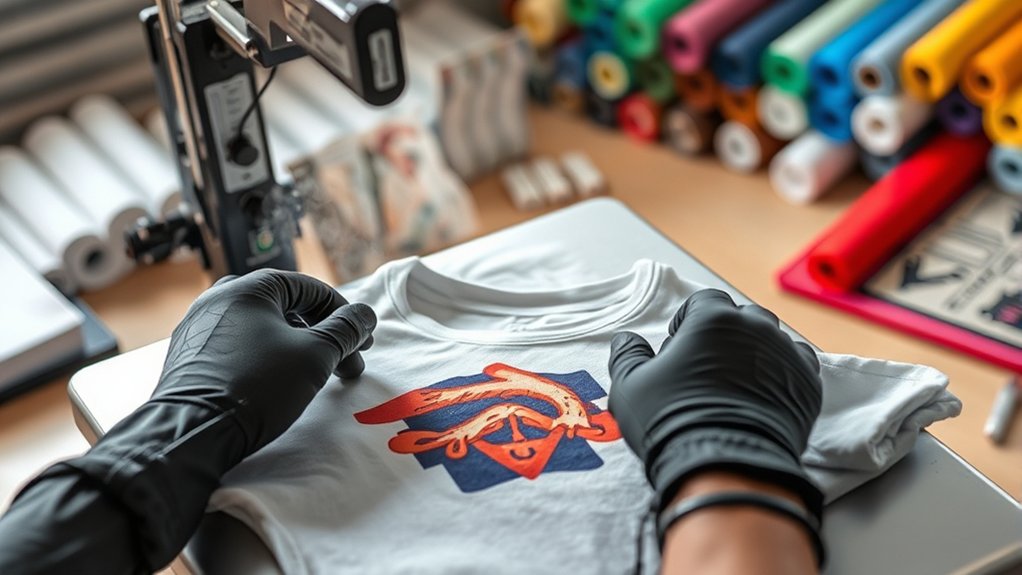

To do heat press effectively, start by selecting a quality machine with precise temperature and pressure controls.
Preparing your design in a high-resolution format is essential to ensure clarity. Choose compatible fabric and transfer material to achieve the best results.
Pre-press garments to remove moisture and wrinkles, which helps the design adhere better. Position the design carefully on the fabric before proceeding.
Set the correct temperature, pressure, and time based on the specific material guidelines.
Apply heat evenly using the press to ensure a sharp and lasting imprint. Always prioritize safety by wearing gloves and ensuring proper ventilation.
Mastering these basics leads to sharp, long-lasting results—explore further for expert tips and troubleshooting.
Key Takeaways
- Preheat the heat press machine to the recommended temperature for your transfer material and fabric type.
- Position the design and garment properly, ensuring the fabric is wrinkle-free and pre-pressed.
- Apply consistent pressure and set the timer according to the transfer medium’s specifications.
- Activate the heat press to bond the design, then carefully peel the transfer paper based on the transfer type (hot or cold peel).
- Allow the garment to cool as needed and inspect the transfer for quality and adhesion before use.
How Does Heat Pressing Work?
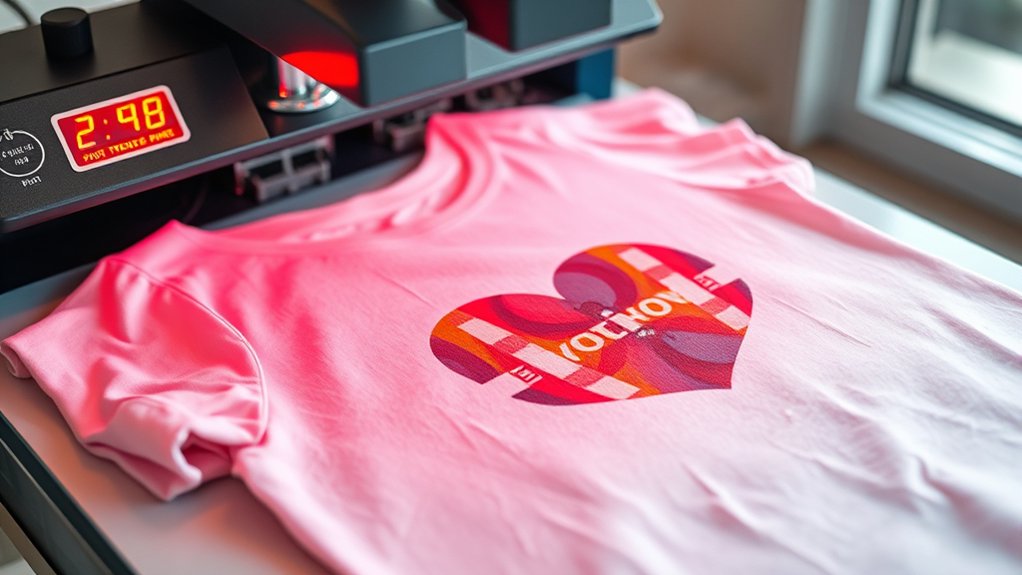
Although it may seem straightforward, heat pressing relies on precise control of temperature, pressure, and time to transfer designs onto materials effectively. You start by placing the design, usually printed on heat transfer paper or vinyl, onto the substrate, such as fabric.
The heat press machine then applies consistent heat and pressure to activate the adhesive on the transfer medium. This heat transfer process causes the design to bond permanently with the substrate fibers.
Pressure application is critical; insufficient pressure results in incomplete adhesion, while excessive pressure can damage the material or distort the design. You must calibrate the machine settings accurately to guarantee ideal temperature, pressure, and dwell time.
Proper pressure ensures perfect adhesion without damaging the material or design—calibration is key.
This methodical approach assures a durable, vibrant, and precise transfer every time.
How to Choose the Best Heat Press Machine
You’ll start by evaluating the main types of heat press machines: clamshell, swing-away, and draw-style. This will help you match your workflow needs.
Next, focus on key features like temperature accuracy, platen size, and pressure adjustment to guarantee consistent results.
Finally, balance these factors within your budget to select a machine that offers the best value and performance.
Types Of Heat Presses
Selecting the right heat press machine hinges on understanding the different types available and their specific functions. Two common designs are clamshell presses and swing away presses.
Clamshell presses operate by lifting the upper platen vertically, which allows for a compact footprint and faster operation. However, they provide limited workspace and less control over platen pressure.
Swing away presses feature a platen that pivots horizontally away from the lower platen, offering full access to the work surface. This design enhances safety and allows for even pressure distribution, making it ideal for thicker or uneven substrates.
When choosing, consider how each type’s mechanics affect your workflow, workspace, and the materials you plan to press. Understanding these distinctions guarantees you select a machine that matches your production needs efficiently.
Key Features To Consider
Choosing the best heat press machine requires evaluating key features that directly impact performance and suitability for your projects. Different heat press types offer unique benefits, so focus on essential heat press features like temperature control, platen size, and pressure adjustment.
These factors guarantee consistent transfers and accommodate various materials.
| Feature | Importance |
|---|---|
| Temperature Control | Precise heat settings for accuracy |
| Platen Size | Determines max printable area |
| Pressure Adjustment | Guarantees proper transfer pressure |
Selecting a machine with digital controls improves repeatability, while a suitable platen size matches your design dimensions. Pressure adjustment is critical for even transfers, especially on thicker substrates.
Budget And Price Range
After identifying the key features that match your project requirements, consider how much you’re willing to invest in a heat press machine. Establish clear budget constraints before diving into options, as prices vary widely based on size, type, and additional functionalities.
Perform a thorough price comparison across reputable brands and models to guarantee you’re getting the best value without sacrificing essential features. Remember, a lower price might mean limited durability or fewer capabilities, while a higher price generally reflects advanced technology and build quality.
Balance your budget constraints with the machine’s specifications to avoid overspending on unnecessary features or underspending on critical performance aspects. This methodical approach guarantees you select a heat press that meets your technical needs within your financial limits.
How to Prepare Designs and Materials
You’ll start by ensuring your design files are in the correct format, typically vector or high-resolution PNG, with appropriate color settings and mirrored if necessary.
Next, select materials compatible with heat pressing, focusing on fabric type, thickness, and temperature tolerance. Proper preparation here guarantees crisp transfers and prevents damage during the pressing process.
Design File Preparation
Before starting the heat press process, verify your design files are properly formatted and optimized for printing. Use graphic design software to create or adjust your artwork, guaranteeing the correct design file formats such as PNG, SVG, or AI are used.
Confirm resolution is set to at least 300 DPI for clear, sharp prints. Convert colors to CMYK or spot colors based on your printer’s requirements.
| Task | Recommended Format | Notes |
|---|---|---|
| Vector graphics | SVG, AI | Scales without quality loss |
| Raster images | PNG, TIFF | Use 300 DPI minimum |
| Color profiles | CMYK, Spot Colors | Align with printer specifications |
Following these steps guarantees your design files are print-ready, minimizing errors during the heat press process.
Material Selection Tips
When selecting materials for heat pressing, consider their heat tolerance, surface texture, and compatibility with your design type. Different fabric types respond uniquely to heat and pressure; natural fibers like cotton withstand higher temperatures, while synthetics like polyester require lower settings to prevent damage.
Evaluate the surface texture to guarantee smooth application; rough or textured fabrics may produce uneven transfers. Choose transfer papers compatible with your fabric and design: inkjet-compatible papers suit detailed, colorful images, while laser transfer papers work best for bold, simple designs.
Always test a small fabric swatch to verify adhesion and durability. By methodically matching fabric types with appropriate transfer papers and settings, you’ll achieve precise, long-lasting results without compromising material integrity.
How to Use a Heat Press Safely
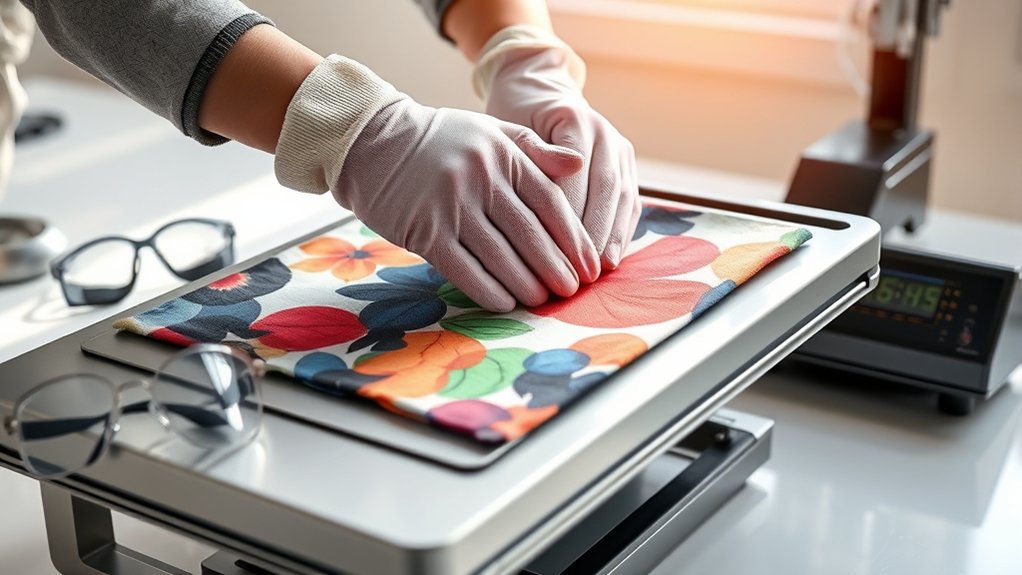
Although heat presses operate at high temperatures and apply significant pressure, following strict safety protocols minimizes the risk of injury and equipment damage. Prioritize heat press safety by wearing heat-resistant gloves and guaranteeing proper ventilation in your workspace to avoid fumes and overheating. Always keep the press area clear and never leave the machine unattended while in use.
| Safety Aspect | Best Practice |
|---|---|
| Protective Gear | Use heat-resistant gloves |
| Workspace | Guarantee proper ventilation |
| Machine Operation | Never leave unattended |
| Maintenance | Regularly inspect for damage |
Tips for Durable and Vibrant Heat Press Results
To achieve durable and vibrant heat press results, you must control key variables like temperature, pressure, and time with accuracy. Start by selecting the appropriate heat transfer techniques suited for your substrate and design complexity.
Master heat press success by precisely controlling temperature, pressure, and time for vibrant, lasting designs.
Consistently calibrate your heat press to maintain precise temperature settings, typically between 320°F and 375°F, depending on material. Apply firm, even pressure to guarantee complete adhesion without damaging the fabric.
Adjust dwell time carefully, often between 10 to 20 seconds, to optimize color fixation and durability. Utilize advanced color application methods such as layering or using high-quality inks to enhance vibrancy and longevity.
Always pre-press garments to remove moisture and wrinkles, improving transfer quality. By methodically controlling these parameters, you’ll achieve professional, long-lasting results with sharp, vivid designs.
Troubleshooting Common Heat Press Issues
If you encounter issues like uneven transfers, fading, or fabric scorching, you need to systematically identify and address the root causes. Start by inspecting for heat press malfunctions, such as uneven pressure or faulty heating elements, which often cause inconsistent imprint quality.
Check the temperature settings against a calibrated thermometer to detect temperature inconsistencies, a common source of fading or scorching. Confirm the platen is clean and properly aligned to maintain uniform heat distribution.
Verify the timer and pressure settings match your material’s specifications. If problems persist, test with different substrates or transfer materials to isolate the issue.
Regular maintenance and calibration are critical for preventing malfunctions. By methodically diagnosing each variable, you’ll restore ideal performance and achieve consistent, vibrant heat press results.
Frequently Asked Questions
Can Heat Pressing Be Used on Metal or Glass Surfaces?
You can use heat transfer on metal and glass, but you must guarantee surface compatibility. Properly prepare and select suitable transfer materials to prevent damage or poor adhesion.
Consider heat sensitivity and texture for effective results.
What Types of Inks Work Best With Heat Pressing?
You should use sublimation inks paired with compatible transfer papers for ideal heat pressing results. These inks bond effectively at high temperatures, ensuring vibrant, durable prints on polyester fabrics and coated substrates.
How Long Does a Heat Press Typically Last?
A heat press lifespan typically ranges from 5 to 10 years. You’ll extend it by following maintenance tips like regularly cleaning platens, checking electrical components, and replacing worn parts promptly for ideal, consistent performance.
Is Heat Pressing Eco-Friendly Compared to Other Methods?
Like choosing the right tool in Da Vinci’s workshop, you’ll find heat pressing eco-friendly when using sustainable materials and managing energy consumption efficiently.
It minimizes waste and emissions compared to traditional printing methods.
Can Heat Pressing Be Automated for Large-Scale Production?
Yes, you can automate heat pressing with specialized machinery, enhancing production efficiency. Automated processes guarantee consistent pressure, temperature, and timing, reducing errors and increasing throughput.
This makes large-scale production both feasible and cost-effective for your business operations.
Conclusion
By mastering heat pressing, you tap into a technique that boosts productivity—did you know that heat press machines can increase transfer efficiency by up to 40% compared to traditional methods? With careful machine selection, precise material preparation, and strict safety protocols, you’ll achieve vibrant, long-lasting results.
Remember, troubleshooting common issues swiftly keeps your workflow smooth. Follow these methodical steps, and you’ll consistently produce professional-quality heat press projects with accuracy and reliability.
In conclusion, mastering heat pressing not only enhances the quality of your work but also streamlines your production process for the best results.