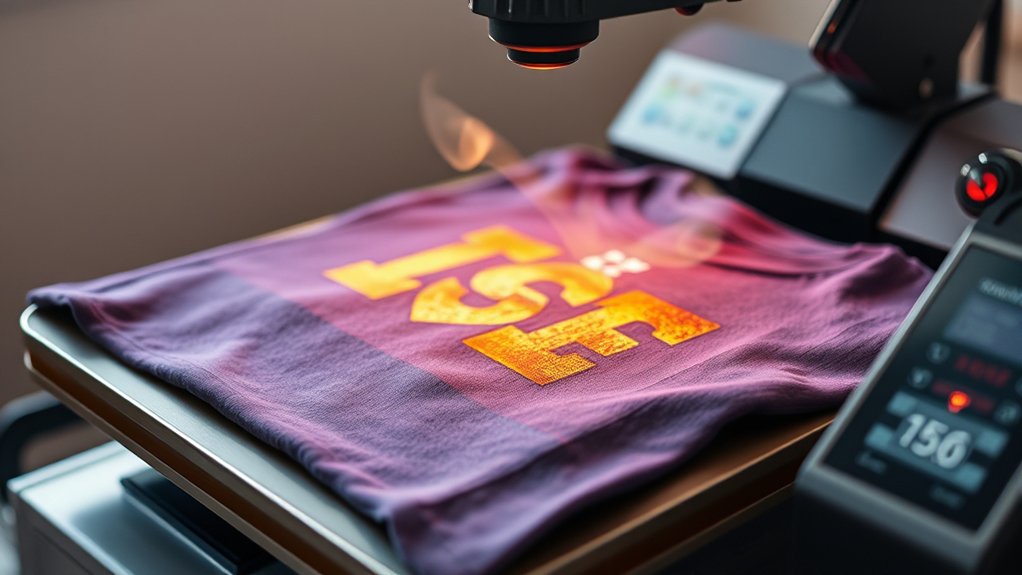

You use a heat press by applying controlled heat and pressure to bond designs onto materials like fabric or vinyl.
Heat presses work by softening adhesives or inks through heat, which increases molecular activity. Meanwhile, the pressure ensures close contact for durable adhesion.
Proper temperature, time, and pressure settings depend on your material to prevent damage and guarantee crisp transfers.
Adjusting these variables precisely is essential for quality results. Understanding different machine types and troubleshooting methods will also enhance your heat press efficiency.
Key Takeaways
- Heat presses use controlled heat and pressure to transfer designs onto materials like fabric or vinyl.
- Heat softens adhesives or inks, allowing them to bond securely with the substrate.
- Pressure ensures close contact between the transfer material and the surface for effective adhesion.
- Temperature, pressure, and dwell time are precisely controlled to optimize transfer quality.
- Different heat press types, like swing away and clamshell, affect usability and transfer efficiency.
Types of Heat Press Machines
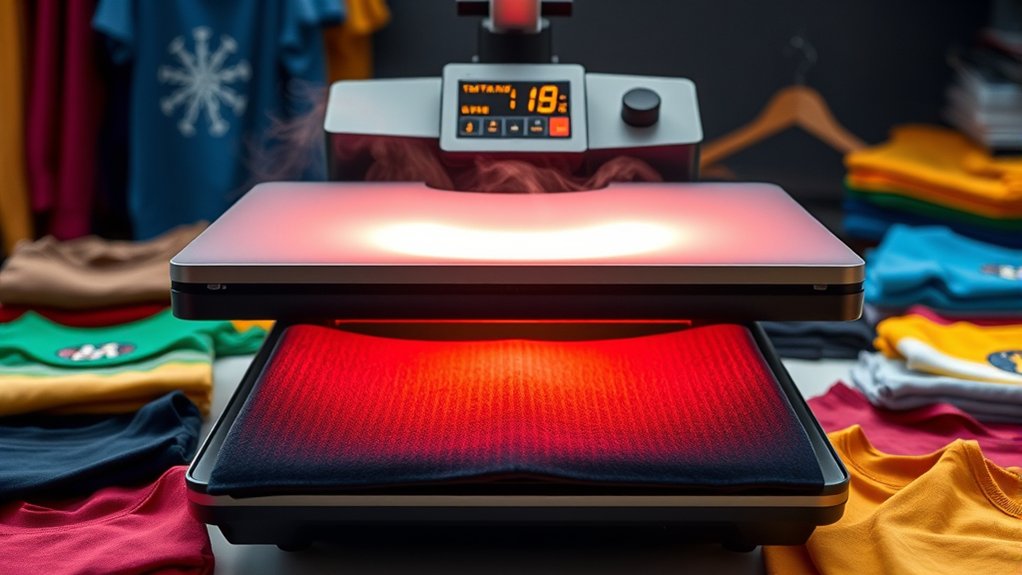
Heat press machines come in several distinct types, each designed to meet specific application needs and operational preferences. You’ll primarily encounter two main categories: swing away presses and clamshell presses.
Swing away presses allow you to pivot the upper platen away from the lower platen, providing unobstructed access to the work surface. This enhances safety and precision during material placement. Clamshell presses operate by lifting the upper platen vertically, then lowering it onto the substrate, offering a compact footprint and faster operation but limited workspace visibility.
Understanding these differences helps you select the right press based on workspace constraints, production speed, and material handling preferences. Both types deliver controlled heat and pressure, but their mechanical designs impact usability and efficiency in various heat transfer applications.
Using a Heat Press: Step-by-Step Guide
Mastering the use of a heat press involves following a series of precise steps to guarantee consistent and high-quality transfers. First, you prepare the substrate and design, ensuring proper alignment.
Next, set the heat press to the required temperature and time based on your transfer technique. Position the transfer material carefully, then apply consistent heat application and pressure.
After the cycle completes, remove the substrate and peel the transfer according to instructions.
| Step | Action | Key Focus |
|---|---|---|
| 1 | Prepare materials | Alignment, cleanliness |
| 2 | Set temperature/time | Accuracy, consistency |
| 3 | Position transfer | Precision placement |
| 4 | Apply heat & pressure | Even heat application |
Following these steps optimizes transfer quality and durability.
Selecting the Right Heat Settings for Your Material
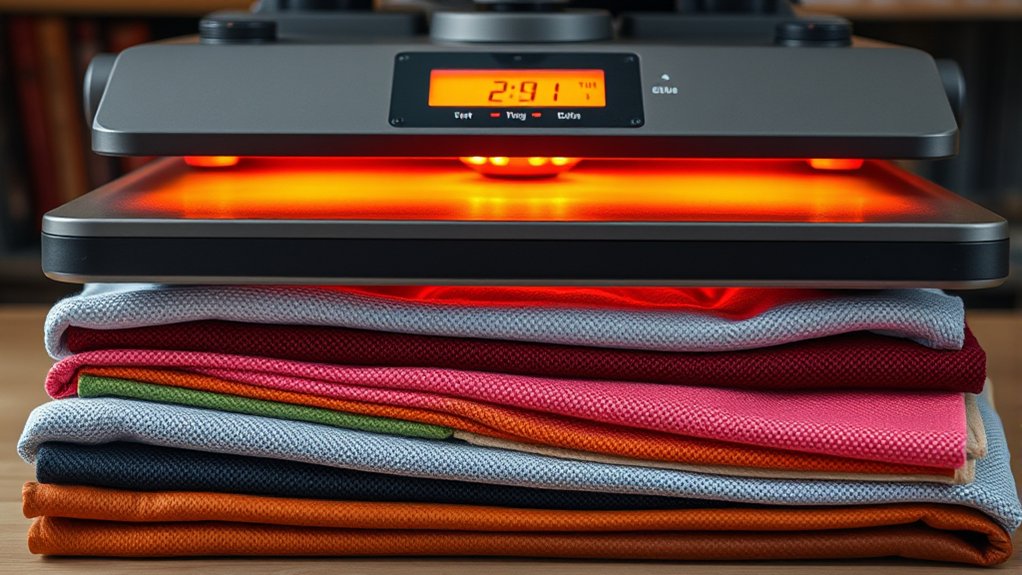
Once you’ve set up the process and aligned your materials correctly, the next step is to determine the ideal temperature and time settings specific to your substrate and transfer medium. Selecting the right heat settings requires understanding material compatibility, as different fabrics and transfer types respond uniquely to heat and pressure.
For example, polyester demands lower temperatures than cotton to avoid scorching, while vinyl transfers often require higher heat for proper adhesion. Consult manufacturer guidelines for baseline parameters, then conduct small test presses to fine-tune temperature and dwell time. Precision here prevents material damage and guarantees optimal transfer durability.
How Heat Presses Transfer Designs With Heat and Pressure
When you apply a heat press to your design and substrate, the combined effect of controlled temperature and pressure activates adhesives or inks, causing them to bond securely. The heat application softens the adhesive or ink components, increasing their molecular mobility.
Simultaneously, the applied pressure guarantees intimate contact between the design and the substrate, facilitating effective material interlocking at the micro-level. This synergy is critical for a durable design transfer, preventing peeling or fading.
Precise control over dwell time, temperature, and pressure optimizes the transfer efficiency, tailored to the specific substrate and design materials. By understanding these parameters, you maintain consistent, high-quality results in your heat press operations, maximizing adhesion strength and design fidelity through scientifically balanced heat and pressure application.
Fixing Common Heat Press Problems
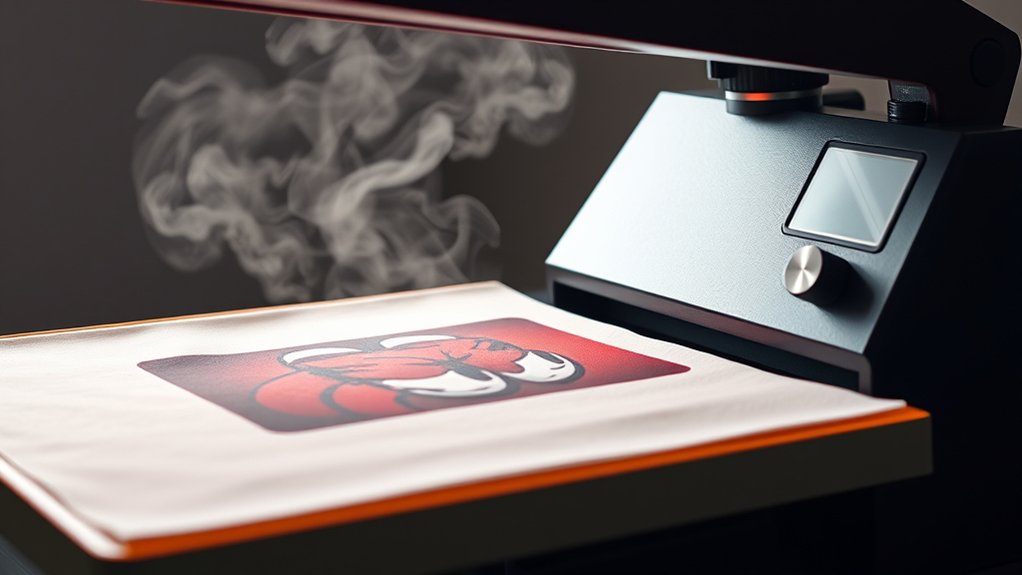
Understanding the interplay of heat, pressure, and timing helps you optimize the transfer process, but encountering issues is common in heat press operations. To fix common issues efficiently, apply these troubleshooting tips:
- Uneven Pressure: Adjust the pressure knob to guarantee uniform contact. Uneven pressure causes inconsistent transfers, so recalibrate regularly.
- Incomplete Transfers: Verify that temperature and time settings match the material’s specifications. Insufficient heat or duration leads to poor adhesion.
- Heat Plate Malfunction: Use a heat gun or infrared thermometer to check for hot or cold spots. Replace or repair faulty heating elements immediately.
Frequently Asked Questions
Can Heat Presses Be Used for Materials Other Than Fabric?
Yes, you can use heat presses on plastic materials and ceramic items by adjusting temperature and pressure settings precisely. This versatility allows you to apply designs effectively beyond fabric, ensuring ideal adhesion and durability on various substrates.
How Energy-Efficient Are Heat Press Machines?
You know what they say, “A stitch in time saves nine.” Heat press machines have low energy consumption and high efficiency ratings, making them energy-efficient options in textile production.
They help you save power while maintaining consistent performance.
What Safety Precautions Should I Take When Using a Heat Press?
You should always wear safety gear like heat-resistant gloves and protective eyewear to prevent burns.
Make certain the workspace is clear, and use caution when handling the heat press to avoid accidental contact with hot surfaces.
Can I Use a Heat Press for Commercial Production?
Yes, you can use a heat press for commercial production, benefiting from heat press advantages like speed, consistency, and scalability. However, consider heat press limitations such as size constraints and material compatibility to optimize your output effectively.
How Long Do Heat Press Machines Typically Last?
You’ll find heat press machines typically last 5-10 years, depending on lifespan factors like usage frequency and build quality.
With proper maintenance tips such as regular cleaning, calibration, and timely part replacement, you can greatly extend their operational life.
Conclusion
So, you’ve learned how heat presses rely on precise heat and pressure to transfer designs—surprisingly simple yet technically exact. Ironically, while these machines seem straightforward, mastering the right temperature, time, and pressure settings takes more than guesswork.
If you think you can just “wing it,” expect inconsistent results. But now, equipped with this knowledge, you’re set to avoid rookie mistakes and achieve professional-quality transfers every time.
Understanding how heat presses work is key to getting the best outcome from your projects.