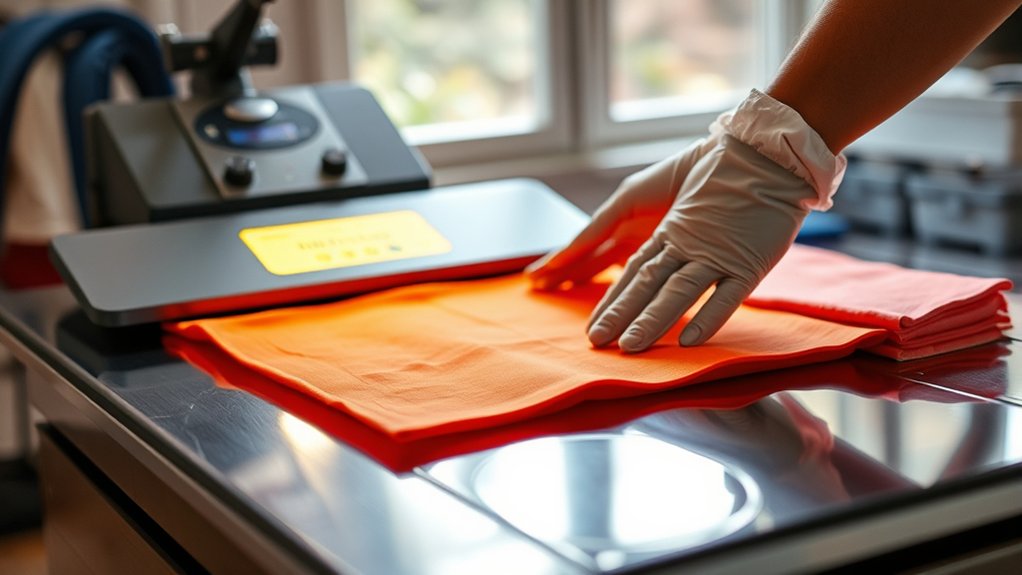

To heat press effectively, start by choosing a machine suited to your project size and material, such as a clamshell or swing-away press.
Preparing your fabric is essential—clean it and pre-press to remove any moisture.
Set the precise temperature, pressure, and time according to your transfer type, always following the manufacturer’s guidelines.
Position your design carefully on the fabric and secure it in place.
Then, apply firm, even heat using the press.
Adjust settings as needed to avoid defects.
Mastering these steps guarantees crisp, durable transfers—and a deeper understanding can improve your results further.
Key Takeaways
- Select the appropriate heat press type and platen size based on your project and fabric requirements.
- Prepare fabric by cleaning, pre-pressing to remove wrinkles, and positioning the design accurately.
- Set the temperature, pressure, and time according to the transfer material and fabric type guidelines.
- Place the garment and design on the platen, close the press evenly, and start the timer for transfer.
- Troubleshoot issues like uneven pressure, ghosting, or scorch marks by adjusting settings and using protective sheets.
How to Pick the Right Heat Press Machine and Materials
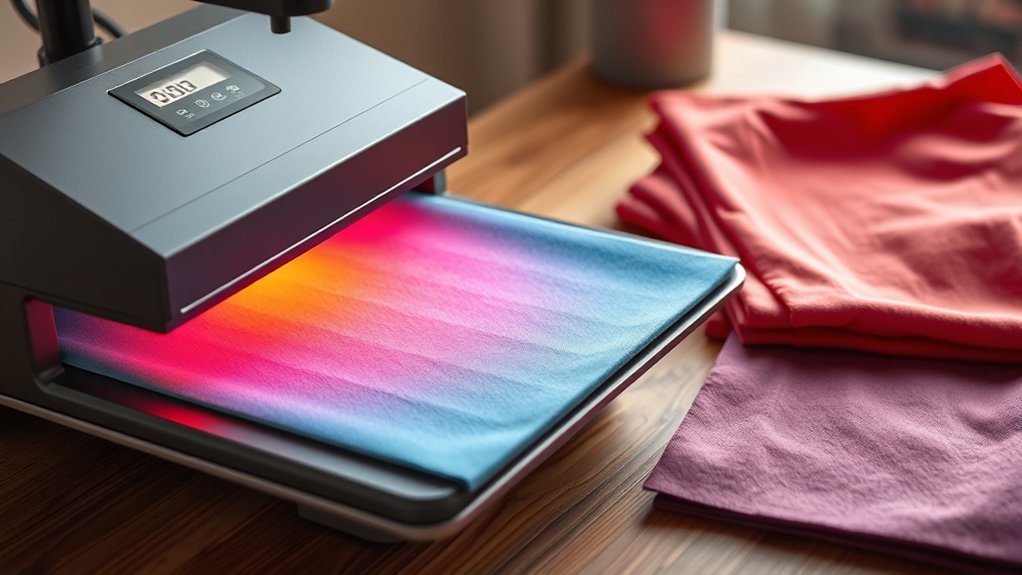
Before you start heat pressing, you need to choose a machine that matches your project’s scale and material types. Consider the various heat press types: clamshell, swing-away, and draw style, each offering different pressure and accessibility.
Clamshell presses are compact and suitable for small projects, while swing-away models provide more workspace and even pressure distribution, ideal for thicker materials. Next, evaluate material compatibility; verify the press’s temperature range and pressure settings align with your fabric and transfer materials.
For example, delicate fabrics require lower heat and pressure, whereas heavy-duty textiles need higher settings. Verify the platen size fits your design dimensions to avoid trimming or repositioning. Selecting the right heat press type with proper material compatibility guarantees efficient, quality transfers and prevents damage to your materials.
Prepare Your Design and Fabric for Heat Pressing
Once you’ve selected the appropriate heat press machine and materials, focus on preparing your design and fabric to guarantee peak transfer quality. Begin with fabric selection: choose a material compatible with your transfer type, typically cotton or polyester blends, making sure it’s clean and wrinkle-free.
Pre-press the fabric for 5-10 seconds to remove moisture and smooth out creases. Next, position your design precisely on the fabric, considering design placement for maximum visual appeal and alignment. Use heat-resistant tape if needed to secure the design and prevent shifting during pressing.
Confirm the design is facing the correct direction and fully adheres to the fabric surface. Proper preparation at this stage prevents misalignment and guarantees a crisp, durable transfer in your heat press project.
Set Heat Press Temperature, Pressure, and Time Correctly
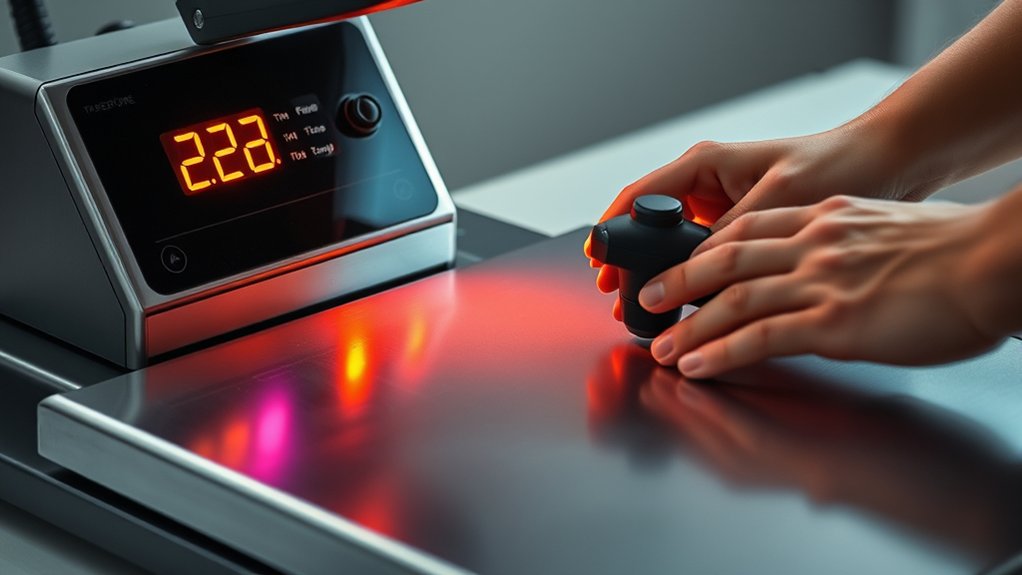
Setting the correct temperature, pressure, and time on your heat press is essential for achieving ideal transfer results. You need to calibrate these parameters according to the material and transfer type for peak adhesion and durability.
Consult the transfer or fabric manufacturer’s guidelines for recommended temperature settings. Adjust pressure using the heat press’s pressure knob or lever; too much pressure can damage fabric, too little may cause poor transfer.
Set the timer precisely. Overexposure can scorch materials, and underexposure leads to incomplete bonding. Perform a test press on a sample to verify your settings before proceeding with the final design.
How to Heat Press Your Design Step-by-Step
With your temperature, pressure, and time dialed in correctly, you can proceed to apply your design using the heat press. First, preheat the press to the set temperature. Position your garment on the platen, ensuring it’s smooth and wrinkle-free.
Next, accurately align your design using proper design placement techniques, center it or follow your template precisely. Place the heat transfer paper or vinyl on the garment, protective sheet facing up if necessary.
Close the press, applying the predetermined pressure evenly across the surface. Start the timer and maintain consistent pressure throughout the cycle. Once the time elapses, carefully lift the press and peel the transfer paper according to the material’s recommended method.
These heat transfer techniques guarantee a durable, crisp design application every time.
Troubleshoot Common Heat Press Issues
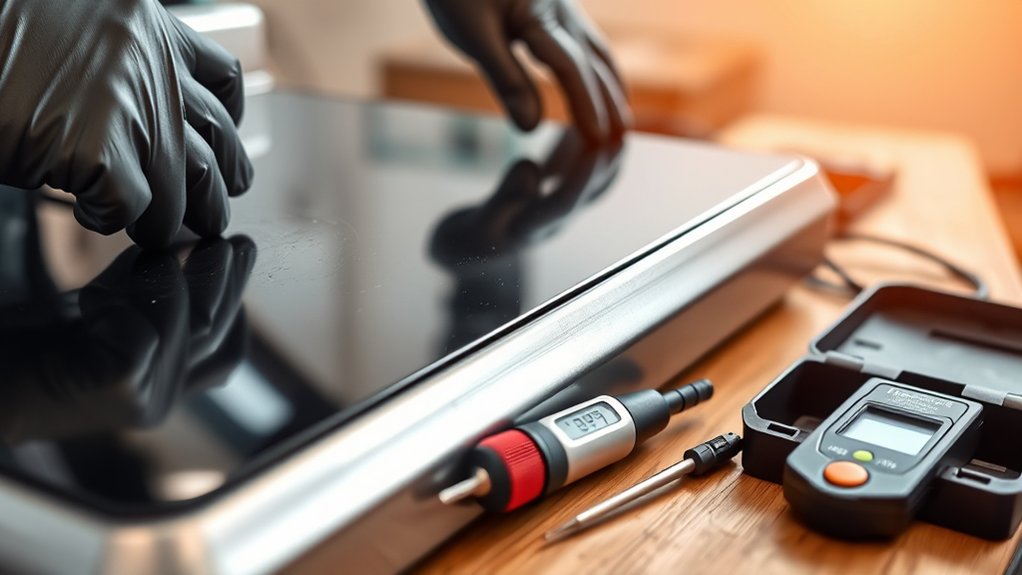
Although heat pressing is a straightforward process, you may encounter issues like uneven transfers, ghosting, or scorch marks. Effective heat press troubleshooting requires identifying these common issues and addressing them systematically. Here’s what you should check:
Uneven pressure: Adjust the press’s pressure settings to guarantee consistent contact across the design area.
Ghosting (double images): Reduce peel time or use a firm peel to prevent image shifting.
Scorch marks: Lower the temperature or use a protective cover sheet to avoid fabric damage.
Incomplete transfer: Verify correct temperature, time, and pressure settings per material and transfer type.
Frequently Asked Questions
Can I Use a Heat Press for Materials Other Than Fabric?
Yes, you can use a heat press for vinyl applications and paper transfers on materials beyond fabric. Adjust temperature, pressure, and time settings precisely to suit different substrates. This ensures proper adhesion and prevents damage during the process.
How Do I Clean and Maintain My Heat Press Machine?
You clean your heat press using a soft cloth and mild cleaner; avoid abrasives.
For maintenance, regularly inspect electrical components, lubricate moving parts, and calibrate temperature controls to guarantee peak performance and prolong machine lifespan.
What Safety Precautions Should I Take When Using a Heat Press?
You should prioritize heat press safety by wearing personal protective equipment like heat-resistant gloves and safety glasses, ensuring proper ventilation, and keeping the workspace clear. Never touch the heated platen during operation to avoid burns and injuries.
Can Heat Pressing Be Used for 3D Objects or Irregular Surfaces?
You can heat press 3D printing objects and irregular shapes by using specialized molds or adjustable platens that conform closely to surfaces. This ensures even pressure and heat distribution for flawless transfers on complex, uneven designs.
How Long Does a Heat Press Machine Typically Last?
You can expect a heat press lifespan of 5 to 10 years, depending on machine durability and usage frequency. Regular maintenance guarantees peak performance, helping you maximize your machine’s operational life and avoid premature wear or failure.
Conclusion
Now that you’ve mastered how to heat press, remember: like a skilled blacksmith shaping metal, your precision with temperature, pressure, and timing forges the perfect transfer.
By choosing the right machine and prepping your materials correctly, you avoid common pitfalls and guarantee lasting, professional results. Keep troubleshooting smartly, and your designs will come out sharp every time.
This careful technique turns effort into art, proving that mastering how to heat press ensures your creations look their very best.