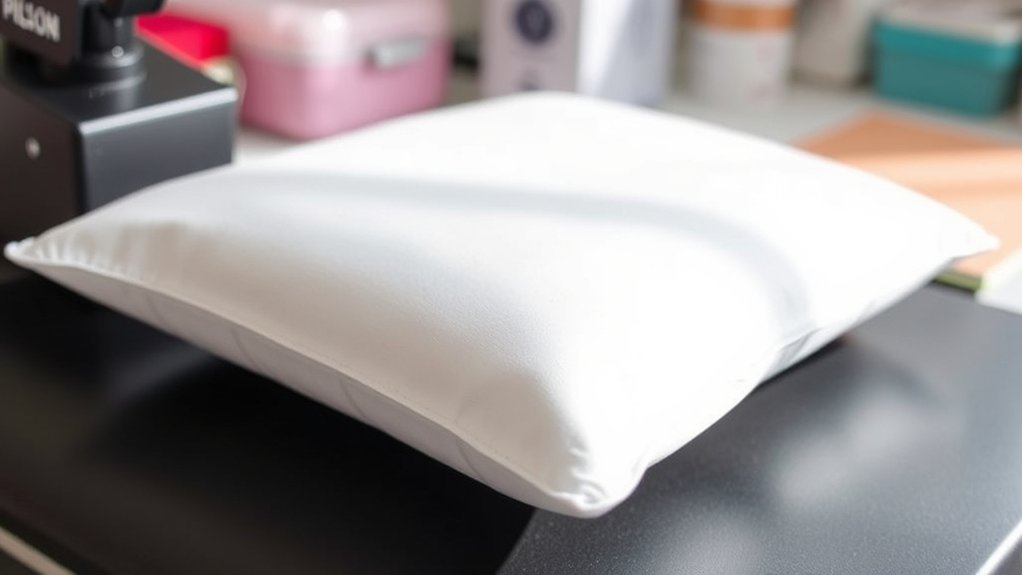

A heat press pillow is your go-to tool for getting even heat and pressure on curved or uneven surfaces during transfers. This essential accessory compresses to fill gaps and contours, ensuring consistent contact.
Made from heat-resistant foam or silicone, it can handle high temperatures without scorching your materials. By cushioning delicate fabrics, it keeps transfers sharp and vibrant without wrinkles or distortions.
Picking the right pillow size and material is key for flawless results.
Keep exploring to reveal tips on using and caring for these essential accessories.
Key Takeaways
- A heat press pillow is an accessory that ensures even heat distribution on curved or irregular surfaces during heat pressing.
- It compresses to fill gaps and contours, providing uniform pressure for better transfer results.
- Made from heat-resistant materials like foam or silicone, it withstands high temperatures during pressing.
- Heat press pillows prevent fabric wrinkles and distortions by cushioning delicate materials.
- They improve transfer quality by maintaining steady contact and minimizing imperfections or re-pressing.
What’s a Heat Press Pillow and How Does It Work?
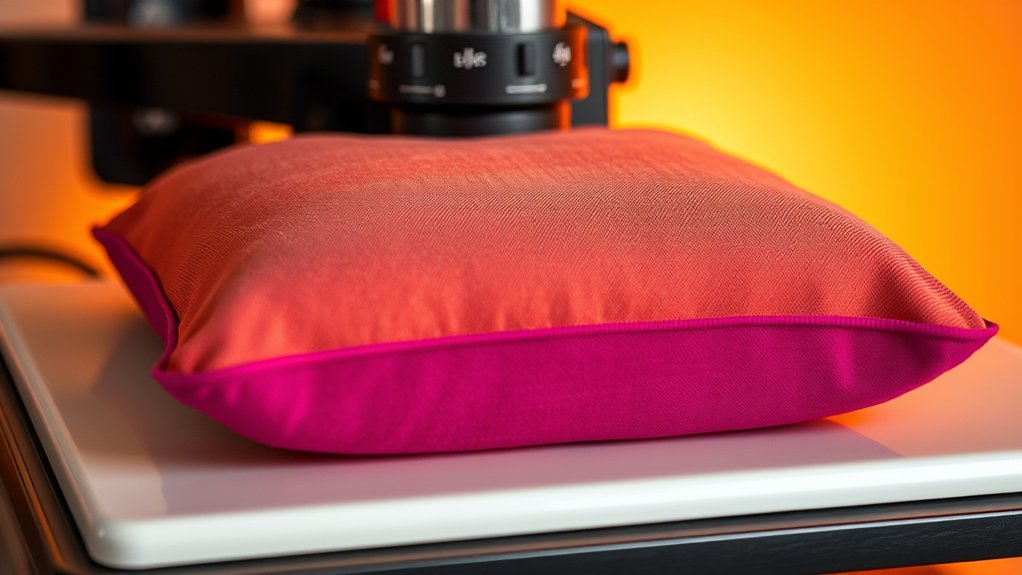
A heat press pillow is a specialized accessory designed to guarantee even heat distribution when using a heat press machine, especially on irregular or curved surfaces. When you place it beneath your substrate, this pillow compresses gently, filling gaps and contours that would otherwise cause uneven pressure.
Its heat-resistant material withstands high temperatures while its flexible core adapts to shapes like sleeves, bags, or hats. The heat press pillow benefits include preventing scorching, minimizing ghosting, and enhancing transfer clarity by ensuring consistent contact.
You’ll find that it’s essential for crisp, professional results on challenging surfaces where a flat platen falls short. By integrating a heat press pillow into your workflow, you maximize the efficiency and quality of every heat transfer job.
How Heat Press Pillows Improve Your Transfers
You’ll notice your transfers come out sharper and more vibrant when using a heat press pillow, thanks to its ability to evenly distribute pressure across uneven surfaces. It cushions delicate fabrics, preventing unwanted wrinkles and distortions that can ruin your design.
Enhancing Transfer Quality
Because uneven surfaces can cause inconsistent heat and pressure during transfers, using a heat press pillow guarantees your designs come out crisp and vibrant. The pillow’s contouring material fills gaps beneath your substrate, ensuring even pressure distribution across the entire transfer area.
This uniform pressure is essential for achieving best transfer consistency, preventing weak spots or faded sections in your design. By adapting to irregular textures or seams, the pillow maintains steady contact between the heat platen and your item, enhancing heat penetration where needed.
As a result, your transfer inks or vinyl adhere more reliably, producing sharp, durable results every time. Incorporating a heat press pillow into your setup transforms uneven surfaces into perfectly balanced platforms, elevating the overall quality and professionalism of your heat press projects.
Preventing Material Wrinkles
When transferring designs onto fabric, wrinkles and creases can easily distort the final image, compromising its clarity and durability. A heat press pillow acts as a flexible cushion beneath your garment, conforming to its contours and smoothing out uneven surfaces.
This targeted support guarantees wrinkle reduction by evenly distributing pressure and heat, preventing unwanted fabric folds. By improving material compatibility, the pillow adapts to various textiles, from thick cotton to delicate polyester blends, enhancing transfer adherence without damaging the fabric.
You’ll find that this precision tool minimizes transfer imperfections caused by fabric bunching, resulting in crisp, consistent prints every time. Using a heat press pillow not only safeguards your design’s integrity but also streamlines your workflow by reducing the need for re-pressing due to wrinkles or misalignment.
Types of Heat Press Pillows and When to Use Them
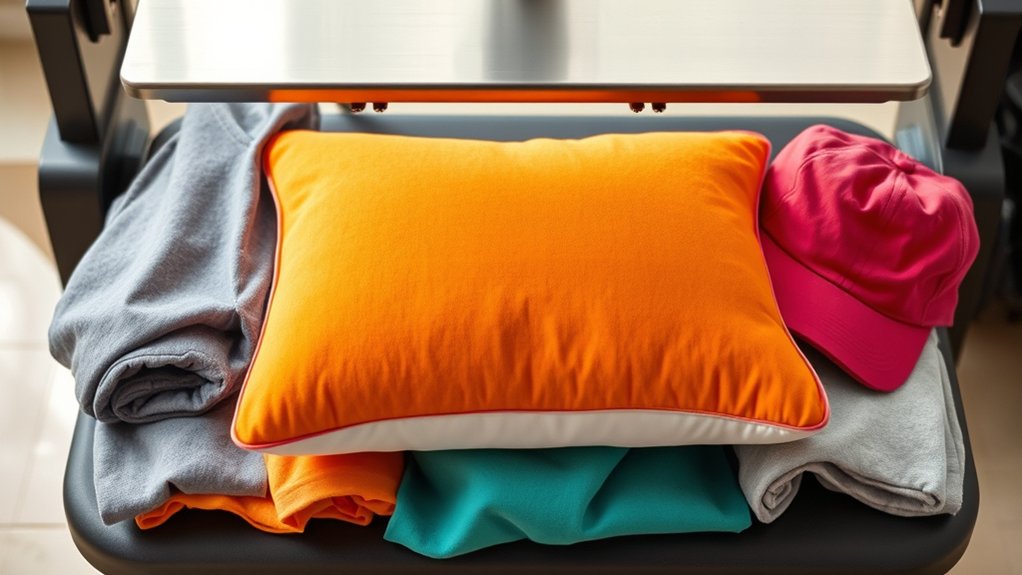
You’ll encounter foam and silicone heat press pillows, each designed to tackle different fabric challenges with precision. Foam pillows compress easily, making them ideal for pressing uneven surfaces like zippers or buttons, while silicone pillows provide firm, heat-resistant support for more delicate or intricate transfers.
Knowing when to switch between these types guarantees your designs come out flawless every time.
Foam Pillows
Although foam pillows might seem straightforward, they play a critical role in heat pressing by providing consistent pressure and support for curved or irregular surfaces. The foam density directly impacts pillow durability and guarantees even heat distribution, preventing scorching or under-pressing.
When selecting a foam pillow, consider its compression resistance to maintain long-term performance.
| Foam Pillow Type | Best Use Case |
|---|---|
| Low-Density Foam | Soft, delicate fabrics |
| Medium-Density Foam | General-purpose pressing |
| High-Density Foam | Thick, textured materials |
| Memory Foam | Irregular or highly curved items |
Choosing the right foam density optimizes your heat press results, balancing durability with precise pressure application.
Silicone Pillows
Foam pillows offer reliable support for many pressing tasks, but silicone pillows bring unique advantages that cater to specific heat press challenges. Thanks to their silicone durability, these pillows withstand high temperatures and repeated use without deforming or breaking down.
The silicone benefits don’t stop there. They provide superior heat distribution and resist sticking, which protects delicate materials during pressing.
Here are three key features of silicone pillows:
- Heat resistance: Maintain shape and performance under intense heat cycles.
- Non-stick surface: Prevent transfer of adhesives or ink, ensuring clean results.
- Flexibility and cushioning: Adapt to uneven surfaces, delivering even pressure across complex contours.
When you need precision and longevity, silicone pillows are a reliable choice in your heat press toolkit.
When To Use
Because each heat press pillow type handles pressure and temperature differently, knowing when to use them guarantees ideal results and preserves your materials. For delicate fabrics or uneven surfaces, a silicone heat press pillow provides consistent heat distribution and cushioning without risking scorch marks.
When working on thick or multi-layered project types, like hoodies or bags, a foam pillow absorbs excess pressure, ensuring even imprinting without damaging seams. If your project involves intricate designs on hard-to-press areas, such as zippers or buttons, a smaller, firmer pillow gives targeted support, preventing print distortion.
Choosing the Right Heat Press Pillow for Your Project
Selecting the right heat press pillow can make all the difference in achieving flawless transfers on your project. You need to take into account pillow size and material thickness carefully to guarantee even pressure and avoid scorching or incomplete transfers.
- Match Pillow Size to Your Design: Choose a pillow size slightly larger than your design area to provide uniform support without excess pressure.
- Assess Material Thickness: Thicker materials require a higher-profile pillow to fill gaps and maintain even heat distribution.
- Material Compatibility: Opt for pillows made with heat-resistant, compressible materials like silicone or foam to adapt to fabric texture and thickness.
How to Use and Care for Your Heat Press Pillow
When you place your heat press pillow correctly beneath your garment, you assure consistent pressure and prevent fabric wrinkles or scorching during the transfer process. To maximize efficiency, position the pillow so it fills gaps under seams or zippers, assuring even heat distribution.
Correctly positioning your heat press pillow ensures even pressure and prevents fabric wrinkles or scorching during transfers.
Use precise usage techniques by selecting the pillow thickness that best complements your fabric type and project requirements. After each session, allow the pillow to cool completely before storing it flat to maintain its shape.
For care tips, avoid direct washing; instead, spot-clean with a damp cloth and mild detergent to preserve the foam’s integrity. Regularly inspect for wear or compression, as a compromised pillow can affect transfer quality.
Following these steps assures your heat press pillow remains a reliable tool for flawless heat transfers.
Troubleshooting Common Heat Press Pillow Problems
Even with proper placement and care, you might encounter issues that disrupt your heat press pillow’s performance. Knowing effective troubleshooting tips can save you time and materials. Here are three common problems and how to address them:
1. Uneven Pressure Distribution
If your transfers show inconsistent imprints, reposition the pillow to guarantee it fills gaps evenly. Adjust the heat press pressure settings for uniform contact.
2. Pillow Deformation or Leakage
Check for tears or punctures causing air or stuffing loss. Replace the pillow if damage affects the pressing surface, as compromised pillows lead to poor results.
3. Heat Damage or Burning
Avoid excessive temperatures or prolonged pressing times, which degrade the pillow’s material. Calibrate your heat press and adhere strictly to recommended settings.
These troubleshooting tips help maintain consistent, high-quality heat press outcomes with your pillow.
Frequently Asked Questions
Can Heat Press Pillows Be Used With All Heat Press Machines?
You can use heat press pillows with most machines, but heat press versatility depends on pillow types and your press’s size. Match pillow thickness and material to your machine for precise pressure and ideal results every time.
Are Heat Press Pillows Safe for Delicate Fabrics?
Yes, heat press pillows are safe for delicate fabrics because they guarantee even heat distribution and provide fabric protection by cushioning pressure points. This prevents damage and allows you to achieve precise, professional results without compromising your garment’s integrity.
How Long Do Heat Press Pillows Typically Last?
Heat press pillows typically last several years, but their durability factors include material quality and usage frequency.
You’ll extend lifespan by following maintenance tips like regular cleaning and avoiding overheating during presses.
Can Heat Press Pillows Be Customized or Resized?
You can customize heat press pillows using various customization options like different foam densities or cover materials. Resizing techniques involve cutting or layering foam to fit your press, ensuring ideal heat distribution and pressure control.
Do Heat Press Pillows Affect the Temperature Settings Needed?
Like a maestro tuning an orchestra, you’ll need temperature adjustments when using heat press pillows. Their cushioning affects heat transfer efficiency, ensuring your design adheres perfectly without scorching or under-pressing the fabric’s surface.
Conclusion
Now that you know how a heat press pillow enhances your transfers by evenly distributing pressure and preventing scorching, you’re ready to elevate your craft. Did you know that using a heat press pillow can improve transfer durability by up to 30%? Choosing the right type and maintaining it properly guarantees flawless results every time.
Keep your pillow in top shape, and watch your projects transform with professional precision and lasting quality. Incorporating a heat press pillow into your process is essential for achieving superior, long-lasting transfers.