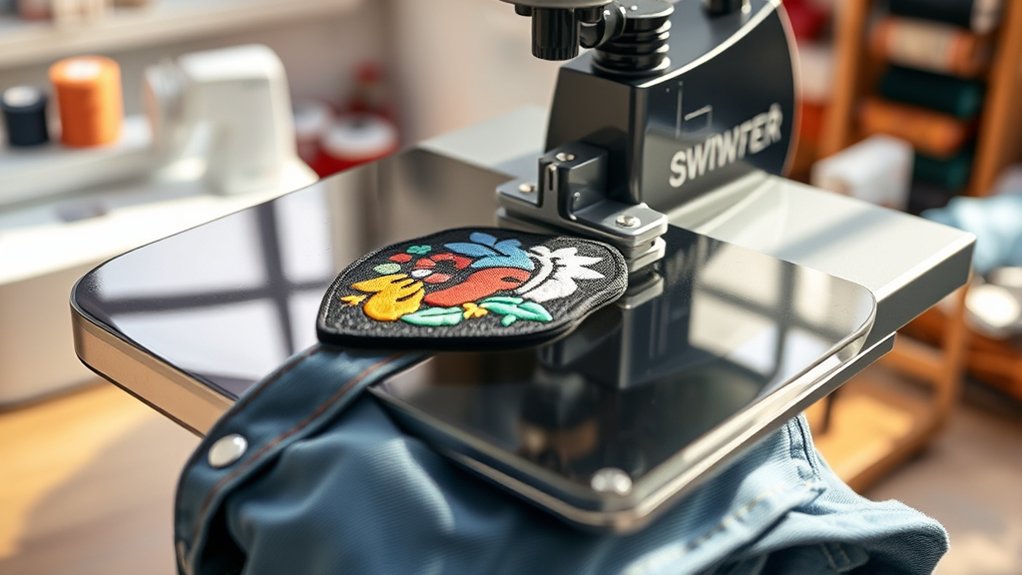

Yes, you can use a heat press for iron-on patches, and it’s often more effective than a regular iron. A heat press provides consistent, controlled heat and pressure, ensuring a strong, uniform bond without damaging the fabric.
For best results, use it on heat-tolerant fabrics like cotton or polyester blends, with patches designed for heat application. Proper temperature, pressure, and timing are essential for adhesion.
If you want to master the process and troubleshoot common issues, keep exploring the details.
Key Takeaways
- A heat press provides consistent heat and pressure, ensuring even and strong adhesion of iron-on patches.
- It allows precise temperature and timer control, reducing risks of patch distortion or fabric damage.
- Ideal temperature is around 320°F (160°C) with firm pressure applied for 15-20 seconds for optimal results.
- Heat presses work best on natural fibers and polyester-backed iron-on patches for durable bonding.
- Using a heat press minimizes the need for additional stitching by creating a uniform, long-lasting bond.
Can You Use a Heat Press for Iron-On Patches?
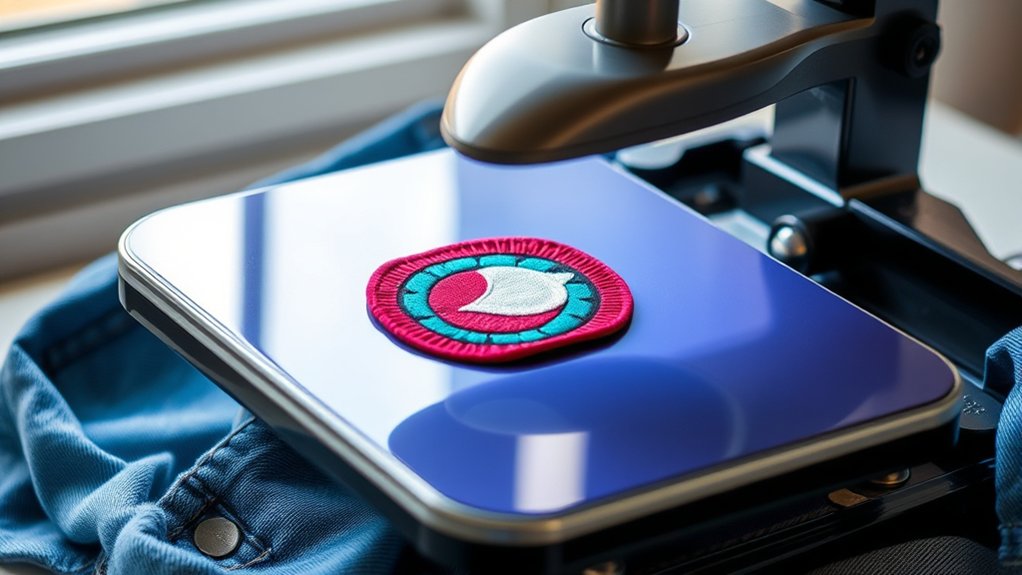
How effective is a heat press for applying iron-on patches? You’ll find that a heat press offers consistent, controlled heat and pressure, which greatly enhances patch application quality.
Unlike a traditional iron, a heat press guarantees uniform temperature distribution, minimizing the risk of uneven adhesion or patch distortion. The heat press benefits include precise temperature settings and timer control, enabling you to replicate ideal conditions for various patch materials reliably.
This precision reduces errors and improves durability, making the patches adhere firmly without damaging the fabric. Additionally, the firm pressure applied during the process guarantees the adhesive bonds thoroughly with the fabric fibers.
Which Fabrics and Patches Work Best With a Heat Press?
Achieving ideal adhesion with a heat press depends largely on selecting compatible fabrics and patches. Fabric compatibility is essential; natural fibers like cotton and polyester blends tolerate heat well, ensuring strong bonds.
Patch materials vary. Polyester-backed patches adhere best, while PVC or leather patches may require specialized techniques. Avoid heat-sensitive fabrics such as nylon or silk to prevent damage.
| Fabric Type | Patch Material |
|---|---|
| Cotton | Polyester-backed |
| Polyester Blend | Embroidered |
| Denim | Woven |
| Canvas | PVC (limited use) |
| Nylon (avoid) | Leather (special care) |
Understanding fabric compatibility and patch materials will help you achieve secure, durable applications with your heat press.
How to Apply Iron-On Patches With a Heat Press (Settings Included)
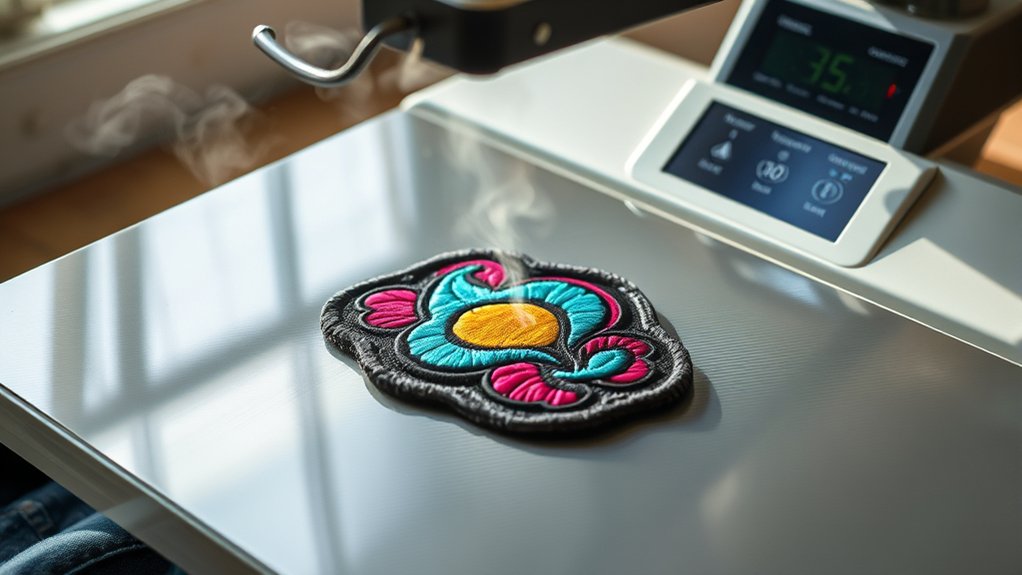
Applying iron-on patches with a heat press involves a few critical steps to guarantee ideal adhesion and durability. Start by preheating your press to 320°F (160°C), a common setting for polyester and cotton blends.
Position the patch precisely on the fabric, adhesive side down. Use a Teflon sheet or parchment paper over the patch to protect both the garment and patch surface.
Apply firm pressure, approximately 40 PSI, for 15-20 seconds. After pressing, let the patch cool slightly before removing the protective sheet to ascertain the adhesive sets properly.
Use firm pressure for 15-20 seconds and allow the patch to cool before removing the protective sheet.
These heat press techniques optimize patch application by providing even heat and consistent pressure, reducing the risk of peeling or lifting. Always check manufacturer guidelines for specific temperature and time adjustments tailored to different patch materials.
How to Troubleshoot Common Heat Press Issues With Patches
Even with proper settings, you might encounter issues like edges lifting, uneven adhesion, or fabric scorching when using a heat press for iron-on patches. To troubleshoot effectively, focus on these key areas:
- Patch Placement: Confirm the patch is aligned precisely. Misplacement can cause uneven pressure, resulting in poor adhesion or lifting edges.
- Heat Press Maintenance: Regularly clean the heat platen and check pressure calibration. Residue or uneven pressure disrupts heat transfer, causing adhesion failures.
- Temperature and Time Settings: Verify the heat press temperature and duration match the patch manufacturer’s recommendations. Excess heat or time can scorch fabric, while insufficient heat leads to weak bonds.
How a Heat Press Bonds Iron-On Patches
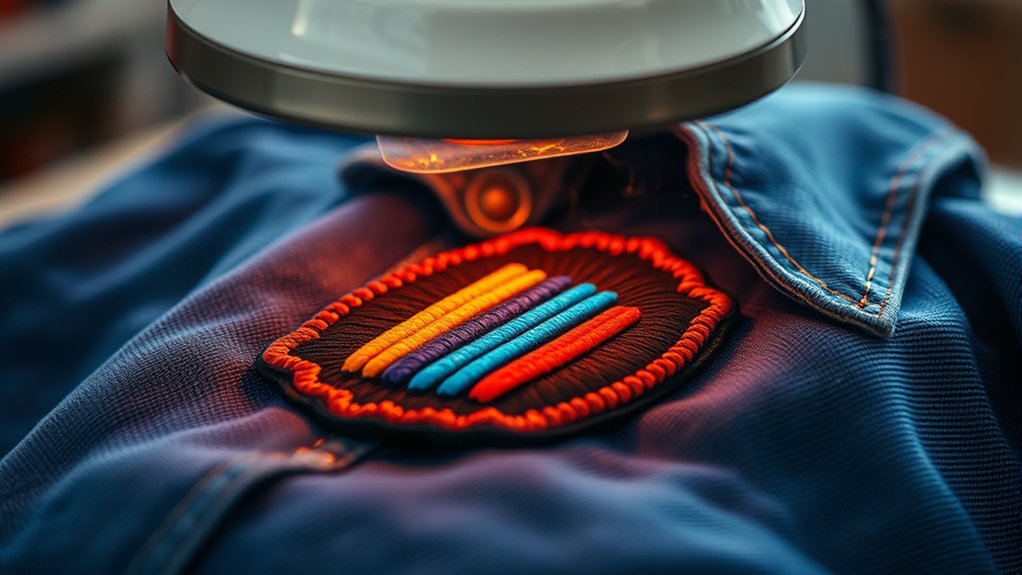
Understanding how a heat press bonds iron-on patches helps you optimize your process and prevent common issues like lifting edges or fabric scorching. The bonding process relies on heat-activated adhesive layers on the patch’s backing.
When you apply precise temperature and pressure, the adhesive melts and fuses with the fabric fibers, creating a strong, uniform bond. This fusion enhances patch durability by guaranteeing the patch resists peeling, washing, and wear.
Controlling the heat press settings—temperature, pressure, and dwell time—is critical; too little heat weakens adhesion, while too much can damage the fabric or adhesive. By mastering these parameters, you guarantee consistent patch bonding, maximizing longevity and appearance.
Proper bonding also reduces the need for additional stitching or reapplication, streamlining your workflow efficiently.
Frequently Asked Questions
Can Heat Pressing Damage Delicate Fabric Fibers?
Yes, heat pressing can damage delicate fabric fibers if you don’t use proper heat settings. You must carefully adjust temperature and time for fabric care, preventing burns or weakening fibers during the process.
How Long Do Iron-On Patches Typically Last After Heat Pressing?
Like a well-oiled machine, your iron-on patch can boast patch longevity of 20-30 washes. Heat press durability guarantees strong adhesion, but proper fabric care is essential to maintain that bond and extend your patch’s lifespan.
Are There Alternatives to Heat Pressing for Applying Iron-On Patches?
Yes, you can use fabric glue for a quick bond or apply sewing techniques like hand-stitching or machine-sewing to secure iron-on patches.
These methods provide durable alternatives when a heat press isn’t available or suitable.
Can Heat Press Settings Vary for Different Patch Thicknesses?
Like tuning a guitar string, you adjust heat settings based on patch thickness. Thicker patches need higher temperature and longer press time, while thinner ones require gentler settings to guarantee secure adhesion without damage.
Is It Safe to Reuse Iron-On Patches After Removal?
You can reuse iron-on patches cautiously, but patch removal techniques often weaken adhesive. To maintain patch adhesion methods, avoid excessive heat or peeling force.
Consider reapplying adhesive or sewing patches for durability after removal.
Conclusion
Using a heat press for iron-on patches is like wielding a precision tool—when you dial in the right fabric, temperature, and pressure, you create a bond that’s strong and lasting. Just follow the recommended settings and troubleshoot any issues promptly to avoid peeling or bubbling.
Mastering this process guarantees your patches adhere seamlessly, turning your projects into professional-grade works without the guesswork or frustration. In conclusion, using a heat press for iron-on patches ensures a durable and polished finish every time.