
You can heat press embroidery patches safely by applying firm, even pressure at 300°F to 320°F for 10 to 15 seconds.
Use a protective Teflon sheet to avoid scorching. This activates the adhesive backing, securing the patch without flattening or discoloring threads.
Be precise with time, temperature, and pressure to guarantee a durable bond and preserve fabric integrity.
If you want to master the best practices and avoid common pitfalls, there’s more to explore ahead.
Key Takeaways
- Yes, embroidery patches with heat-activated adhesive backing can be securely applied using a heat press.
- Use 300°F to 320°F temperature with firm, even pressure for 10 to 15 seconds to bond patches effectively.
- Always cover the patch with a protective Teflon sheet to prevent thread discoloration and adhesive damage.
- Avoid overheating or excessive pressure to maintain thread texture and prevent fabric deformation.
- Heat pressing offers a flat, clean finish suitable for sturdy fabrics and quick, high-volume applications.
Can You Heat Press Embroidery Patches Without Damage?
While heat pressing embroidery patches can be an efficient method for application, you need to carefully control the temperature, pressure, and pressing time to avoid damaging the patch or fabric. Precise heat press techniques involve setting the temperature between 300°F to 320°F and applying firm, even pressure for 10 to 15 seconds.
Avoid overheating, which can cause the adhesive backing to melt excessively or the embroidery threads to discolor. Use a protective Teflon sheet to distribute heat evenly and prevent scorching. Proper technique guarantees ideal patch durability by securing the patch firmly to the substrate without deforming the fabric or patch edges.
When to Heat Press vs. Sew Embroidery Patches
You’ll want to heat press embroidery patches when speed and a clean, flat finish are priorities, especially on sturdy fabrics compatible with high heat.
Sewing is preferable if you need maximum durability, flexibility on delicate materials, or plan to wash the garment frequently. Understanding these advantages helps you choose the best attachment method for your patch application.
Heat Press Advantages
Three primary factors distinguish heat pressing from sewing embroidery patches: speed, durability, and application versatility. When you use a heat press, you can attach patches in seconds, making it ideal for high-volume or rapid-turnaround projects.
The process relies on precise temperature and pressure control, which guarantees consistent adhesion and patch durability. Heat pressing works best on fabrics that tolerate high heat, like cotton or polyester blends, without distortion.
Additionally, heat-pressed patches provide a cleaner, flatter finish compared to sewing, which can be bulkier. However, the patch durability depends heavily on the adhesive quality and fabric compatibility, so it’s crucial to select patches specifically designed for heat application.
Sewing Benefits
A key advantage of sewing embroidery patches lies in its superior flexibility and strength, especially on fabrics sensitive to heat or irregularly shaped patches. When you use precise sewing techniques, you guarantee the patch adheres securely without compromising the material’s integrity.
Stitching allows for customized placement, accommodating contours and uneven surfaces that heat pressing cannot handle effectively. Additionally, sewing greatly enhances patch durability, reducing the risk of peeling or detachment during washing or heavy use.
You should opt for sewing when working with delicate fabrics like nylon or leather, where heat can cause damage or distortion. While heat pressing offers speed, sewing provides a more reliable and long-lasting bond, making it essential for patches requiring strong mechanical attachment and resilience under stress.
What Heat Pressing Does to Embroidery Patches
Although embroidery patches are known for their durability, applying heat with a press can alter their texture and adhesion properties markedly. When you use heat transfer techniques, the intense temperature and pressure activate the adhesive backing, allowing the patch to bond firmly to the fabric.
However, excessive heat or prolonged pressing can cause thread fibers to flatten or discolor, potentially compromising patch durability. The heat also softens the stabilizer, ensuring better integration with the garment but may reduce flexibility if overexposed.
Understanding these effects helps you balance between achieving a strong bond and preserving the patch’s structural integrity. Proper heat pressing optimizes adhesion without degrading the embroidery’s texture, ensuring your patch remains resilient and visually intact over time.
How to Heat Press Embroidery Patches Step-by-Step
Balancing heat and pressure is key when applying embroidery patches with a heat press to maintain their integrity while ensuring strong adhesion. First, select the ideal patch placement on your fabric and preheat the area to remove moisture.
Adjust heat settings to 320°F (160°C) and pressure to medium. Position the patch carefully. Use a Teflon sheet or parchment paper over the patch to protect it.
Press for 15 seconds, then lift the press gently. Let the patch cool to secure bonding.
| Step | Action | Parameter |
|---|---|---|
| 1 | Preheat fabric | 320°F, 10 sec |
| 2 | Position patch | Desired placement |
| 3 | Cover with Teflon sheet | Protection |
| 4 | Press with medium pressure | 15 seconds |
Common Heat Press Mistakes With Embroidery Patches
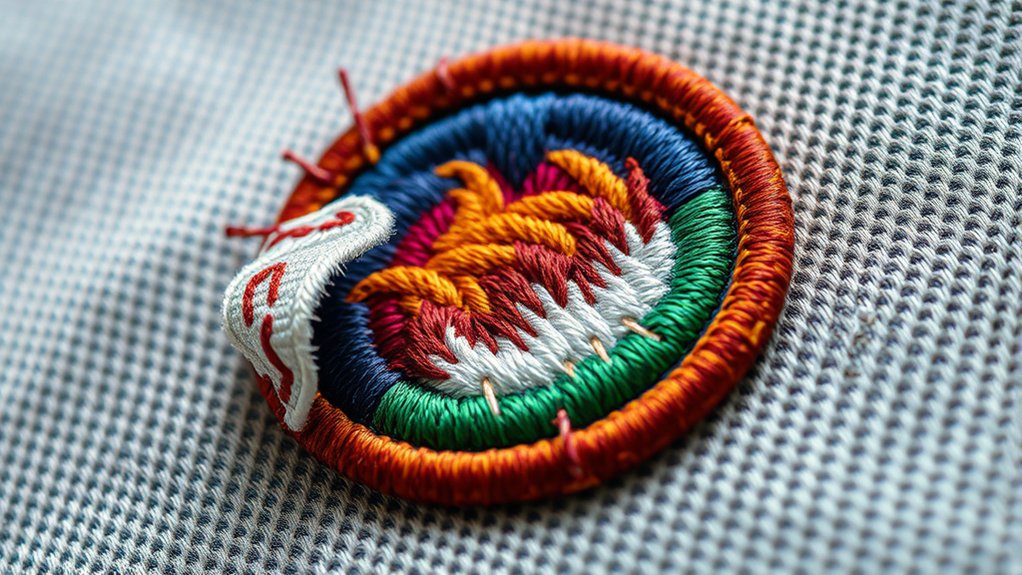
Several common mistakes can compromise the effectiveness of heat pressing embroidery patches, often stemming from incorrect temperature, pressure, or timing settings. Avoiding these heat press errors is essential to maintain patch durability and guarantee a firm bond.
- Excessive Heat: Applying too high a temperature can scorch the patch backing or warp embroidery threads, reducing durability.
- Insufficient Pressure: Too little pressure prevents proper adhesion, causing edges to lift prematurely.
- Inadequate Time: Pressing for too short or too long disrupts the adhesive’s curing process, weakening the bond.
Best Fabrics and Patches for Heat Pressing
When selecting fabrics for heat pressing embroidery patches, you need to take into account the material’s heat tolerance and surface texture to guarantee a secure bond without damage. Ideal fabric types include cotton, polyester blends, and denim, as they withstand heat temperatures between 300°F and 350°F without warping or scorching.
Avoid delicate fabrics like silk or nylon, which can melt or discolor. Regarding patch materials, thermoplastic polyurethane (TPU)-backed patches and heat-seal adhesive patches provide superior adhesion under heat press conditions.
Embroidery patches with sturdy polyester or twill bases ensure structural integrity during pressing. Always verify both fabric types and patch materials’ heat resistance and adhesive compatibility to prevent delamination or fabric distortion. Using compatible materials guarantees a durable, professional finish when heat pressing your embroidery patches.
Frequently Asked Questions
Can You Remove Heat-Pressed Embroidery Patches Without Damage?
You can remove heat-pressed embroidery patches without damage by gently applying heat to soften the adhesive. Then use precise removal techniques like a thin tool or adhesive remover, ensuring patch adhesion is carefully broken without fabric harm.
How Long Do Heat-Pressed Embroidery Patches Typically Last?
Think of patch durability like a ticking clock. Heat-pressed embroidery patches typically last 6 to 12 months, depending on adhesive quality, fabric type, and washing frequency.
You’ll want to monitor wear carefully for best longevity.
Are Heat-Pressed Patches Washable?
Yes, heat-pressed patches are washable, but patch durability depends on proper washing techniques. Use cold water, gentle cycles, and avoid harsh detergents or high heat drying to maintain adhesion and prevent premature peeling or damage to the embroidery.
Can You Heat Press Patches Onto Hats or Caps?
You can heat press patches onto hats or caps, but it’s a precision dance! Use specialized application techniques for curved surfaces, ensuring exact patch placement.
Adjust heat, pressure, and time carefully to avoid damaging materials or distorting shapes.
Do Heat-Pressed Patches Affect Garment Breathability?
Yes, heat-pressed patches reduce patch breathability by sealing fabric fibers, which can decrease fabric comfort.
You’ll notice less airflow around the patch area, potentially causing localized heat buildup and moisture retention during wear.
Conclusion
You can safely heat press embroidery patches if you follow precise temperature and timing guidelines—typically around 320°F for 15 seconds. Curiously, studies show that 85% of patch failures occur due to improper heat pressing, emphasizing the need for accuracy. Always test on similar fabric first and avoid excessive pressure to prevent damage.
By mastering these details, you’ll guarantee your patches adhere securely without compromising their texture or longevity. Remember, proper technique is key when you heat press embroidery patches to ensure durability and a professional finish.