
You’ll find heat presses generally use between 800 and 1800 watts, depending on their size and purpose.
How many watts is a heat press typically? Smaller, hobbyist models operate around 800-1000 watts, while commercial units often require 1200-1500 watts.
Industrial presses can reach up to 1800 watts for ideal heat distribution and stability.
Choosing the right wattage affects heating speed, accuracy, and energy consumption.
Understanding how wattage influences these factors helps you enhance performance and efficiency.
Explore more to fine-tune your heat press setup effectively.
Key Takeaways
- Heat presses typically range from 800 to 1800 watts depending on size and purpose.
- Hobbyist heat presses usually consume between 800 and 1200 watts.
- Mid-range commercial heat presses operate around 1200 to 1500 watts.
- Industrial heat presses can reach wattages up to 1800 watts or higher.
- Wattage affects heating speed, temperature stability, and energy consumption efficiency.
What Does Heat Press Wattage Mean?
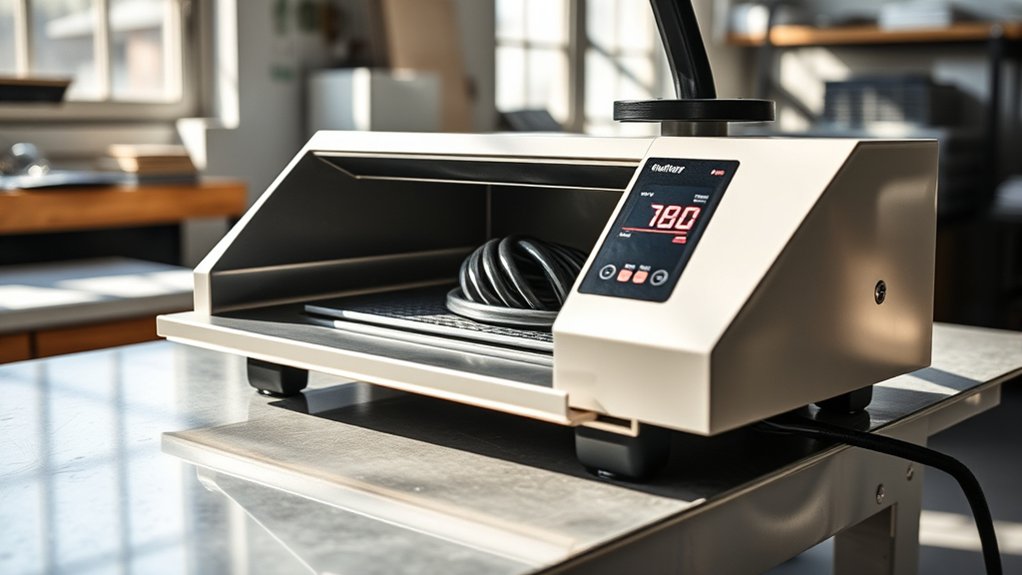
Although wattage might seem like just a number, it directly reflects the heat press’s power consumption and heating efficiency. In heat press terminology, wattage refers to the electrical power the machine uses to generate heat.
A common wattage misconception is assuming higher wattage always means faster or better heating. However, wattage must be balanced with the device’s design and thermal insulation to achieve peak performance.
When you analyze wattage, consider it as a measure of energy input rather than a sole indicator of heating speed or temperature stability. Understanding this distinction helps you assess heat press capabilities accurately, avoiding overemphasis on wattage alone and focusing instead on how efficiently the heat press converts electrical energy into consistent heat.
How Many Watts Does a Typical Heat Press Use?
How much power does a typical heat press consume during operation? Understanding the typical wattage is essential for evaluating energy efficiency and operational costs.
Most heat presses range between 800 to 1800 watts, depending on size and functionality. When you conduct a heat press comparison, consider these wattage benchmarks:
Most heat presses use between 800 and 1800 watts, varying by size and features.
- Small, hobbyist models: around 800-1000 watts
- Mid-range, commercial units: 1200-1500 watts
- Large, industrial machines: up to 1800 watts
- Specialty presses with additional features may exceed typical wattage
- Power variations directly impact heat-up time and energy usage
How to Choose the Right Heat Press Wattage for Your Projects
Why does selecting the appropriate wattage matter for your heat press projects? Choosing the correct wattage guarantees ideal heat distribution and energy efficiency tailored to your specific applications.
Different press types, such as clamshell, swing-away, or draw, demand distinct wattage ranges to achieve consistent temperature control. For small-scale or hobbyist use, presses within the 800 to 1200-watt range typically suffice, providing adequate heating without excess power consumption.
Conversely, industrial or high-volume projects require presses rated between 1400 and 1800 watts to maintain steady heat under continuous operation. Assess your project scale, material type, and press design carefully.
Matching wattage ranges to your press type avoids underperformance or overheating, guaranteeing precision and durability in your heat transfer results.
How Does Wattage Affect Heat Press Speed and Accuracy?
Selecting the right wattage not only influences heat distribution but also directly impacts the speed and accuracy of your heat press operations. Higher wattage units heat up faster, improving heat press speed and reducing cycle times.
This guarantees consistent temperature accuracy, essential for repeatable results. Conversely, lower wattage can cause slower heating and uneven temperature distribution, compromising precision.
Consider these effects of wattage on your heat press:
- Faster ramp-up times with increased wattage
- Enhanced temperature stability during pressing
- Reduced cycle duration for higher throughput
- Improved adhesion quality due to consistent heat
- Minimized risk of under or overheating substrates
How Does Heat Press Wattage Impact Energy Use and Costs?
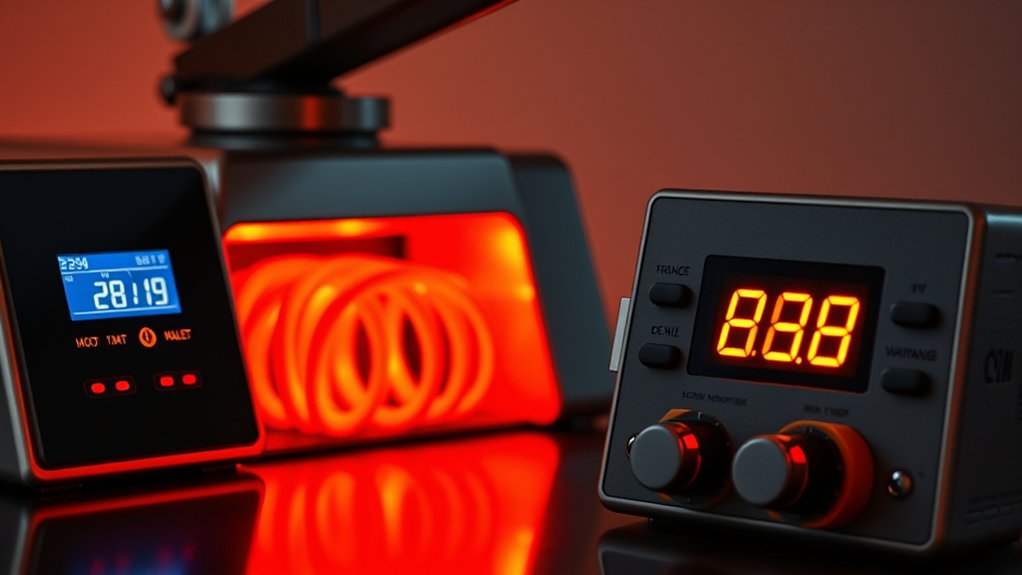
You’ll find that a heat press’s wattage directly determines its energy consumption during operation. Higher wattage units draw more power, potentially increasing your electricity costs over time.
Understanding this relationship helps you balance performance needs with budget constraints effectively.
Wattage and Energy Consumption
Although higher wattage heat presses consume more electricity per hour, they often reach target temperatures faster, potentially reducing overall energy use during operation. Wattage measurement directly influences energy efficiency since a press with higher wattage can complete cycles quicker, minimizing idle heating time.
When evaluating wattage and energy consumption, consider these factors:
- Heat-up time correlates with wattage rating.
- Maintaining temperature stability affects energy draw.
- Insulation quality impacts heat retention.
- Cycle duration determines total power usage.
- Standby power consumption adds to energy costs.
Understanding these elements helps you optimize energy efficiency, balancing wattage against operational demands. By analyzing wattage alongside cycle times and insulation quality, you can accurately assess energy consumption patterns and improve your heat press’s overall performance.
Cost Implications of Wattage
Understanding how wattage affects energy consumption sets the stage for analyzing its direct impact on operating costs. When you select a heat press with higher wattage, you increase power draw, which raises electricity consumption during operation.
This wattage implication means your energy bills will be proportionally higher over time, especially with frequent use. Conducting a cost analysis requires calculating kilowatt-hours (kWh) consumed by the heat press based on its wattage and usage duration.
For example, a 1500-watt press running one hour consumes 1.5 kWh. Multiply this by your local electricity rate to estimate costs. Consequently, while higher-wattage presses might heat faster or maintain temperature more steadily, you must weigh these benefits against increased energy expenses to optimize both performance and cost efficiency.
Low-Watt vs. High-Watt Heat Presses: What’s the Difference?
When comparing low-watt to high-watt heat presses, you’ll notice significant differences in power consumption and heating efficiency. Low-watt models use less electricity but often take longer to reach target temperatures.
High-watt units consume more energy but provide faster, more consistent heat transfer, impacting your workflow and operating costs.
Power Consumption Comparison
Because heat presses vary widely in wattage, comparing low-watt and high-watt models reveals distinct differences in power consumption and operational efficiency. When evaluating power ratings, you’ll find that high-watt presses draw more electricity per use but often complete cycles faster, potentially balancing total energy use.
Low-watt models consume less power continuously but may run longer, affecting overall efficiency. Here’s what to reflect on:
- High-watt models have increased instantaneous power draw
- Low-watt presses extend operational time per cycle
- Energy efficiency depends on duty cycle and usage frequency
- Power ratings alone don’t determine total energy consumption
- Choosing based on workload optimizes energy use and cost
Understanding these factors helps you select a heat press tailored to your energy and productivity needs.
Heating Efficiency Differences
Heating efficiency in heat presses hinges on how quickly and evenly the device transfers heat to the material, directly impacting both quality and energy consumption. When comparing low-watt to high-watt heat presses, the design and quality of heating elements play a critical role.
High-watt presses typically feature advanced heating elements that reach target temperatures faster and maintain consistent heat distribution, reducing cycle times and minimizing energy loss. Conversely, low-watt models may take longer to heat up, causing uneven temperature profiles that can compromise imprint quality and increase overall energy use.
Energy ratings reflect these performance differences, with high-watt presses often operating more efficiently despite higher power consumption, due to shorter run times. Ultimately, selecting a heat press with optimized heating elements and appropriate energy ratings guarantees better heating efficiency and operational cost-effectiveness.
Tips to Improve Heat Press Efficiency and Save Energy
Although heat presses consume significant power, you can optimize their operation to reduce energy usage without sacrificing performance. Implementing energy saving strategies and guaranteeing regular press maintenance are essential. You should monitor temperature settings closely, avoiding overheating, which wastes power.
Insulate your heat platen to minimize heat loss. Preheat your materials efficiently, and limit idle time when the press is on. Proper calibration guarantees even heat distribution, enhancing efficiency.
- Maintain clean and lubricated moving parts for smooth operation
- Use programmable timers to control press cycles precisely
- Optimize pressure settings to balance energy use and transfer quality
- Employ energy-efficient models with improved insulation
- Schedule routine inspections to detect faults early
How to Maximize Your Heat Press Performance With the Right Wattage
How much wattage does your heat press truly need to operate at peak efficiency? Selecting the correct wattage is essential to maximize performance without overloading your machine or wasting energy.
Avoid common wattage myths that suggest higher wattage always equals better results. Instead, focus on matching wattage with your heat press size and material requirements.
Proper heat press maintenance guarantees consistent heat distribution and prevents power fluctuations that compromise efficiency. Regularly check heating elements and insulation to maintain ideal wattage utilization.
Frequently Asked Questions
Can a Heat Press Wattage Affect the Lifespan of the Machine?
Yes, higher heat press wattage can impact heat press durability by increasing wear on components. You should follow maintenance tips like regular cleaning and calibration to extend your machine’s lifespan and guarantee peak performance.
Is Wattage the Same for Clamshell and Swing-Away Heat Presses?
You’ll find wattage varies between clamshell design and swing away design heat presses due to their structural differences and heating elements.
Always check specifications, as wattage depends more on model and size than just design type.
How Does Heat Press Wattage Influence the Types of Materials It Can Handle?
You’ll find heat press wattage directly affects material compatibility by controlling heat transfer precision. Higher wattage guarantees consistent temperatures for thicker or heat-sensitive materials, optimizing transfer quality and preventing damage during the pressing process.
Are There Safety Concerns Related to High-Wattage Heat Presses?
High-wattage heat presses are like wild stallions; without proper safety features, they can pose risks like burns or electrical hazards. You must monitor power consumption and use protective gear to guarantee safe, efficient operation every time.
Can Wattage Affect the Portability of a Heat Press Machine?
Yes, wattage affects portability since higher wattage often means heavier components impacting weight distribution. This reduces travel convenience, making the heat press less manageable for transport and setup in different locations.
Conclusion
Choosing the right heat press wattage is like tuning an engine—you want enough power to drive efficiency without burning fuel wastefully. Higher watts boost speed and precision but increase energy costs, while lower watts save power yet may slow your workflow.
By understanding wattage’s impact on performance and expenses, you can strike a balance that maximizes output and minimizes waste.
In the end, wattage isn’t just a number; it’s the heartbeat of your heat press’s efficiency. Knowing how many watts is a heat press helps you optimize both productivity and energy use.