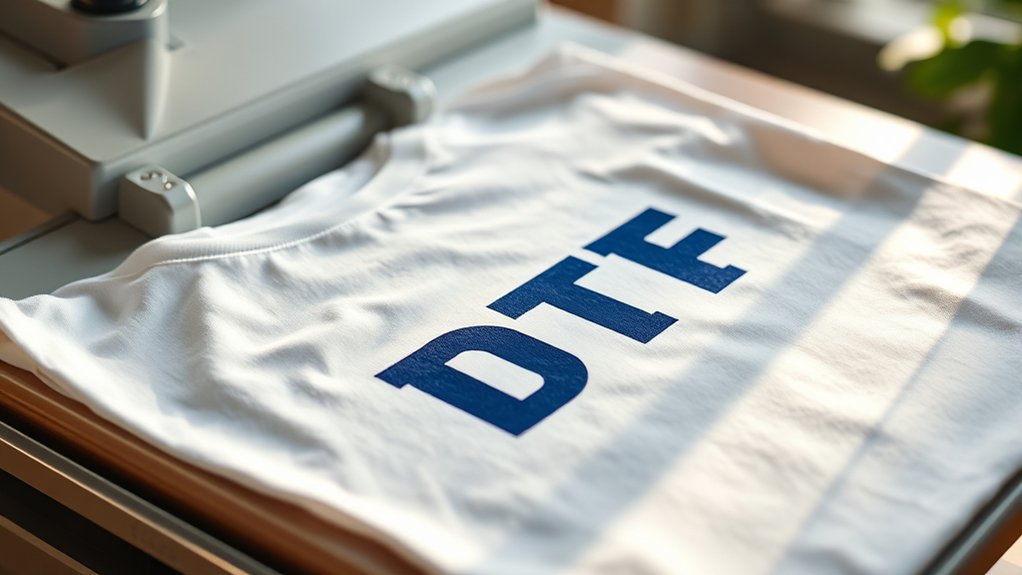

You need a heat press for DTF transfers to guarantee consistent temperature and pressure, which are essential for strong adhesion and vibrant, accurate images.
Unlike irons, a heat press delivers even heat and reliable timing, preventing incomplete bonding and enhancing durability.
It creates the ideal controlled environment for melting adhesive powders properly.
While alternatives exist, a heat press is the preferred tool for professional results.
Keep exploring to understand how to optimize your DTF workflow and equipment choices.
Key Takeaways
- A heat press ensures consistent temperature and pressure critical for strong, durable DTF transfer adhesion.
- It offers precise control, preventing incomplete bonding and enhancing image quality and color accuracy.
- Irons lack uniform heat and pressure, making them unreliable for professional-grade DTF transfers.
- Alternatives like heat guns or ovens require careful technique and monitoring but can work with experience.
- For best results and repeatability, investing in a heat press with digital controls and proper platen size is recommended.
Do You Really Need a Heat Press for DTF Transfers?
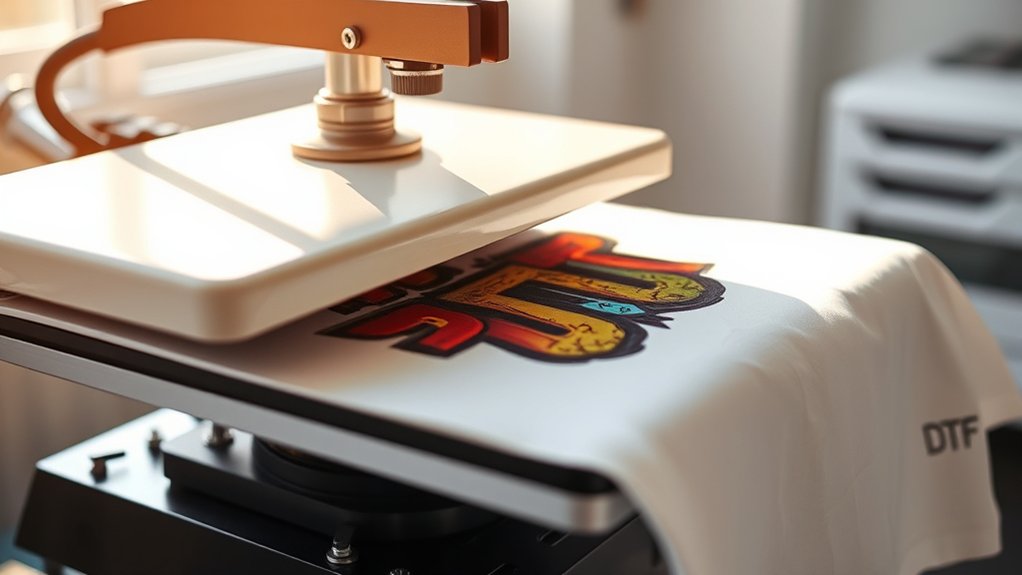
Why is a heat press often considered vital for DTF transfers? Because it delivers consistent temperature and pressure, essential for ideal heat transfer in DTF technology. When you use a heat press, you guarantee the adhesive powder melts properly, bonding the printed design firmly to the fabric.
Without precise control of heat and pressure, you risk incomplete adhesion, leading to poor durability and image quality. While alternative methods exist, they rarely match the uniformity and reliability provided by a heat press.
For accurate replication of colors and fine details, the controlled environment a heat press offers is indispensable. Ultimately, if you want professional-grade DTF transfers with lasting results, relying on a heat press is highly recommended to enhance transfer efficiency and print longevity.
What Is a Heat Press and Why It’s Important for DTF
A heat press is a specialized machine designed to apply controlled heat and pressure to transfer designs onto fabrics, making it crucial for DTF (Direct to Film) transfers. You’ll find various heat press types, including clamshell, swing-away, and draw presses, each offering precise temperature and pressure control.
These features guarantee consistent transfer temperatures, essential for activating the adhesive on DTF films without damaging the fabric or print. Maintaining exact transfer temperatures, typically between 160°C to 170°C, is crucial for ideal ink fusion and durability.
Without a heat press, achieving the uniform pressure and temperature required for quality DTF transfers becomes difficult, leading to poor adhesion and color vibrancy. Using the right heat press type and settings enhances transfer reliability, making it a key tool in your DTF workflow.
Can an Iron Replace a Heat Press for DTF Transfers?
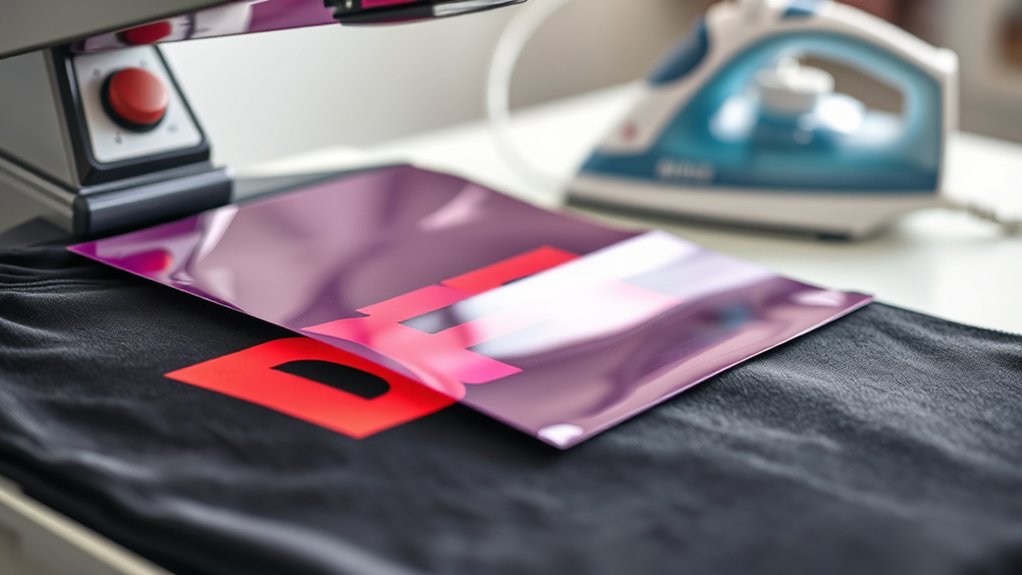
While heat presses deliver consistent temperature and pressure for ideal DTF transfers, you might wonder if a household iron can serve the same purpose. When comparing iron vs heat press, consider these critical points affecting transfer quality comparison:
- Temperature Control: Heat presses maintain precise temperatures; irons often fluctuate, risking under- or overheating.
- Pressure Distribution: Heat presses apply even pressure across the entire design; irons provide uneven pressure, causing poor adhesion.
- Timing Accuracy: Heat presses use timers ensuring exact curing; irons rely on manual timing, increasing error chances.
- Surface Contact: Heat presses have flat, stable plates; irons’ curved, inconsistent surfaces can lead to incomplete transfers.
What Are the Best Alternatives to Heat Presses for DTF?
You can achieve effective DTF transfers without a heat press by using a heat gun, which offers targeted curing with adjustable temperature control.
An iron can work if you apply consistent pressure and maintain the right heat level, but it requires precise technique to avoid uneven results.
Alternatively, oven curing provides uniform heat distribution, though it demands careful timing and temperature monitoring to prevent damage.
Heat Gun Efficiency
Although heat presses dominate the DTF transfer process, heat guns offer a viable alternative for curing inks when controlled correctly. To optimize heat gun efficiency, consider these factors:
- Select the appropriate heat gun types. Variable temperature models provide better control than fixed settings.
- Maintain an ideal heat gun temperature, typically between 300°F and 400°F, to guarantee ink adhesion without damaging substrates.
- Use consistent, even strokes to avoid hot spots and uneven curing.
- Monitor distance between the heat gun nozzle and transfer surface, generally 2–4 inches, to prevent overheating.
Mastering these parameters helps you efficiently cure DTF transfers without a heat press, though it demands more attention to detail and practice to achieve consistent results.
Iron Application Technique
Since heat presses might not always be accessible, the iron application technique serves as a practical alternative for curing DTF transfers. To enhance transfer efficiency using iron techniques, preheat your iron to the highest cotton setting without steam.
Place the printed DTF film on the fabric, cover it with parchment paper, and apply firm, even pressure. Move the iron slowly in a circular motion for approximately 60-90 seconds, guaranteeing consistent heat distribution. Avoid excessive movement that could cause image distortion.
After heating, peel the film while warm to achieve prime adhesion. Although iron techniques can yield quality results, they require careful control of pressure, temperature, and timing to rival heat press outcomes.
Mastering this method improves transfer efficiency and guarantees durable, vibrant prints without specialized equipment.
Oven Curing Methods
When a heat press is unavailable, oven curing offers a controlled environment to properly cure DTF transfers. You’ll need to carefully manage oven temperature and curing time to guarantee ideal results. Follow these steps to substitute a heat press with oven curing:
- Preheat the oven to the recommended oven temperature, typically around 320°F (160°C).
- Place the transfer on the garment inside the oven, ensuring even heat distribution.
- Maintain the curing time precisely, usually between 8-12 minutes, to fully activate adhesives and inks.
- Remove the garment carefully and allow it to cool before peeling the transfer film.
This method requires monitoring to avoid overheating or under-curing, but it’s a viable alternative when a heat press isn’t accessible.
How to Choose the Right Heat Press for Your DTF Projects
How do you determine the best heat press for your DTF projects? Begin by evaluating essential heat press features such as adjustable temperature control, even heat distribution, and sufficient pressure settings. These elements guarantee consistent transfer quality and durability.
Focus on a model that can maintain precise transfer temperature, typically between 320°F and 350°F, vital for ideal ink adhesion without damaging substrates. Size also matters; choose a platen large enough to accommodate your typical print dimensions to avoid repositioning.
Consider digital controls for accuracy and repeatability. Additionally, check for a reliable timer function to prevent overexposure. Durability and warranty support are important for long-term use.
Tips for Applying DTF Transfers Without a Heat Press
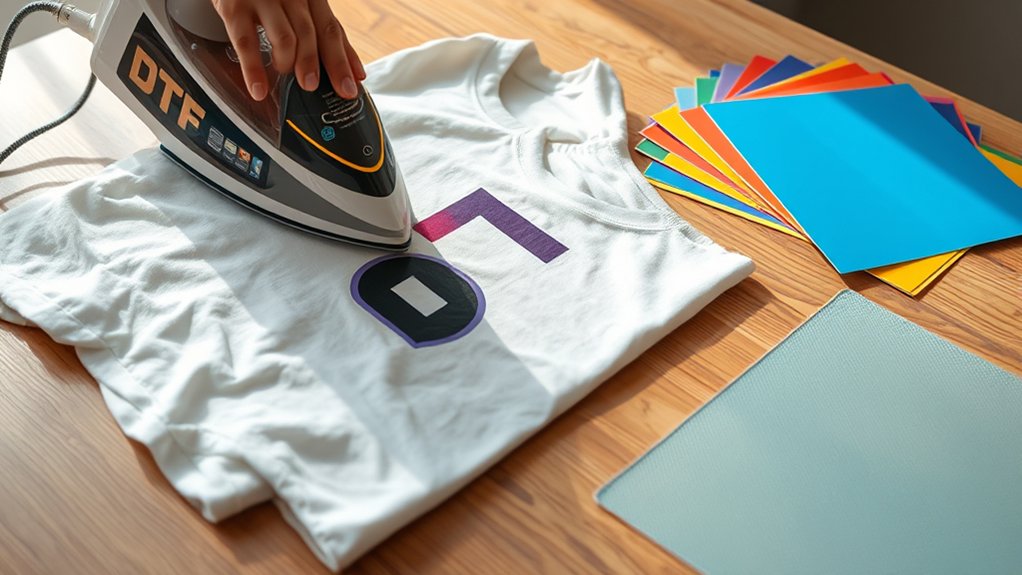
Wondering if you can apply DTF transfers without a heat press? Yes, you can, but success depends on mastering the transfer technique and applying pressure consistently. Follow these tips:
- Use a sturdy, flat surface to guarantee even pressure distribution during transfer.
- Employ a household iron with adjustable temperature settings; set it to 320–350°F (160–177°C) for ideal heat.
- Apply firm, even pressure manually for 60–90 seconds, moving the iron slowly to avoid shifting the transfer.
- Allow the transfer to cool slightly before peeling the carrier film to prevent distortion.
This method demands precision in applying pressure and heat. While it’s feasible for small or occasional projects, a heat press remains the most reliable tool for consistent, professional DTF results.
Frequently Asked Questions
What Types of Fabrics Work Best With DTF Transfers?
You’ll find cotton blends and polyester fabrics work best with DTF transfers due to their ability to bond with the adhesive. These materials guarantee vibrant colors and durability, optimizing transfer quality and wash resistance for your projects.
How Long Do DTF Transfers Typically Last After Application?
You don’t want your DTF transfer to outlive your favorite shirt, right? Typically, transfer lifespan ranges from 30 to 50 washes, heavily depending on your application techniques, fabric choice, and proper heat pressing precision.
Can DTF Transfers Be Washed and Dried Normally?
You can wash and dry DTF transfers normally, but use gentle washing techniques like cold water and mild detergent. Opt for air drying or low heat drying methods to maintain print quality and extend the transfer’s lifespan.
Are DTF Inks Safe for Skin Contact?
DTF ink generally guarantees skin safety once properly cured; uncured ink may cause irritation. You should always use certified, non-toxic inks and follow manufacturer guidelines to minimize skin contact risks during application and handling.
What Environmental Conditions Affect DTF Transfer Quality?
You’ll find humidity levels and temperature fluctuations critical for DTF transfer quality. High humidity can cause ink smudging, while inconsistent temperatures may lead to poor adhesion and color distortion, so control your environment precisely.
Conclusion
So, do you *need* a heat press for DTF transfers? Technically, no—you *could* risk using an iron or other alternatives and hope for the best. But if you enjoy uneven adhesion, wasted transfers, and inconsistent results, go ahead.
For precise temperature, pressure, and timing control, a heat press is your best friend. Iron enthusiasts might call it overkill, but if quality matters, the heat press isn’t just a luxury—it’s essential.
When it comes to achieving the best results, having a heat press for DTF transfers makes all the difference.