
Printer paper comes in several standard sizes to fit different needs. Understanding what size printer paper you need is essential for producing professional-looking documents.
In the U.S., you’ll most often use Letter size (8.5 x 11 inches) for everyday documents and Legal size (8.5 x 14 inches) for longer contracts.
Internationally, A4 (about 8.27 x 11.69 inches) is common. Specialty sizes exist for photos and posters, too.
Matching your paper size with printer settings guarantees smooth printing. Understanding these differences helps you pick the right paper every time and optimize your printing results.
Key Takeaways
- Standard U.S. printer paper sizes include Letter (8.5 x 11 inches) and Legal (8.5 x 14 inches).
- A4 paper size (210 x 297 mm) is widely used internationally for documents.
- Specialty paper sizes include photo prints (4×6, 5×7) and posters (11×17, 24×36 inches).
- Printer settings must match the exact paper size loaded to ensure correct printing.
- Paper size choice depends on document type, printer compatibility, and regional preferences.
Most Used Printer Paper Sizes and Their Dimensions
When choosing printer paper, you’ll encounter several common sizes that fit most printing needs. The most widely used common paper types include Letter (8.5 x 11 inches), Legal (8.5 x 14 inches), and A4 (210 x 297 mm).
Letter and Legal sizes dominate in the United States, while A4 follows international standards and is popular globally. Each size serves specific purposes: Letter for everyday documents, Legal for contracts, and A4 for international correspondence.
Understanding these dimensions helps you select the right paper for your printer and guarantees compatibility with various devices. By familiarizing yourself with these international standards and common paper types, you’ll avoid printing errors and maintain professional document presentation every time.
Differences Between Letter, Legal, and A4 Printer Paper Sizes
Understanding the basic dimensions of Letter, Legal, and A4 paper sets the stage for recognizing how they differ in use and format. Letter dimensions are typically 8.5 by 11 inches, making them standard for everyday printing in the U.S.
Legal paper measures 8.5 by 14 inches, extended to accommodate legal uses such as contracts and official documents. A4 paper, common outside the U.S., measures 210 by 297 millimeters (about 8.27 by 11.69 inches) and suits various professional and academic A4 applications.
When choosing paper, consider paper compatibility with your printer, as not all devices support every size. Knowing these differences helps you select the right size for your printing needs without confusion or errors.
Choosing the Right Printer Paper Size for Your Needs
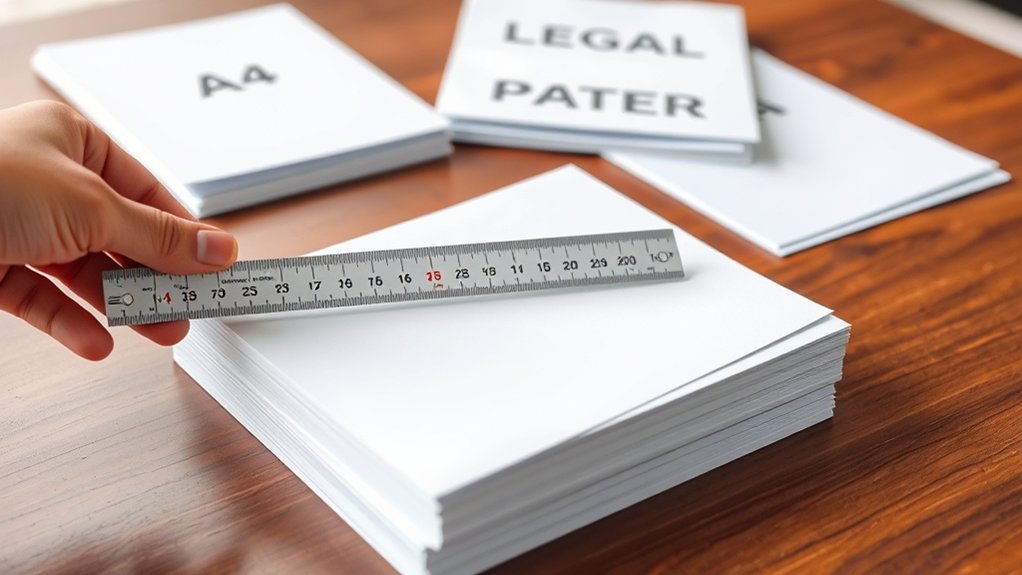
Although selecting the right printer paper size might seem straightforward, it directly impacts the quality and professionalism of your printed documents. Choosing the correct paper size guarantees your printing projects look polished and meet their intended purpose.
Consider these factors when deciding on paper size:
- Purpose of the document (e.g., letter, report, flyer)
- Printer compatibility with various paper sizes
- Audience expectations and regional standards (Letter vs. A4)
- Amount of content and layout design requirements
- Cost and availability of the paper size
Specialty Printer Paper Sizes for Photos and Posters
Beyond standard sizes like Letter and A4, specialty printer paper sizes cater to unique projects such as photos and posters. When you print photos, photo paper is essential for vibrant color and sharp detail.
Poster paper, on the other hand, is larger and designed for bold, eye-catching prints. Choosing the right size guarantees your project looks professional and fits your display space perfectly.
| Paper Type | Common Sizes (inches) |
|---|---|
| Photo Paper | 4×6, 5×7, 8×10 |
| Poster Paper | 11×17, 13×19, 18×24 |
| Photo Paper | 8.5×11 |
| Poster Paper | 24×36 |
| Photo Paper | 20×30 |
Selecting the correct specialty paper size assures excellent print quality and impact.
Adjusting Printer Settings to Match Printer Paper Size
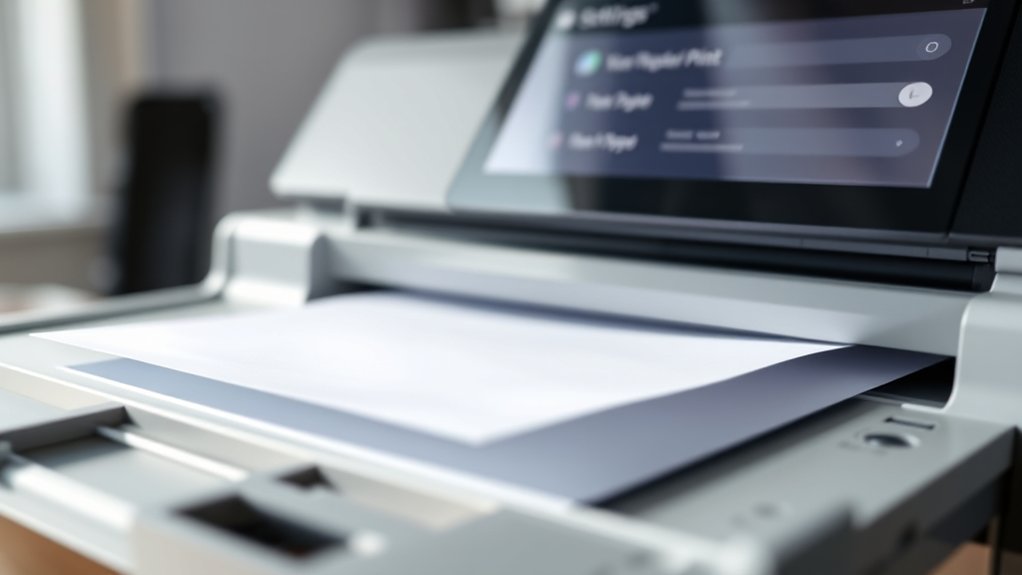
When you select the right paper size for your print job, you also need to adjust your printer settings to match it. This guarantees ideal print quality and prevents paper jams. Start by checking your printer settings for paper size options and confirm they align with your chosen paper. Consider paper compatibility to avoid issues with thickness or texture.
Matching your printer settings to your paper size ensures top print quality and prevents jams.
To properly adjust your printer settings:
Access the printer properties through your computer’s print dialog.
Select the exact paper size you’re using.
Choose the correct paper type for better ink absorption.
Set the print quality according to your task.
Verify tray selection matches the loaded paper.
Where to Find Printer Paper and How to Pick the Right One
You can find printer paper at local stores or through online retailers, each offering a variety of options. When choosing paper, consider the weight to match your printing needs and guarantee quality results.
Picking the right paper helps your printer perform efficiently and produces the best output.
Local Store Options
Finding the right printer paper at your local store can save you time and guarantee compatibility with your printer. When browsing local store selections, pay close attention to the paper stock, size, and finish to ascertain ideal print quality. Here’s what to take into account:
Verify the standard size (usually 8.5 x 11 inches in the U.S.) matches your printer’s requirements. Choose the paper stock weight based on your printing needs, lighter for everyday use, heavier for professional documents.
Check for compatibility with inkjet or laser printers. Contemplate finishes like matte or glossy depending on your project.
Look for multipacks or economy options to save money without sacrificing quality.
Online Paper Sources
Several reliable online retailers offer a wide range of printer paper options that cater to different printing needs. When searching for online paper options, you’ll find everything from standard letter size to specialty formats.
Digital paper suppliers often provide detailed descriptions, helping you select the right size and finish for your project. To pick the right paper, consider your printer’s compatibility and the type of documents you print most frequently.
Look for suppliers with good reviews and clear return policies to guarantee a smooth purchase. Shopping online lets you compare prices and bulk options easily, saving time and often money.
Choosing Paper Weight
Paper weight plays a crucial role in determining the quality and suitability of your prints. When choosing printer paper, consider the paper thickness and paper texture, as these factors affect how your printer handles the sheets and the final look of your documents.
Thinner paper is lighter and often used for everyday printing, while thicker paper feels more professional and durable. Paper texture influences ink absorption and print sharpness, so select one that matches your project’s needs.
Keep these tips in mind when picking paper weight:
- Match paper thickness to your printer’s specifications
- Use heavier paper for resumes or presentations
- Choose smooth textures for sharp text prints
- Opt for textured paper for artistic or formal prints
- Check for compatibility with ink or toner types
This guarantees you get the best print quality every time.
Frequently Asked Questions
Can I Print Double-Sided on All Printer Paper Sizes?
You can do double sided printing on many paper sizes, but not all printers support every size for duplexing.
Check your printer’s specs to confirm which paper sizes allow double sided printing for the best results.
How Does Paper Thickness Affect Print Quality?
Paper thickness, or paper weight, directly impacts print quality by affecting ink absorption and color vibrancy. Thicker paper reduces bleed-through and smudging, so you’ll get sharper images and text with better overall print results.
What Is the Environmental Impact of Different Printer Papers?
Imagine choosing paper from a company using sustainable sourcing; you reduce deforestation and waste.
You can also opt for paper alternatives like hemp or recycled fibers, which cut environmental impact considerably while maintaining print quality.
Can I Recycle Used Printer Paper?
Yes, you can recycle used printer paper, which offers great recycling benefits like saving trees and reducing waste. Just separate paper types properly, avoiding glossy or heavily coated sheets, to guarantee smooth recycling and environmental impact reduction.
How Should I Store Printer Paper to Avoid Damage?
Treat your printer paper like a delicate flower. Store it flat in a cool, dry place with proper storage containers and humidity control. This keeps sheets crisp, prevents curling, and guarantees flawless prints every time you need them.
Conclusion
Now that you know the common printer paper sizes and their uses, you can choose the right one for your project with confidence. Whether you’re printing letters, legal documents, photos, or posters, matching your paper size to your printer settings is key to avoiding mistakes.
Don’t overlook specialty papers—they make a difference. Remember, picking the correct paper size isn’t just about dimensions; it’s about getting the best results every time you print.
Understanding what size is printer paper helps ensure your prints come out professional and precise, no matter the task.