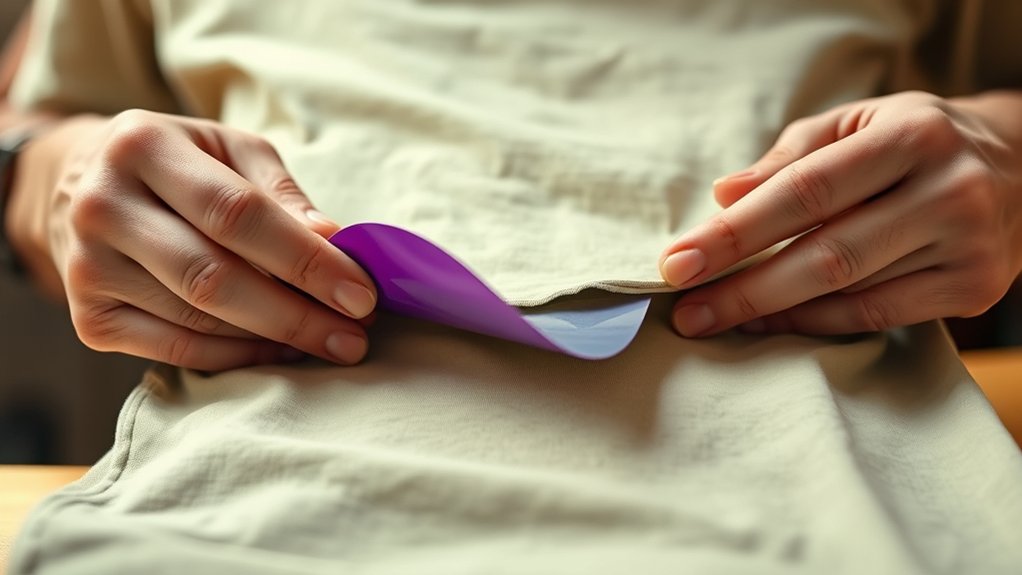

To remove heat press vinyl, first warm it gently with a heat gun or iron set around 250°F to 300°F for 10-15 seconds.
Carefully lift a corner with a plastic scraper and peel back at a 45-degree angle.
If the vinyl resists, maintain heat and lift slowly to avoid fabric damage.
After removal, soften any residue using heat and apply adhesive remover cautiously.
Following this method guarantees safe, effective removal, and exploring further will reveal how to handle stubborn vinyl and protect your fabric.
Key Takeaways
- Gently heat vinyl with a heat gun or iron on low for 10-15 seconds to soften adhesive before removal.
- Lift vinyl edges slowly at a 45-degree angle using a plastic scraper or fingernail to avoid fabric damage.
- Maintain steady, moderate heat during removal to keep adhesive pliable and ease peeling.
- Use adhesive remover or rubbing alcohol on residue, testing fabric compatibility first to avoid damage.
- Protect fabric by testing heat tolerance, using a Teflon sheet, and lifting vinyl carefully to preserve fibers.
How to Remove Heat Press Vinyl Step by Step (Safely)
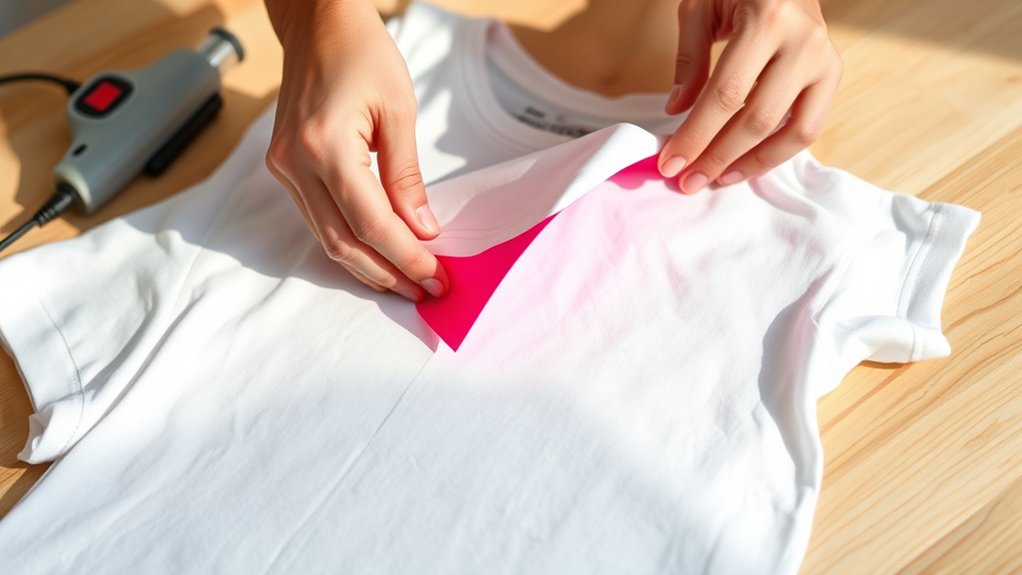
To remove heat press vinyl safely, start by heating the vinyl slightly to loosen the adhesive without damaging the fabric. Use a heat gun or an iron on low heat, applying it for 10-15 seconds.
Next, gently lift a corner of the vinyl with a plastic scraper or your fingernail, avoiding sharp objects that could harm the fabric. Slowly peel the vinyl back at a 45-degree angle, maintaining steady heat if needed to prevent tearing.
Gently lift a vinyl corner with a plastic scraper, peeling slowly at 45 degrees to protect the fabric.
If adhesive residue remains, apply a small amount of adhesive remover suitable for the fabric type, then blot gently with a clean cloth. Always test removal products on an inconspicuous area first.
These vinyl removal techniques prioritize fabric care, ensuring you preserve the garment’s integrity while effectively removing the vinyl.
How to Identify Your Heat Press Vinyl Type
After safely removing heat press vinyl, understanding the specific type you’re dealing with can help optimize future applications and removals. Begin by examining the vinyl’s surface texture and flexibility. Some vinyl types are matte and soft, while others are glossy and rigid.
Check the backing material; for example, polyurethane vinyl often has a thin, smooth backing, whereas PVC-based vinyl tends to be thicker. Note the vinyl’s thickness and stretchability, as these vinyl characteristics distinguish heat transfer vinyl (HTV) from adhesive vinyl.
You can also perform a simple heat test: HTV usually becomes pliable under heat, while adhesive vinyl softens less noticeably. Identifying your vinyl type accurately allows you to select the correct removal methods and tools, preventing damage to your substrate and ensuring efficient vinyl handling.
How to Use Heat and Tools to Loosen Stubborn Vinyl
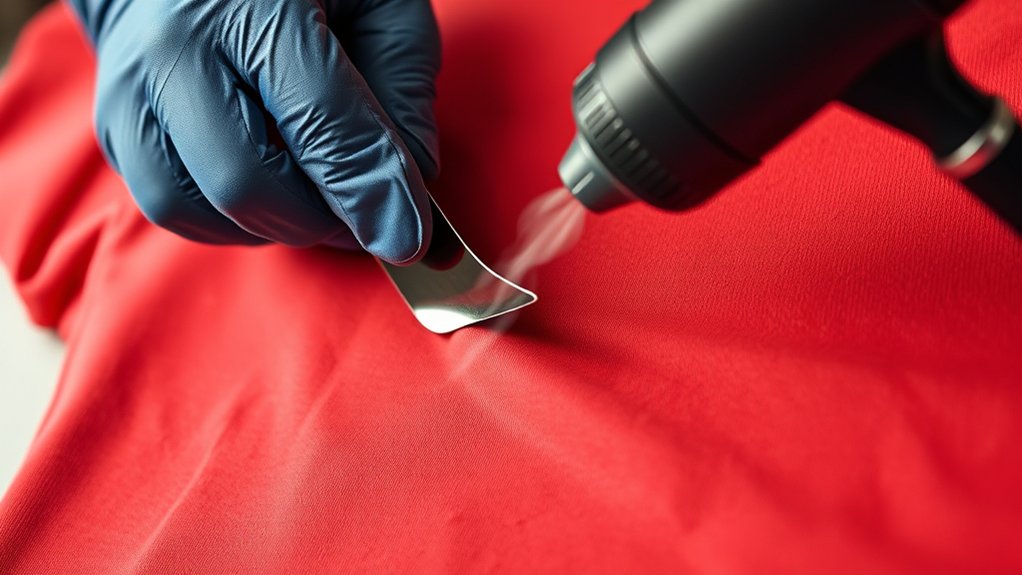
You’ll need to apply targeted heat using a heat gun or iron set to the appropriate temperature to soften the vinyl adhesive. Once warmed, use a thin, rigid tool like a scraper or weeding hook to gently lift the edges without damaging the fabric. Combining controlled heat with the right tools guarantees efficient removal of stubborn vinyl layers.
Applying Heat Techniques
One effective method for loosening stubborn heat press vinyl involves carefully applying controlled heat to soften the adhesive. Understanding heat application methods and vinyl adhesion principles lets you target the bond without damaging the fabric.
Use these techniques to optimize heat transfer:
- Preheat your heat press or iron to the recommended temperature, typically between 250°F and 300°F.
- Use a heat-resistant silicone mat or parchment paper to protect the surface.
- Apply steady, even pressure for 10-15 seconds to weaken the adhesive.
- Allow a brief cooling period; residual heat further loosens the vinyl.
- Repeat heating cycles if necessary, avoiding overheating to prevent fabric damage.
Effective Vinyl Removal Tools
Although applying heat softens the vinyl adhesive, using the right tools is crucial to safely and effectively lift stubborn vinyl from fabric. Start with a plastic scraper or a specialized vinyl removal tool to gently pry the edges without damaging the fabric. Avoid metal tools that can tear or puncture the material.
Use a heat gun or a household iron set to low heat to reactivate the adhesive as you work. Apply consistent, moderate pressure with the tool while reheating to loosen the vinyl gradually. For persistent spots, tweezers help to grip and peel small sections.
Incorporate these vinyl removal techniques systematically to minimize stress on the fabric. Remember, following vinyl care tips like testing on scrap material guarantees you avoid irreversible damage during removal.
How to Remove Residue After Taking Off Heat Press Vinyl
After removing heat press vinyl, you may find stubborn adhesive residue left on the fabric or surface. For effective residue removal and adhesive cleanup, follow these steps carefully to avoid damaging the material.
Start by softening the adhesive with gentle heat using a hairdryer or heat gun on low. Then, apply a small amount of adhesive remover or rubbing alcohol to a clean cloth and dab the residue. Gently rub in circular motions until the residue loosens.
After loosening, wash the area with warm soapy water to remove any chemical traces. Finally, air dry or pat dry with a clean towel.
- Use low heat to loosen adhesive residue
- Select appropriate adhesive removers safe for fabric
- Apply remover sparingly to prevent damage
- Use soft cloths for gentle rubbing
- Clean residue and chemicals thoroughly with soap and water
How to Protect Fabric When Removing Heat Press Vinyl
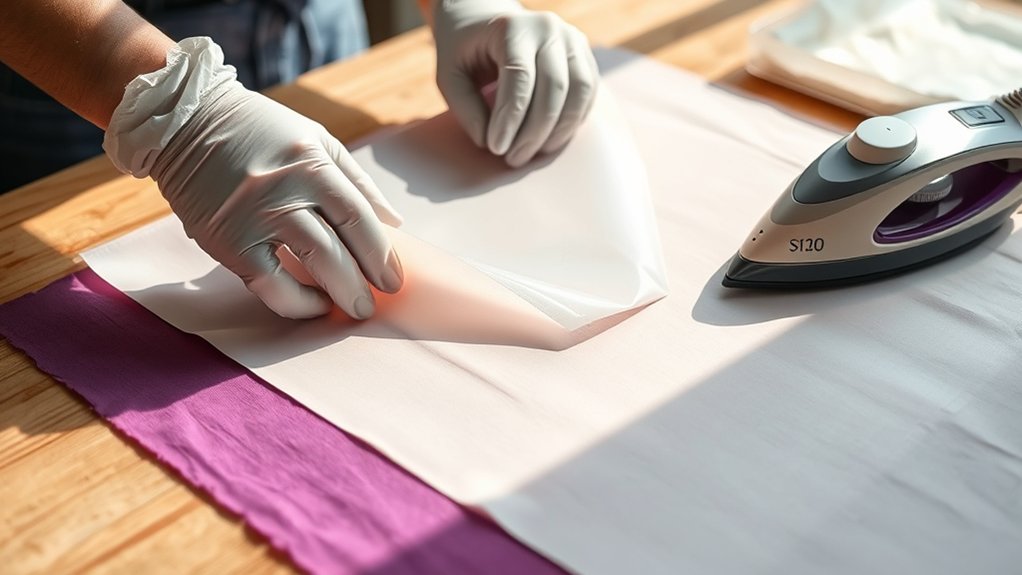
Protecting your fabric during heat press vinyl removal prevents damage and preserves the garment’s quality. To guarantee proper fabric care, begin by testing a small, inconspicuous area to assess heat tolerance.
Use protective measures such as a Teflon sheet or parchment paper between the heat source and fabric to evenly distribute heat and prevent scorching. Avoid excessive heat and prolonged exposure; adjust temperature and timing based on fabric type.
When peeling vinyl, lift slowly at a low angle to minimize stress on fibers. If residue remains, opt for gentle manual removal rather than harsh scraping. Always allow the fabric to cool before handling further. These precise steps maintain fabric integrity while effectively removing heat press vinyl, optimizing both safety and garment longevity.
When Should You Use Chemical Removers for Heat Press Vinyl?
When do you need to turn to chemical removers for heat press vinyl? Use chemical removers when mechanical methods fail or risk damaging the fabric. Chemical removers are effective for stubborn vinyl or complex designs that won’t peel easily. Prioritize chemical safety by working in a well-ventilated area and wearing gloves.
Consider chemical removers if:
- Heat press vinyl is deeply embedded or cured
- Fabric is delicate and prone to damage
- Vinyl alternatives with stronger adhesives were used
- Mechanical removal leaves residue or tears fabric
- You have tested remover compatibility on a fabric scrap
Always follow product instructions and test on inconspicuous areas first. Using chemical removers judiciously preserves fabric integrity and guarantees thorough vinyl removal when other methods fall short.
Frequently Asked Questions
Can Heat Press Vinyl Be Reused After Removal?
You generally can’t reuse heat press vinyl after removal due to adhesive residue concerns. However, mastering vinyl reapplication techniques might help minimize damage. Expect compromised adhesion and reduced durability when attempting to reuse removed vinyl.
What Causes Heat Press Vinyl to Peel Prematurely?
Sometimes, your vinyl just decides to take an early exit. Poor adhesive quality or incorrect application temperature usually causes this.
Guarantee precise heat and pressure settings to keep the vinyl bonded firmly and prevent premature peeling.
How Long Does Heat Press Vinyl Typically Last on Fabric?
You can expect heat press vinyl to last 20-50 washes, depending on vinyl durability factors and fabric care tips. Always wash inside out in cold water and avoid high heat drying to maximize longevity.
Are There Eco-Friendly Vinyl Options for Heat Pressing?
Yes, you can use eco friendly materials like biodegradable or water-based heat press vinyl. Choose these options to support sustainable practices, reduce environmental impact, and guarantee your designs remain durable and vibrant on fabric.
Can Heat Press Vinyl Damage Different Fabric Types?
You won’t always damage fabric, but heat press vinyl demands careful fabric compatibility checks. Ignoring heat sensitivity risks scorching delicate fibers or warping synthetics. Adjust temperature, pressure, and time precisely to preserve fabric integrity during application.
Conclusion
Removing heat press vinyl doesn’t have to feel like wrestling with a stubborn shadow. Start by identifying the type of vinyl you’re working with. Then, apply controlled heat to soften the adhesive.
Use the right tools to peel the vinyl away cleanly and safely. Always protect your fabric during the process. Tackle any residue promptly to preserve your garment’s integrity.
Save chemical removers as a last resort, and follow the instructions carefully. With these steps, you’ll master heat press vinyl removal like a pro, avoiding damage and frustration every time.