
You find printer ink expensive because printer ink pricing reflects advanced technology, precise chemical formulations, and proprietary designs.
Printer companies use microchip sensors and licensed cartridges to control usage and limit alternatives. This strategy often involves selling printers cheaply but relying on ink sales for profit.
Ink’s quality, size, and delivery systems also affect costs. Strict manufacturing and packaging processes add additional overhead.
If you want to understand the full reasons behind these costs and ways to reduce them, there’s more insight to explore.
Key Takeaways
- Printer ink costs reflect expensive raw materials, advanced formulations, quality control, and packaging expenses.
- Microchip sensors and precision nozzles raise production costs to ensure ink accuracy and monitor usage.
- Proprietary cartridge designs and patents limit competition, keeping original ink prices high.
- Printer companies often sell printers cheaply but rely on ink sales for profit through recurring purchases.
- Smaller cartridge sizes and frequent replacements increase overall ink expenses for consumers.
What Makes Printer Ink So Expensive?
Although printer ink might seem overpriced at first glance, several factors contribute to its high cost. You need to recognize that printer ink pricing reflects more than just the raw materials; it includes research and development, manufacturing complexities, and stringent quality control.
Companies invest heavily to guarantee ink delivers consistent color accuracy and print longevity. Consumer perceptions also play a significant role, as many view ink purchases as recurring expenses, influencing pricing strategies. Additionally, the packaging and distribution costs impact the final price you pay.
When you analyze printer ink pricing objectively, it becomes clear that its expense stems from multifaceted considerations beyond the cartridge’s physical contents, aiming to balance product performance, brand value, and market demand. Understanding this helps you grasp why ink costs remain elevated.
How Ink Cartridge Technology Raises Printer Ink Prices
Because ink cartridge technology integrates advanced features like microchip sensors and precision nozzles, it directly contributes to higher printer ink prices. These innovations improve ink usage efficiency and enhance ink cartridge durability, but they also increase manufacturing complexity and costs.
You benefit from precise ink delivery, which reduces waste, yet this precision demands costly components and research. The table below outlines key technological aspects affecting pricing:
| Feature | Purpose | Impact on Price |
|---|---|---|
| Microchip Sensors | Monitor ink levels and usage | Raises production cost |
| Precision Nozzles | Control ink droplet size | Increases component cost |
| Durable Materials | Enhance cartridge lifespan | Raises material cost |
| Smart Authentication | Prevent third-party cartridges | Adds licensing fees |
| Ink Flow Control | Optimize ink usage efficiency | Requires advanced design |
Understanding these factors clarifies why ink cartridges remain expensive despite technological benefits.
How Ink Quality and Composition Affect Printer Ink Costs
You’ll find that the complexity of ink formulations directly influences printer ink costs, as advanced chemical blends require more precise manufacturing processes.
Strict quality control standards guarantee consistency and performance but also add to production expenses. Understanding these factors helps explain why higher-quality inks often come with a steeper price tag.
Ink Formulation Complexity
When you examine printer ink costs, the complexity of ink formulation plays an essential role in determining price. The ink formulation ingredients must meet strict criteria for color vibrancy, drying time, and compatibility with different printer models.
These ingredients often include specialized pigments, solvents, and additives that enhance performance but increase production costs. The ink formulation processes require precise blending and rigorous testing to guarantee consistency and prevent clogging in printer nozzles.
Manufacturers invest heavily in research to optimize these processes, balancing durability and print quality. This intricate combination of materials and methods drives up the cost of ink.
Quality Control Standards
The meticulous formulation of printer ink sets the stage for stringent quality control standards that directly impact ink costs. You’ll find that quality assurance involves rigorous testing to guarantee consistent color accuracy, drying time, and nozzle compatibility.
These processes increase manufacturing complexity, driving up expenses. Here’s a breakdown of key quality control factors:
| Quality Control Aspect | Impact on Costs |
|---|---|
| Color Consistency | Requires precise pigment ratios |
| Drying Time | Involves chemical balancing |
| Nozzle Compatibility | Demands extensive testing |
How Printer Design Impacts Ink Use and Price
You’ll find that cartridge size and capacity directly influence how often you need replacements, affecting overall ink expenses. The way printheads are integrated can change ink efficiency and maintenance costs by altering how ink is deposited.
Additionally, ink delivery mechanisms determine the consistency and amount of ink used per print, impacting both consumption and price.
Cartridge Size And Capacity
Although cartridge size might seem like a simple feature, it directly affects both ink consumption and overall printing costs. When you consider cartridge dimensions, larger cartridges hold more ink volume, allowing for extended printing before needing replacement.
However, bigger cartridges often come with a higher upfront cost, which may seem expensive but can reduce the cost per page over time. Conversely, smaller cartridges may seem cheaper initially but require frequent replacements, increasing your total expense.
Additionally, printer manufacturers design cartridges to balance size with printer compatibility and performance. By controlling cartridge dimensions, they influence how much ink you use per print job and how often you must buy new cartridges.
Understanding this relationship helps you make informed decisions about the printers and cartridges that best fit your printing needs and budget.
Printhead Integration Effects
Because printhead design directly influences how ink is delivered onto the page, it plays a crucial role in both ink efficiency and overall printing costs. When you understand printhead technology and integrated systems, you see why printer design impacts ink use and price. Consider these factors:
- Printhead Integration: Printers with integrated printheads often require cartridge replacement for printhead wear, increasing costs.
- Printhead Longevity: Durable printheads reduce frequency of replacements, lowering long-term expenses.
- Ink Control Precision: Advanced printhead technology delivers ink more precisely, minimizing waste and saving ink.
- System Complexity: Integrated systems may boost reliability but can limit user options for cheaper ink refills.
Ink Delivery Mechanisms
When printers deliver ink onto paper, the specific mechanisms they use greatly affect both ink consumption and cost efficiency. You’ll find that different ink delivery systems, such as thermal bubble, piezoelectric, or continuous inkjet, vary in how precisely they deposit ink droplets.
This precision directly influences how much ink is wasted or effectively used. Additionally, cartridge design plays a significant role; some cartridges integrate the printhead, while others separate it, impacting ink flow control and replacement costs.
A well-engineered cartridge design can minimize ink evaporation and clogging, helping you get more prints per cartridge. Understanding these factors helps explain why ink costs can be high: printers with less efficient ink delivery systems or costly cartridge designs tend to consume more ink and charge you more frequently for replacements.
How Printer Companies Keep Printer Ink Prices High
Since printer ink remains one of the most expensive consumables relative to its volume, printer companies have developed strategic practices to maintain high prices. You’ll notice these ink pricing strategies rely heavily on shaping consumer perception and controlling the market.
Here’s how:
- Proprietary Cartridges: They design cartridges to work only with their printers, limiting third-party alternatives.
- Microchip Technology: Embedded chips monitor ink levels, discouraging refills and enforcing cartridge replacement.
- Bundled Pricing: Printers are sold cheaply, shifting revenue dependency to ink sales.
- Patent Protections: They use patents to restrict competition and delay generic ink availability.
How to Save Money on Printer Ink Without Losing Quality
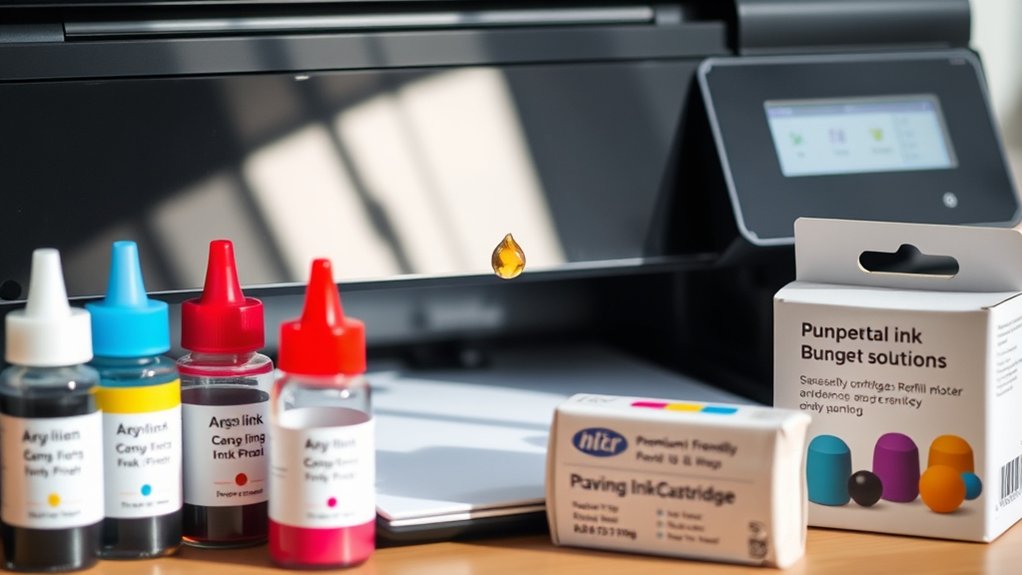
Understanding the strategies printer companies use to keep ink prices high helps you identify effective ways to cut costs without compromising print quality. Start by adjusting your printer settings. Use draft mode for everyday documents, which reduces ink usage while maintaining readability.
Implement ink saving tips like printing in grayscale when color isn’t necessary, and regularly clean print heads to prevent ink waste from clogs. Opt for fonts designed to use less ink, such as Ecofont or Century Gothic.
Additionally, print multiple pages per sheet to maximize paper and ink efficiency. These approaches promote cost effective printing by lowering ink consumption without sacrificing output quality. By combining these tactics, you can greatly reduce printing expenses while ensuring your documents remain clear and professional.
When to Choose Third-Party or Refilled Printer Ink Cartridges
Although original manufacturer cartridges often guarantee compatibility and print quality, you might consider third-party or refilled ink cartridges to reduce expenses. When deciding, evaluate these factors carefully through third party comparisons and the quality of refilled cartridges.
- Cost savings: Third-party and refilled cartridges typically cost less, offering significant budget relief.
- Print volume: If you print frequently, these options can lower overall expenses.
- Printer warranty: Verify that using non-original ink won’t void your warranty.
- Print quality and reliability: Assess reviews and tests to confirm acceptable output and cartridge longevity.
Frequently Asked Questions
How Long Does Printer Ink Typically Last Once Opened?
Once opened, your printer ink typically lasts six to twelve months, depending on ink storage conditions. Proper storage in a cool, dark place extends ink longevity, preventing drying and maintaining print quality over time.
Can Expired Printer Ink Still Be Used Effectively?
You can use expired ink, but its effectiveness declines, risking print quality and nozzle clogging.
For ideal printer maintenance, avoid expired ink usage to prevent damage and guarantee consistent, high-quality printing results over time.
Does the Color of Ink Affect Printing Speed?
You’ll find that color impact on printing speed is minimal; studies show ink viscosity varies by color, but modern printers adjust flow rates, ensuring consistent speed regardless of ink color or viscosity. This optimizes overall print performance effectively.
Are All Printers Compatible With Refillable Ink Tanks?
Not all printers support ink tank compatibility; you’ll find refillable printer options mainly in models designed for bulk ink use. Check specifications carefully to verify your printer can handle refillable tanks before purchasing or refilling.
How Does Environmental Temperature Impact Ink Performance?
When temperatures stray outside the ink’s cozy temperature range, its viscosity shifts, causing your printer to struggle. You’ll notice clogging or fading because ink flows less smoothly, impacting print quality and consistency in cooler or warmer conditions.
Conclusion
You might feel like printer ink costs an arm and a leg, but understanding the technology, quality, and business strategies behind it helps explain why prices stay sky-high.
Printer design and ink composition aren’t just technical details—they directly impact how much you pay. By exploring alternatives like refilled or third-party cartridges, you can save money without sacrificing quality.
Being informed lets you make smarter choices and avoid overpaying for something you use every day. Ultimately, knowing why printer ink is so expensive empowers you to manage your printing costs better.