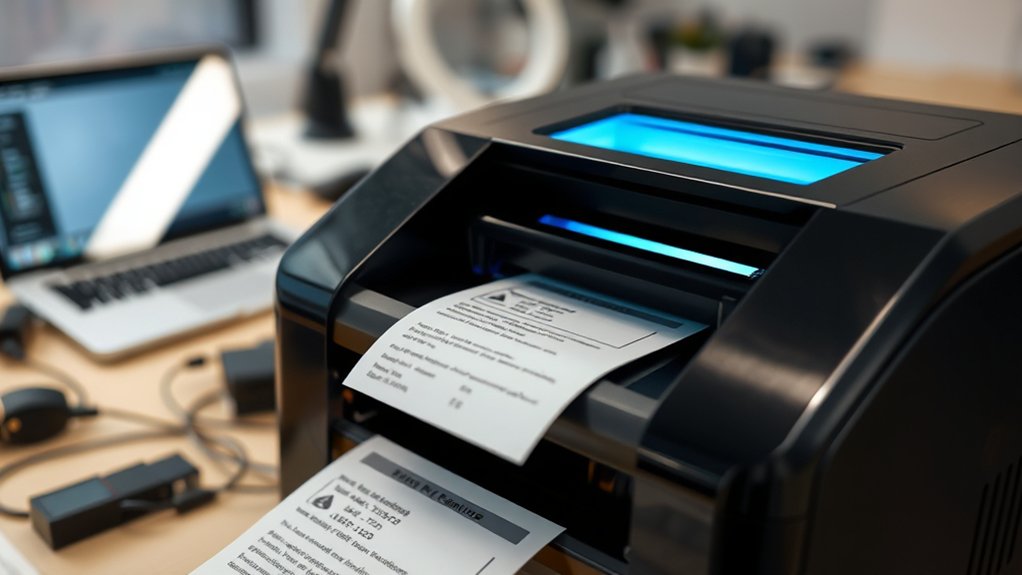

A thermal printer uses heat to create images on special paper without ink or toner, making it perfect for printing receipts, labels, and barcodes quickly and quietly.
This technology is widely used because it offers fast and reliable output, especially in retail and logistics settings.
There are two main types of thermal printers: direct thermal, which heats the paper itself, and thermal transfer, which uses a ribbon for more durable prints.
Each type has its advantages depending on the application and durability requirements.
Thermal printers boost efficiency by producing prints quickly and reducing maintenance needs.
Their trouble-free operation makes them a popular choice for businesses looking to streamline their printing tasks.
Key Takeaways
- A thermal printer uses heat to create images on special thermal paper without ink or toner. It activates tiny heating elements in the print head to produce fast, quiet prints.
- There are two types: direct thermal (heat-sensitive paper) and thermal transfer (uses ink ribbons).
- Thermal printers are common in retail, healthcare, and logistics for receipts, labels, and barcodes.
- They require minimal maintenance, mainly print head cleaning, to ensure consistent quality and prevent jams.
What Is Thermal Printing and How Does It Work
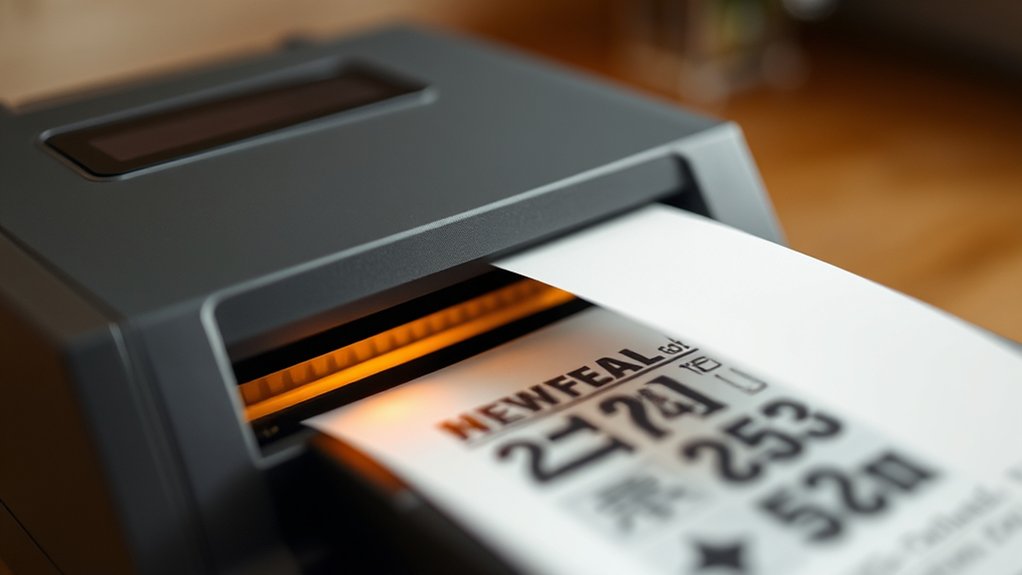
Thermal printing uses heat to create images on special paper, eliminating the need for ink or toner. You’ll find that thermal printing technology relies on print head mechanisms that apply controlled heat to thermal paper.
These print heads contain tiny heating elements that selectively activate to produce images or text. When the heat touches the paper, it changes color instantly, forming the desired print.
Tiny heating elements in print heads activate selectively, instantly changing paper color to create images or text.
This process is fast and quiet, making it ideal for receipts, labels, and tickets. Because you don’t have to worry about refilling ink or toner, thermal printers are low-maintenance and cost-effective.
Understanding how print head mechanisms work helps you appreciate why thermal printing technology remains popular in many industries seeking efficient, reliable printing solutions.
Types of Thermal Printers: Direct vs. Transfer
Although both direct and transfer printers use heat to create images, they operate differently and suit various applications. With direct printing, you apply heat directly to special thermal paper, causing it to darken where heated. This method is fast, simple, and cost-effective but works best for short-term labels or receipts as the print may fade over time.
Transfer printing, on the other hand, uses a heated printhead to transfer ink from a ribbon onto regular paper or synthetic materials. This produces durable, high-quality images resistant to heat, light, and moisture.
When choosing between direct printing and transfer printing, consider your need for longevity, print quality, and material compatibility. Direct printing excels in quick, temporary prints, while transfer printing suits long-lasting, robust labels.
Why Businesses Use Thermal Printers for Receipts
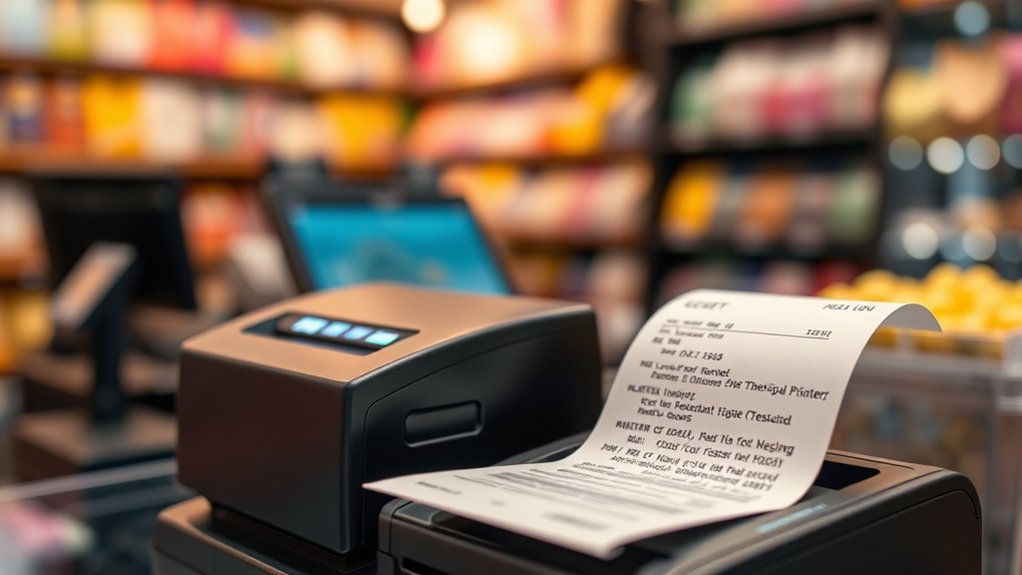
When you run a business, speed and reliability at the point of sale matter a lot. Thermal printers deliver both by producing receipts quickly and with minimal errors. You’ll appreciate their high receipt accuracy, which reduces mistakes that can frustrate customers and complicate transactions.
By using thermal printers, you guarantee that your customers get clear, legible receipts every time, boosting customer satisfaction. These printers operate quietly and require less maintenance, meaning fewer disruptions during busy hours. Plus, their compact design saves valuable counter space.
Choosing thermal printers for your receipts streamlines your checkout process, helps maintain accurate records, and keeps your customers happy. That’s why many businesses rely on them to handle daily transactions smoothly and efficiently.
Key Benefits of Thermal Printing Technology
You’ll find several advantages that make thermal printing technology a smart choice for various applications. One of the key thermal printing advantages is its speed; these printers produce prints rapidly, helping you save time during high-volume tasks.
Additionally, thermal printers require fewer moving parts, reducing maintenance needs and downtime. You’ll also appreciate the cost efficiency since thermal printers don’t use ink or toner, cutting ongoing supply expenses.
The prints are clear and durable, making them ideal for receipts, labels, and barcodes. Plus, thermal printers operate quietly, creating a better environment for you and your customers.
These benefits combine to provide a reliable, economical solution that meets your everyday printing demands without compromising quality or performance.
Thermal Printer Applications Across Industries
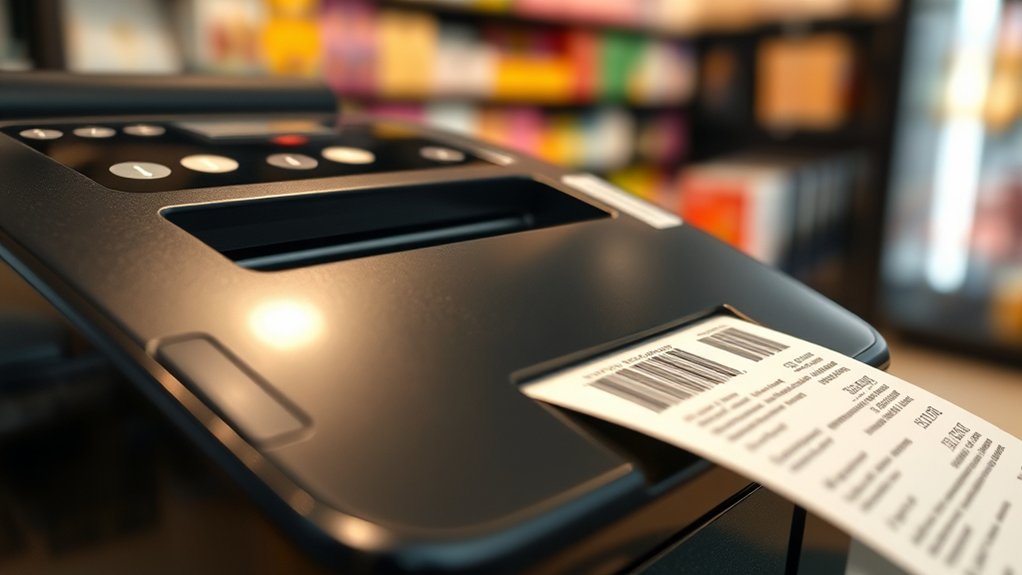
You’ll find thermal printers everywhere, from retail stores printing labels to hospitals managing patient records. They’re essential in logistics for creating shipping labels that keep packages on track. Understanding these applications shows how versatile and reliable thermal printing really is.
Retail Label Printing
Although many industries benefit from thermal printers, retail label printing stands out as one of the most common and essential applications. When you use a thermal printer in retail, you create durable, high-quality labels that help manage retail inventory efficiently.
These labels typically include barcodes, which speed up barcode scanning at checkout and during stocktaking. You’ll find thermal printers ideal because they produce clear, smudge-free prints quickly, reducing errors and improving overall workflow.
Whether you run a small boutique or a large store, thermal printing helps you track products accurately, streamline inventory management, and enhance customer service. By relying on thermal printers, you guarantee your retail operations stay organized and responsive to real-time inventory needs.
Healthcare Documentation
When documenting patient information, healthcare professionals rely on thermal printers to deliver fast, accurate, and legible prints. You’ll find that thermal printers enhance healthcare efficiency by minimizing errors in patient documentation, which is critical in medical settings.
These printers produce clear labels for patient wristbands, prescription bottles, and medical records, ensuring that essential information is always easy to read. Because thermal printing requires no ink, you avoid smudges and delays, helping you maintain a smooth workflow.
This reliability supports quick decision-making and improves overall patient care. If you want to streamline your documentation process and reduce administrative burdens, thermal printers offer a dependable solution tailored to the fast-paced demands of healthcare environments.
Logistics And Shipping
Because shipping depends on speed and accuracy, thermal printers play an essential role in logistics by producing clear, durable labels for packages and shipments. When you rely on thermal printers, you get smudge-resistant shipping labels that withstand handling and environmental conditions, ensuring your packages reach their destination without confusion.
This accuracy supports logistics optimization, reducing errors and delays.
You can use thermal printers to:
- Print barcodes for quick scanning
- Generate tracking labels on demand
- Create return address labels instantly
- Produce batch shipping labels efficiently
- Support real-time inventory updates via label printing
Tips for Maintaining and Troubleshooting Thermal Printers
To keep your thermal printer running smoothly, regular cleaning and proper care are essential. You’ll also want to know how to quickly fix common errors like paper jams or print quality issues.
Let’s explore some practical tips to help you maintain and troubleshoot your device effectively.
Cleaning and Care
Although thermal printers are designed for durability, regular cleaning and care play an essential role in ensuring consistent print quality and preventing malfunctions. Using proper cleaning techniques and care tips can extend your printer’s lifespan and reduce downtime.
Start by gently cleaning the thermal print head with isopropyl alcohol and a lint-free cloth to remove residue. Keep the platen roller free of dust and debris to avoid paper jams. Regularly inspect and clean the paper path to prevent feeding issues. Avoid using harsh chemicals that might damage sensitive parts.
Here are some key cleaning and care tips to follow:
- Use recommended cleaning pens or swabs for the print head
- Clean after every roll change or heavy use
- Keep the printer covered when not in use
- Avoid touching the print head directly
- Perform routine maintenance checks as per the manual
Common Error Solutions
Five common issues can disrupt your thermal printer’s performance, but most are easy to fix with quick troubleshooting. You might encounter error codes, poor print quality, or paper jams.
Start by checking error codes on your display or software to identify specific problems. Clean the printhead regularly to maintain peak print quality. Confirm you’re using compatible thermal paper to avoid jams or faded prints.
| Issue | Solution |
|---|---|
| Error Codes | Refer to manual, reset printer |
| Poor Print Quality | Clean printhead, check paper |
| Paper Jam | Clear jam, reload paper properly |
Following these tips helps you maintain your printer and quickly resolve common issues without professional help.
Frequently Asked Questions
Can Thermal Printers Print in Color?
Yes, you can print in color with color thermal printing, but it’s limited. Thermal printer technology mainly suits black and white.
Some advanced models use special ribbons or paper to produce basic color prints.
Are Thermal Printers Eco-Friendly?
Thermal printers, like a gentle breeze, support sustainability practices by using less energy and producing minimal waste. You’ll appreciate their waste reduction benefits, making them a smarter, eco-friendly choice for your printing needs.
What Is the Average Lifespan of Thermal Printer Paper?
You can expect thermal paper durability to last around 5 to 7 years if you store it properly. Thermal paper storage in a cool, dark place helps maintain its quality and prevents fading or damage over time.
Can Thermal Printers Print on Materials Other Than Paper?
Yes, you can use thermal printing applications on alternative printing materials like synthetic labels, fabrics, and plastic films. Just verify your thermal printer supports these materials for maximum print quality and durability.
How Do Thermal Printers Compare to Inkjet Printers in Cost?
Think of thermal printers as fuel-efficient cars; you’ll enjoy better cost efficiency and lower maintenance expenses compared to inkjets. Thermal printers save you money over time, especially if you print frequently and want hassle-free upkeep.
Conclusion
If you think thermal printers are just simple gadgets, think again—they’re the superheroes of fast, reliable printing! Whether you’re running a busy store or managing inventory, these printers deliver crisp, smudge-free results at lightning speed.
With minimal maintenance and versatile uses, they’re practically unstoppable. Thermal printers handle high-volume tasks efficiently, making them ideal for various business environments.
So, don’t underestimate the power of thermal printing—it’s the secret weapon that keeps your business running smoothly, saving you time and money every single day. Thermal printers truly are an essential tool for modern operations.