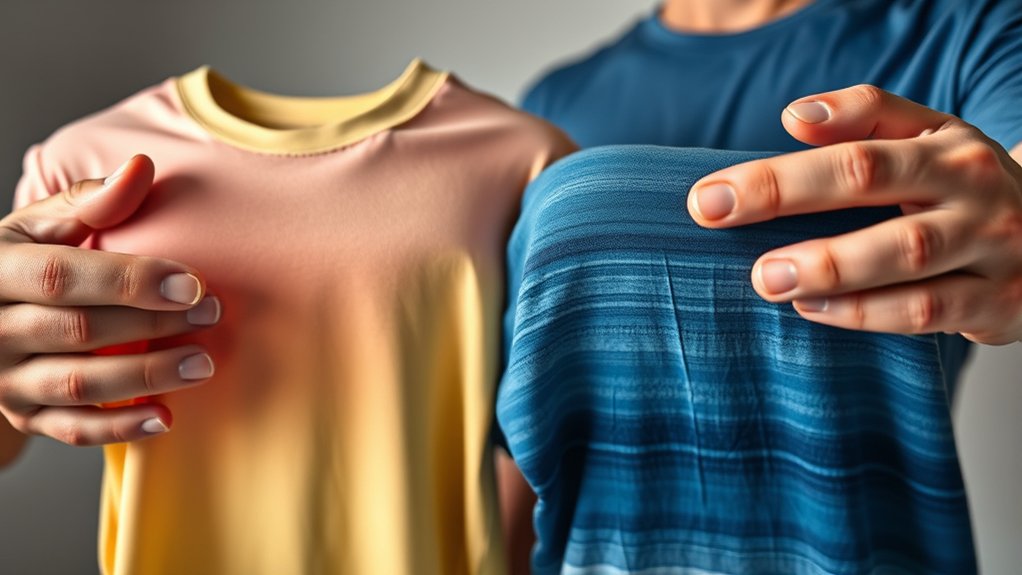

DTF shirt printing vs screen printing: if you want vibrant, detailed prints quickly, DTF printing shines with its easy setup and fine color gradients.
It’s perfect for small batches and polyester blends.
But if you crave bold, long-lasting designs that hold up wash after wash—especially on cotton—screen printing might be your best bet.
It’s cost-effective for large runs but slower to set up.
Curious which process fits your fabric, design, and budget best? Let’s explore the details further.
Key Takeaways
- DTF printing excels in detailed, multicolor designs with quick setups, while screen printing is ideal for bold, simpler designs requiring multiple screens.
- DTF works best on polyester blends, producing vibrant colors, whereas screen printing performs best on 100% cotton for deep, durable ink bonding.
- Screen printing generally offers greater durability and wash resistance, while DTF prints are flexible but may fade slightly after many washes.
- DTF is cost-effective for small batches with minimal setup, whereas screen printing becomes more economical for large volume orders.
- DTF enables faster production and turnaround times, making it suitable for short runs, while screen printing is slower but preferred for mass production.
DTF vs Screen Printing: Which Shirt Printing Method Is Right for You?
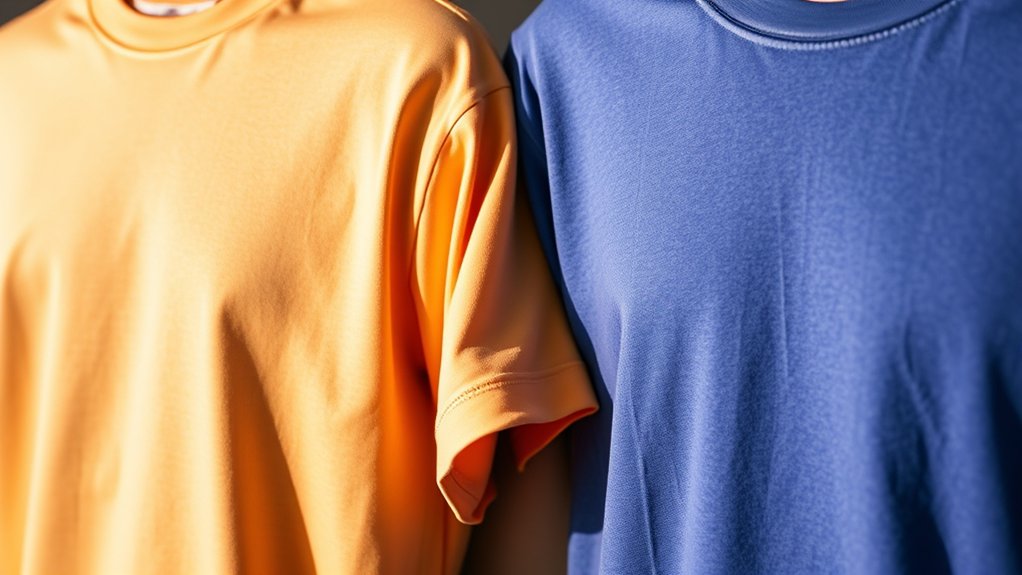
Wondering which shirt printing method fits your style and needs? You’re at the crossroads of design trends and printing techniques that shape your wardrobe’s personality.
DTF (Direct to Film) offers vibrant, detailed prints perfect for complex, colorful designs that pop on any fabric. It suits you if you crave versatility and quick turnaround.
On the other hand, screen printing delivers bold, durable images with a classic feel, ideal for simpler designs and mass production. It’s your go-to for that timeless, textured finish.
Both methods embrace current design trends, but your choice hinges on whether you prioritize vivid detail or lasting durability. Picture your ideal shirt, then let that vision guide you to the right printing technique.
How Do DTF and Screen Printing Work?
You start with DTF printing by layering vibrant inks onto a special film, then heat-pressing that design onto your shirt for crisp, full-color results.
Screen printing, on the other hand, pushes ink through stenciled mesh screens, building your image one color at a time with bold, lasting vibrancy. Understanding these processes helps you see which method brings your vision to life best.
DTF Printing Process
Although both DTF and screen printing create vibrant designs, their processes differ considerably. With DTF printing, you start by printing your artwork onto a special film using water-based inks. Then, you apply a layer of adhesive powder that sticks to the wet ink.
Once heated and cured, this dtf transfer creates a flexible, high print quality design ready to be pressed onto fabric. This method captures fine details and gradients beautifully.
| Step | Description |
|---|---|
| Print on Film | Inkjet prints design on film |
| Apply Adhesive | Powder sticks to wet ink |
| Heat Cure | Powder melts, bonding to design |
| Transfer to Fabric | Heat press applies design to shirt |
This precise process lets you achieve vibrant, durable prints with smooth finishes.
Screen Printing Method
Screen printing uses a time-tested technique that layers ink through a fine mesh stencil to create bold, vibrant designs on fabric. You’ll start by preparing a screen with your design, blocking out areas where ink shouldn’t pass.
Then, you press ink types, usually plastisol or water-based, through the mesh directly onto the shirt. Each color requires its own screen, so you’ll align and print layers carefully.
While this method delivers rich, durable results, it does come with design limitations: intricate gradients and photo-realistic images are tricky due to the layering process. You’ll find screen printing shines best with solid colors and simple shapes.
Its tactile ink finish and longevity make it a classic choice when you want your design to pop and last.
Which Shirt Printing Method Handles Complex and Colorful Designs Better?
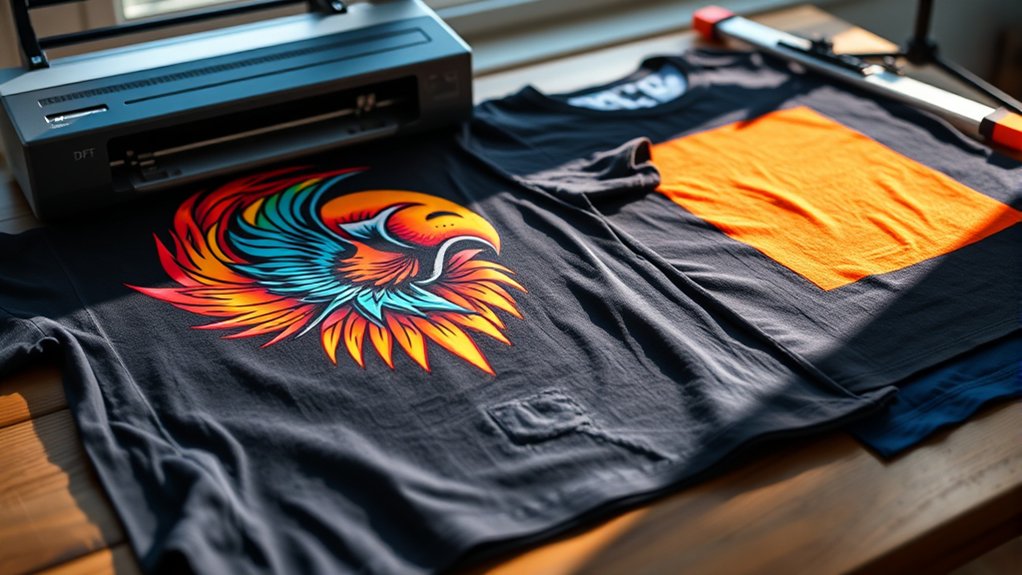
When your design bursts with intricate details and a kaleidoscope of colors, direct-to-film (DTF) printing shines brightest. It captures colorful designs with stunning accuracy, faithfully reproducing complex patterns that might overwhelm traditional methods.
You’ll see every fine line and subtle gradient pop vividly on your shirt, thanks to DTF’s digital precision. Screen printing, while reliable for bold, simple graphics, struggles to handle too many colors without blurring or misalignment.
If your artwork demands vibrant hues and sharp, intricate elements, DTF gives you that flawless finish, layer by layer, preserving your vision. So, when complexity meets color, DTF stands out, making your shirt a walking masterpiece without sacrificing detail or vibrancy.
What Fabrics Work Best for DTF and Screen Printing Shirts?
Choosing the right fabric can make all the difference in how your printed design looks and lasts. For DTF printing, polyester and polyester blends shine because their smooth surfaces enhance fabric compatibility, resulting in vibrant, detailed prints. Cotton works too but can slightly dull colors.
Screen printing thrives on natural fibers like 100% cotton, where ink bonds deeply, boosting print quality with rich, lasting colors and crisp edges. Blends can work but may affect ink absorption and sharpness.
When you pick your fabric, consider how each method interacts with the material’s texture and fiber content. Your choice directly impacts the print’s vibrancy and durability, ensuring your shirt turns heads for all the right reasons. Make sure your fabric choice complements your desired print method for excellent results.
How Do Durability and Washability Compare Between DTF and Screen Printing?
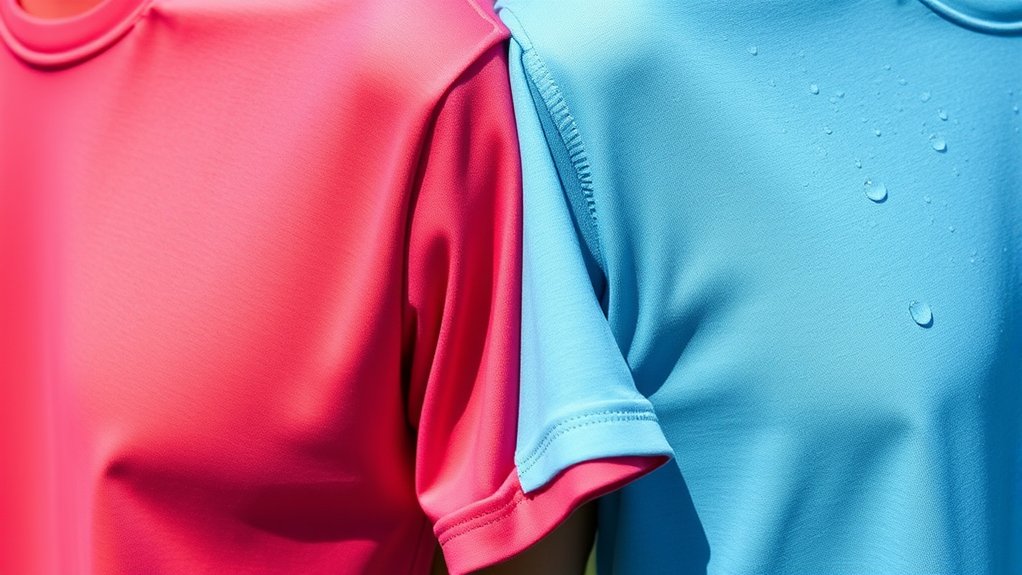
Although both DTF and screen printing deliver eye-catching designs, they differ markedly in how well they stand up to wear and washing. When considering durability factors, DTF prints tend to flex with the fabric, offering resistance to cracking and peeling over time. Screen prints, meanwhile, embed ink more deeply, often lasting longer through heavy use.
DTF flexes with fabric resisting cracks, while screen printing embeds ink for longer-lasting durability.
In washability tests, you’ll notice:
- DTF’s vibrant colors may fade slightly after many washes but maintain overall integrity.
- Screen printing withstands repeated laundering with minimal color loss.
- Both methods benefit from cold washes and air drying to extend lifespan.
Choosing between them depends on your priorities: if you want softness with decent durability, DTF’s a solid pick; for rugged longevity, screen printing holds the edge.
What Are the Cost Differences for Small and Large Shirt Printing Orders?
Because printing costs shift dramatically with order size, understanding the price differences between small and large shirt runs can save you a bundle. When you order just a handful of shirts, DTF printing usually shines. Its setup costs are low, making it budget-friendly for small order quantities.
Screen printing, however, demands initial setup, so it’s pricier for tiny batches. But as your order quantities climb, bulk pricing kicks in, and screen printing becomes more economical. The per-shirt cost drops considerably, especially for simple designs and limited colors.
In contrast, DTF maintains a relatively steady cost per shirt regardless of volume. So, if you’re planning a small run, lean toward DTF. For large orders, screen printing’s bulk pricing often delivers the best bang for your buck.
How Fast Can You Expect Your Shirts With DTF and Screen Printing?
How quickly do you need your custom shirts? If speed’s your priority, understanding print speed and order turnaround can save you time. DTF printing excels with rapid setups, pushing out vibrant shirts in record time, making it ideal for tight deadlines. Screen printing, while brilliant for bulk orders, demands more prep, slowing order turnaround.
Here’s a quick look at the timing differences:
DTF Printing: Fast print speed, minimal setup, perfect for quick, small to medium runs.
Screen Printing: Longer setup, slower print speed initially, but efficient for large batches.
Order Turnaround: DTF often ships within days; screen printing might take a week or more depending on volume.
Choose based on your timeline to get your shirts exactly when you need them.
Which Printing Method Is Easier for On-Demand Shirt Printing?
When you need a single custom shirt or a few on demand, ease and speed become your best friends. DTF printing shines here, offering quick printing setup and minimal prep time. You simply print your design directly onto a special film, then transfer it to the shirt with a heat press. No screens, no lengthy drying.
This streamlined process boosts your on demand efficiency, letting you turn orders around fast without sacrificing quality.
Screen printing, on the other hand, demands a more involved setup. Each color requires its own screen, and aligning them takes time, making it less agile for small batches.
While perfect for large runs, screen printing’s setup can slow you down when you’re focusing on quick, on-demand shirt printing. For speed and simplicity, DTF is the easier choice.
Frequently Asked Questions
Can DTF and Screen Printing Be Combined on the Same Shirt?
You can combine DTF and screen printing on one shirt to boost design flexibility and production efficiency. This blend lets you layer vibrant details with bold textures, creating eye-catching, dynamic apparel that stands out in any crowd.
Are There Environmental Concerns With DTF or Screen Printing?
You might wonder if your shirt’s journey harms Earth. Both DTF and screen printing have environmental impacts, but you can choose sustainability practices like eco-friendly inks and waste reduction to keep your prints vibrant and the planet happy.
How Do DTF and Screen Printing Inks Differ Chemically?
You’ll find ink composition differs: DTF inks use water-based pigment with additives for flexibility, while screen printing inks rely on plastisol or solvent-based formulas. These offer distinct chemical properties that affect texture, adhesion, and durability on fabric.
Can DTF and Screen Printing Be Used on Dark-Colored Shirts Equally Well?
Imagine you’re printing a vibrant design on a black tee: DTF shines with color vibrancy and print durability on dark fabrics. Screen printing struggles without extra white ink layers to maintain boldness and longevity.
What Equipment Maintenance Is Required for DTF Vs Screen Printing?
You’ll need regular equipment upkeep for both, but DTF demands frequent printhead cleaning and powder system checks. Screen printing requires consistent screen preparation and squeegee care. Stick to strict maintenance schedules to keep prints flawless.
Conclusion
So, which shirt printing method fits your style and needs best? If you want vibrant, detailed designs with quick turnaround, DTF might be your go-to. But if you’re after durability and cost-efficiency for bulk orders, screen printing shines.
Consider your fabric, design complexity, and budget—your perfect print is just a choice away. Ready to wear your vision? Whether bold or classic, the right method brings your ideas to life in vivid color.
In the end, choosing between DTF shirt printing vs screen printing depends on what matters most to you: speed and detail or longevity and economy. Both have unique strengths that can make your custom shirt stand out.