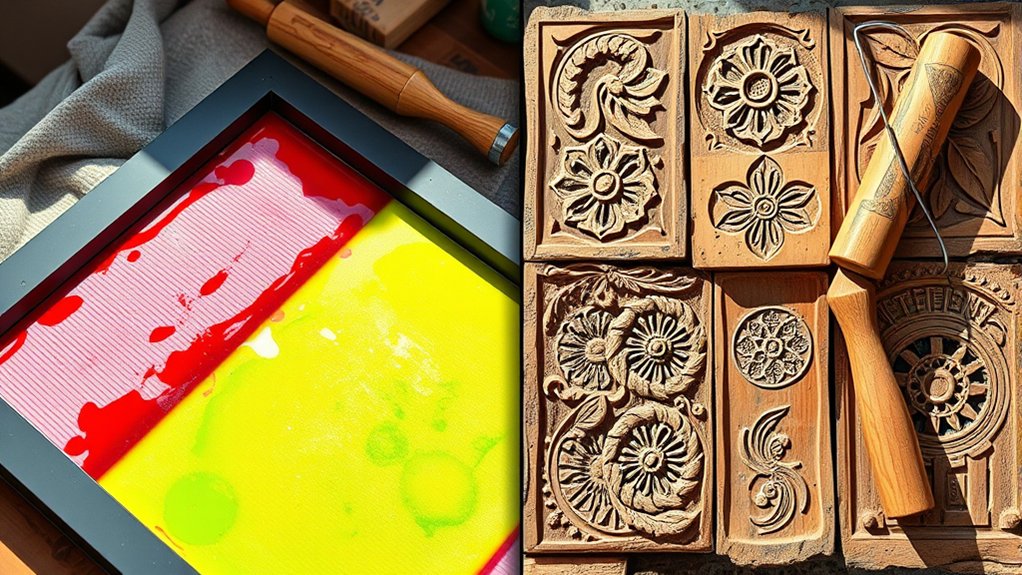

Screen printing vs linocut offers distinct advantages depending on your project needs.
Screen printing delivers vivid, sharp designs quickly, using mesh screens and layered ink for smooth, durable prints—perfect for large runs.
Linocut, meanwhile, offers a handcrafted feel with textured, bold lines carved into blocks, but it’s slower and suits smaller batches.
Costs and longevity favor screen printing for bigger projects, while linocut shines in artistic expression.
If you want to explore which method fits your creative or commercial needs best, more insights await.
Key Takeaways
- Screen printing uses mesh screens and stencils to produce smooth, vibrant prints with fine detail and sharp edges.
- Linocut involves hand-carving a linoleum block, creating textured prints with bold, expressive lines and moderate color intensity.
- Screen printing is faster and more cost-effective for large print runs, while linocut suits smaller, artisanal batches.
- Screen prints have thicker ink layers, offering superior durability and resistance to fading compared to linocut’s thinner, hand-pressed ink.
- Screen printing supports multi-layer color complexity, whereas linocut typically uses solid, flat colors with simpler layering.
How Screen Printing Works: Process and Materials
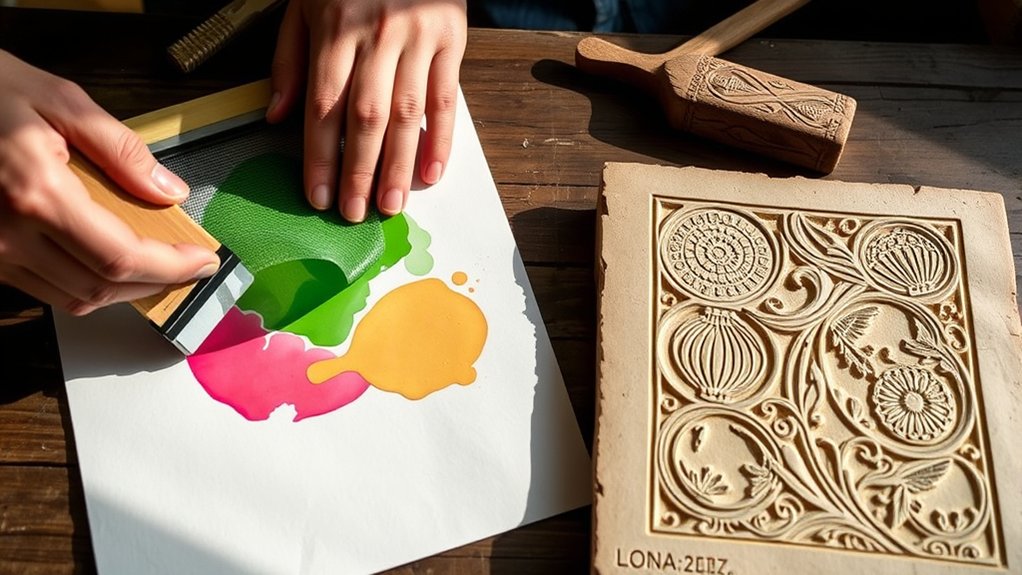
Although screen printing might seem complex at first, you’ll find the process straightforward once you grasp its core steps. You start by preparing a mesh screen, typically made from polyester or nylon, stretched tightly over a frame. The mesh screens vary in mesh count, affecting ink flow and detail precision.
Next, you apply a stencil on the screen to block out areas where you don’t want ink. When you flood the screen with ink, it passes through the open mesh areas onto your substrate.
Different ink types, like plastisol, water-based, or discharge ink, offer unique finishes and durability. By mastering screen tension and ink viscosity, you control the print’s sharpness and vibrancy, making screen printing a versatile and efficient method for producing bold, consistent designs.
How Linocut Works: Tools and Techniques
Linocut involves carving a design into a linoleum block using specialized tools like gouges and knives. You’ll start by sketching your design on the block, then use carving tools to remove areas that won’t hold ink.
These linocut techniques require steady hands and deliberate cuts to create clean lines and textures. The carving tools come in various shapes and sizes, allowing you to achieve fine details or bold, graphic effects.
Once carved, the raised surface holds ink, while the recessed areas remain blank. You’ll apply ink evenly with a roller before pressing paper onto the block. Understanding these tools and techniques is essential for mastering linocut’s tactile, hands-on process, making your prints visually striking and uniquely textured.
Color and Detail: Screen Printing Vs Linocut Compared
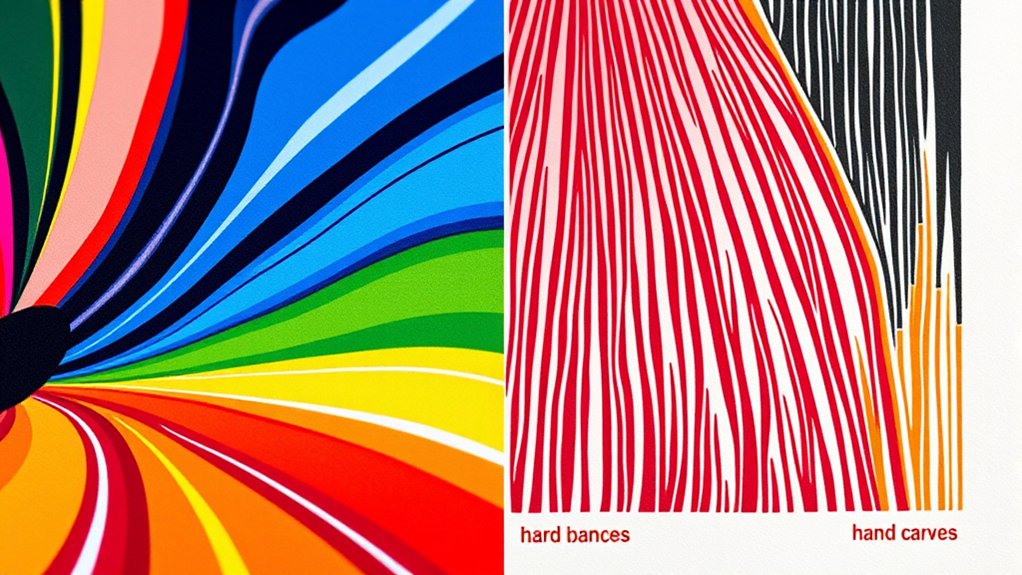
Mastering the carving process sets the stage for exploring how linocut and screen printing handle color and detail differently. When you choose screen printing, you get superior color vibrancy and the ability to layer multiple hues seamlessly.
Linocut, however, offers bold, tactile impressions with a charming, handcrafted feel but limits fine detail precision.
| Feature | Screen Printing | Linocut |
|---|---|---|
| Color Vibrancy | High; vivid, multi-layered | Moderate; solid, flat |
| Detail Precision | Fine lines, sharp edges | Coarser, expressive lines |
| Texture | Smooth, consistent | Textured, carved patterns |
This comparison helps you decide which method suits your artistic vision and project requirements best.
Which Printing Method Is Faster and Cheaper?
You want to get your prints done quickly without breaking the bank, so understanding the speed and cost differences is key. Screen printing often handles large runs faster but needs upfront setup, while linocut offers lower initial costs but takes longer per print.
Let’s compare how each method stacks up in efficiency and expense.
Speed Comparison
When comparing speed and cost, screen printing often takes the lead, especially for larger runs. Efficiency metrics clearly show that once your screen is prepared, you can produce dozens of prints quickly, thanks to its streamlined process.
Time analysis reveals that each additional print requires minimal extra effort, making it ideal if you need many copies. Linocut, on the other hand, demands more hands-on time per print because you carve and hand-press each design individually.
While linocut offers a unique, tactile quality, its slower pace limits output volume. So, if your priority is speed, screen printing delivers faster turnaround times and consistent results, helping you maximize productivity without sacrificing quality in high-volume jobs.
Cost Efficiency
Although screen printing requires an upfront investment in materials and setup, it becomes more cost-effective as the volume increases. When considering budget considerations, you’ll find screen printing offers lower cost per unit for large runs, despite higher initial material expenses. Linocut, by contrast, demands less initial spending but grows costly and time-consuming with bigger orders.
To weigh your options, consider:
- Upfront costs: screens, inks, and equipment vs. carving tools and linoleum
- Material expenses scaling with volume
- Time investment per print affecting labor costs
If you plan to produce many prints, screen printing saves money and time. For limited, artisanal runs, linocut may better suit your budget. Understanding these factors helps you choose the method that fits your financial and production goals.
Which Prints Last Longer? Durability of Screen Printing Vs Linocut?
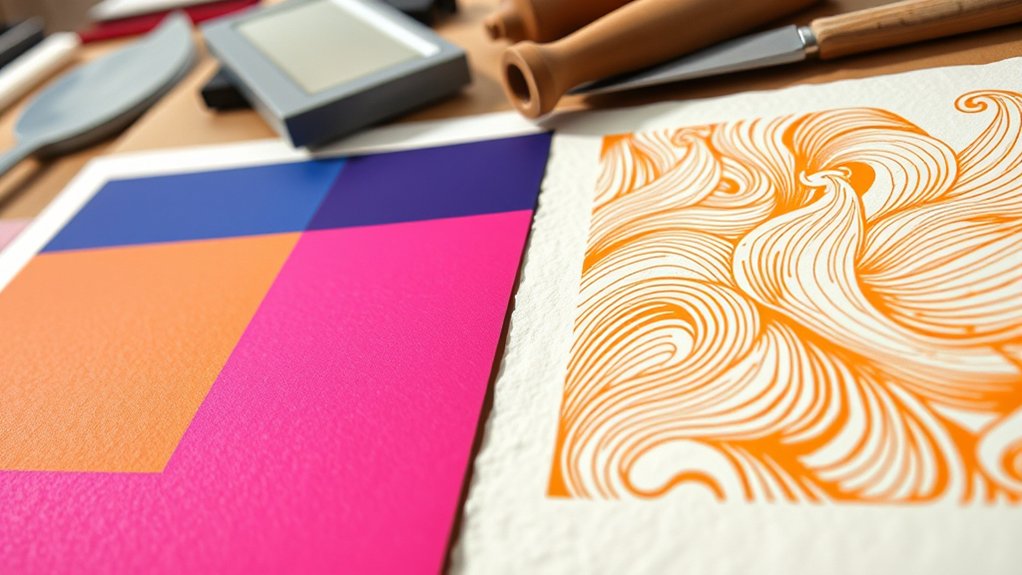
Since the longevity of your print matters, understanding how screen printing and linocut hold up over time is essential. Durability factors like ink type, substrate, and technique influence print longevity.
Screen printing uses thicker layers of ink, creating vibrant, resilient prints that resist fading and cracking. This method excels on textiles and surfaces exposed to regular wear.
Linocut prints, however, rely on thinner ink application and hand-pressed impressions, which may fade or wear faster, especially with frequent handling or washing. While linocut offers a unique, textured aesthetic, it generally lacks the robust durability of screen printing.
If your project demands lasting vibrancy and toughness, screen printing often outperforms linocut in print longevity due to its ink density and application method.
How to Choose Between Screen Printing and Linocut for Your Project
Why should you pick screen printing over linocut or vice versa? It boils down to your project requirements and artistic preferences. Screen printing suits you if you need vibrant colors, sharp details, and high-volume runs. Linocut fits better when you want a handcrafted, textured look with limited colors and smaller batches.
Consider these factors to decide:
- Complexity & Detail: Screen printing handles intricate designs; linocut shines with bold, graphic shapes.
- Production Volume: Screen printing is cost-effective for large runs; linocut works well for unique, small projects.
- Aesthetic & Feel: Choose linocut for organic, tactile textures; screen printing for smooth, consistent finishes.
Match your choice to your project’s goals and your creative vision for the best results.
Frequently Asked Questions
Can Screen Printing and Linocut Be Combined in One Artwork?
Yes, you can combine screen printing and linocut using hybrid techniques. This creative experimentation lets you layer textures and colors, producing dynamic, visually rich artwork that balances bold linocut lines with smooth screen-printed areas.
What Environmental Impacts Do Screen Printing and Linocut Have?
You’ll find screen printing often uses synthetic inks and chemicals, challenging waste management. Linocut leans on sustainable materials like linoleum and water-based inks, making it more eco-friendly if you handle waste responsibly.
Are There Beginner-Friendly Kits for Learning Screen Printing or Linocut?
Like planting seeds in a garden, beginner kits for screen printing and linocut provide essential tools and learning resources.
You’ll find step-by-step guides and materials that make mastering these crafts straightforward and enjoyable.
How Do Artists Price Screen Printed Vs Linocut Prints?
You’ll price screen prints higher when market demand’s strong, using pricing strategies that factor in edition size and complexity.
Linocut prints often command more for their handcrafted feel, so adjust prices based on uniqueness and demand.
Can Screen Printing and Linocut Be Used on Fabric Equally Well?
You know what they say, “Variety is the spice of life.” Both screen printing and linocut offer fabric adaptability, but screen printing’s technique versatility often yields more consistent, vibrant results on diverse fabrics.
Conclusion
Choosing between screen printing and linocut is like picking the right brush for your canvas—each brings its own texture and story. Screen printing offers vibrant hues and speed, perfect for bold, detailed visions. It excels in producing consistent, sharp images with multiple colors.
Linocut, with its tactile charm, carves depth and character into every print. The hands-on process creates unique, textured results that highlight the artist’s touch. This method suits those who appreciate a more traditional, handcrafted feel.
Trust your project’s spirit to guide you, knowing that both methods leave a lasting imprint. Ultimately, understanding the strengths of screen printing vs linocut will help you turn your ideas into timeless art.