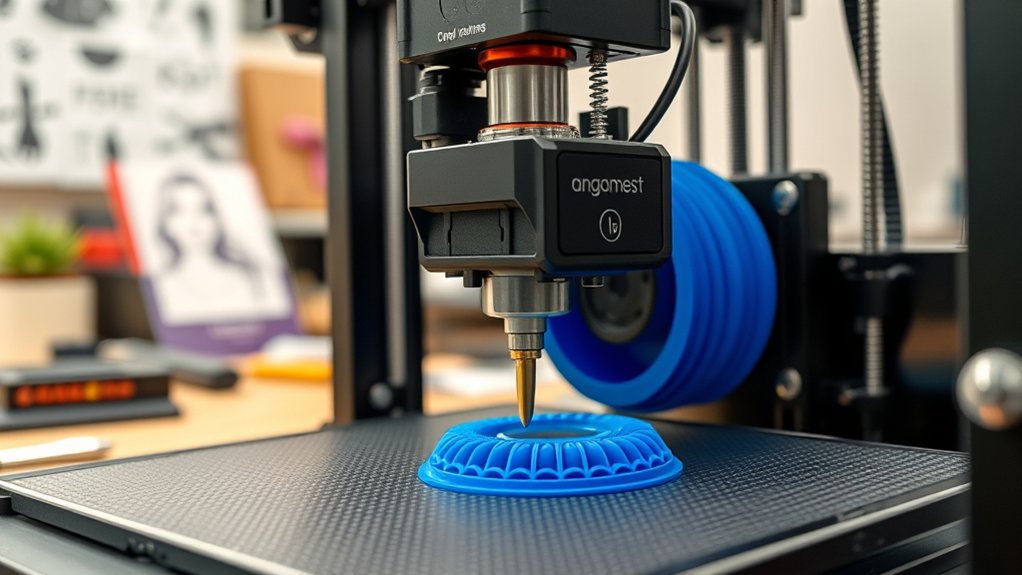

A 3D printer is a device that precisely builds three-dimensional objects layer by layer from digital models using materials like plastics, resins, or metals.
This technology enables the creation of complex shapes that would be difficult or impossible to make with traditional manufacturing methods.
You’ll see types such as FDM for thermoplastics or SLA using laser-cured resin, each suited for different detail levels and applications.
Understanding the materials and printer capabilities helps you achieve desired results efficiently.
Exploring this technology further reveals how to select the right printer and maximize its benefits for your projects.
With the right knowledge, you can harness 3D printing to bring your ideas to life with precision and creativity.
Key Takeaways
- A 3D printer creates physical objects by layering materials based on digital 3D models using additive manufacturing technology.
- It works by slicing models into thin cross-sections and depositing materials like plastics, resins, or metals layer by layer.
- Common 3D printing technologies include FDM, SLA, DLP, SLS, and Binder Jetting, each suited for different applications.
- 3D printers enable rapid prototyping, customization, and production of complex geometries not feasible with traditional methods.
- Material choices range from biodegradable plastics like PLA to specialty filaments, impacting object properties and printing requirements.
What Is a 3D Printer and How Does It Work?
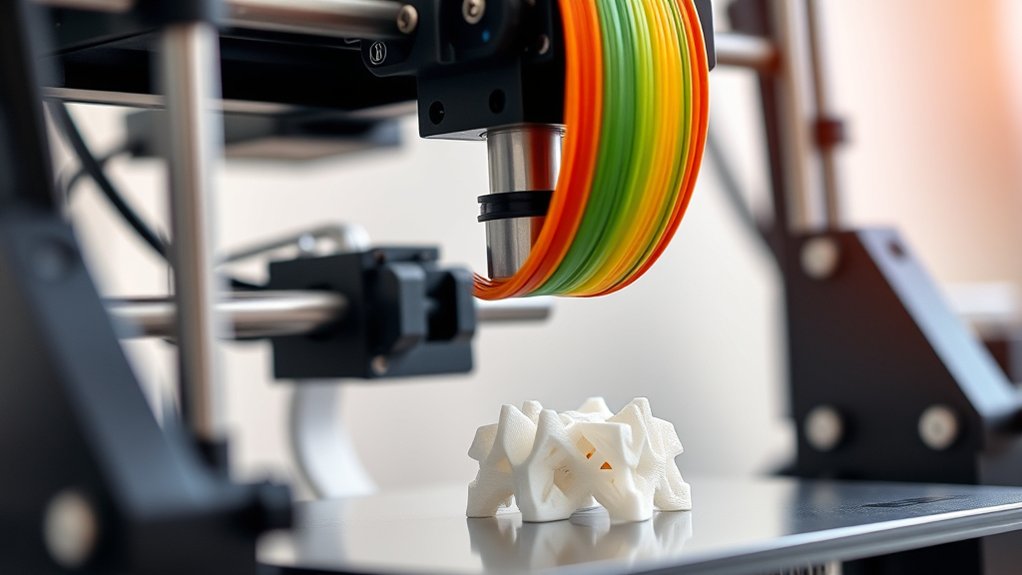
A 3D printer is a device that creates three-dimensional objects by depositing material layer by layer based on digital models. When you engage with 3D printing, you harness a technology evolution that transforms virtual designs into tangible items through additive manufacturing.
This process begins by slicing a 3D model into thin cross-sections, guiding the printer to build each layer sequentially. The printer deposits materials, such as thermoplastics, resins, or metals, with precise control over placement and thickness.
The printer builds objects layer by layer, precisely placing materials like thermoplastics, resins, or metals.
As you operate the printer, it fuses layers using methods like extrusion or photopolymerization, ensuring structural integrity. This advancement in manufacturing technology evolution enables rapid prototyping, customization, and complex geometries that traditional subtractive methods can’t easily achieve.
Understanding this workflow clarifies how 3D printers revolutionize production efficiency and design flexibility.
Types of Common 3D Printers
Three primary types of 3D printers dominate the market, each employing distinct technologies that influence material compatibility, resolution, and application. FDM printers extrude thermoplastic filaments layer by layer, offering cost-effective prototyping.
SLA and DLP printers utilize photopolymerization; SLA employs a laser to cure resin precisely, while DLP projects entire layers simultaneously, enhancing speed and detail. SLS printers sinter powdered material, like nylon or metal, enabling complex geometries without support structures.
Binder Jetting sprays a binding agent onto powder beds, facilitating multi-material and full-color prints. Metal printing techniques, including selective laser melting and electron beam melting, produce dense, functional metal parts with high strength.
Understanding these types helps you select the appropriate printer based on resolution needs, material properties, and intended application, optimizing your 3D printing outcomes.
What Materials Can You Use for 3D Printing?
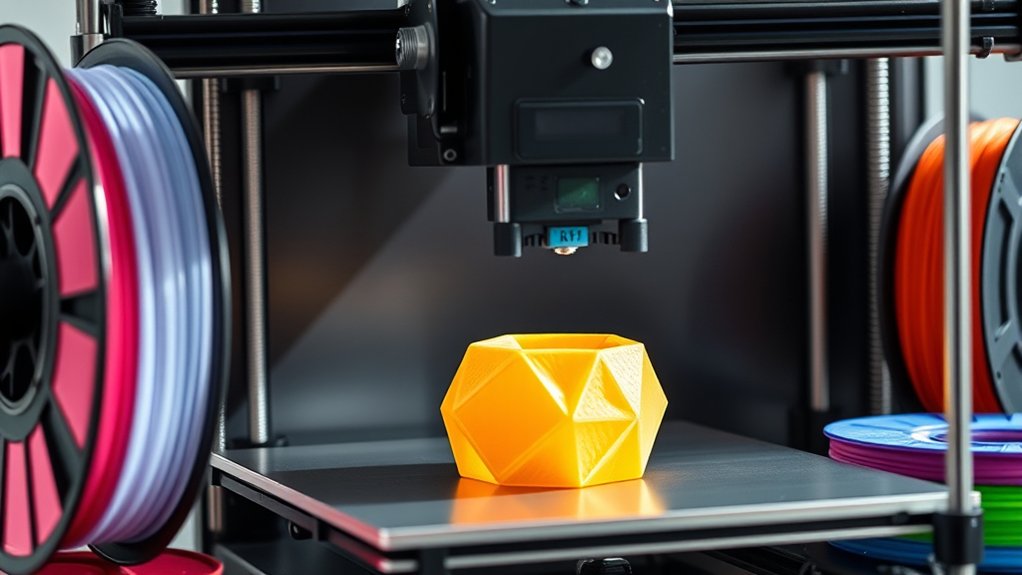
You’ll work with a range of materials in 3D printing, from common thermoplastics like PLA and ABS to specialty filaments with embedded properties. Understanding each material’s mechanical and thermal characteristics is essential for matching them to specific applications.
Let’s analyze these materials’ properties and typical uses to optimize your printing outcomes.
Common 3D Printing Materials
Materials form the foundation of 3D printing, directly influencing the strength, flexibility, and finish of the final product. When selecting materials, you’ll encounter a variety of options tailored to specific applications:
- Biodegradable Plastics: PLA is a popular choice, offering environmental benefits due to its renewable origins and easy printability. It is ideal for prototypes and educational models.
- Composite Materials: These integrate fibers like carbon or glass into a polymer matrix, enhancing mechanical properties such as tensile strength and thermal resistance. They are perfect for functional parts.
- Standard Thermoplastics: ABS and PETG provide durability and flexibility, suitable for end-use components requiring impact resistance.
Understanding these materials’ properties allows you to optimize your 3D prints for performance, sustainability, or aesthetics, depending on your project needs.
Specialty Filaments Explained
Although standard thermoplastics cover many 3D printing needs, specialty filaments expand your options by offering unique properties tailored for advanced applications. These filament types enable you to address specialty applications such as enhanced strength, flexibility, or conductivity that standard materials can’t provide.
Understanding these options allows you to select the right material for precise functional requirements.
| Filament Type | Specialty Application |
|---|---|
| Carbon Fiber | Increased stiffness, lightness |
| Flexible TPU | Elasticity, impact resistance |
| Conductive PLA | Electrical conductivity |
| Wood Fill | Aesthetic wood-like texture |
Material Properties and Uses
Choosing the right substance for 3D printing hinges on understanding the distinct physical and chemical properties each material offers. You need to balance material durability and print accuracy to suit your project’s demands.
Here are three common materials:
- PLA (Polylactic Acid): A biodegradable polymer with moderate material durability, ideal for prototypes requiring high print accuracy but limited mechanical stress.
- ABS (Acrylonitrile Butadiene Styrene): Offers superior material durability and heat resistance, suitable for functional parts, though print accuracy can be affected by warping.
- Nylon: Known for exceptional toughness and flexibility, providing excellent material durability and reliable print accuracy for industrial-grade components.
What Can You Make With a 3D Printer?
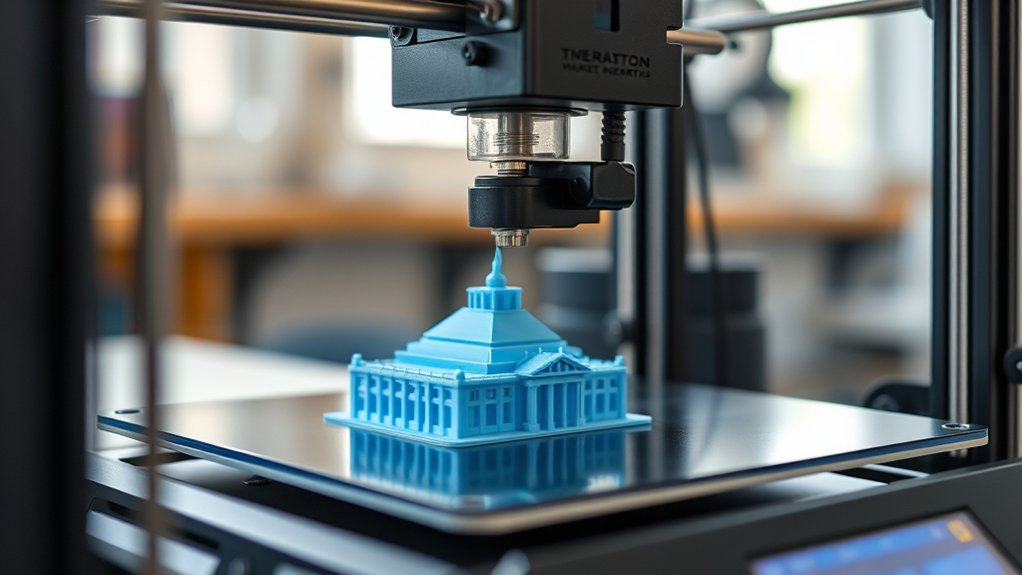
You can create a wide range of everyday household items with a 3D printer, from replacement parts to kitchen tools. The technology also allows you to produce customized artistic creations tailored to your exact specifications.
Understanding these capabilities helps you maximize the practical and creative potential of 3D printing.
Everyday Household Items
Household objects such as custom hooks, replacement knobs, and cable organizers demonstrate the practical applications of 3D printing technology. You can create 3d printed homeware that fits exact specifications, enhancing functionality and reducing costs. Consider these examples:
- Custom Hooks: Design hooks tailored to your space and weight requirements, providing efficient storage solutions.
- Replacement Knobs: Print precise replacements for broken or outdated knobs, restoring appliance usability without waiting for parts.
- Cable Organizers: Manufacture cable clips and holders that prevent tangling, improving workspace organization.
These items exemplify how 3D printing enables the rapid development of functional prototypes and end-use parts. By producing durable, customized household tools, you optimize your environment and extend the lifespan of existing products through targeted, on-demand fabrication.
Customized Artistic Creations
Although 3D printing excels in practical applications, its capacity for producing customized artistic creations opens new avenues for creativity and design. You can leverage 3D printers to fabricate objects with unique designs that traditional manufacturing methods struggle to achieve.
By manipulating digital models, you gain precise control over form, texture, and complexity, allowing for nuanced artistic expression. This technology enables rapid prototyping of sculptural pieces, jewelry, and decorative art tailored to individual preferences.
The ability to iterate designs quickly fosters experimentation and refinement, enhancing the creative process. Additionally, you can integrate multiple materials and colors within a single print, further expanding artistic possibilities.
Ultimately, 3D printing empowers you to transform conceptual ideas into tangible, personalized artworks with a level of detail and customization previously unattainable.
Benefits and Limitations of 3D Printing
While 3D printing offers unprecedented customization and rapid prototyping capabilities, it also presents certain constraints that affect its practical applications. You’ll find that 3D printing excels in:
3D printing enables unmatched customization and rapid prototyping but comes with practical limitations to consider.
- Cost efficiency: It reduces material waste and lowers production costs for small batches or complex parts, enhancing your budget control.
- Design flexibility: You can create intricate geometries impossible with traditional methods, allowing you to innovate without manufacturing limitations.
- Speed: Rapid iteration accelerates development cycles, enabling faster testing and refinement.
However, limitations remain. You might face slower production speeds for mass manufacturing, limited material choices compared to conventional techniques, and sometimes inferior mechanical properties. Understanding these benefits and constraints lets you leverage 3D printing’s strengths effectively while anticipating its challenges in practical use.
How to Choose the Right 3D Printer?
How do you determine which 3D printer suits your specific needs? Start by evaluating budget considerations; printers vary widely in cost, so define your maximum investment.
Next, assess print quality requirements. Resolution, layer height, and material compatibility impact the final output. Consider the printer’s technology type, such as FDM or SLA, as it influences precision and suitable applications.
Factor in build volume based on the size of your typical projects. Don’t overlook software usability and community support, which affect your learning curve and troubleshooting.
Maintenance needs and operational costs also play critical roles in long-term ownership. By analyzing these parameters systematically, you can select a 3D printer that balances cost-efficiency with performance, ensuring it meets both your technical demands and financial constraints effectively.
Frequently Asked Questions
How Much Electricity Does a 3D Printer Consume?
You’ll find 3D printer power consumption varies, typically between 50 to 250 watts. To optimize energy efficiency, monitor usage during printing and standby modes, reducing unnecessary consumption while maintaining precise, reliable performance.
Are 3D Printed Objects Safe for Food Use?
You can safely use 3D printed objects for food if you choose food grade materials and guarantee they comply with safety regulations. Always verify printer settings and post-processing to prevent contamination and maintain material integrity.
Can 3D Printers Be Used for Medical Implants?
You’ll find over 60% of custom implants use 3D printing. Advanced bioprinting techniques and implant materials like titanium alloys enable precise, patient-specific medical implants, improving fit and function.
This approach also reduces surgical time and recovery complications.
How Noisy Is a Typical 3D Printer During Operation?
You’ll find printer noise varies, typically ranging from 40 to 60 decibels during operation. These operation sounds result from motors and fans, so you’ll want to contemplate soundproofing if noise sensitivity is a concern.
What Software Is Best for Designing 3D Print Models?
You’ll find design software like Fusion 360 and Blender excel as modeling tools for 3D print models, offering precise control, parametric design, and robust mesh editing. They are ideal for creating detailed, printable geometries efficiently.
Conclusion
Choosing the right 3D printer is like selecting the perfect key to access innovation’s door. Understanding its types, materials, and capabilities empowers you to transform digital blueprints into tangible reality.
While limitations exist, the precision and versatility you gain turn challenges into stepping stones. By mastering these technical tools, you hold the power to shape ideas with exactness.
Making each print a demonstration of your analytical skill and creative foresight highlights the true potential of a 3D printer.