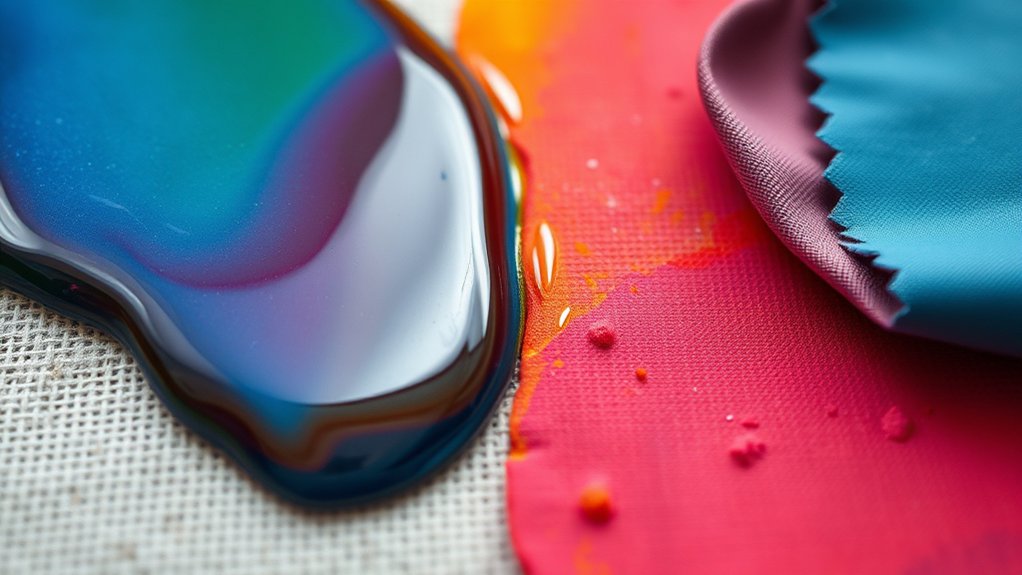

Screen printing ink vs fabric paint is a common consideration when choosing how to decorate textiles.
If you want vibrant, durable prints that withstand frequent washing, go with screen printing ink—it uses a precise mesh screen and requires curing for long-lasting designs.
Fabric paint offers more creative freedom with brush application, dries faster, and keeps fabric soft but may fade faster without heat setting.
Screen printing suits bulk projects, while fabric paint is ideal for custom, small batches.
Exploring application techniques and durability details can help you decide which suits your textile goals best.
Key Takeaways
- Screen printing ink offers higher durability and wash resistance than fabric paint, making it ideal for long-lasting designs.
- Fabric paint allows more creative freedom with direct brush application, suitable for custom or small-batch projects.
- Screen printing ink provides more vibrant, opaque colors and a smooth finish, especially on dark fabrics.
- Fabric paint dries faster and requires minimal equipment, reducing initial costs compared to screen printing setups.
- Screen printing is best for precise, repeatable patterns and bulk production, while fabric paint suits varied textures and spontaneous designs.
What Is Screen Printing Ink?
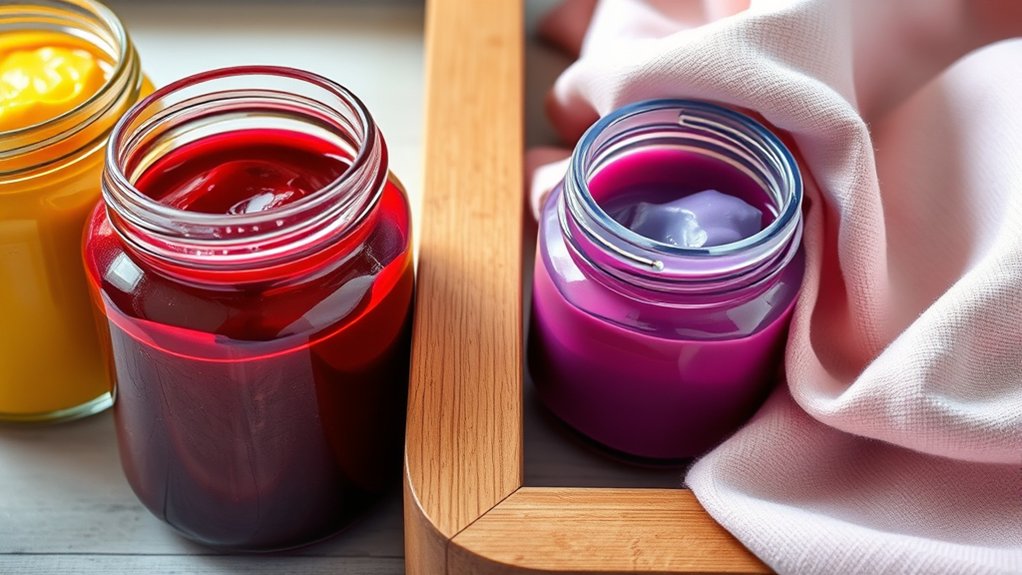
Although screen printing ink comes in various formulations, it primarily consists of pigments suspended in a binder that adheres to fabric during the printing process. When you use screen printing techniques, you rely on these ink formulations to deliver sharp, vibrant images with durability.
The binder’s composition is essential because it guarantees the pigments fix properly to textile fibers without cracking or fading. Different ink formulations, such as plastisol, water-based, or discharge inks, serve specific purposes depending on the fabric type and desired finish.
Plastisol inks, for example, remain on the fabric surface, offering opacity, while water-based inks penetrate fibers for a softer feel. Understanding these distinctions helps you select the appropriate screen printing ink for your project, optimizing adhesion, colorfastness, and overall print quality.
What Is Fabric Paint?
Fabric paint is a specially formulated medium designed to adhere to textile fibers, typically composed of pigments suspended in a flexible binder. You’ll find it commonly used for customizing clothing, accessories, and home textiles due to its ability to maintain color vibrancy and fabric softness.
Unlike screen printing ink, fabric paint usually dries faster and offers durable, washable results suitable for various crafting techniques.
Definition And Composition
When you apply paint designed for textiles, you’re working with fabric paint, a medium formulated specifically to bond with fibers while maintaining flexibility and durability. Understanding ink properties and paint types is essential to grasp fabric paint’s definition and composition.
Unlike traditional inks, fabric paints contain pigments suspended in a binder that adheres to fabric without cracking.
| Component | Purpose | Effect on Fabric |
|---|---|---|
| Pigments | Provide color | Long-lasting vibrancy |
| Binders | Guarantee adhesion | Flexibility, wash resistance |
| Solvents | Adjust consistency | Ease of application |
Fabric paint’s formulation guarantees colorfastness and durability, distinguishing it from screen printing inks, which have different ink properties tailored for mesh stencils.
Common Uses And Applications
Textile artists and DIY enthusiasts often choose fabric paint for its versatility and ease of use across various applications. You can apply fabric paint on multiple fabric types, including cotton, polyester, and blends, making it ideal for diverse creative projects. Its formulation allows for strong adhesion without compromising fabric flexibility.
Common uses and applications include:
- Customizing apparel such as t-shirts, hats, and bags
- Decorating home textiles like curtains, cushions, and tablecloths
- Creating intricate designs on quilts and fabric art pieces
- Enhancing accessories such as scarves or shoes
Fabric paint’s adaptability lets you experiment with textures and colors on different fabric types, granting you precise control to achieve detailed, durable results in your creative projects.
Drying Time And Durability
Although drying times vary depending on the brand and environmental conditions, fabric paint typically dries to the touch within 20 to 30 minutes. You should allow at least 24 hours for full curing to guarantee maximum adhesion and durability.
Fabric paints form a flexible, permanent bond with fibers, contributing to notable ink longevity. Compared to screen printing ink, fabric paint often offers quicker drying times but may require heat setting for enhanced wash resistance.
Keep in mind that improper curing can reduce durability, leading to cracking or fading over time. When selecting fabric paint, consider its drying characteristics and how they align with your project’s requirements for ink longevity and wear resistance.
Proper application and curing are essential to maximize the lifespan of your painted designs on fabric.
When to Use Screen Printing Ink or Fabric Paint
You’ll want to choose screen printing ink when durability and longevity are critical, especially for high-volume or commercial projects. Fabric paint suits detailed, small-scale applications where brush or stencil techniques are preferred. It works well on various fabric types. Understanding your fabric’s compatibility with each medium guarantees ideal adhesion and finish quality.
Durability And Longevity
Durability plays an essential role when deciding between screen printing ink and fabric paint for your project. You want your design to withstand wear, washing, and time without considerable fading or cracking.
Screen printing ink generally offers superior application longevity due to its chemical bonding with fabric fibers, making it ideal for high-use items. Fabric paint, while versatile, may require extra care to maintain its appearance.
Consider these factors for durability and maintenance practices:
- Screen printing ink resists cracking and peeling better under frequent washing.
- Fabric paint may fade faster without heat setting or protective coatings.
- Both require gentle washing to maximize lifespan.
- Proper curing greatly extends application longevity for both mediums.
Choosing the right material guarantees your design remains vibrant and intact.
Application Techniques
To guarantee your design lasts, selecting the right application technique is as important as choosing the appropriate medium. Screen printing ink excels when you need precise, repeatable patterns using stencils, allowing for efficient layering methods that build opacity and sharp detail.
This technique suits bulk production and complex multicolor designs. Conversely, fabric paint offers flexibility for freehand or small-scale projects where brush or sponge application techniques provide creative control over texture and blending.
You’ll find fabric paint ideal for layering methods that emphasize artistic variation rather than uniformity. Understanding these application techniques helps you decide when to use screen printing ink for consistency or fabric paint for customization, ensuring your final product meets durability and aesthetic expectations.
Fabric Compatibility
Although both screen printing ink and fabric paint can adhere to various textiles, their effectiveness depends heavily on the fabric type and its fiber composition. You need to take into account ink absorption and fabric types carefully to achieve durable results.
Screen printing ink works best on natural fibers like cotton and linen because these fabrics absorb ink efficiently, producing sharp, vibrant prints. Fabric paint, however, suits synthetic fibers or blends better, as it forms a flexible layer on the surface rather than soaking in.
When deciding which to use, evaluate:
- Cotton and linen for superior ink absorption with screen printing ink
- Polyester and nylon favoring fabric paint for surface adhesion
- Blended fabrics requiring testing for ideal compatibility
- Delicate or stretchy fabrics needing flexible fabric paint to avoid cracking
Understanding fabric compatibility guarantees your design lasts and looks professional.
Durability Comparison: Screen Printing Ink vs Fabric Paint
When you apply screen printing ink to fabric, it forms a solid, flexible layer that resists cracking and fading through multiple washes. This durability stems from its chemical composition and curing process, which binds the ink to fibers effectively.
In contrast, fabric paint, depending on its formulation, often sits on the surface and may crack or peel over time, especially with frequent laundering. Considering application methods, screen printing ink requires precise curing to achieve ideal longevity, while fabric paint demands thorough drying but may lack the same resilience.
To extend the life of both, follow maintenance tips like washing garments inside out in cold water and avoiding harsh detergents or bleach. Ultimately, screen printing ink generally offers superior durability compared to fabric paint under typical use conditions.
Application Differences Between Screen Printing Ink and Fabric Paint
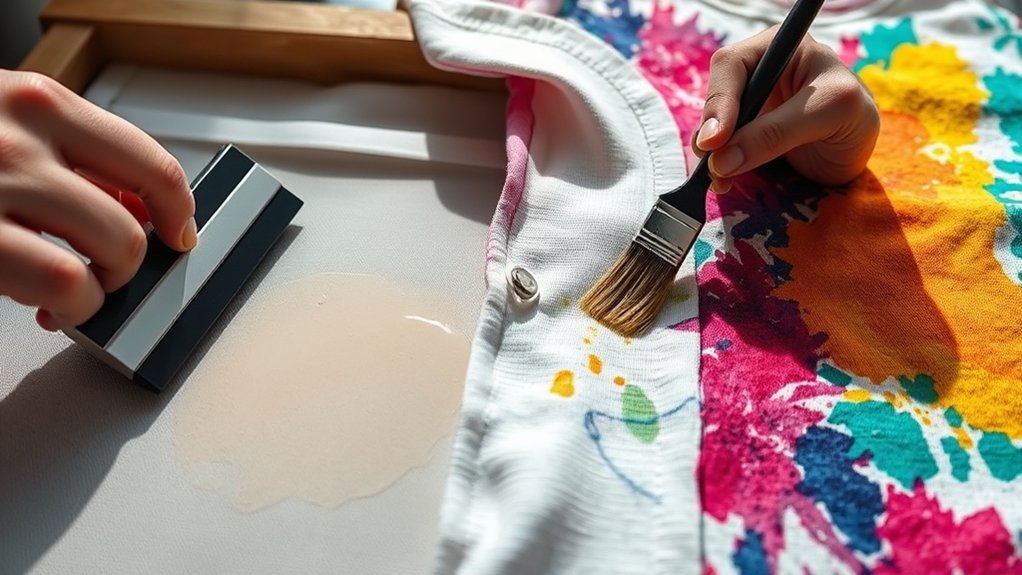
Understanding the durability differences between screen printing ink and fabric paint helps clarify why their application methods vary considerably. Screen printing ink requires a mesh screen and squeegee for precise ink transfer, benefiting from controlled application methods that guarantee consistency across multiple prints.
Fabric paint, however, offers more direct application options, such as brushes or sponges, granting you greater design flexibility on varied fabric surfaces.
Key differences include:
- Screen printing demands stencil preparation for each design, limiting spontaneity.
- Fabric paint allows freehand techniques, enhancing creative freedom.
- Ink requires curing with heat for longevity, while fabric paint may air dry or need heat setting depending on type.
- Screen printing suits bulk production; fabric paint excels in custom or small-batch projects.
These distinctions influence your choice based on project scope and desired design flexibility.
Color Vibrancy and Finish: Screen Printing Ink vs Fabric Paint
Color vibrancy and finish greatly impact the visual appeal and perceived quality of fabric designs. When you use screen printing ink, you get higher color saturation due to the ink’s dense pigmentation and controlled application. This results in sharp, vivid colors that retain intensity even after multiple washes.
The finish texture with screen printing ink is typically smooth and slightly raised, offering a professional, polished look. Fabric paint, on the other hand, provides more varied finish textures depending on its formulation: matte, glossy, or even textured. However, its color saturation tends to be less intense compared to screen printing ink, especially on darker fabrics.
If you prioritize bold, consistent colors with a sleek finish, screen printing ink is your better choice. Fabric paint suits projects where texture variety matters more than maximum vibrancy.
Cost and Equipment for Screen Printing Ink vs Fabric Paint
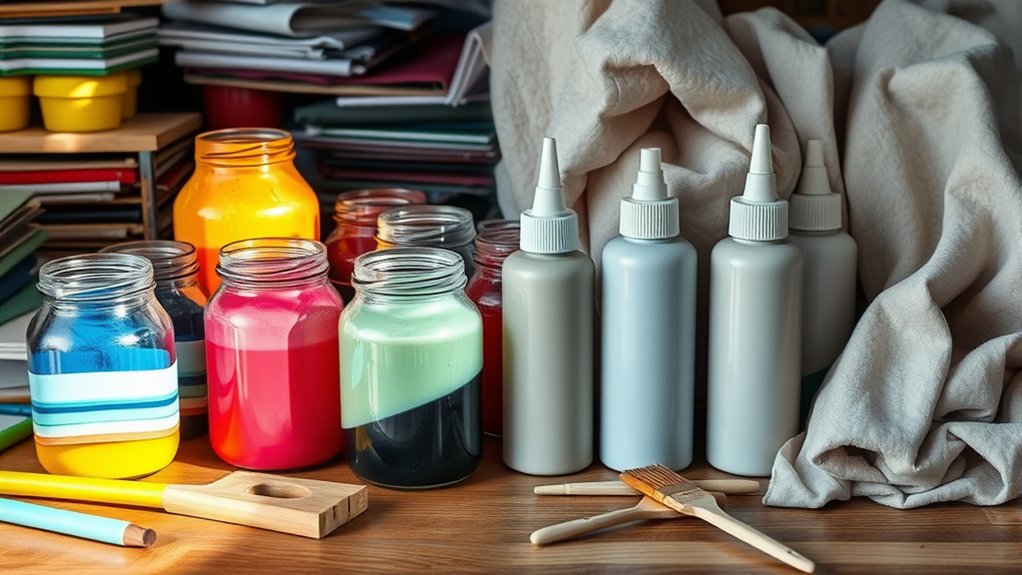
Choosing between screen printing ink and fabric paint involves evaluating both upfront costs and the necessary equipment. A thorough cost analysis requires you to assess initial investment and ongoing expenses. Screen printing demands specialized tools, while fabric paint offers more flexibility with minimal gear.
Key equipment requirements and cost factors include:
Screen printing: mesh screens, squeegees, inks, and exposure units; higher initial cost
Fabric paint: brushes, stencils, fabric medium; generally lower startup expenses
Ink longevity and durability affect long-term value
Setup time and complexity may increase operational costs for screen printing
Frequently Asked Questions
Can Screen Printing Ink Be Used on Non-Fabric Materials?
Yes, you can use screen printing ink on non-fabric applications, but you’ll need inks formulated for those surfaces.
Regular fabric inks often won’t adhere properly or cure well on materials like plastic, metal, or glass.
How Do Screen Printing Inks Affect Skin Allergies?
You’d think screen printing inks could cause skin reactions as fierce as a storm. Some contain chemicals triggering allergy symptoms like redness or itching. Always test a small area first, and use gloves to minimize risks effectively.
Are Fabric Paints Safe for Children to Use?
You’ll find many fabric paints formulated with low paint toxicity, ensuring child safety during use. Always check labels for non-toxic certification and supervise children to prevent ingestion or skin irritation, maintaining a safe creative environment.
What Is the Environmental Impact of Screen Printing Ink?
You might think all screen printing inks harm the environment, but eco friendly alternatives exist. Proper ink disposal methods prevent pollution, minimizing toxic runoff and resource waste.
This ensures your printing process stays sustainable and compliant with environmental standards.
Can Fabric Paint Be Mixed to Create Custom Colors?
Yes, you can mix fabric paint to create custom colors. When color mixing, consider paint properties like opacity and drying time to guarantee consistent results.
Also, maintain the fabric’s texture and flexibility after application.
Conclusion
When deciding between screen printing ink and fabric paint, consider durability and finish. Screen printing ink can last up to 50 washes without significant fading, making it ideal for long-term use. Fabric paint offers more texture variety but may fade sooner.
Your choice depends on whether you prioritize longevity or artistic flexibility. Keep in mind, screen printing requires more equipment, while fabric paint suits simpler, hands-on projects with less setup.
Choose wisely for your fabric needs by understanding the differences between screen printing ink and fabric paint.