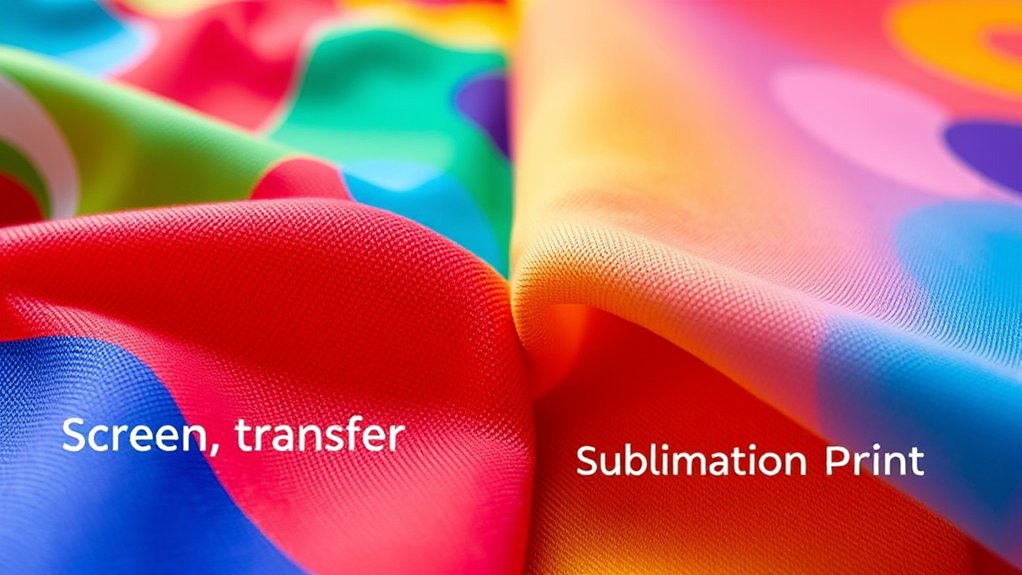

Screen print transfer vs sublimation offer distinct advantages depending on your project needs.
If you want bold, vibrant designs on cotton that stand out with opaque colors, screen print transfers are your go-to—they push ink on the surface, creating that classic pop but might fade or crack over time.
Sublimation, meanwhile, dyes polyester fabrics from within, delivering seamless, detailed, photo-quality prints that resist peeling and fading.
Each method suits different materials and effects, so understanding these key contrasts will help you pick the perfect technique for your project.
Key Takeaways
- Screen printing applies ink on fabric surface, ideal for bold, opaque colors on cotton blends.
- Sublimation infuses dye into polyester fibers, producing seamless, vibrant, and detailed photo-quality designs.
- Screen prints may crack or fade after washing; sublimation offers superior durability and color retention.
- Screen printing suits large orders with lower per-piece cost; sublimation is cost-effective for small runs with complex colors.
- Fabric choice is critical: cotton blends for screen printing; polyester or polymer-coated fabrics for sublimation.
How Screen Print Transfer and Sublimation Work
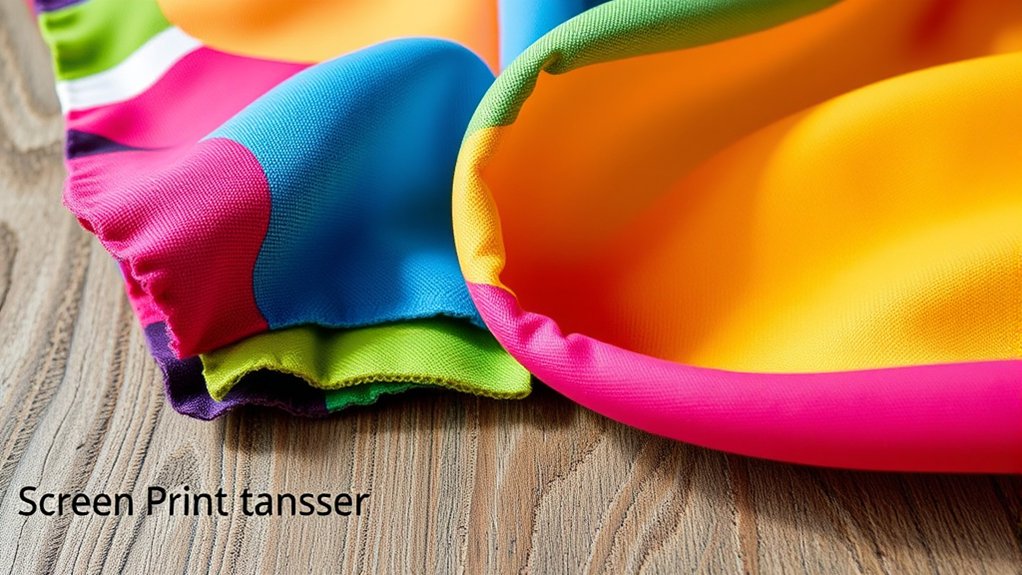
Though both screen print transfer and sublimation create vibrant designs, they work in fundamentally different ways. When you use the screen print process, you push ink through a finely woven mesh stencil, layer by layer, building bold, opaque colors that sit on the fabric’s surface. This tactile method lets you craft sharp, vivid images with solid coverage.
On the other hand, the sublimation technique uses heat to transform special ink into gas, which then penetrates polyester fibers, embedding the design beneath the surface. This results in seamless, photo-quality prints that won’t crack or peel.
Materials and Fabrics Best for Screen Print and Sublimation
When choosing the right fabric for your design, you’ll find that screen print and sublimation each call for very different materials to shine. Screen printing loves cotton blends; their natural fibers soak up ink beautifully, creating bold, lasting prints with a soft touch.
Screen printing thrives on cotton blends, soaking up ink for bold, lasting, and soft-to-the-touch designs.
You’ll notice how cotton blends hold vibrant colors and stand up to repeated washing, making them perfect for classic tees and casual wear.
On the flip side, sublimation demands polyester fabrics. These synthetic surfaces allow dye to bond at a molecular level, embedding your design deep into the fabric.
Polyester fabrics make colors pop with a crisp, smooth finish that won’t crack or peel. So, if you want a design that feels like part of the fabric itself, polyester’s your go-to for sublimation success.
Color Vibrancy and Detail: Screen Print vs Sublimation
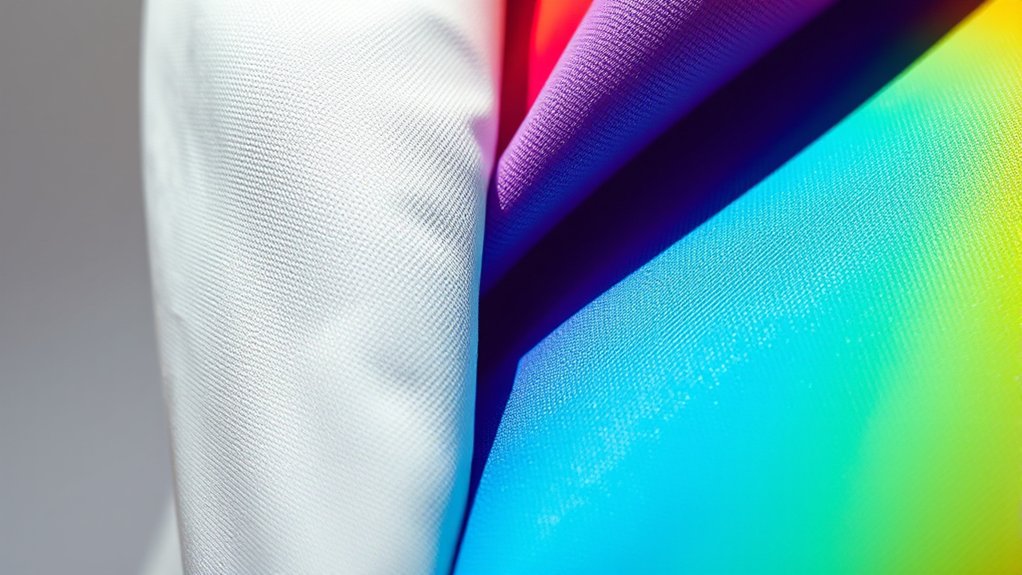
Because color vibrancy and detail define the impact of your design, choosing between screen print and sublimation comes down to how you want your artwork to appear. Screen printing excels in bold color intensity, making solid hues pop with striking clarity.
Sublimation shines with intricate design complexity, blending colors seamlessly for photographic-quality prints.
Consider these points to guide your choice:
- Screen print delivers vibrant, opaque colors on both light and dark fabrics.
- Sublimation infuses ink directly into polyester fibers, preserving fine details.
- Complex gradients and subtle shading come alive with sublimation.
- Screen print suits simpler, bold designs with fewer colors for maximum punch.
Your decision hinges on whether you prioritize vivid, intense colors or intricate, detailed imagery.
Durability and Washability: Screen Print vs Sublimation
When you toss a shirt in the wash, the print’s staying power really shows its true colors. Screen prints sit on the surface, so you might see cracks or fading after a few cycles.
Sublimation inks soak into the fabric, locking in vibrant hues for the long haul. Understanding how each handles wear and washing helps you choose the best fit for your needs.
Longevity of Print Quality
Print longevity plays an essential role in deciding between screen print and sublimation for your projects. When you want your designs to stay vibrant over time, understanding print lifespan and ink stability is key.
Screen printing layers thick ink on fabric, offering durable colors that resist fading but can crack with heavy wear. Sublimation, on the other hand, infuses ink into polyester fibers, creating prints that won’t peel or crack but depend on fabric type for lasting brilliance.
Consider these factors for lasting quality:
- Screen print’s ink stability offers bold, tactile designs
- Sublimation’s embedded ink resists surface wear
- Print lifespan varies with fabric and usage
- Sublimation excels on light, polyester materials, while screen print suits diverse textiles
Choose based on how long you want your design’s vibrancy to last.
Resistance to Washing Effects
Understanding how your design holds up against washing is just as important as knowing how long its colors stay vibrant. With screen print transfers, you might notice print fading or color bleeding after multiple washes, especially if you don’t follow care instructions carefully.
The ink sits on top of the fabric, making it more vulnerable to wear from heat, detergents, and abrasion. On the other hand, sublimation infuses the dye directly into the fabric fibers, creating a design that resists print fading and color bleeding far better.
When you wash sublimated garments, the colors stay sharp and crisp, almost as if the design was part of the fabric itself. So, if durability through many wash cycles matters to you, sublimation offers a clear advantage in resistance to washing effects.
Cost Differences Between Screen Print and Sublimation
Although both screen printing and sublimation deliver vibrant designs, the costs behind each method paint very different pictures. When you explore a cost comparison, you’ll notice price factors hinge on setup complexity and production volume.
Screen printing demands upfront investment in screens and inks, making it cost-efficient for large batches. Sublimation, on the other hand, thrives with digital precision, ideal for small runs but with higher per-piece costs.
Consider these price factors:
- Initial setup: Screen printing requires more prep work and materials.
- Quantity: Larger orders favor screen print’s economies of scale.
- Color complexity: Sublimation handles full-color gradients without extra cost.
- Material compatibility: Sublimation suits polyester-based fabrics, limiting choices.
Understanding these nuances helps you weigh cost against your project needs.
When to Choose Screen Print Transfer
When your project calls for bold, durable designs on cotton or other natural fibers, screen print transfer often stands out as the better choice. You’ll appreciate its design versatility, effortlessly handling large, vivid graphics or simple, sharp logos with equal finesse.
If you need quick turnaround times without sacrificing quality, screen print transfer delivers impressive production speed, making it ideal for bulk orders or last-minute requests. The tactile texture it creates adds a layer of depth and character that sublimation can’t replicate.
When to Choose Sublimation Printing
If your project demands vibrant, all-over designs that blend seamlessly with polyester fabrics, sublimation printing is your best bet. This method reveals unique sublimation benefits, especially for those seeking durability and photo-quality detail.
You’ll find it shines in ideal applications like:
- Custom sportswear where breathability and flexibility matter
- Personalized mugs and hard surfaces coated for sublimation
- Intricate, multi-colored graphics that need flawless gradients
- Lightweight, fade-resistant promotional products
Sublimation infuses ink into the fabric, creating vivid, permanent colors that won’t crack or peel. When you want your design to feel part of the material, not just sit on top, this technique elevates your project’s quality and longevity.
Choose sublimation printing to achieve eye-catching results that endure daily wear and wash without compromise.
Best Tips for Screen Print and Sublimation Results
You’ll want to start by prepping your surfaces until they’re perfectly clean and smooth. Imperfections can steal the spotlight from your design.
Next, pick high-quality materials that bring out vibrant colors and sharp details, whether you’re screen printing or sublimating. With these steps, your prints will pop with professional polish every time.
Preparing Surfaces Properly
Because every surface tells a story, preparing it properly sets the stage for vibrant, lasting prints. Surface preparation is your foundation; without thorough cleaning techniques, colors may dull or peel. You want a pristine canvas that embraces ink or dye fully. Start by removing dust, oils, and residues that block adhesion or alter hues.
Focus on these key steps:
- Wipe surfaces with isopropyl alcohol or mild detergent for deep cleansing
- Use lint-free cloths to avoid fibers sticking to prints
- Confirm surfaces are completely dry before printing
- Test a small area to check for contaminants or reactions
Choosing Quality Materials
Selecting the right materials breathes life into your prints, transforming ordinary projects into vibrant masterpieces. Your fabric selection is vital: choose natural fibers like cotton for screen printing for rich, lasting colors.
For sublimation, opt for polyester or polymer-coated surfaces to achieve vivid, permanent designs. Quality materials guarantee your artwork pops and endures washing without fading or cracking.
Visualize your choices:
| Screen Print Fabrics | Sublimation Fabrics |
|---|---|
| 100% Cotton | 100% Polyester |
| Cotton Blends | Polymer-coated Surfaces |
| Canvas | Polyester Sportswear |
When you pick premium fabrics tailored to each technique, you’re setting the stage for spectacular results. Remember, fabric selection isn’t just a step—it’s the foundation of your project’s brilliance and durability.
Frequently Asked Questions
Can Screen Print or Sublimation Be Used on Dark-Colored Fabrics?
You can use screen printing on dark fabric compatibility easily, as it layers vibrant inks atop. Sublimation, however, struggles with color vibrancy differences on dark fabrics, often fading or disappearing, so it’s less suitable for those.
Are There Environmental Impacts Associated With Screen Printing or Sublimation?
You’ll face sustainability concerns with both methods; screen printing uses more chemicals, risking pollution, while sublimation’s ink and polyester dependence can limit eco-friendliness.
Choosing wisely reduces your environmental footprint considerably.
How Long Does the Setup Process Take for Each Printing Method?
You’ll find setup duration shorter with sublimation, boosting your printing efficiency instantly.
Screen print transfer demands more prep time, like layering colors, but once ready, it pumps out vibrant prints at a steady, rhythmic pace.
Can Both Methods Be Used for Printing on Items Other Than Fabric?
Yes, you can use both methods on various printing surfaces. Sublimation works best on polymer-coated items, while screen print transfers adapt to diverse transfer applications, including plastics, ceramics, and metals.
This expands your creative possibilities beyond fabric.
Is Special Training Required to Operate Screen Print or Sublimation Equipment?
You’ll need some technical expertise to master both methods, especially for equipment maintenance.
While sublimation’s digital nature simplifies setup, screen printing demands hands-on skill and precision to keep your prints vibrant and machines humming smoothly.
Conclusion
Whether you choose screen print transfer or sublimation, you’re shaping your design’s story with color, texture, and life. You’ll get bold vibrancy or subtle detail, lasting durability or soft finesse. There are budget-friendly options or premium quality to consider.
You can print on cotton, polyester, or blends, crafting pieces that stand out or blend in beautifully. Trust your vision and match your fabric carefully. Watch your creation come alive with every press or print.
In the end, understanding the differences between screen print transfer vs sublimation helps you achieve the best results for your project.