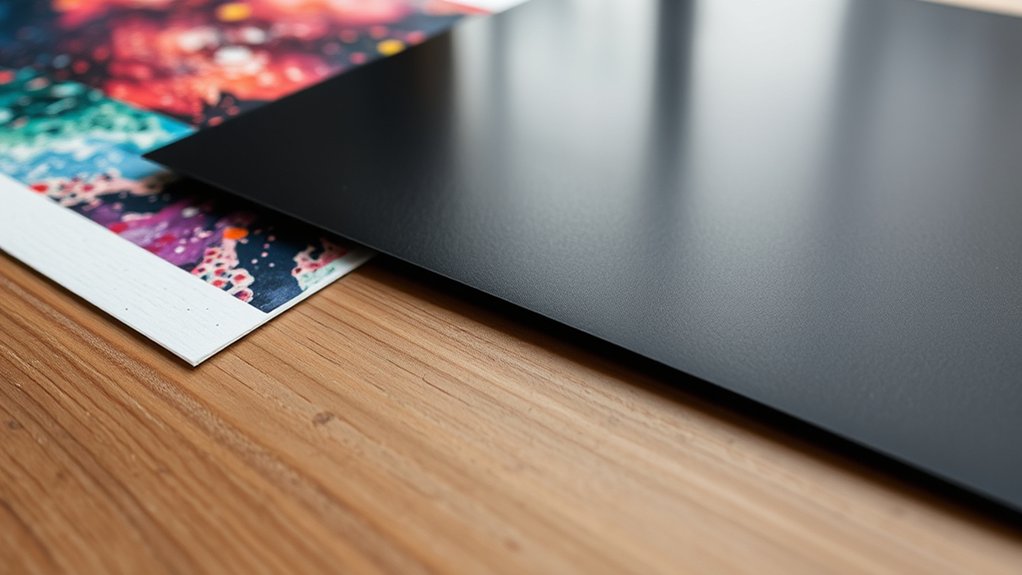

Print vs Screen Print is an important consideration when deciding how to produce your designs.
You’ll want direct print for sharp, full-color designs, especially with small runs or complex details—its digital process prints ink smoothly into fabric.
Screen printing, on the other hand, pushes thick ink layers through stencils, creating bold, durable colors that last through many washes, ideal for large orders.
While print cuts setup time and cost for low quantities, screen printing shines in toughness and vibrancy.
Keep these factors in mind as you explore which method suits your project best.
Key Takeaways
- Direct print applies designs digitally with minimal setup, ideal for complex, colorful images and small orders.
- Screen printing uses stencils and mesh to apply thick ink layers, offering superior durability and color longevity.
- Screen printing has higher initial setup costs but is cost-effective for large runs; digital print suits short runs and customization.
- Digital prints produce smooth textures and rich gradients, while screen prints have tactile ink layers with vivid, lasting colors.
- Design complexity and order size determine the best method: digital for intricate designs and low quantities, screen print for bold designs and bulk orders.
What Is Direct Print?
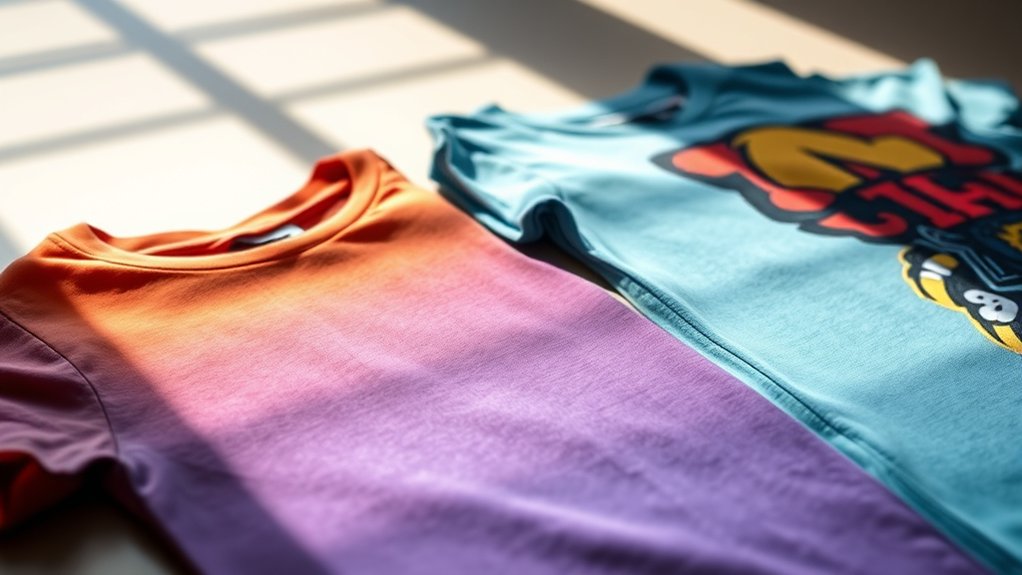
Direct print refers to a method where your design is applied straight onto the material using specialized printers, bypassing intermediate steps like screens or transfers. You’ll find direct print techniques rely on digital inkjet or thermal printing, which sprays or presses ink directly onto fabrics, plastics, or paper.
This approach offers several direct print benefits: it allows for high-resolution, full-color designs without setup delays, making short runs and custom prints cost-effective. You can achieve intricate gradients and fine details impossible with traditional methods.
Plus, direct printing reduces waste and speeds up production since you skip screen preparation. When precision and flexibility matter most, direct print techniques deliver sharp, vibrant results efficiently, letting you customize on demand while maintaining consistent quality across each piece.
How Screen Printing Creates Vibrant Designs
When you want bold, vibrant designs that pop with rich color saturation, screen printing delivers by pushing ink through a fine mesh stencil directly onto your material. This method applies thick layers of ink, ensuring vivid, lasting vibrant colors that stand out.
You control each color separately, layering them precisely using various design techniques like halftones or gradients to achieve depth and detail. The stencil blocks areas where ink isn’t needed, allowing for sharp edges and crisp lines in your design.
Because the ink sits on top of the fabric rather than soaking in, colors remain intense after multiple washes. By mastering screen tension, ink viscosity, and squeegee pressure, you get consistent, high-quality results that bring your creative vision vividly to life.
Print Vs. Screen Print: Costs and Setup
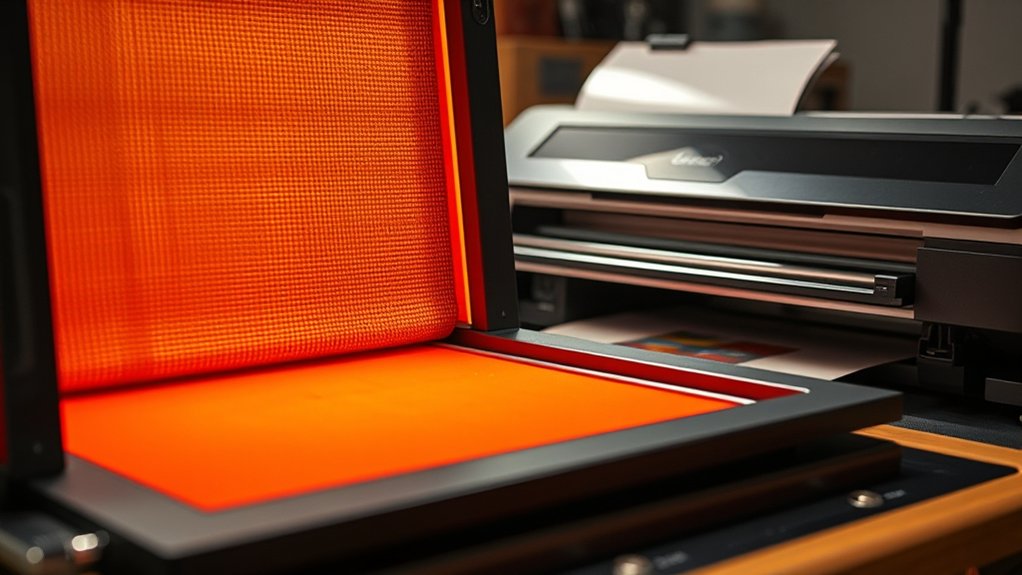
While screen printing produces vibrant, durable designs, it requires careful preparation that impacts both cost and setup time. You’ll need to create a stencil for each color, which means higher setup requirements than digital printing.
Screen printing delivers vibrant designs but demands detailed preparation and higher setup compared to digital printing.
This process involves coating screens, drying, and aligning each layer meticulously. When you perform a cost analysis, screen printing shows a higher initial investment due to these steps, but costs drop considerably with large print runs.
In contrast, digital printing demands minimal setup, just a file upload, making it cheaper for small quantities. However, as your order size grows, screen printing becomes more cost-effective.
Understanding these setup requirements and cost structures helps you choose the best method based on your project’s size and budget constraints.
Durability and Color Quality Compared
Because you want your designs to last and look sharp, understanding durability and color quality is essential. Screen printing typically offers superior ink longevity, embedding ink deep into fabric fibers. This results in prints that resist fading and cracking over time.
Digital print, however, excels in color saturation with vibrant, detailed images but may lack the same durability.
Consider these factors:
- Ink Longevity: Screen prints endure repeated washes without significant degradation.
- Color Saturation: Digital prints provide richer, more complex color gradients.
- Surface Texture: Screen prints create a tactile, slightly raised finish; digital prints sit smoothly on fabric.
When to Choose Print or Screen Print
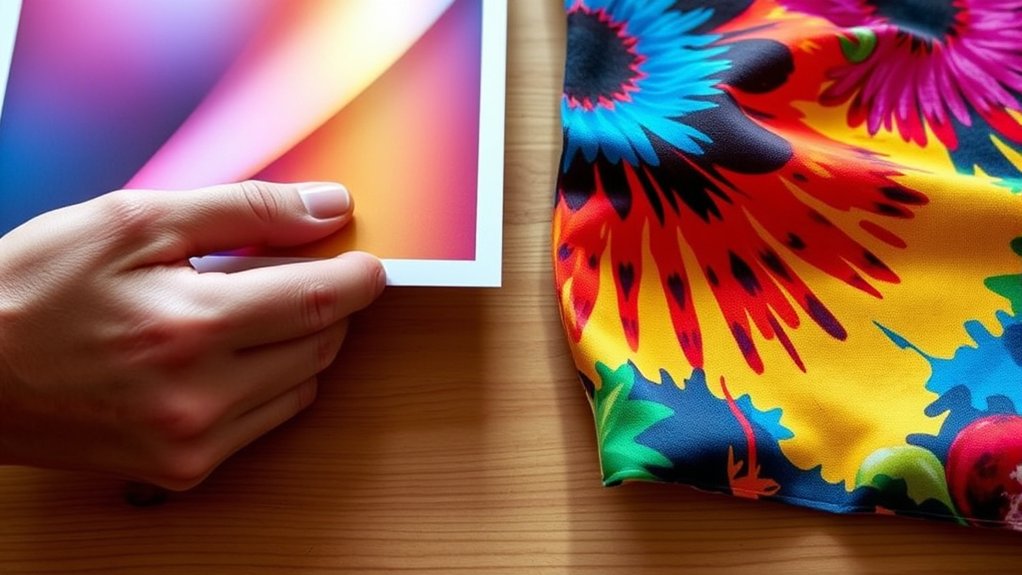
Deciding between print and screen print hinges on your project’s specific needs and priorities. Focus on your design preferences and material choices to make the right call. Print suits complex, multi-color designs and delicate materials.
Screen print excels with bold, simple designs and durable fabrics.
| Criteria | Screen Print | |
|---|---|---|
| Design Complexity | High (photorealistic, gradients) | Low to moderate (solid colors) |
| Material Choices | Sensitive fabrics, blends | Cotton, polyester, thicker fabrics |
| Color Usage | Unlimited colors | Limited colors, spot color best |
| Durability | Moderate | High, withstands washing well |
Use this table to align your project’s technical demands with the ideal printing method.
How Order Size Affects Your Choice
Your project’s scale directly impacts whether print or screen print is the better fit. When deciding, consider how your order quantity influences production scalability and cost-effectiveness.
For smaller runs, digital print offers flexibility without setup costs, ideal for limited editions or prototypes. Screen print shines with larger orders, where its setup investment pays off through faster, more consistent output.
Keep these points in mind:
- Low order quantity: Digital print minimizes waste and setup time.
- High order quantity: Screen print maximizes efficiency and durability.
- Production scalability: Screen print scales smoothly; digital print suits rapid, varied batches.
Design Limits You Should Know for Print and Screen Print
Although both print and screen print offer vibrant results, each method comes with specific design constraints you need to take into account. For print, you can embrace intricate details and subtle gradients, but be mindful of color accuracy, as some printers struggle with exact hues.
Screen print excels in bold, solid colors but faces design limitations with fine lines and gradient shifts, which can blur or require halftone techniques. You’ll also need to limit the color palette in screen printing since each color demands a separate screen, impacting cost and complexity.
Both methods require careful file preparation. Vector graphics suit screen print, while high-resolution raster images work best for print. Understanding these design limitations upfront helps you choose the right process and guarantees your artwork translates perfectly onto your final product.
Tips for Best Results With Print and Screen Print
Mastering print and screen print starts with understanding how to optimize your artwork for each method’s strengths and limitations. To get the best results, focus on design techniques tailored to your chosen printing materials.
Print excels with detailed gradients and wide color ranges, while screen print thrives on bold, solid colors and sharp edges.
Keep these tips in mind:
- Simplify your design for screen printing to prevent ink bleeding and preserve crisp lines.
- Choose high-quality, compatible printing materials to enhance color vibrancy and durability.
- Use vector graphics for scalability and precise color separation critical in screen printing.
Frequently Asked Questions
Can Screen Printing Be Done on Materials Other Than Fabric?
Yes, you can screen print on materials beyond fabric by using a paper screen or plastic screen. These screens help you apply ink precisely on surfaces like paper, plastic, wood, or metal for versatile, vibrant prints.
How Environmentally Friendly Are Print and Screen Print Methods?
You know what they say, “Waste not, want not.” You’ll find screen printing often uses eco friendly practices and sustainable materials, minimizing waste and energy.
Traditional print methods frequently involve more chemicals and less environmental care.
What Is the Typical Turnaround Time for Each Printing Method?
You’ll find screen print offers faster production speed for bulk orders, boosting turnaround efficiency. Digital print’s quicker for small runs but slower overall.
Choose based on your project size to optimize turnaround and efficiency.
Can Screen Printing Be Combined With Other Printing Techniques?
Like mixing paints on a palette, you can combine screen printing with other techniques for vibrant color blending. This technique hybridization enhances texture and detail, giving your designs depth and complexity that single methods alone can’t achieve.
Are There Health Risks Associated With Screen Printing Inks?
Yes, screen printing inks can pose health risks if mishandled. You should prioritize ink safety by using non-toxic inks, proper ventilation, and adhering to health regulations.
This helps prevent skin irritation and respiratory issues during your work.
Conclusion
Whether you choose direct print for detailed, small runs or screen print for bold, vibrant bulk orders, you’re balancing cost, color, and durability. You’ll save setup time with print, gain longevity with screen print, and navigate design limits based on your project’s needs.
By understanding these factors, you’ll make smarter choices, achieve sharper designs, and get the best results.
So, weigh your options, match your goals, and print with precision every time to master the art of print vs screen print.