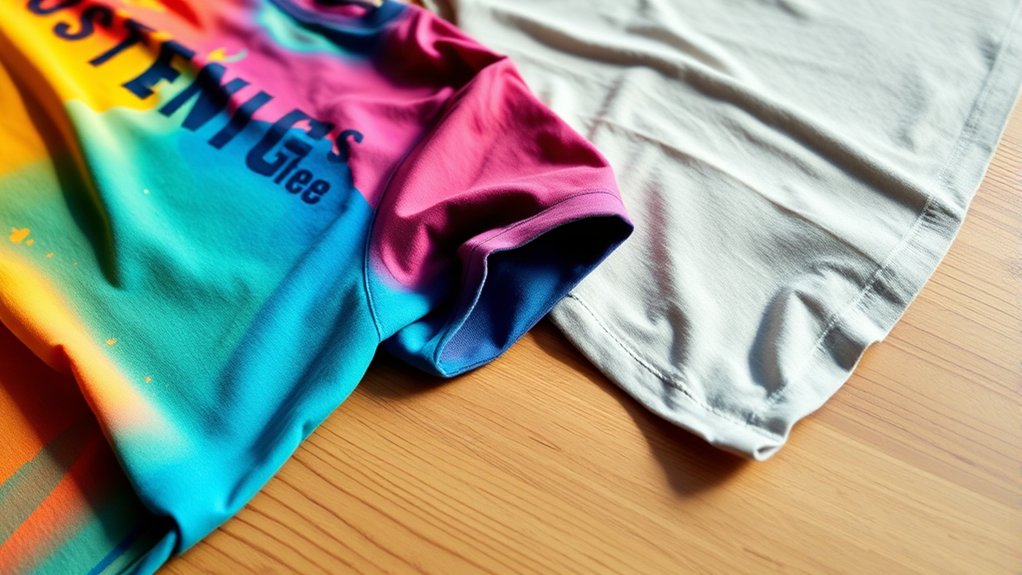

You’re comparing plastisol vs screen printing methods, but plastisol is actually a key ink type used within screen printing.
It delivers thick, vibrant layers that produce sharp, durable prints, especially on dark fabrics. Unlike water-based or discharge inks, plastisol offers superior opacity and long-lasting color but needs heat curing.
If you want to understand how plastisol fits into the screen printing process and how it stacks up against other inks, exploring their differences will clarify your best choice.
Key Takeaways
- Plastisol ink is a common medium used in screen printing for vibrant, durable prints with excellent opacity on dark fabrics.
- Screen printing involves pushing ink through a mesh stencil, with plastisol offering consistent color and easy cleanup during the process.
- Plastisol prints require heat curing, resulting in long-lasting, crack-resistant designs compared to other inks or printing methods.
- Screen printing with plastisol suits large runs and complex designs, balancing setup costs with high production efficiency and repeatability.
- Compared to digital or water-based inks, plastisol in screen printing provides superior color vibrancy and durability but may feel heavier on fabric.
What Is Plastisol Ink and How Does It Fit Into Screen Printing?
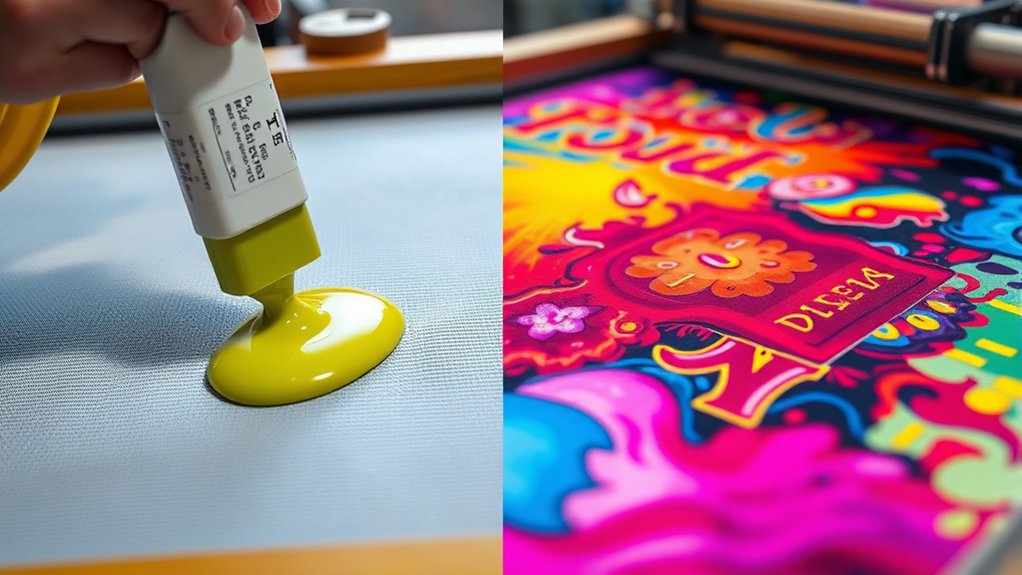
Plastisol ink acts as the lifeblood of many screen printing projects, offering vibrant colors and durability. You’ll find plastisol advantageous because it doesn’t dry out on the screen, allowing you to work at your own pace without clogging issues.
Its thick, plastic-like texture guarantees excellent opacity, even on dark fabrics, making colors pop vividly. The ink versatility shines in its compatibility with various fabrics and complex designs, letting you achieve sharp details and smooth gradients.
When cured, plastisol forms a flexible, durable layer that withstands washing and wear. This durability and adaptability make plastisol ink a preferred choice in screen printing, especially when high-quality, long-lasting prints are essential to your project’s success.
How Does Screen Printing Work?
Although screen printing may seem complex, it boils down to forcing ink through a mesh stencil onto fabric, layer by layer. You start with screen preparation, coating the mesh with a light-sensitive emulsion and exposing it to a design to create your stencil.
The mesh’s tension and openness affect ink flow, so precise preparation is essential. Once set, you apply ink with a squeegee, pushing it through the stencil’s open areas. Controlling ink viscosity is vital. Too thick, and it won’t pass evenly; too thin, and it might bleed or lose opacity.
Each color gets its own screen, building the image step-by-step. This method delivers sharp, vibrant prints with durability, making screen printing a technical yet versatile process for fabric decoration.
Plastisol Vs Other Screen Printing Inks: What’s the Difference?
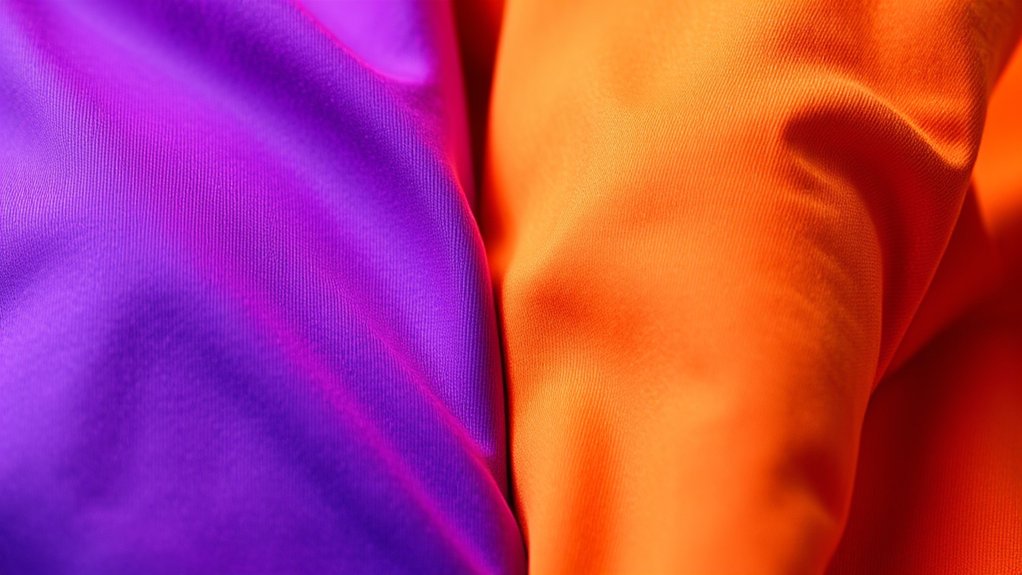
You’ll notice plastisol inks have a thicker, PVC-based composition, giving your prints a vibrant, raised texture. In contrast, water-based and discharge inks absorb into the fabric, offering a softer feel but less surface durability.
Understanding these differences helps you choose the right ink for your design’s longevity and tactile impact.
Ink Composition Comparison
When comparing ink compositions, you’ll notice that plastisol relies on a PVC-based formulation suspended in a plasticizer, creating a thick, opaque layer that sits atop fabrics. Its ink properties deliver excellent opacity and vibrant color saturation, ideal for bold designs.
In contrast, water-based inks use a solvent carrier that soaks into fibers, producing softer prints but often less vivid colors. Discharge inks chemically remove fabric dye during printing, offering a unique vintage look but requiring precise color mixing and fabric compatibility.
Plastisol’s consistency makes color mixing predictable and repeatable, whereas water-based inks can vary with environmental factors. Understanding these differences helps you choose the right ink based on the visual effect and technical demands of your project.
Durability And Texture Differences
Three key factors define the durability and texture differences between plastisol and other screen printing inks. First, plastisol inks create a thicker, raised print feel, giving your design a bold texture that stands out visually and physically. In contrast, water-based inks soak into the fabric, producing a softer, more integrated feel.
Second, plastisol excels in wash resistance; its plastic-based composition resists cracking and fading even after multiple washes, ensuring your print lasts longer. Water-based inks may fade or blur more quickly due to their absorption into fibers.
Finally, plastisol’s durability suits heavy-duty applications, while other inks prioritize softness over longevity. Understanding these differences helps you choose the ideal ink for your desired print feel and long-term wash resistance.
Pros and Cons of Using Plastisol Ink
Although plastisol ink requires heat to cure, it offers vibrant colors and excellent opacity that make your designs stand out on dark fabrics. You’ll appreciate plastisol advantages like durability and ease of use, but also face plastisol disadvantages such as limited breathability and potential cracking over time.
| Pros (Plastisol Advantages) | Cons (Plastisol Disadvantages) |
|---|---|
| Bright, opaque colors | Needs heat curing |
| Durable and long-lasting | Can feel heavy or plasticky |
| Easy to clean screens | Limited eco-friendliness |
| Suitable for complex designs | Less breathable on fabric |
| Consistent print quality | Potential for cracking with wear |
When Should You Choose Plastisol Over Other Screen Printing Methods?
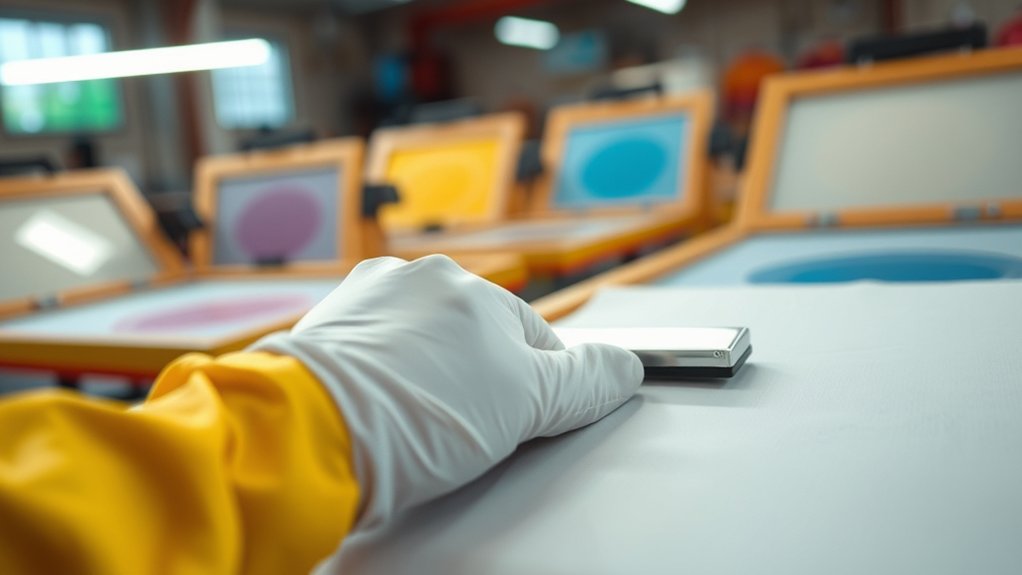
Plastisol ink’s vibrant colors and durability make it a top choice for projects demanding bold, lasting prints on dark fabrics. You should choose plastisol when your screen printing applications require high opacity and sharp detail, especially on cotton and polyester blends.
Plastisol advantages include easy layering without bleeding, allowing complex multi-color designs with crisp edges. If you need a fast curing process with consistent results, plastisol excels compared to water-based or discharge inks.
It’s also ideal when you want to avoid fabric distortion since plastisol sits on the garment surface rather than soaking in. However, if you prioritize a soft hand feel or eco-friendly options, consider alternatives.
Use plastisol when vivid, durable prints and efficient production are your top priorities.
How Durable and Vibrant Are Plastisol Prints Compared to Others?
You’ll notice plastisol prints hold up exceptionally well over time, resisting cracking and fading through countless washes. Their thick ink layer locks in vibrant colors that stay bright far longer than many other methods.
Comparing print longevity and color retention reveals why plastisol remains a top choice for durable, vivid designs.
Print Longevity Comparison
When comparing print longevity, you’ll find plastisol inks deliver vibrant colors that resist fading and cracking over time. Their print lifespan typically surpasses water-based and discharge inks, maintaining integrity through multiple washes.
Plastisol’s thick, flexible ink layer forms a durable bond on fabric, minimizing ink fading caused by abrasion and UV exposure. Unlike thinner inks, plastisol withstands stretching without breaking down, preserving print clarity.
However, proper curing is essential; undercured prints can degrade faster. While other methods may offer softer hand feel, plastisol excels in lasting vibrancy and durability.
If you want prints that hold up brilliantly against wear and repeated laundering, plastisol remains a top choice, ensuring your designs stay sharp and resilient much longer than many alternatives.
Color Brightness Retention
Few printing methods maintain color brightness like plastisol inks do, even after repeated washes and heavy wear. When you assess colorfastness evaluation, plastisol prints consistently exhibit superior pigment stability compared to water-based or discharge inks.
This stability stems from plastisol’s vinyl polymer base, which encapsulates pigments, protecting them from fading caused by UV exposure and laundering. As a result, your designs stay vivid and sharp over time, resisting dullness and cracking.
Unlike other methods where ink penetrates fabric fibers, plastisol sits atop the surface, preserving saturation and contrast. So, if you prioritize long-term vibrancy and durability, plastisol screen printing offers a technical advantage that guarantees your colors remain bold, making it ideal for apparel that demands lasting visual impact.
Cost and Setup: Plastisol Vs Other Screen Printing Options
Although plastisol inks often require a higher initial investment in screens and equipment, they streamline the setup process with faster curing times and consistent viscosity. This boosts your cost efficiency by reducing downtime and waste.
Alternative inks like water-based and discharge demand longer setup and curing, increasing labor costs.
| Ink Type | Initial Setup Cost | Setup Process Complexity |
|---|---|---|
| Plastisol | High | Quick, consistent |
| Water-Based | Medium | Moderate, sensitive |
| Discharge | Medium-High | Complex, longer curing |
Choosing plastisol means you get a reliable, repeatable setup process that minimizes errors and speeds production. While upfront costs rise, the overall cost efficiency improves, especially on larger runs.
Which Printing Method Is Best for Your Project?
Understanding the cost and setup differences between plastisol and other inks sets the stage for choosing the right printing method for your project. If you need vibrant, durable prints with sharp edges, plastisol screen printing excels on cotton fabrics and bulk orders.
For detailed, multi-color designs with minimal setup, digital printing offers precision and fast turnaround but may lack plastisol’s opacity on dark garments. Transfer printing suits complex graphics and smaller runs, providing flexibility without the extensive setup of traditional screens.
Consider your design complexity, fabric type, order volume, and budget. If you prioritize durability and vivid colors on large quantities, plastisol screen printing is best. For quick, detailed prints or small batches, digital or transfer printing might serve you better.
Match your project’s specifics to the method’s strengths for ideal results.
Frequently Asked Questions
Can Plastisol Ink Be Used on Materials Other Than Fabric?
You can use plastisol ink on materials beyond fabric thanks to its versatility. Its strong ink adhesion works well on plastics, leather, and more.
Surface preparation is key for best results and durability.
How Environmentally Friendly Is Plastisol Ink Compared to Other Inks?
You might be surprised. Plastisol ink isn’t the greenest choice. Its sustainability practices lag behind eco friendly alternatives like water-based inks, which break down easier and emit fewer toxins.
These qualities make water-based inks better for the planet and your conscience.
What Are the Cleanup Requirements for Plastisol Versus Other Inks?
You’ll find plastisol’s cleanup process needs solvents and careful ink disposal since it doesn’t dissolve in water. Other inks often allow water-based washouts, making cleanup simpler and less hazardous, streamlining your workflow effectively.
Are There Health Risks Associated With Handling Plastisol Ink?
Yes, plastisol ink poses health concerns like skin irritation and respiratory issues. You should wear gloves, work in ventilated areas, and avoid direct contact to guarantee safety precautions effectively minimize exposure risks during handling and printing.
Can Plastisol Ink Be Used for Multi-Color or Gradient Designs?
Yes, you can use plastisol ink for multi-color and gradient designs by applying gradient techniques and precise color layering. This approach lets you create vibrant, seamless shifts with sharp edges and rich opacity on your prints.
Conclusion
Think of plastisol ink like a reliable engine in your screen printing machine—durable, vibrant, and built for consistent performance. Just as a race car depends on its engine to deliver speed and precision, your prints rely on plastisol for bold colors and long-lasting wear.
While other inks might offer quick starts, plastisol guarantees your design finishes strong. When quality and durability drive your project, plastisol is the smart choice to keep you ahead.
In the comparison of plastisol vs screen printing, plastisol stands out as the dependable ink that ensures your artwork maintains its vibrancy and durability over time.