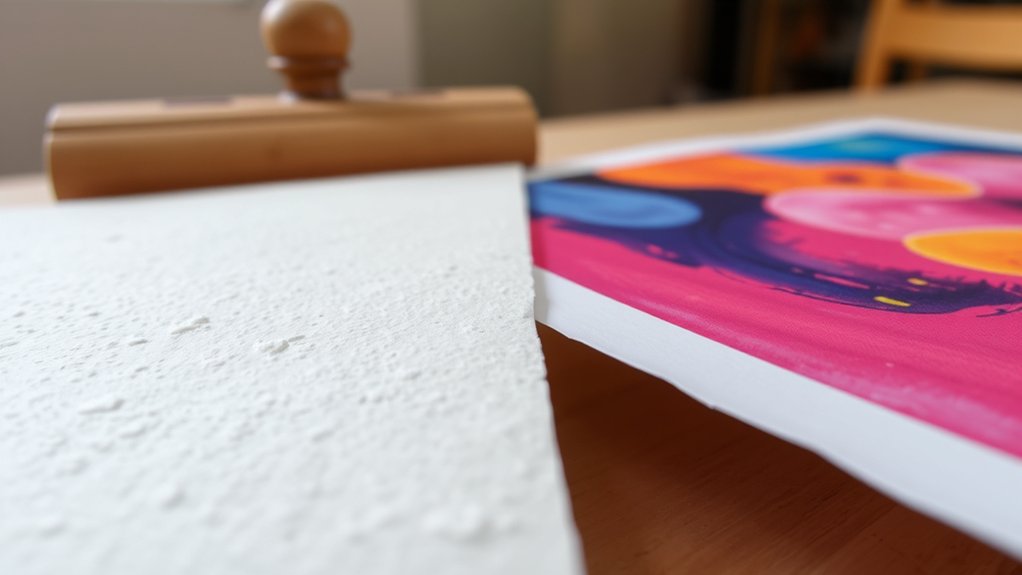

Letterpress vs screen print offers distinct advantages depending on your project needs.
You’ll want letterpress for tactile depth and subtle, muted tones on thick, textured paper—perfect for classy invitations or business cards.
Screen printing, however, delivers vibrant, bold colors and works across fabrics, plastics, and metals, making it ideal for apparel or posters.
Letterpress suits small, detailed jobs with a handcrafted vibe, while screen printing thrives on large runs with faster turnaround and durable ink layers.
Your choice depends on texture, color impact, and project scale; there’s more to explore for perfect results.
Key Takeaways
- Letterpress uses raised, inked surfaces to create tactile impressions, ideal for simple, bold designs on thick paper stock.
- Screen printing forces ink through a stencil mesh, allowing vibrant, multi-colored designs on diverse materials like fabric and plastic.
- Letterpress excels in premium, small-batch projects like wedding invitations, while screen printing suits large-volume, fast-turnaround apparel and posters.
- Screen printing delivers bold colors with thicker ink layers; letterpress offers subtle, textured tones showing the paper’s natural texture.
- Letterpress provides long-lasting impressions on quality paper; screen printing creates durable ink films ideal for apparel and large graphics.
How Letterpress and Screen Printing Work
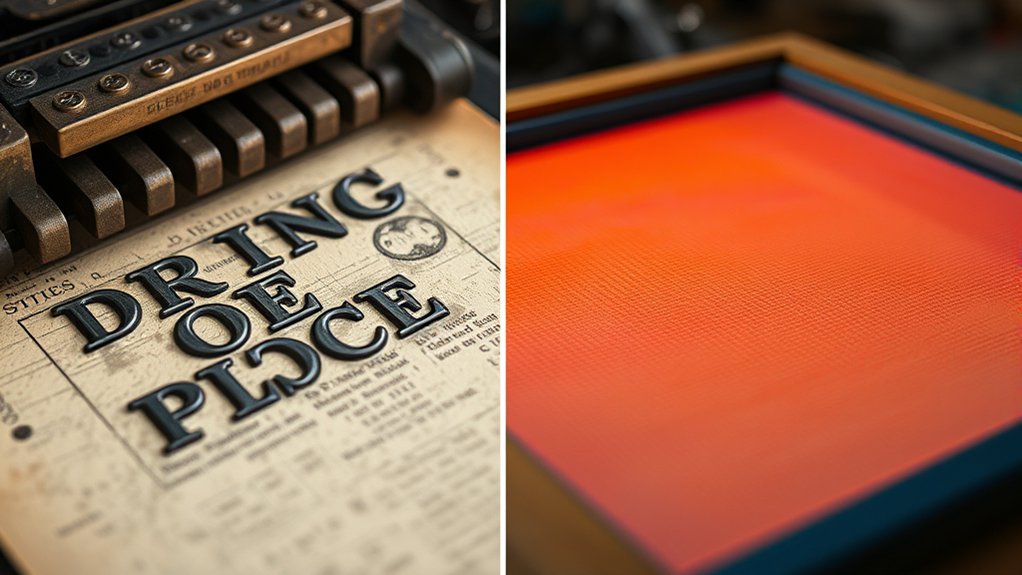
Although both letterpress and screen printing create striking prints, they use fundamentally different processes. Letterpress is a relief printing technique where you press inked, raised surfaces onto paper, producing deep impressions with tactile texture.
You’ll set movable type or plates, ink them, then apply firm pressure, making it ideal for crisp typography and subtle layering in creative applications. Screen printing, on the other hand, forces ink through a stencil-covered mesh screen onto the substrate beneath.
You’ll push ink with a squeegee, allowing for vibrant colors and bold designs on various materials. Both printing techniques offer unique visual and textural effects, so understanding these processes helps you select the right method for your creative applications, ensuring your prints achieve the desired impact with precision and quality.
Materials and Projects Best Suited for Each Method
Understanding how letterpress and screen printing work gives you a clear picture of their strengths, but knowing which materials and projects suit each method helps you choose the finest fit. Letterpress excels with thick, textured print materials like cotton or recycled cardstock, lending itself to wedding invitations, business cards, and artisanal packaging where tactile quality matters.
Screen printing adapts well to diverse surfaces such as fabric, plastic, and metal, and works perfectly for apparel, posters, and large-scale graphics. When evaluating project suitability, consider the desired detail, durability, and volume. Letterpress achieves crisp, embossed impressions ideal for limited runs emphasizing craftsmanship.
Screen printing handles bold colors and repetitive prints efficiently, suitable for mass production and varied substrates. Matching your project’s material constraints and output goals with each method guarantees exceptional results in both aesthetics and function.
Color and Visual Effects: Letterpress Vs Screen Printing
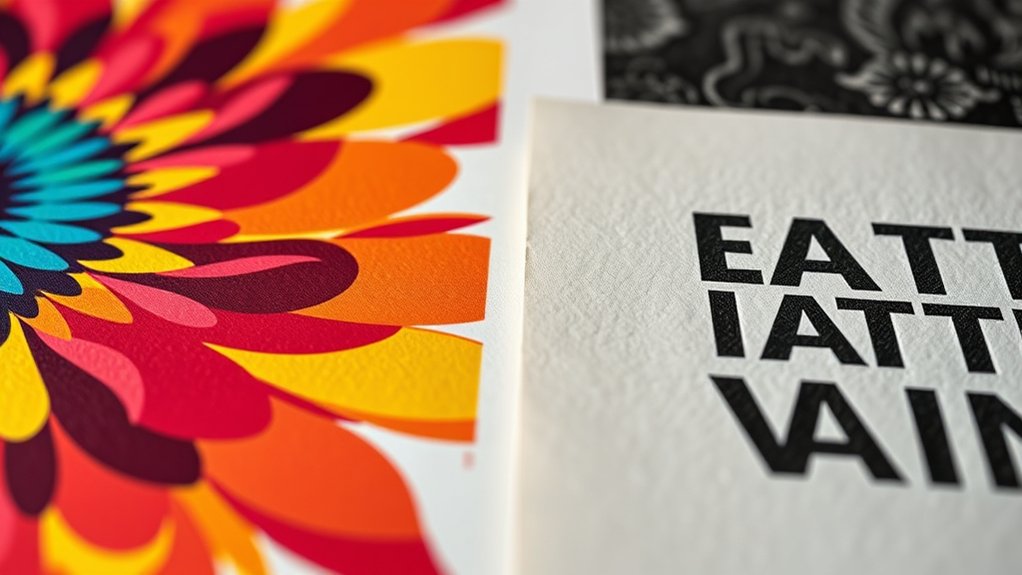
You’ll notice screen printing delivers bold, vibrant colors that pop on almost any surface. Letterpress, on the other hand, presses ink deep into the paper, creating tactile texture and subtle depth.
Understanding these differences helps you choose the right technique for your desired visual impact.
Color Vibrancy Comparison
When comparing color vibrancy, screen printing delivers bold, intense hues that pop off the surface, thanks to its thick ink layers and opacity. You’ll notice screen printing achieves higher color saturation because it deposits more ink, creating vivid, solid colors without losing brightness.
Its ability to layer inks enables precise color mixing directly on the substrate, expanding your color palette and producing gradients or blends with smooth shifts. In contrast, letterpress uses thinner ink applications that allow some substrate texture to show through, resulting in subtler, muted tones.
While letterpress offers charm through its tactile qualities, it doesn’t match the pure, saturated vibrancy screen printing provides. So when you want eye-catching, punchy colors, screen printing is the technical choice that maximizes visual impact through superior color saturation and mixing control.
Texture and Depth Effects
Texture defines the tactile experience and visual depth that letterpress and screen printing bring to your designs. With letterpress, you get pronounced texture variations as the press physically indents the paper, creating a debossed effect you can both see and feel.
This technique offers a rich tactile experience, adding sophistication and dimensionality. Screen printing, however, builds up layers of ink on the surface, allowing you to achieve raised textures and varied thicknesses. You can experiment with different ink types like puff or glitter to enhance texture variations.
While letterpress impresses with subtle depth and elegance, screen printing gives you more versatility in surface texture. Depending on your project, choose letterpress for refined tactile detail or screen printing for bold, varied texture effects.
Letterpress Vs Screen Printing Cost and Production Time
Although both letterpress and screen printing offer unique aesthetic qualities, their cost and production time vary markedly. When you look at cost comparison, letterpress demands higher setup costs due to custom plates and manual alignment. This makes it less budget-friendly for short runs but ideal for premium, tactile projects.
On the other hand, screen printing features lower initial expenses, especially for large runs, thanks to stencil-based screens that enable rapid replication. Regarding production efficiency, screen printing outpaces letterpress by quickly producing high volumes with consistent results.
Letterpress, while slower, excels in delivering intricate detail but requires more labor and drying time. So, if you prioritize speed and lower costs for bulk orders, screen printing serves you better. If you want artisanal quality and can afford longer production, letterpress fits your needs perfectly.
Letterpress Vs Screen Printing Durability and Longevity
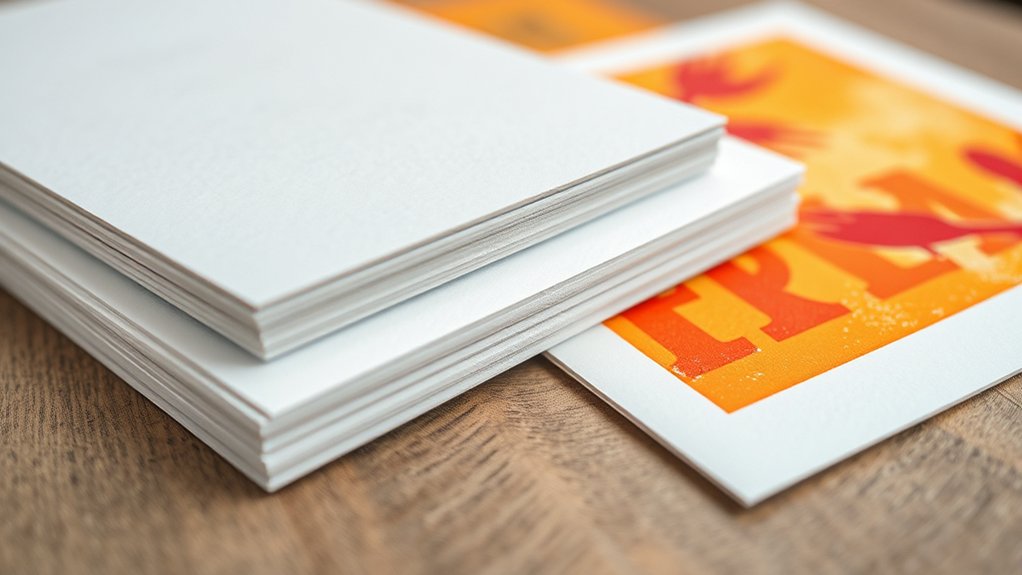
Because you want your prints to last, understanding the durability differences between letterpress and screen printing is essential. Letterpress impressions physically emboss the paper, creating raised textures that resist wear well, especially on thick, high-quality stock. This tactile quality adds to longevity expectations, as the ink is pressed into the fibers rather than sitting on the surface.
Screen printing, however, deposits thicker layers of ink, often plastisol or water-based, which form a durable film atop the substrate. Durability factors here include ink type, fabric or paper quality, and curing process. Screen prints generally withstand repeated handling and washing better, making them ideal for apparel.
In contrast, letterpress excels in longevity for stationery and art prints, where tactile texture and subtle ink absorption matter most. Your choice hinges on these durability factors and expected use.
How to Choose Between Letterpress and Screen Printing
You’ll want to match your choice to the material you’re printing on, since letterpress works best on thick, textured paper while screen printing handles a wider range of surfaces.
Consider your design’s complexity: letterpress favors simple, bold elements, whereas screen printing can capture intricate details and multiple colors.
Finally, weigh cost and production speed. Letterpress can be pricier and slower for large runs, while screen printing excels at fast, high-volume jobs.
Material Compatibility Considerations
When selecting between letterpress and screen printing, you need to contemplate the type of material you’re working with, as each method interacts differently with surfaces. Letterpress excels on thicker substrates like heavyweight cardstock, where its impression creates a tactile debossed effect.
Its ink absorption is minimal, as the ink sits atop the surface, preserving sharp edges without bleeding. Conversely, screen printing adapts well to varied substrate thicknesses, including fabrics and plastics, thanks to its ability to deposit thicker ink layers.
This method handles porous and non-porous materials differently: porous substrates absorb ink more readily, affecting color vibrancy and durability. You should consider how substrate thickness influences the pressure and ink layer in letterpress, while screen printing requires attention to ink absorption rates to prevent smudging or uneven coverage.
Choose based on your material’s compatibility for best results.
Design Complexity Limitations
Although both letterpress and screen printing offer distinct aesthetic appeals, their ability to handle intricate designs varies considerably. You’ll find letterpress faces design intricacy limits due to its reliance on raised surfaces, making fine details and gradients challenging.
Screen printing, however, adapts better to complex, multi-colored artwork but struggles with minute line work because of mesh and ink spread.
Consider these technique adaptability challenges when deciding:
- Letterpress excels in bold, simple shapes but falters with delicate patterns.
- Screen printing handles vibrant, layered designs yet risks blurring tiny elements.
- Both require design adjustments to optimize clarity and impact.
Understanding these constraints helps you choose the right method for your project’s detail level without compromising visual quality.
Cost And Production Speed
Because both cost and production speed directly impact project timelines and budgets, understanding their differences between letterpress and screen printing is essential. You’ll find that letterpress involves higher production expenses per piece due to setup and material costs but offers a classic, tactile finish.
Screen printing, however, excels in time efficiency for large runs, reducing cost per item as volume increases.
| Method | Production Expenses | Time Efficiency |
|---|---|---|
| Letterpress | Higher setup costs | Slower, manual process |
| Screen Print | Lower per unit cost | Faster for large batches |
| Ideal Use | Small, premium jobs | Large volume, quick turn |
Choose based on your budget and timeline priorities.
Frequently Asked Questions
Can Letterpress and Screen Printing Be Combined in One Project?
You can combine letterpress and screen printing using hybrid techniques to enhance creative projects. This fusion lets you layer textures and colors, achieving unique, tactile designs that maximize both methods’ strengths for stunning, professional results.
What Are the Environmental Impacts of Each Printing Method?
You’ll notice sustainability concerns differ; letterpress uses oil-based inks with less waste, while screen printing’s ink composition often involves plastisol, increasing environmental impact.
Choosing eco-friendly inks and recycling materials can reduce your project’s footprint.
Are There Specific Industries That Prefer Letterpress or Screen Printing?
You’ll spot letterpress in stationery design, where tactile impressions convey luxury. Screen printing dominates fashion branding, delivering vibrant, durable colors on fabrics. Each suits industries needing either refined texture or bold, wearable graphics.
How Do Maintenance Requirements Differ for Letterpress and Screen Printing Equipment?
You’ll clean ink regularly on both, but letterpress needs more precise ink maintenance due to its plates, ensuring crisp impressions.
Screen printing demands thorough mesh care for equipment longevity, preventing clogs and maintaining smooth ink flow.
Can Beginners Easily Learn Both Letterpress and Screen Printing Techniques?
You can learn both techniques; 70% of beginners find screen printing’s learning curve gentler than letterpress. With beginner resources like tutorials and workshops, you’ll quickly master each craft’s unique technical steps and tools.
Conclusion
When choosing between letterpress and screen printing, consider your project’s needs carefully. Did you know letterpress can create impressions up to 1/32 inch deep, adding tactile dimension screen printing can’t match? If you want crisp, textured designs with a classic feel, letterpress is your go-to.
For vibrant, multi-color prints on diverse materials, screen printing wins. Weigh cost, time, and durability to pick the method that brings your vision to life with precision and style. Ultimately, understanding the strengths of letterpress vs screen print will help you make the best choice for your project.