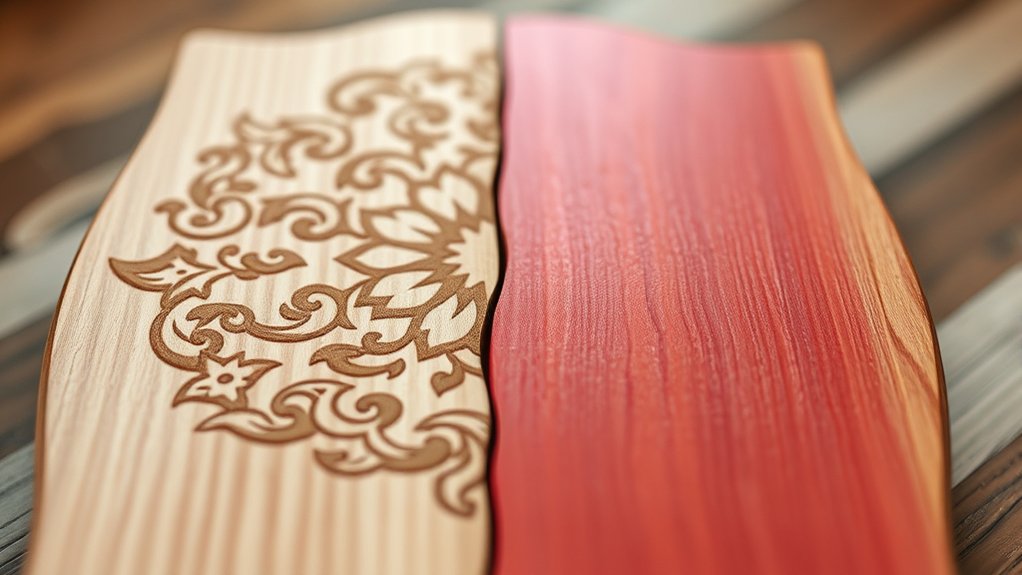

Laser engraving vs screen printing is a comparison of two popular methods for creating custom designs.
Laser engraving uses a focused light beam to etch sharp, permanent designs into wood, metal, or glass. It’s perfect for intricate, fade-proof details.
Screen printing, on the other hand, pushes vibrant inks through mesh screens for bold, colorful patterns on fabric or porous surfaces. This method is ideal for eye-catching visuals.
While engraving offers lasting finesse, screen printing shines in colorful versatility and cost-effectiveness.
Keep exploring to see which method truly fits your creative needs and budget.
Key Takeaways
- Laser engraving uses a focused light beam to create permanent, intricate designs on various materials without physical contact.
- Screen printing pushes ink through mesh stencils, ideal for vibrant, layered color designs on fabrics and porous surfaces.
- Laser engraving offers superior durability and precision, resisting fading and wear better than screen printing.
- Screen printing is cost-effective for large runs and provides rich, bold colors but may crack or peel over time.
- Laser engraving suits detailed customization on hard materials, while screen printing excels in colorful, eye-catching visuals on textiles.
How Laser Engraving Works and What Materials It Suits
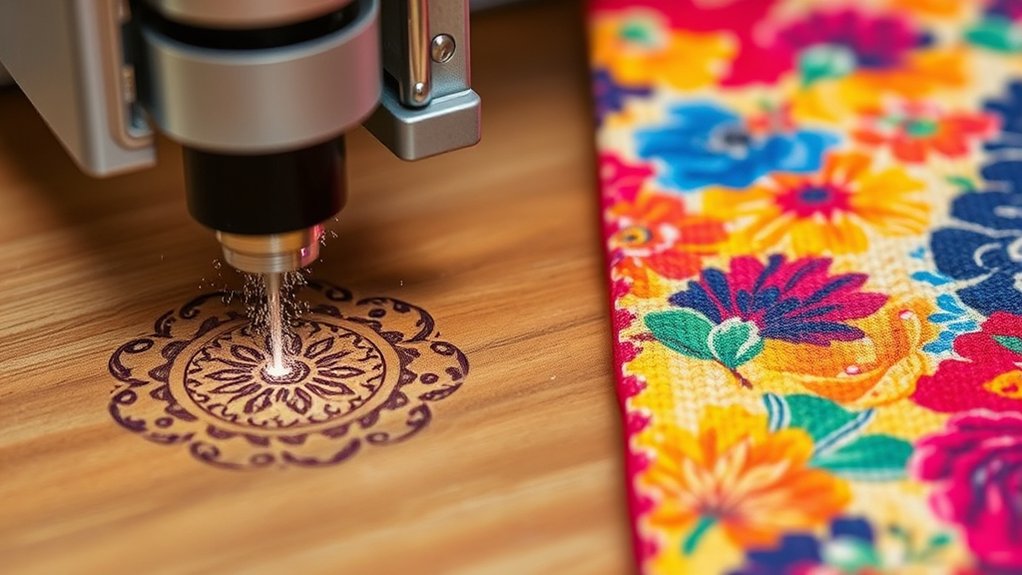
When you choose laser engraving, you’re harnessing a beam of concentrated light that carves intricate designs directly onto a surface. Laser technology works by focusing intense energy on a tiny spot, vaporizing or etching the material with pinpoint accuracy.
You can watch as the laser dances, creating detailed patterns without physical contact. This method excels in material compatibility; it works beautifully on wood, acrylic, glass, leather, and metals like stainless steel and aluminum.
Each material reacts differently—the laser may burn, melt, or discolor the surface, producing unique textures and contrasts. You’ll appreciate how this precision tool adapts to various substrates, allowing you to customize your designs with unparalleled control. Laser engraving brings your vision to life, tailored perfectly to the material’s nature.
Benefits of Laser Engraving Compared to Screen Printing
Laser engraving’s ability to etch detailed designs onto a variety of materials gives it a clear edge over screen printing in many scenarios. You’ll appreciate its precision detail, which captures intricate patterns that screen printing can’t match.
Plus, laser engraving offers design versatility, working seamlessly on metals, woods, plastics, and more, while screen printing is limited to flat, porous surfaces. This method also guarantees durability; your designs won’t fade or peel over time.
| Feature | Laser Engraving | Screen Printing |
|---|---|---|
| Precision Detail | Fine, intricate etching | Limited by mesh and inks |
| Design Versatility | Works on diverse materials | Best for flat, porous surfaces |
| Durability | Permanent, fade-resistant | Prone to cracking and fading |
How Screen Printing Works and What Surfaces It Suits
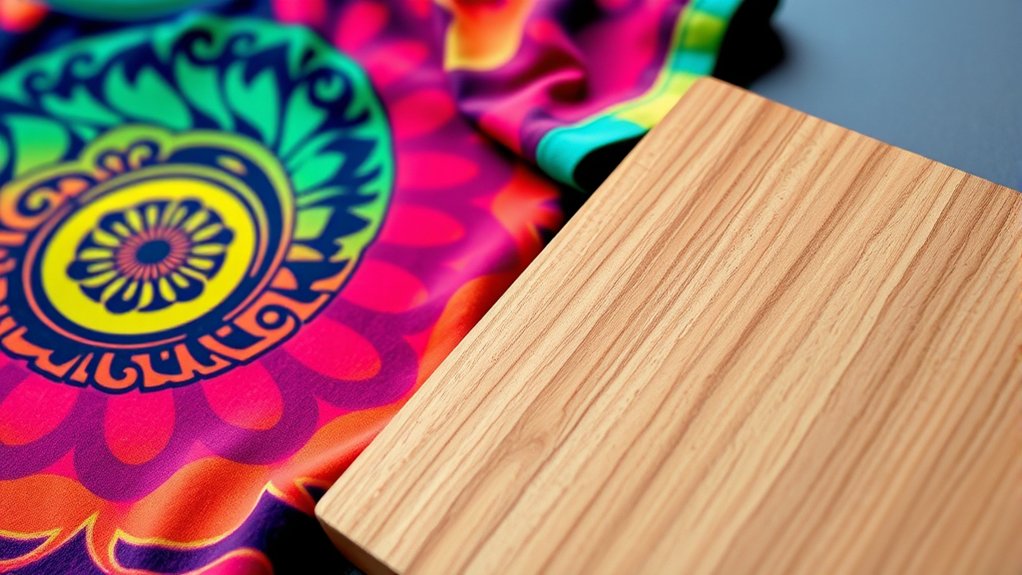
Although screen printing might seem straightforward, it involves a careful process where ink is pushed through a fine mesh stencil onto your chosen surface, layer by vibrant layer. You’ll notice that each ink application builds depth and richness, creating sharp, durable designs.
This technique thrives on fabric compatibility, especially with cotton, polyester, and blends, where ink bonds smoothly without cracking or fading. Beyond textiles, screen printing also suits rigid surfaces like wood, metal, and glass, provided you use the right ink type.
As you select your material, consider its texture and porosity. Smooth surfaces allow crisp lines, while rough ones may blur details. By mastering these elements, you guarantee your prints pop vividly and stand the test of time.
Benefits of Screen Printing and When to Choose It
Because screen printing delivers vibrant, long-lasting colors with every pass, you’ll find it perfect for bold designs that demand attention. When you want your artwork to pop with vivid hues, this method gives you exceptional color options, letting your creativity run wild.
Screen printing offers remarkable design flexibility. You can layer inks, mix textures, and achieve sharp, clean lines that stand out on fabrics or other surfaces. Choose screen printing when your project calls for eye-catching visuals, especially on materials like cotton or polyester.
It’s ideal for large runs where consistent quality matters, and you want your design to resist fading over time. If you’re aiming for a striking, colorful finish that grabs the eye and endures, screen printing is the way to go.
Comparing Cost and Durability of Laser Engraving vs Screen Printing
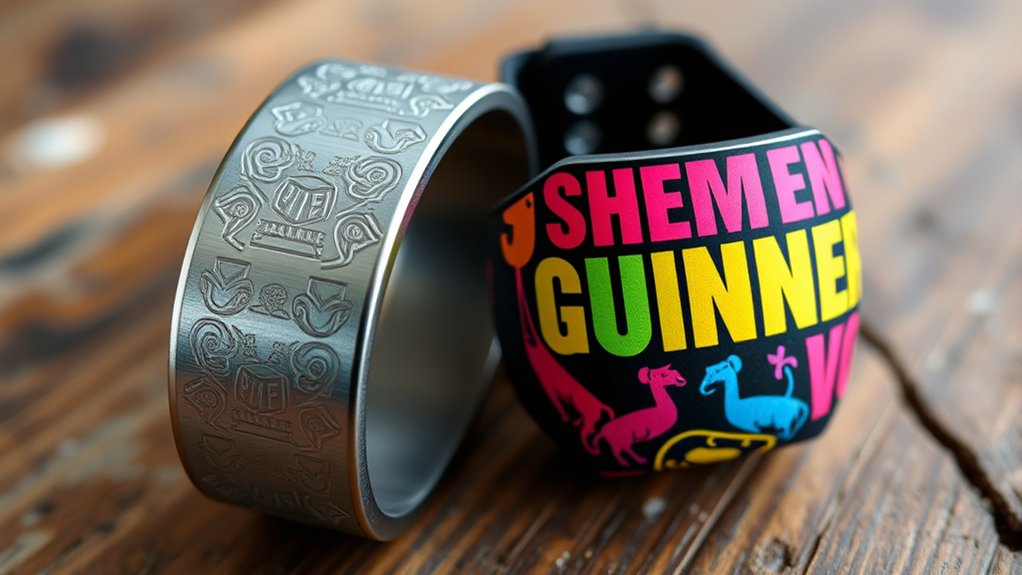
When you weigh the costs and durability of laser engraving versus screen printing, you’ll notice each method shines in different ways. A cost analysis reveals that laser engraving demands a higher upfront investment, thanks to advanced equipment, but offers lower ongoing expenses since it requires no consumables.
Screen printing, on the other hand, starts cheaper but rakes up costs with ink, screens, and setup for multiple colors. In durability comparison, laser engraving etches directly onto the material, resisting fading and wear even under harsh conditions.
Screen printing creates vibrant, bold designs but may crack or peel over time, especially after repeated washing or exposure. So, if longevity and precision are your priorities, laser engraving stands out; for budget-friendly, colorful runs, screen printing still holds sway.
Frequently Asked Questions
Can Laser Engraving Be Used on Clothing Fabrics?
You can use laser engraving on specific fabrics like leather or denim, but fabric compatibility varies. Engraving techniques gently etch designs, creating unique textures, though delicate fabrics might not endure the laser’s heat without damage.
How Long Does the Setup Process Take for Screen Printing?
You’ll spend about 1-3 hours on the setup duration, mainly on screen preparation. Imagine coating and drying a screen as carefully as painting a delicate masterpiece. Each step guarantees your print’s crisp, vibrant finish.
Are There Environmental Concerns With Screen Printing Inks?
Yes, you should consider the environmental impact since some screen printing inks contain harmful chemicals. Choosing eco-friendly, water-based ink composition reduces pollution and waste, helping you create vibrant designs while protecting our planet’s delicate balance.
Can Laser Engraving Create Multi-Colored Designs?
Imagine engraving a wooden plaque where subtle shading mimics color mixing. Laser engraving can’t produce true multi-colored designs but uses design techniques like depth variation and surface texture to create visually rich, nuanced effects.
What Is the Typical Turnaround Time for Each Method?
You’ll find laser engraving’s turnaround efficiency shines with quick production speed, often finishing same-day.
Screen printing takes longer, sometimes days, due to setup and drying, but it’s worth the vibrant, multi-colored results you’re after.
Conclusion
Choosing between laser engraving and screen printing is like picking between a sculptor’s chisel and a painter’s brush—each leaves a distinct mark. Laser engraving offers precision and durability, perfect for metals and hard surfaces. Screen printing shines on fabric and flexible materials with vibrant color.
Think about your project’s needs, budget, and material. When you match the right technique to your vision, your design won’t just be seen—it’ll be remembered. Ultimately, understanding the strengths of laser engraving vs screen printing will help you create a lasting impression.