
Embroidery vs screen printing cost varies depending on several factors, making it important to understand which method suits your needs best.
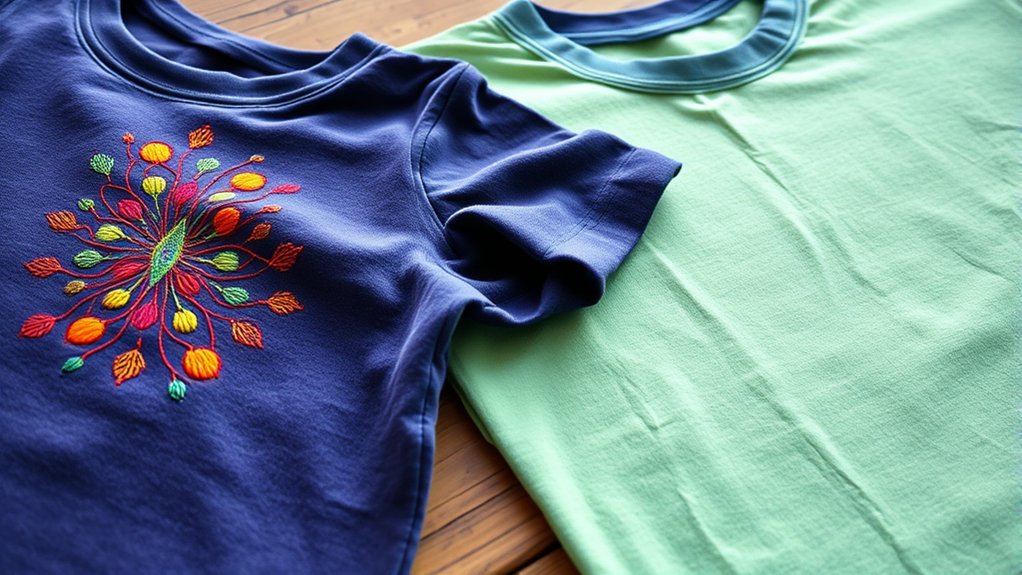
You’ll pay more for embroidery when your design has high stitch counts or uses textured fabrics. This makes embroidery ideal for small, detailed logos on thicker materials.
Screen printing costs stay lower for large orders with fewer colors but can spike with complex, multi-color images and bigger designs.
Factors like fabric type and design intricacy affect the prices of both methods. Choosing the right method depends on your budget, design, and fabric—explore deeper to find smart ways to save.
Key Takeaways
- Embroidery costs increase with stitch count, design complexity, and thread colors, making it pricier for intricate or detailed logos.
- Screen printing offers lower setup costs, ideal for large orders with simple, bold designs and fewer color variations.
- Multiple colors in screen printing raise costs due to separate screen setups and longer production times.
- Fabric type affects costs: rough fabrics increase embroidery labor, while porous fabrics raise screen printing ink use.
- Embroidery delivers durability and premium feel but is costlier upfront; screen printing is more budget-friendly for bulk, colorful designs.
Embroidery Vs Screen Printing: Cost Comparison Overview
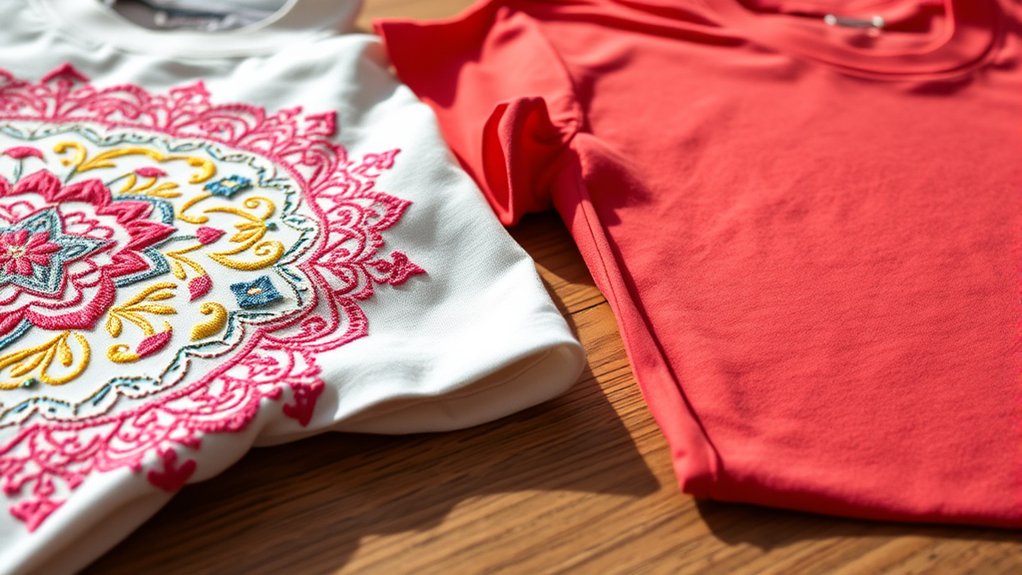
When weighing embroidery against screen printing, you’ll quickly notice how their costs diverge based on factors like design complexity, order size, and material type. Embroidery techniques often involve digitizing your design, thread selection, and stitch count, which drives up costs for intricate patterns.
In contrast, screen printing methods require creating screens for each color, making it more cost-effective for large orders with simpler designs. If your design demands multiple colors and fine details, embroidery might increase expenses due to stitch density and thread changes.
Screen printing shines with bold, flat colors but can get pricey with many layers or special inks. Understanding these differences helps you choose the right method that balances quality and budget, ensuring your final product looks sharp without overspending.
Key Factors Affecting Embroidery Costs
You’ll notice embroidery costs shift based on stitch count. More stitches mean more time and thread. Design complexity plays a big role too; intricate patterns demand precision and slow down production.
Plus, the type of material you choose affects how easily the needle moves and the final look, influencing the price.
Stitch Count Impact
Stitch count drives embroidery costs by determining the amount of thread and time needed to complete a design. The higher the stitch density, the more thread you use, and the longer the machine runs. Thread quality also matters. A premium thread may increase cost but improves durability and appearance.
Here’s how stitch count impacts your cost:
| Stitch Count Range | Cost Impact |
|---|---|
| Under 5,000 | Low: faster, less thread |
| 5,000 to 15,000 | Moderate: balanced cost |
| Over 15,000 | High: more time, thread |
You’ll want to optimize stitch density to maintain quality without excessive stitches. Choosing quality thread keeps your embroidery crisp and lasting, but expect some cost increase due to finer materials.
Design Complexity
Because embroidery designs can vary widely in detail, the complexity directly influences both production time and cost. When your design embraces simplicity, with bold shapes and minimal colors, you’ll save money and speed up production.
On the other hand, highly detailed artwork demands precise stitching, increasing both time and expense. Fine lines, intricate patterns, and subtle gradients require expert craftsmanship and slow, careful stitching to capture artwork precision accurately.
If your design includes tiny text or delicate elements, expect costs to rise as the embroidery machine must work meticulously to replicate every detail. Balancing design complexity with design simplicity not only cuts costs but guarantees a cleaner, more durable final product.
Material Type Effects
Fabric choice plays an essential role in determining embroidery costs, as different materials respond uniquely to stitching. When you select fabrics with higher durability, they handle stitches better, reducing thread breakage and rework.
Thread quality also impacts costs. Premium threads last longer and produce sharper designs but may increase expenses.
Here’s how common fabrics influence embroidery cost and outcome:
| Fabric Type | Impact on Cost & Durability |
|---|---|
| Cotton | Moderate cost; good fabric durability |
| Polyester | Cost-effective; resists wear well |
| Silk | Higher cost; delicate, less durable |
| Denim | Higher cost; excellent durability |
Choosing the right fabric and thread quality guarantees your embroidery lasts, balancing cost with appearance and fabric durability.
How Design Choices Influence Screen Printing Costs
When you pick bright, multiple colors for your design, screen printing costs climb quickly due to extra setup and ink usage. Larger designs eat up more material and time, pushing the price higher.
Plus, intricate details demand sharper screens and careful printing, which adds to your total cost.
Color Complexity Impact
Although screen printing offers vibrant results, the number of colors in your design directly affects the cost. Each color variation requires a separate screen, so the more colors you include in your design palettes, the higher the setup fees and production time.
| Number of Colors | Setup Cost | Production Speed |
|---|---|---|
| 1-2 colors | Low | Fast |
| 3-4 colors | Moderate | Moderate |
| 5-6 colors | High | Slower |
| 7+ colors | Very High | Slowest |
Keep your color variations minimal to save money and speed up the process. Complex palettes demand extra screens and careful alignment, increasing both cost and error risk. Simplify your design palettes to optimize your budget without sacrificing visual impact.
Design Size Effects
Because larger designs require more ink and longer press time, they naturally push up your screen printing costs. When planning your design dimensions, keep in mind that bigger prints eat up more resources and slow down production.
Screen printing has size limitations based on the equipment and garment area, so pushing beyond these can increase setup complexity and cost. Staying within ideal dimensions helps control expenses and maintain print quality.
If your design stretches to cover a large portion of the fabric, expect a higher price tag due to increased ink usage and longer drying times. Conversely, smaller, well-placed prints require less ink and speed up the process, saving you money.
Balancing design size within practical limits is key to managing your screen printing budget effectively.
Detail Level Costs
If you want to keep your screen printing costs down, pay close attention to the level of detail in your design. Intricate designs with fine lines and small text demand more screens and greater precision, driving up the cost breakdown.
Each additional color or complex element requires separate screens, increasing setup time and materials. Simple, bold designs reduce the number of screens needed, aligning with efficient pricing strategies.
When planning your artwork, consider limiting colors and avoiding overly detailed elements to control expenses. By understanding how detail influences labor and equipment use, you can make smarter choices that keep your project affordable without sacrificing visual impact.
Balancing design complexity with cost helps you navigate pricing strategies confidently, ensuring your screen printing stays within budget.
How Fabric Type Affects Embroidery and Screen Printing Costs
When you choose a fabric for your project, its texture and weave directly impact both embroidery and screen printing costs. Rough, thick fabrics like canvas demand more thread and effort during embroidery, increasing labor and material costs.
Smooth, tightly woven materials like polyester make screen printing easier and more vibrant, reducing setup time and ink usage. Fabric characteristics such as stretchiness and absorbency also affect how well ink adheres or stitches hold, influencing durability and cost.
For embroidery, highly durable materials resist needle damage but may require extra tension adjustments, adding to time and expense. In screen printing, porous fabrics soak up more ink, raising ink consumption and drying time.
Understanding these material durability factors helps you predict costs and choose the best method for your fabric type.
When Embroidery Is More Cost-Effective Than Screen Printing
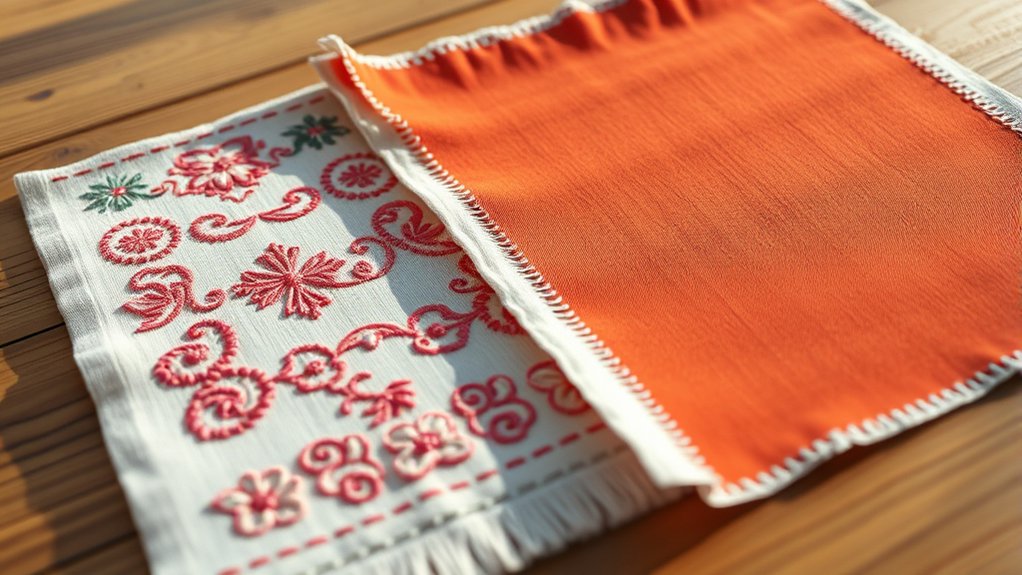
Although screen printing suits large, flat designs, embroidery becomes more cost-effective for smaller, intricate logos that demand durability and texture. When your design involves fine details or multiple colors in tight spaces, embroidery’s precision shines without increasing costs drastically.
You’ll benefit from embroidery durability. Stitching withstands frequent washing and wear better than printed ink, preserving your brand’s appearance longer. This longevity translates into branding benefits: your logo stays sharp, professional, and tactile, enhancing perceived quality.
Plus, embroidery adds a premium feel that can elevate your apparel’s value without the repeated expense of reprinting faded designs. So, if you prioritize lasting impact and textured aesthetics in compact designs, embroidery often offers a smarter investment than screen printing.
Budget Tips to Lower Custom Apparel Costs
To keep your custom apparel costs down, focus on simplifying your design and order details. Choose fewer colors and avoid intricate patterns that drive up production time. Opt for standard apparel styles and sizes to reduce expenses.
Take advantage of bulk ordering by consolidating your needs into one large order. This lowers the cost per piece considerably. Watch out for seasonal discounts; many suppliers offer promotions during off-peak months, letting you save even more.
Plan ahead to align your order with these sales. Also, avoid last-minute changes that can increase fees. By thoughtfully streamlining your design and timing your purchase, you’ll maximize your budget without sacrificing quality or style, making custom apparel more affordable and efficient for your needs.
How to Choose Between Embroidery and Screen Printing
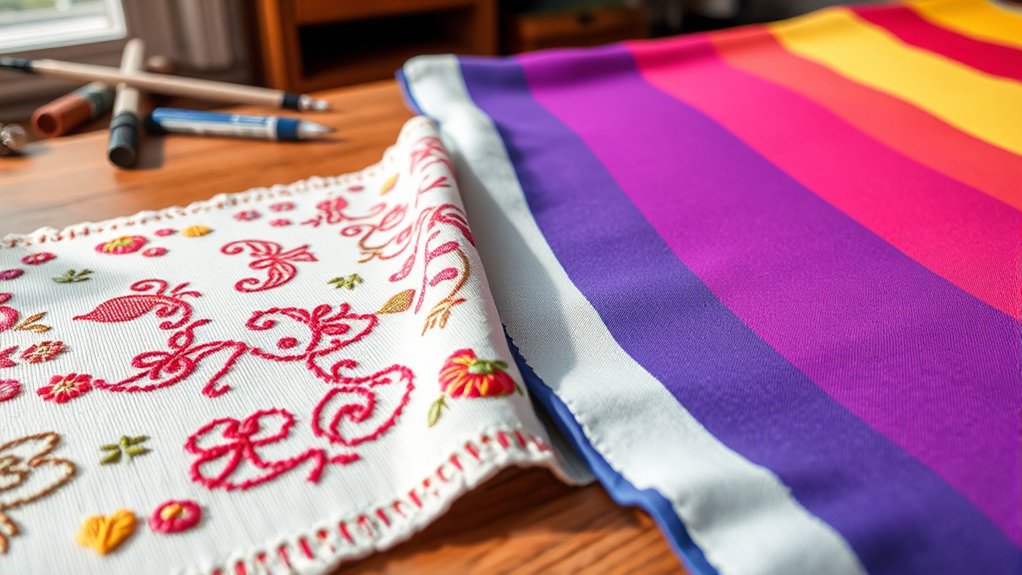
Deciding between embroidery and screen printing hinges on your design’s complexity, fabric type, and budget. Embroidery techniques add texture and durability, ideal for logos or small designs on thicker fabrics. Screen printing methods work best for vibrant, detailed, or multi-color images, especially on lighter, smooth materials.
| Factor | Embroidery | Screen Printing |
|---|---|---|
| Design Detail | Simple, fewer colors | Complex, multiple colors |
| Fabric Type | Thick, durable fabrics | Light, smooth fabrics |
| Cost Efficiency | Higher setup cost, lasts longer | Lower setup, better for bulk |
| Durability | Highly durable with texture | Durable but can crack over time |
Match your choice to your fabric and design needs while balancing cost for the best results.
Frequently Asked Questions
Can Embroidery and Screen Printing Be Combined on One Garment?
Yes, you can combine embroidery and screen printing on one garment. This approach expands design possibilities, letting you mix textures and colors.
It works well on various garment types like jackets, polos, and hoodies for a unique, eye-catching look.
How Long Does Each Method Take to Produce?
Think of production time like baking: screen printing’s setup process is a slow oven preheat, but actual printing is quick.
Embroidery takes longer throughout, stitching each detail carefully, so you won’t rush its intricate art.
Which Method Is More Durable for Outdoor Apparel?
You’ll find embroidery offers superior durability for outdoor apparel, resisting wear and weather better. This durability comparison highlights embroidery’s textured stitches, which maintain outdoor performance, unlike screen printing that may crack or fade over time.
Are There Limitations on the Number of Colors for Each Method?
You won’t face many color limits with embroidery, but intricate designs can get tricky. Screen printing handles complex color complexity better, letting you capture fine detail and vivid hues. This method is perfect when your design intricacy demands precision.
How Do Washing Instructions Differ Between Embroidered and Screen-Printed Items?
You’ll want to use gentle washing care for both, but embroidered items handle cold water better, preserving stitches on various fabric types.
Screen-printed items need inside-out washing to protect prints, especially on delicate or synthetic fabrics.
Conclusion
When deciding between embroidery and screen printing, remember that embroidery can cost up to 50% more per piece but offers unmatched durability and a premium look.
Screen printing shines with vibrant colors and lower costs for large runs. Keep your design simple and fabric in mind to save money.
By weighing these factors, you’ll pick the best method that fits your budget and style perfectly—making your custom apparel both eye-catching and cost-effective. Understanding the embroidery vs screen printing cost will help you make the right choice for your project.