
Dtf Vs Silk Screen Printing is a key decision when choosing the best printing method for your project.
You’ll choose DTF printing if you need vibrant, detailed multi-color designs on various fabrics with minimal setup, using heat-pressed adhesive powders for lasting flexibility.
Silk screen printing suits bold, simple designs requiring thick, durable ink layers ideal for large-volume runs.
DTF works best for small to medium orders with faster turnaround, while silk screen becomes more cost-effective at scale.
Understanding their processes and benefits helps guarantee you select the right method for your project needs.
Key Takeaways
- DTF printing excels in vibrant, detailed multi-color designs with lower setup costs, ideal for small to medium runs.
- Silk screen printing offers superior durability and color vibrancy, best suited for bold designs and large volume production.
- DTF uses adhesive powder on printed film for flexible, wash-resistant transfers, while silk screen applies thick ink layers directly on fabric.
- Silk screen has higher initial costs but lower per-unit expenses at scale; DTF is cost-effective for intricate, limited-quantity projects.
- Choose DTF for complex, colorful designs needing quick turnaround; select silk screen for durability and efficiency in large batch orders.
How DTF Printing Works
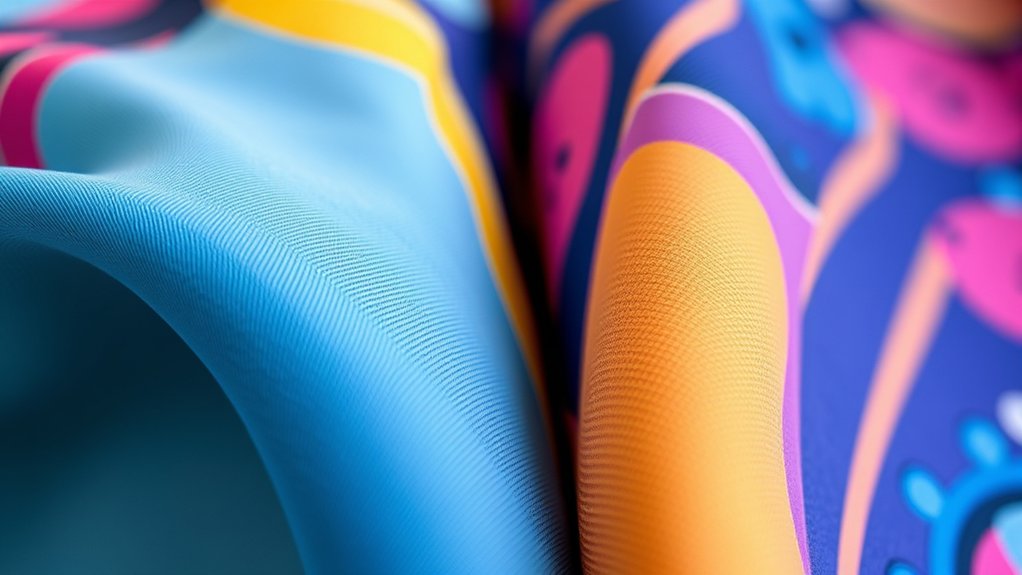
Although DTF printing may seem complex, it follows a clear, step-by-step process that you can easily understand. First, you finalize the design process by preparing a digital image with precise color management.
Then, you print the design onto a specialized film using water-based inks. After printing, you apply a layer of adhesive powder to the wet ink, ensuring it adheres properly during transfer.
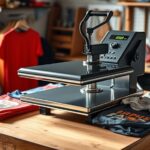
Next, you cure the film with heat to bond the adhesive. Finally, you place the film on the fabric and use a heat press to transfer the design. This method guarantees exceptional print longevity, resisting cracking and fading over time.
How Silk Screen Printing Works
Silk screen printing uses a stencil-based technique where you push ink through a fine mesh screen onto the fabric. You start by preparing a screen coated with a light-sensitive emulsion, then expose it to ultraviolet light with your design on a transparent film.
The exposed areas harden, while unexposed parts wash away, creating your stencil. Next, you position the screen over the fabric, apply ink at one end, and use a squeegee to force the ink through the open mesh areas.
This process allows precise ink deposition, resulting in sharp, vibrant prints. Silk screen techniques excel in producing durable images and are ideal for high-volume print applications, offering consistent results on various materials like cotton, polyester, and blends.
Advantages of DTF Printing
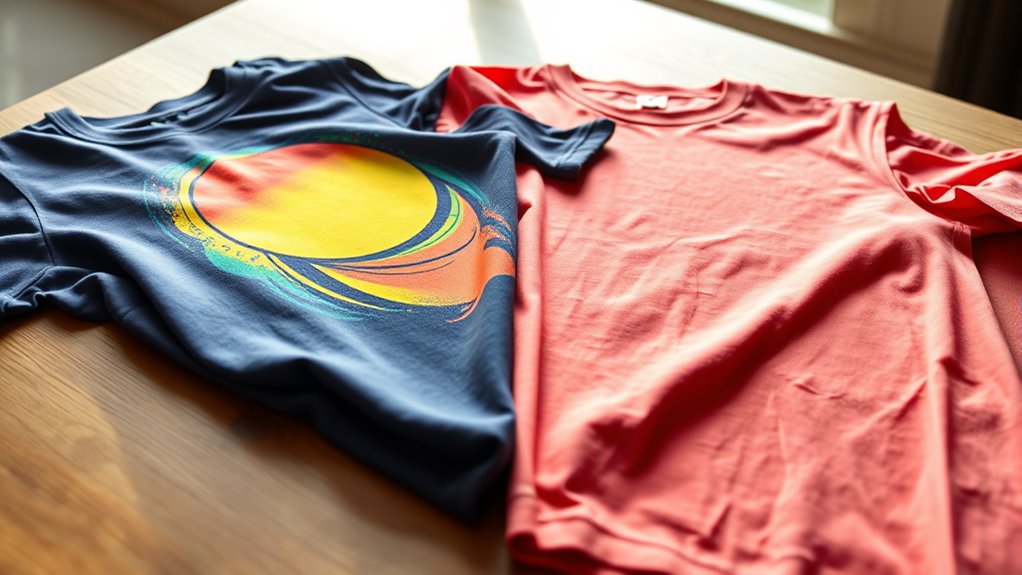
You’ll notice DTF printing delivers vibrant color reproduction with high precision, ensuring detailed and consistent output. It works effectively across various fabric types without compromising print quality.
Plus, it’s cost-effective for small runs, minimizing setup time and material waste compared to traditional methods.
Vibrant Color Reproduction
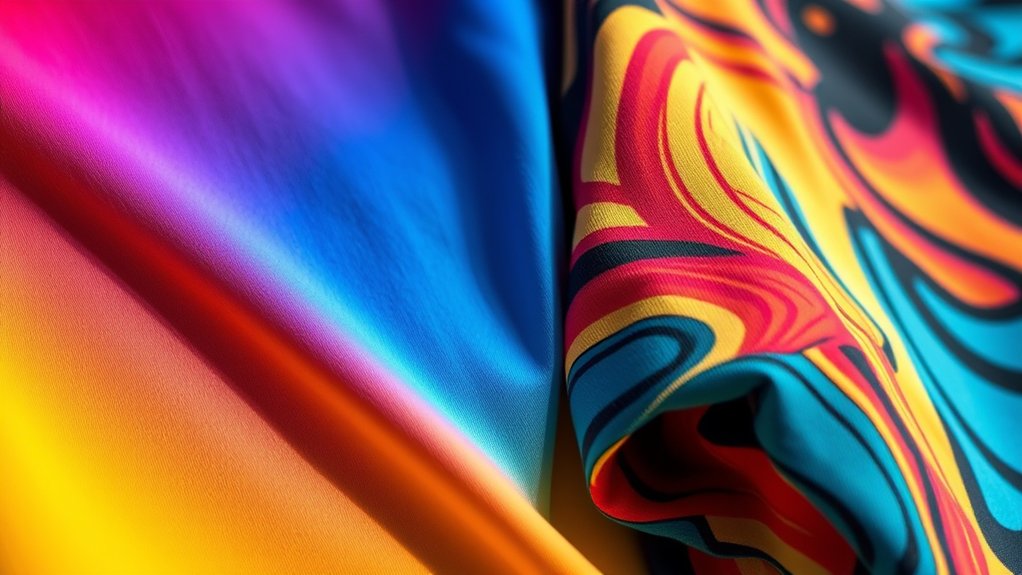
DTF printing delivers up to 16 million colors by layering finely controlled ink droplets, enabling you to achieve vibrant, high-resolution images with smooth gradients and sharp details. This process enhances color saturation beyond traditional print techniques, ensuring each hue remains vivid and true to the original design.
The precision of ink placement minimizes color bleeding and maximizes sharpness, essential for complex artwork.
| Feature | Benefit |
|---|---|
| Ink Droplet Control | Precise color layering |
| Color Saturation | Rich, vibrant hues |
| Gradient Smoothness | Seamless shifts |
| Detail Resolution | Crisp, sharp images |
Fabric Versatility
Beyond vibrant color reproduction, the printing method you choose greatly impacts the range of fabrics compatible with your designs. DTF printing excels in fabric versatility by utilizing specialized printing materials that adhere effectively to diverse fabric types, including cotton, polyester, blends, nylon, and even leather.
The process involves printing designs onto a polymer film, then transferring them to fabric with a heat press, ensuring strong adhesion and flexibility. This method eliminates the need for fabric-specific inks or treatments, allowing you to switch between materials without sacrificing print quality.
Unlike traditional silk screen printing, which often requires different inks or screens for various fabric types, DTF streamlines production and expands your creative options across multiple textiles, enhancing efficiency and product range.
Cost-Effective Small Runs
How can small production runs maintain high quality without inflating costs? DTF printing offers budget friendly options tailored for small business needs by eliminating setup fees and minimizing material waste. You print only what’s required, reducing overhead and turnaround time while preserving detail and durability.
| Aspect | DTF Printing |
|---|---|
| Setup Cost | Minimal |
| Run Size Flexibility | High |
| Material Waste | Low |
| Print Detail | Precise |
| Turnaround Time | Fast |
This process suits small batches, allowing you to scale production efficiently. You avoid the high initial costs and cumbersome setup of silk screen printing, making DTF ideal for cost-effective small runs without sacrificing quality.
Advantages of Silk Screen Printing
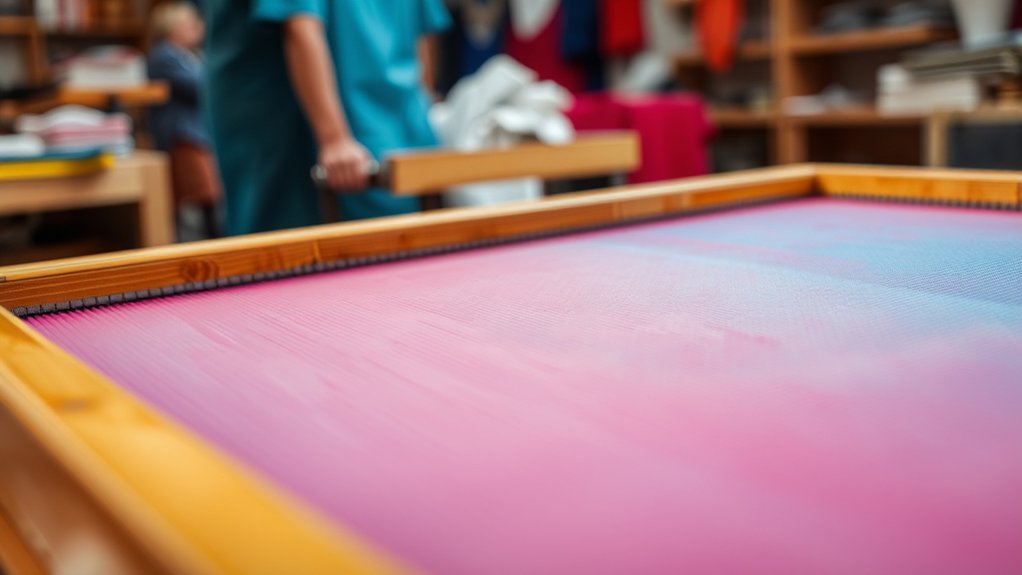
Although silk screen printing requires more setup time than some methods, it delivers exceptional durability and color vibrancy that you’ll appreciate in high-volume or long-lasting projects. You’ll find that the process offers significant design flexibility, enabling use of specialty inks and various substrates.
Once the screens are prepared, production speed increases dramatically, making it ideal for bulk orders. The method transfers thick ink layers, which enhances longevity and wash resistance. Despite the initial setup, the repeatability of prints guarantees consistent quality across large runs.
Color Vibrancy: DTF vs Silk Screen Printing
When comparing color vibrancy, you need to examine the ink quality differences between DTF and silk screen printing, as they directly affect the final output. You’ll also want to assess the color range capabilities each method offers, since this impacts the accuracy and intensity of colors.
Finally, consider the durability of vibrancy over time, which determines how well the colors hold up through wear and washing.
Ink Quality Differences
Because ink quality directly impacts the final appearance of printed designs, understanding the differences in color vibrancy between DTF (Direct to Film) and silk screen printing is essential. DTF inks typically use a polymer-based composition designed to bond with the film and fabric during heat transfer, resulting in consistent color intensity and smooth gradients.
In contrast, silk screen printing relies on plastisol or water-based inks with thicker viscosity, which enables higher pigment concentration and more opaque colors. However, this thicker ink can sometimes reduce fine detail sharpness.
You’ll notice DTF’s ink composition allows for vibrant, precise colors with excellent durability, while silk screen inks offer robust color intensity but may require multiple layers for full opacity. Choosing between these methods depends on your design’s complexity and desired finish.
Color Range Capabilities
Both DTF and silk screen printing offer distinct advantages in color range capabilities, directly influencing the vibrancy and accuracy of your final print. With DTF, you benefit from digital color mixing, allowing seamless shifts and detailed print gradients that reproduce complex images with high fidelity.
This process supports a broader spectrum of colors without the need for multiple screens. Conversely, silk screen printing relies on layering individual inks, which can limit the achievable color range and make smooth gradients more challenging.
However, this method excels in producing bold, solid colors with precise saturation. When choosing between the two, consider whether your design demands intricate color blending or strong, uniform hues. Understanding these differences guarantees your print aligns perfectly with your color vibrancy requirements.
Durability Of Vibrancy
Understanding how color vibrancy holds up over time is essential after evaluating initial color range capabilities. When comparing DTF and silk screen printing, you need to analyze key vibrancy factors such as ink formulation, substrate absorption, and curing processes.
DTF uses specialized polymer inks that bond with fabric at a molecular level, enhancing color retention. Silk screen printing relies on thicker ink layers that can crack or fade due to environmental exposure.
Durability tests, including wash fastness and UV resistance, reveal DTF prints maintain vibrancy longer under repeated stress. However, high-quality silk screen prints with proper curing also exhibit strong durability but may lose vibrancy faster with frequent washing.
Durability Comparison: DTF and Silk Screen Prints
When evaluating the durability of DTF and silk screen prints, you’ll find that each method offers distinct advantages based on material composition and application technique. DTF prints use a specialized adhesive powder fused with inks, providing excellent wash resistance and flexibility.
This process generally yields a print lifespan of 30-50 washes without significant degradation. In contrast, silk screen printing applies ink layers directly onto fabric, creating a thicker, more robust print.
This method typically endures a higher number of wash cycles, often exceeding 50, before noticeable wear occurs. However, silk screen prints may crack or fade over time with improper curing or harsh laundering.
Ultimately, your choice depends on balancing print lifespan expectations with the specific fabric and intended use, ensuring maximum durability for your project.
Cost Differences Between DTF and Silk Screen Printing
Durability plays a significant role in choosing between DTF and silk screen printing, but cost factors often influence your final decision just as much. When conducting a price comparison, silk screen printing usually involves higher initial production expenses due to setup costs like stencil creation and screen preparation.
These fixed costs become more economical as your order volume increases, reducing the per-unit price. Conversely, DTF printing has lower upfront expenses since it doesn’t require screen setup, making it more cost-effective for small runs or highly detailed designs.
However, DTF’s variable costs, including specialized inks and transfer films, can add up. Understanding these production expenses helps you evaluate which method aligns better with your budget and order size without compromising quality.
How to Choose Between DTF and Silk Screen Printing
How do you determine which printing method best fits your project requirements? Start by evaluating your design preferences and order quantities. Consider if your design demands intricate details or vibrant colors, where DTF excels.
For large, simple designs and high order quantities, silk screen printing offers cost-efficiency and durability.
| Factor | DTF Printing | Silk Screen Printing |
|---|---|---|
| Design Preferences | Complex, multi-color designs | Bold, simple color separations |
| Order Quantities | Small to medium runs efficient | Best for large volume orders |
| Cost Efficiency | Lower setup cost | Lower cost per unit at scale |
Match your choice to these criteria for ideal results. Choose DTF for flexibility and detail, silk screen for volume and durability.
Frequently Asked Questions
Can DTF and Silk Screen Printing Be Combined on One Garment?
Yes, you can combine DTF and silk screen printing on one garment if your design compatibility is carefully planned. Guarantee proper layering to optimize print durability, blending both methods for detailed, long-lasting results efficiently.
Which Method Is More Environmentally Friendly?
You’ll find silk screen printing more environmentally friendly due to its sustainability practices and use of eco friendly materials like water-based inks, whereas DTF relies on plastic films and chemical adhesives, increasing environmental impact.
Are There Fabric Types Unsuitable for Either Printing Method?
You’ll find fabric compatibility varies; silk screen printing struggles with stretchy or delicate fabrics. DTF printing’s limitations include poor adhesion on certain rough or heat-sensitive materials. Choose based on fabric type and process needs.
How Do Washing Instructions Differ for DTF Vs Silk Screen Prints?
You’ll want to use gentle washing techniques for DTF prints to maintain print durability, avoiding high heat.
Silk screen prints tolerate warmer washes, but always turn garments inside out to protect the ink and extend longevity.
Is One Method Better for Small Batch or Custom Orders?
You’ll find DTF better for small orders and custom designs since it requires less setup time and allows quick, detailed prints without screens.
Silk screen suits large batches due to its upfront preparation and cost efficiency.
Conclusion
When deciding between DTF and silk screen printing, consider that DTF prints can achieve up to 30% more color vibrancy, making your designs pop with precision. You’ll also weigh durability and cost based on your project scale. Understanding each method’s workflow helps you optimize quality and efficiency.
By analyzing these factors, you can confidently select the printing process that best aligns with your technical requirements and production goals. Ultimately, choosing between DTF vs silk screen printing depends on your specific needs for color vibrancy, durability, and cost-effectiveness.