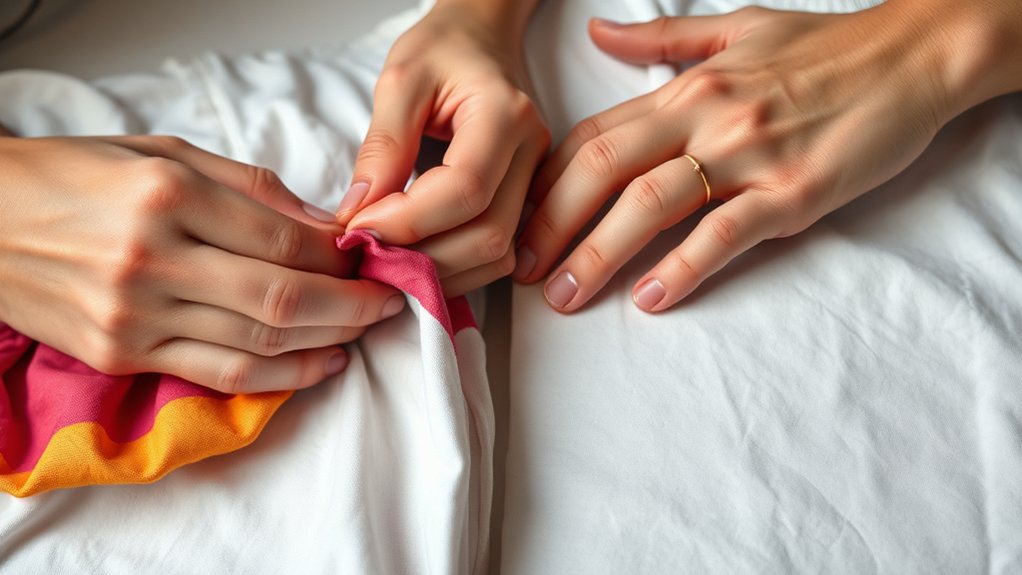

When choosing between cut and sew vs screen printing, you encounter two distinct creative approaches.
Cut and sew involves crafting garments from scratch, allowing customization of fit, fabric, and texture for a couture feel.
Screen printing, on the other hand, applies bold, vibrant designs quickly and affordably onto the fabric’s surface.
If you’re after detailed construction and fabric finesse, cut and sew is the way to go.
For flashy, cost-effective visuals, screen printing shines.
Keep exploring to discover which technique best suits your project’s soul and style.
Key Takeaways
- Cut and sew creates custom garments with precise fabric cutting and stitching, while screen printing adds designs onto fabric surfaces.
- Cut and sew offers superior fit and fabric manipulation; screen printing emphasizes vibrant, detailed surface designs.
- Screen printing is faster and more cost-effective for large runs; cut and sew involves higher costs and longer production times.
- Quality in cut and sew comes from garment construction; screen printing quality depends on ink and fabric compatibility.
- Fabric choice impacts both methods differently, with natural fibers absorbing inks uniquely and affecting print clarity.
Understanding Cut and Sew: What It Is and How It Works
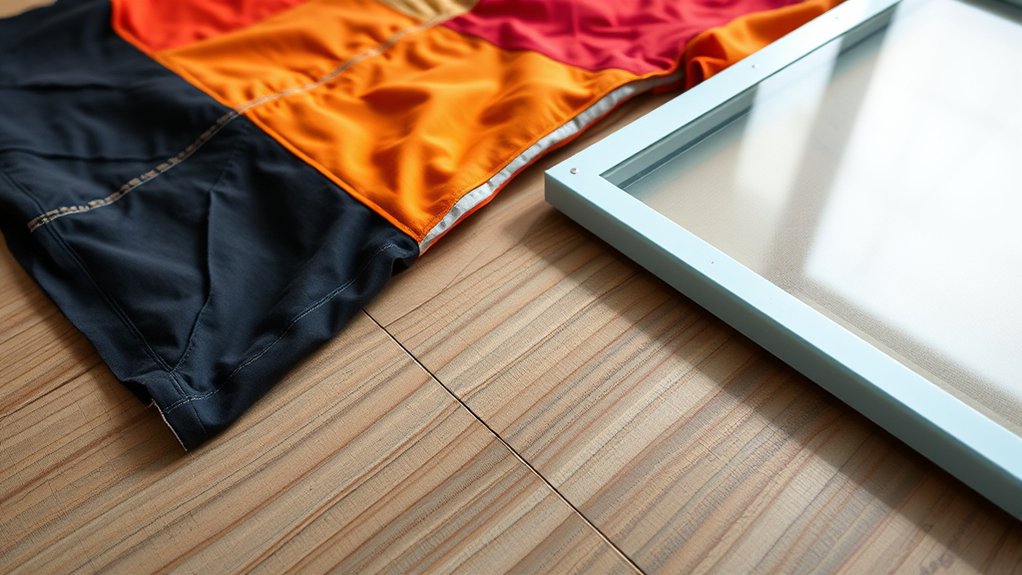
Cut and sew is a hands-on approach to garment creation that lets you turn fabric into a wearable art piece by piece. You start by carefully choosing your fabric selection, considering texture, weight, and color to set the tone for your design.
Then, you apply precise design techniques, cutting each pattern piece with intention and stitching them together to sculpt your vision into reality. Every seam and detail reflects your craftsmanship, giving you control over fit and style that mass production can’t match.
As you work, you see how different fabrics interact, how cuts influence drape, and how your design comes alive through your hands. This method transforms raw textiles into custom, high-quality garments uniquely yours.
Screen Printing Explained: Process and Benefits
While cut and sew lets you shape fabric into unique garments, screen printing adds vibrant, lasting designs that bring your vision to life on the surface. You start by creating a stencil, or screen, which acts like a mask for your design.
Using specialized screen printing techniques, you push ink through the mesh onto your chosen printing materials—usually cotton or blends—layer by layer. This process captures bold colors and intricate details with sharp precision.
The inks bond deeply with fibers, ensuring durability and vibrancy wash after wash. Screen printing lets you express your creativity visually, making every print pop with texture and richness.
Once you grasp these fundamentals, you’ll see how this method transforms simple fabric into dynamic, wearable art.
Cut and Sew Vs Screen Printing: Quality, Customization, Cost, and Production Time
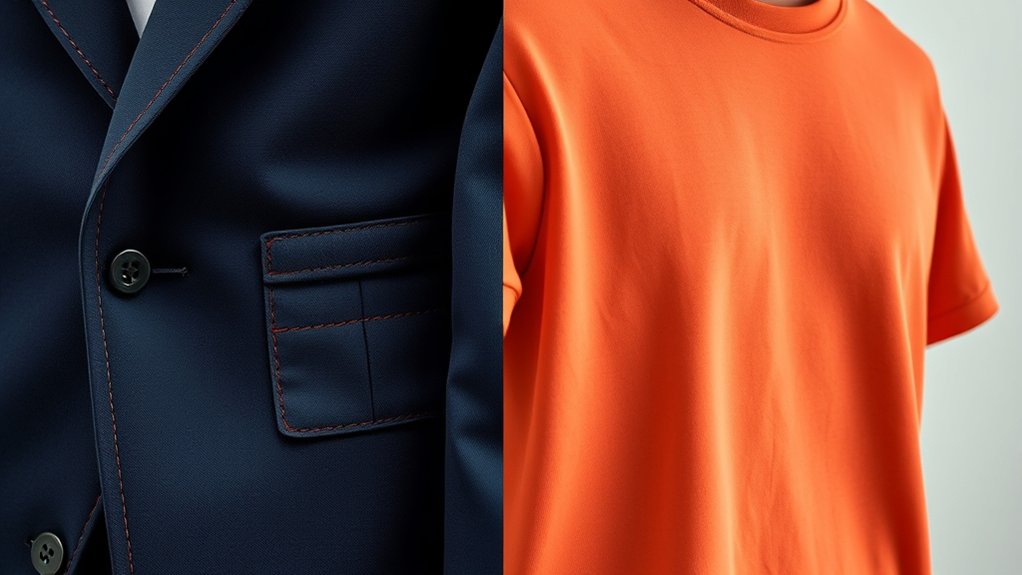
Although both cut and sew and screen printing offer unique ways to bring your designs to life, they differ greatly in quality, customization options, cost, and production time. When you choose cut and sew, you’re sculpting your garment from the ground up, selecting fabric types and tailoring every seam to match your design’s intricacies. Screen printing, on the other hand, paints your design onto pre-made apparel, making it faster but sometimes less detailed.
Cut and sew crafts your garment from scratch; screen printing adds designs quickly onto ready-made apparel.
- Quality: Cut and sew delivers a premium, tailored feel; screen printing depends on ink and fabric compatibility.
- Customization: Cut and sew lets you manipulate fabric types and shapes; screen printing focuses on surface detail.
- Cost & Time: Screen printing is budget-friendly and quicker; cut and sew demands more investment and longer production.
Which Method Is Right for Your Project? Decision Criteria
How do you decide which method suits your project best? Start by envisioning your design preferences: intricate patterns and tailored fits lean toward cut and sew, while bold, graphic prints shine with screen printing.
Next, consider your target audience. Are they style-conscious trendsetters craving uniqueness, or a broad crowd wanting vibrant, durable designs? Cut and sew attracts those valuing premium, personalized apparel, whereas screen printing appeals for quick, cost-effective runs with vivid colors.
Also, think about production scale and timeline. Cut and sew demands more time and craftsmanship, while screen printing offers speed and affordability.
Tips for Successfully Customizing Apparel With Cut and Sew or Screen Printing
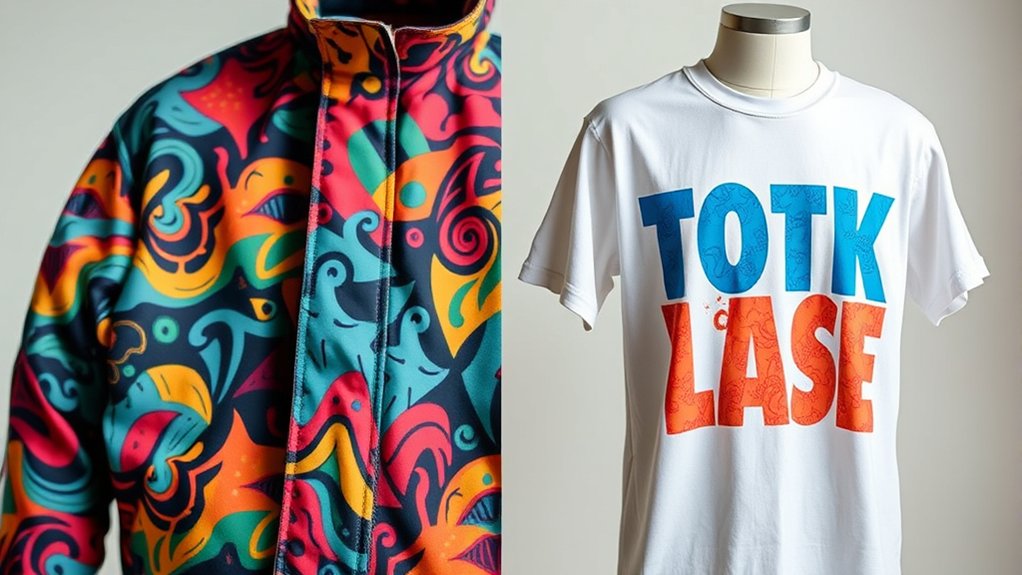
When you customize apparel using cut and sew or screen printing, attention to detail transforms your vision into wearable art. Start by focusing on design considerations. Think about how colors, shapes, and textures will interact on your chosen fabric.
Fabric selection is just as essential; natural fibers absorb inks differently than synthetics and affect stitching precision. To nail your project:
Choose fabrics that complement your printing or sewing technique, ensuring durability and comfort. Simplify complex designs for screen printing to maintain clarity and vibrancy. Plan your color palette carefully, considering how hues will appear on different materials.
Frequently Asked Questions
Can Cut and Sew Be Combined With Screen Printing on the Same Garment?
Yes, you can combine cut and sew with screen printing on the same garment. You’ll achieve seamless design integration by blending these production techniques, creating vivid, layered visuals that bring your custom apparel to life with depth and texture.
What Are the Environmental Impacts of Cut and Sew Versus Screen Printing?
You’d love the heaps of waste from both, right? Cut and sew’s fabric scraps challenge sustainability concerns, while screen printing’s chemical inks demand smart waste management.
Ironically, each leaves its colorful footprint on our planet.
How Do Fabric Types Affect Cut and Sew and Screen Printing Results?
You’ll notice fabric compatibility shapes printing quality. Cotton soaks screen prints beautifully, while synthetics resist.
Cut and sew thrives on textured fabrics, enhancing structure and detail. Choose carefully to make your designs truly pop.
Are There Any Limitations on Design Complexity for Cut and Sew?
You’ll find design intricacy limited by fabric limitations in cut and sew; intricate patterns can be tricky to align and sew precisely. You’ll need to balance your creative vision with practical stitching and fabric behavior.
Can Screen Printing Be Done on Non-Fabric Materials?
Ever wonder if screen printing materials can dance beyond fabric? Absolutely! You’ll find screen printing versatile, embracing non-fabric applications like wood, glass, and metal, painting vivid designs with precision and vibrant longevity on unexpected surfaces.
Conclusion
Choosing between cut and sew and screen printing is like picking the perfect brush for your masterpiece—each brings its own vibrant strokes and textures. Whether you crave the tailored precision of cut and sew or the bold splash of screen printing, your project’s soul guides the way.
Embrace the process, trust your vision, and watch your apparel come alive, stitching stories and colors into fabric that’s truly yours. Ultimately, understanding the benefits of cut and sew vs screen printing will help you create a garment that perfectly reflects your style and purpose.