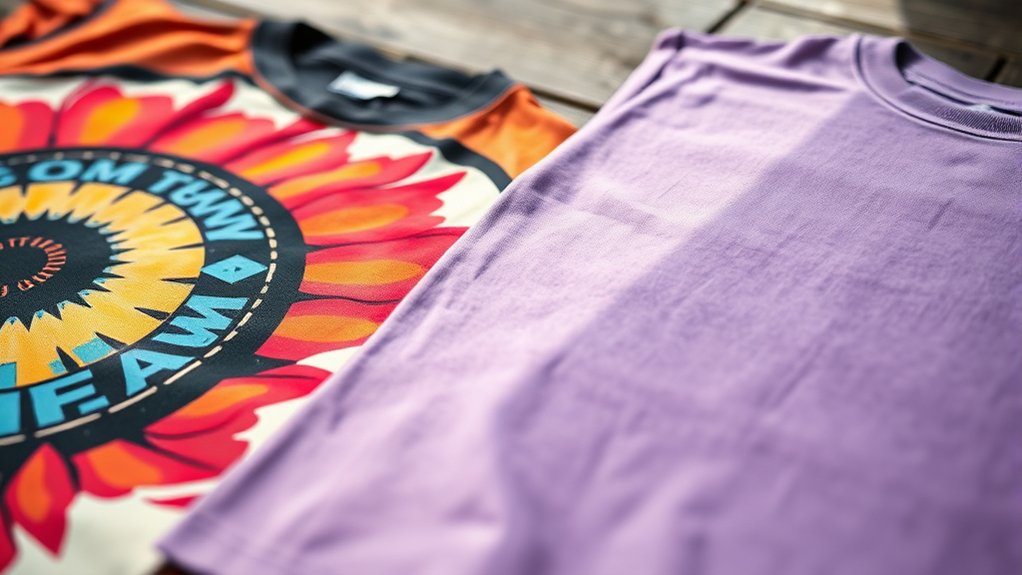

When choosing between screen printing vs transfer, it’s important to understand their distinct processes and benefits.
Screen printing uses stencils and mesh to push ink through, creating durable and vibrant designs. This method is ideal for large batches because it offers lower per-unit costs.
Transfer printing involves applying pre-printed images onto garments using heat. This allows for detailed, multi-color designs and is better suited for small runs. However, transfer prints tend to be less durable over time.
Transfers become more expensive when produced at scale, while screen printing designs last longer through multiple washes.
Knowing these key differences will help you select the best method for your project’s needs.
Key Takeaways
- Screen printing uses stencils and mesh screens to apply thick, durable ink layers for vibrant, long-lasting prints.
- Transfer printing applies pre-printed designs via heat press, enabling complex, multi-colored, photo-quality images.
- Screen printing is cost-effective for large orders due to lower per-unit costs after initial setup.
- Transfer printing is better suited for small runs with lower setup costs but higher per-unit expenses.
- Screen printing offers superior durability and wash resistance, while transfers may fade or crack over time.
How Screen Printing Works and When to Use It
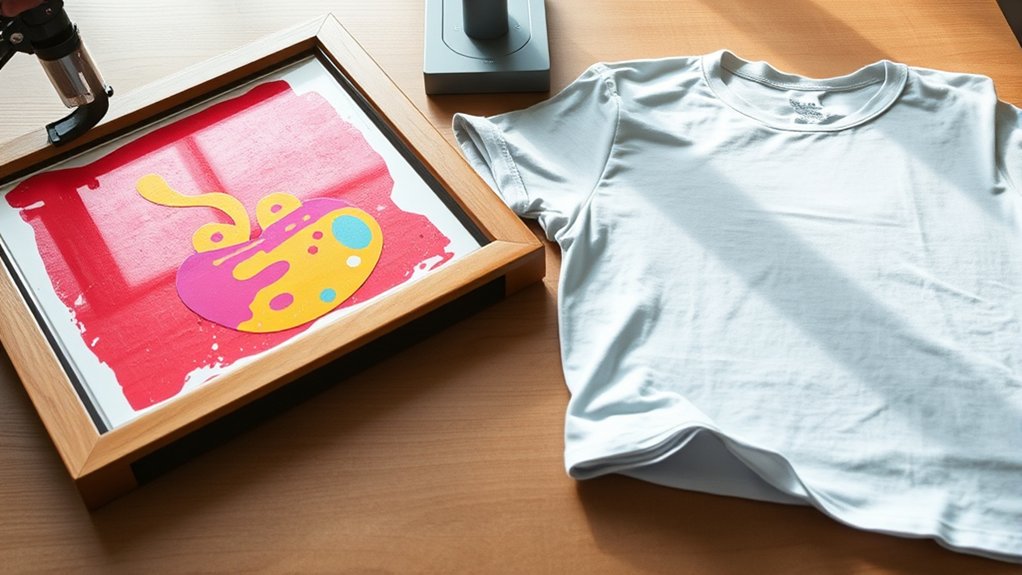
Although screen printing may seem complex, it operates through a straightforward stencil process that transfers ink onto a substrate using a mesh screen. You begin by preparing a screen coated with a light-sensitive emulsion, then expose it to a design to create precise print areas.
During ink application, you use a squeegee to push ink through the open mesh sections onto the material below. This method allows you to build multiple print layers, which is ideal for producing vibrant, durable designs with rich color density.
Screen printing excels when you need consistent, high-quality prints on textiles or rigid surfaces, especially for large runs. Its ability to handle thick ink layers guarantees excellent opacity and longevity, making it a preferred choice for professional-grade apparel and signage.
How Transfer Printing Works and When to Use It
Transfer printing involves applying a pre-printed design onto a substrate using heat and pressure. You start by printing your design onto a special transfer paper using inkjet or laser printers, depending on the transfer technique.
Next, place the transfer paper on your target fabric or material, then use a heat press to activate the adhesive and transfer the image. This method offers significant design flexibility, accommodating complex, multi-colored, and photo-quality images without the need for screens or multiple printing runs.
Transfer techniques work best for small batches, detailed graphics, or customized items where speed and specificity matter. However, because the design is pre-printed, you should consider fabric compatibility and heat sensitivity to avoid damage.
Use transfer printing when you need quick turnaround and intricate designs.
Durability and Color Quality: Screen Printing vs Transfer
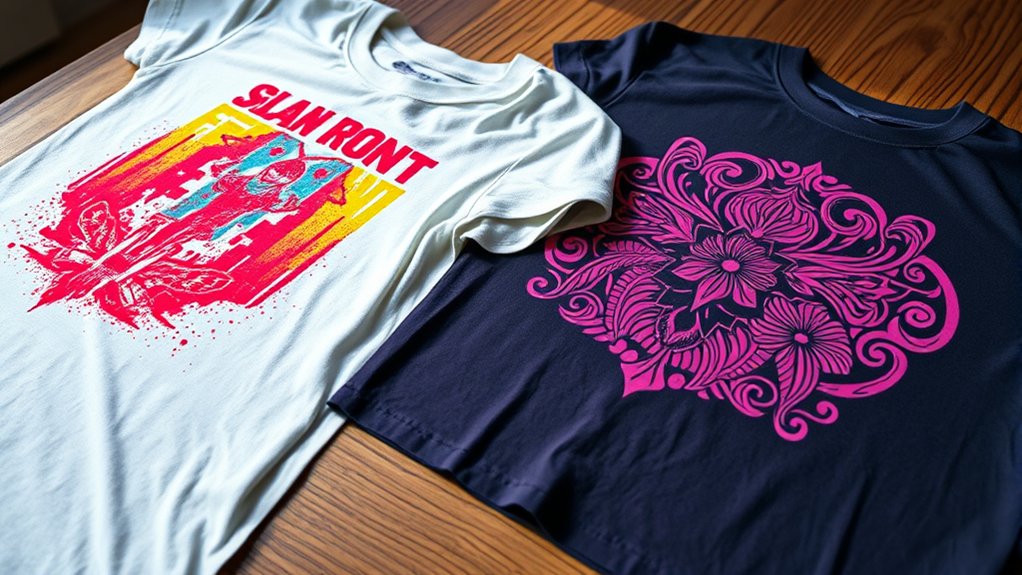
While transfer printing excels in handling complex and detailed designs quickly, you should weigh its durability and color quality against screen printing. Screen printing generally offers superior wear resistance, making it ideal for garments subjected to frequent washing and abrasion. It also delivers greater color vibrancy due to thicker ink layers that penetrate fabric fibers.
Transfer prints, however, may fade or crack over time, especially when exposed to harsh laundering.
Consider these factors for your decision:
Balance durability and color vibrancy when choosing between screen printing and transfer printing methods.
- Screen printing inks bond deeply, enhancing longevity.
- Transfer prints sit on fabric surface, affecting durability.
- Screen printing achieves richer, more vibrant colors.
- Transfers allow intricate gradients but can degrade faster.
Balancing these aspects helps you choose the method aligned with your durability and color quality needs.
Cost Comparison: Screen Printing vs Transfer
When evaluating printing methods, you’ll find that cost structures differ considerably between screen printing and transfer. Screen printing involves a higher initial setup cost due to stencil creation and screen preparation, making it less economical for small runs.
However, the price difference diminishes markedly with bulk orders, as the per-unit cost drops sharply. Conversely, transfer printing has lower setup fees and is cost-effective for small quantities but becomes more expensive per unit as order volume increases. Transfers also incur material costs for each design, impacting scalability.
If you focus on large volume production, screen printing offers better cost efficiency, while transfers serve better for limited runs or complex multicolor designs. Understanding these cost dynamics helps optimize your budget based on order size and design complexity.
How to Choose Between Screen Printing and Transfer
Choosing the right printing method depends on several factors including order size, design complexity, and budget constraints. To decide between screen printing and transfer, focus on key design considerations and production volume.
Selecting the ideal printing method hinges on order size, design detail, and budget considerations.
- Production Volume: Screen printing excels with large batches due to lower per-unit costs. Transfers suit small runs or prototypes.
- Design Complexity: Transfers handle intricate, multi-color designs better without increasing setup time.
- Material Compatibility: Screen printing offers durable results on varied fabrics. Transfers may limit texture and breathability.
- Durability Needs: Screen printing withstands repeated washing. Transfers may degrade faster under heavy use.
Analyze your project’s scale and design intricacies carefully to choose the method that balances quality, cost-efficiency, and application requirements.
Frequently Asked Questions
Can Screen Printing Be Used on Fabrics Other Than Cotton?
Yes, you can screen print on polyester blends and mixed fabrics. Just adjust the ink type and curing temperature to guarantee proper adhesion and durability, since these materials react differently than pure cotton during the printing process.
Are There Eco-Friendly Options for Transfer Printing?
When it comes to eco-friendly transfer printing, you can’t judge a book by its cover. You can use sustainable materials and eco-conscious inks, reducing environmental impact while maintaining print quality and durability on various fabrics.
How Long Does the Setup Process Take for Each Method?
You’ll find screen printing’s setup time longer due to stencil preparation, affecting process efficiency for small runs.
Transfer printing’s setup is quicker, enhancing efficiency for short runs, but may slow mass production compared to screen printing.
Can Both Methods Be Used for Small Custom Orders?
Yes, you can use both methods for small orders, but transfers handle custom designs more efficiently. Screen printing requires more setup, so it’s cost-effective mainly for larger runs with consistent design details.
What Are Common Maintenance Tips for Screen Printing Equipment?
You should perform regular screen cleaning to prevent ink buildup and clogging. Store inks in airtight containers away from heat and light to maintain consistency.
Also, inspect squeegees and frames frequently for wear or damage.
Conclusion
Choosing between screen printing and transfer is like picking the right tool for your craft—each excels in different scenarios. Screen printing offers unmatched durability and vibrant colors, making it ideal for large runs. Transfer printing, on the other hand, shines with intricate designs and smaller batches.
Consider your budget, design complexity, and production size carefully before deciding. These factors play a crucial role in determining which method suits your project best.
By understanding these key differences, you’ll make a precise choice that guarantees your prints not only look sharp but stand the test of time. Ultimately, knowing when to use screen printing vs transfer will ensure your final product meets both quality and design expectations.