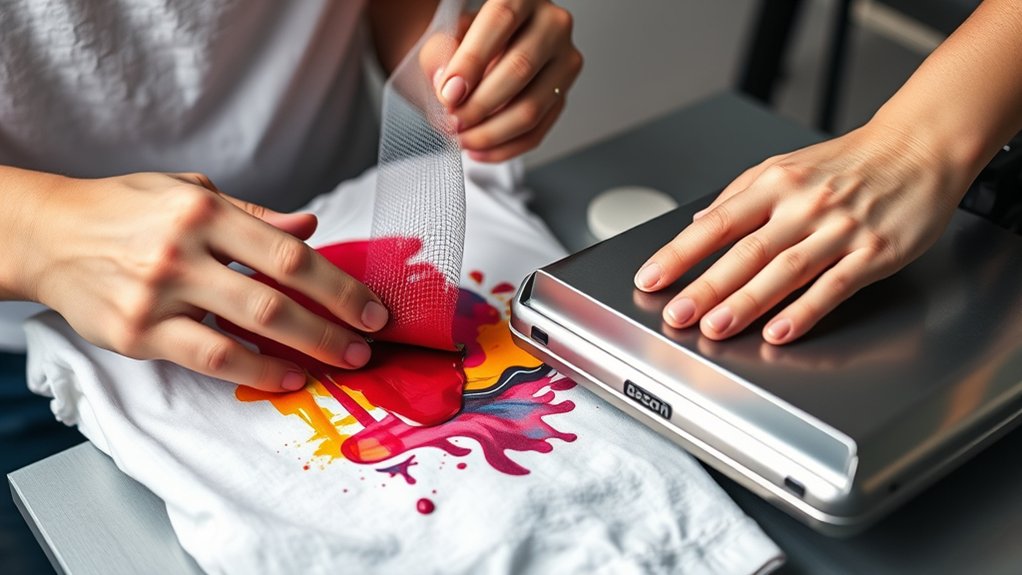

Screen print vs vinyl heat press is a key consideration when choosing the best method for your apparel designs.
If you want vibrant, long-lasting designs with rich color depth, screen printing is your go-to. It uses stencils and mesh screens to layer ink for a smooth, durable finish.
Vinyl heat press, on the other hand, offers sharp, crisp graphics by pressing cut vinyl onto fabric. This method is perfect for smaller, simple batches.
It’s all about balancing your design complexity and order size.
Keep exploring to uncover which method truly fits your creative vision and budget.
Key Takeaways
- Screen printing offers vibrant, durable designs ideal for large orders and intricate color layering.
- Vinyl heat press provides sharp, clean graphics suited for small batches and simpler designs.
- Screen printing has higher setup costs but lower per-unit costs for bulk production.
- Vinyl heat press has lower setup costs but higher per-unit costs, making it cost-effective for small runs.
- Screen printing excels in wash resistance and color depth, while vinyl heat press offers crisp edges but may crack over time.
Screen Printing: How It Works and When to Choose It
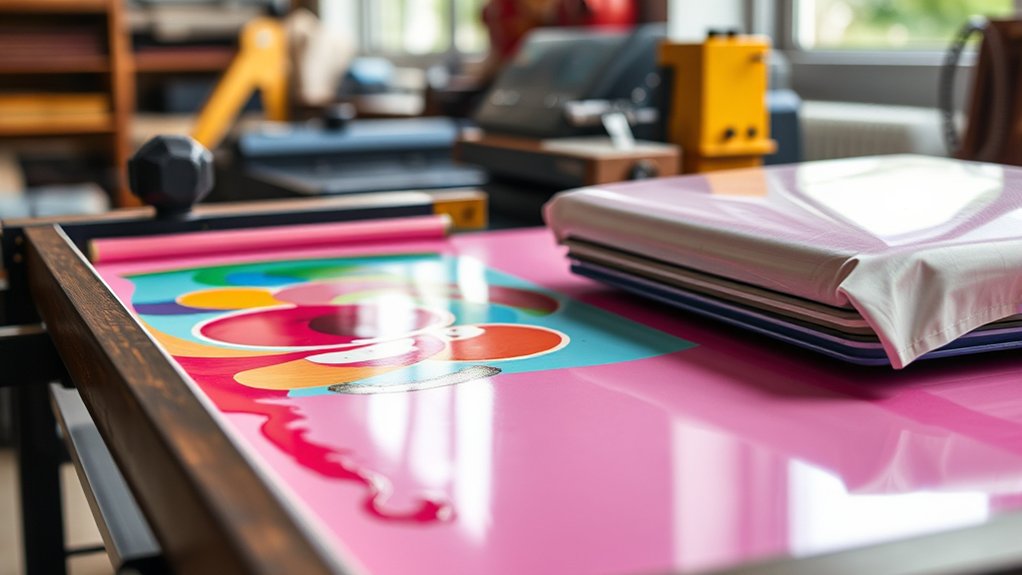
When you want vibrant, long-lasting designs on your apparel, screen printing offers a hands-on method that truly brings your vision to life. You start by creating a stencil, or screen, that acts as a blueprint for your design. Ink application happens as you press ink through the mesh screen, allowing it to transfer precisely onto fabric.
This method excels with color layering. Each color is applied individually, letting you build rich, complex images with unmatched depth. You’ll appreciate how the ink soaks into the fibers, creating a durable, bright finish that resists fading even after many washes.
Choose screen printing when you want bold, vivid colors and are working with larger orders or designs requiring multiple layers of ink for that perfect pop.
Vinyl Heat Press: How It Works and Ideal Uses
Vinyl heat pressing transforms your designs into sharp, clean graphics by applying heat and pressure to cut vinyl sheets.
You start by selecting the right vinyl types, like standard, glitter, or reflective, each offering unique textures and finishes. Next, you use a cutting machine to precisely trim your design from the chosen vinyl.
Once cut, you peel away excess material, revealing your graphic. Then, you position it carefully on your fabric and apply heat with a press. This activates the adhesive backing, fusing the vinyl to the garment.
Your application techniques—temperature, pressure, and timing—are essential for vibrant, durable results. Vinyl heat press works best for customizing smaller batches, intricate designs, and multi-color graphics, making it ideal when you want crisp details and quick turnaround without screen setup.
Comparing Cost, Durability, and Quality of Both Methods
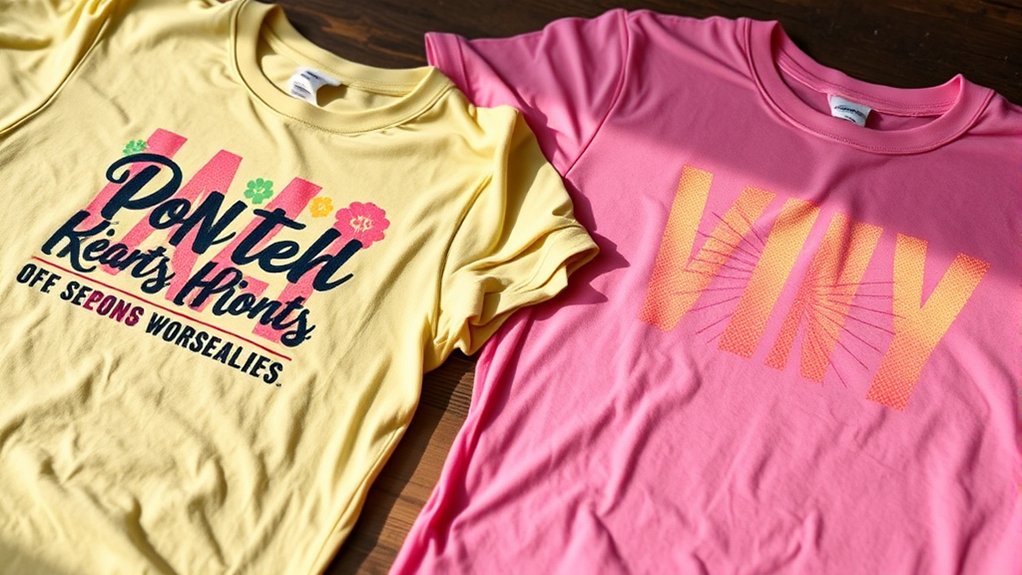
Understanding the mechanics behind vinyl heat pressing gives you a solid foundation, but deciding between screen printing and heat pressing often comes down to cost, durability, and quality.
When you plunge into cost analysis, vinyl heat press usually demands less upfront investment, while screen printing shines with lower per-unit costs for large runs.
Durability is another key factor; screen prints typically withstand wear and washing better.
Quality-wise, screen printing excels in vibrant, long-lasting colors, whereas vinyl offers sharper edges and easier customization.
| Aspect | Screen Print | Vinyl Heat Press |
|---|---|---|
| Cost | Higher setup, lower per unit | Lower setup, higher per unit |
| Durability | Excellent wash resistance | Good, but can crack over time |
| Quality | Rich color depth, smooth finish | Crisp edges, limited shading |
| Design Flexibility | Moderate (best for simple colors) | High (complex, multi-layered) |
Choosing the Right Method Based on Design and Volume
Although both screen printing and heat pressing offer unique advantages, your choice hinges largely on the complexity of your design and the size of your order. If your design complexity includes intricate details or multiple colors, screen printing excels by layering inks with precision, delivering vibrant, durable results.
However, this method shines brightest when handling large production scale; the setup cost spreads out, making it cost-effective for bulk orders. On the other hand, if your design is simpler or you’re working with smaller production scale, vinyl heat press offers flexibility and quick turnaround.
It’s ideal for sharp, clean graphics with fewer colors, letting you customize each piece without extensive setup. By matching your design complexity and production scale, you guarantee the best quality and efficiency for your project.
Key Tips for Picking Screen Printing or Vinyl Heat Press
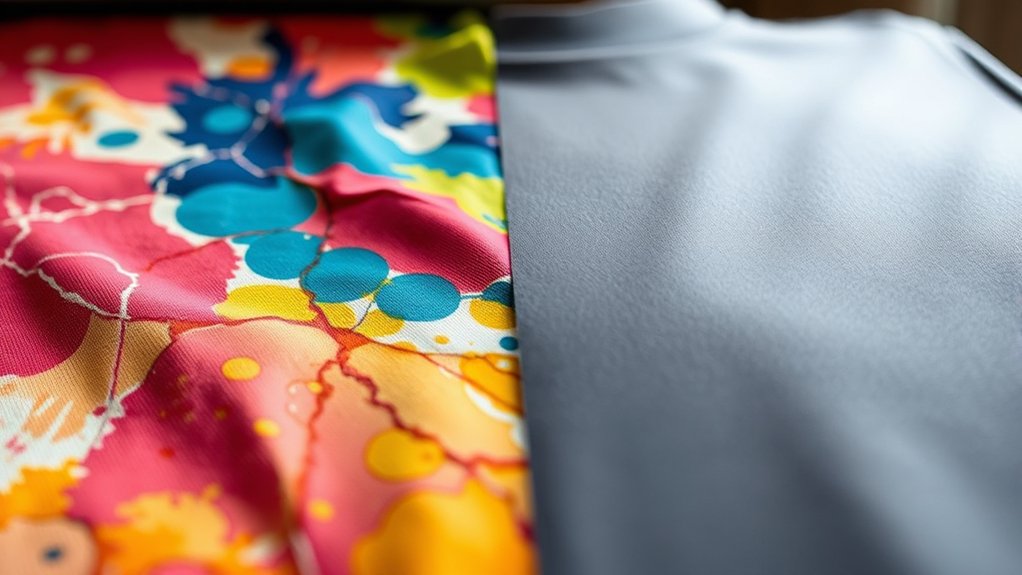
How do you decide which printing method fits your project best? Start by examining your design complexity. If your artwork bursts with intricate details or color gradients, screen printing captures those nuances with vibrant precision. However, if your design is simpler or text-based, vinyl heat press offers crisp, clean lines.
Next, consider production speed: vinyl heat press lets you move swiftly through small batches or personalized items, while screen printing shines in high-volume runs, delivering consistent quality. Don’t forget material compatibility; some fabrics work better with one method over the other.
Finally, weigh your budget against these factors. By focusing on design complexity and production speed, you’ll pick the method that not only highlights your artwork but also fits your timeline and resources perfectly.
Frequently Asked Questions
Can Screen Printing Be Done on Non-Fabric Materials?
Yes, you can use screen printing on non-fabric materials like wood, plastic, or metal. You’ll need to adjust your printing techniques and inks to guarantee proper material compatibility for vibrant, lasting designs on those surfaces.
What Environmental Impacts Do Each Method Have?
You’ll notice screen printing uses more water and chemicals, demanding strict waste management to boost sustainability practices.
Vinyl heat press generates less liquid waste but relies on plastics, so proper disposal and recycling are key to minimizing impact.
Is Special Training Required for Operating Each Technique?
You’ll need specific training requirements to master each technique. Gaining technique familiarity helps you handle equipment safely and confidently, ensuring precise prints.
Hands-on practice sharpens your skills, making your designs pop with vibrant detail.
How Do Washing Instructions Differ for Each Method?
Imagine a medieval knight caring for armor: screen prints need gentle washing to preserve washing durability, while vinyl heat press demands careful maintenance to avoid peeling.
You’ll want cold water, inside-out washing, and air drying for both.
Can Custom Colors Be Matched Accurately With Both Methods?
You can achieve precise color matching with screen printing’s consistent ink layers, but vinyl heat press offers vibrant hues with slight variability.
For printing consistency, screen printing excels, while vinyl lets you experiment creatively with custom colors.
Conclusion
When deciding between screen printing and vinyl heat press, remember this: screen printing can produce up to 1,000 vibrant prints per hour, making it perfect for high-volume runs.
Vinyl heat press, meanwhile, shines with detailed, multi-colored designs in smaller batches. By matching your design’s complexity and order size, you’ll create standout pieces every time.
So, choose wisely—your perfect print method is just one smart decision away! When it comes to screen print vs vinyl heat press, understanding their strengths will help you pick the best option for your project.