
Heat transfer vinyl (HTV) vs screen printing is a common comparison when choosing the best method for your textile designs.
You’ll find heat transfer vinyl (HTV) perfect for vibrant, textured designs with intricate layers, applied smoothly onto cotton or blends using heat and pressure.
On the other hand, screen printing seeps ink into fabric for long-lasting, fade-resistant images, ideal for bulk orders with consistent colors and fine details.
HTV shines with small batches and personalization, while screen printing cuts costs on larger runs.
If you want to explore how to pick the best method for your project, keep going.
Key Takeaways
- HTV uses vinyl sheets applied with heat, while screen printing pushes ink through mesh screens for design application.
- HTV offers great design flexibility with multi-color layering and intricate shapes; screen printing excels in vibrant, consistent colors for large runs.
- Screen printing designs are more durable, resisting fading and cracking through many washes compared to HTV’s potential dulling over time.
- HTV has lower setup costs, ideal for small batches or custom projects; screen printing is cost-effective for bulk orders due to economies of scale.
- HTV works best on cotton, polyester, and blends, whereas screen printing integrates well into various fabrics for a natural finish.
How Do Heat Transfer Vinyl (HTV) and Screen Printing Work?
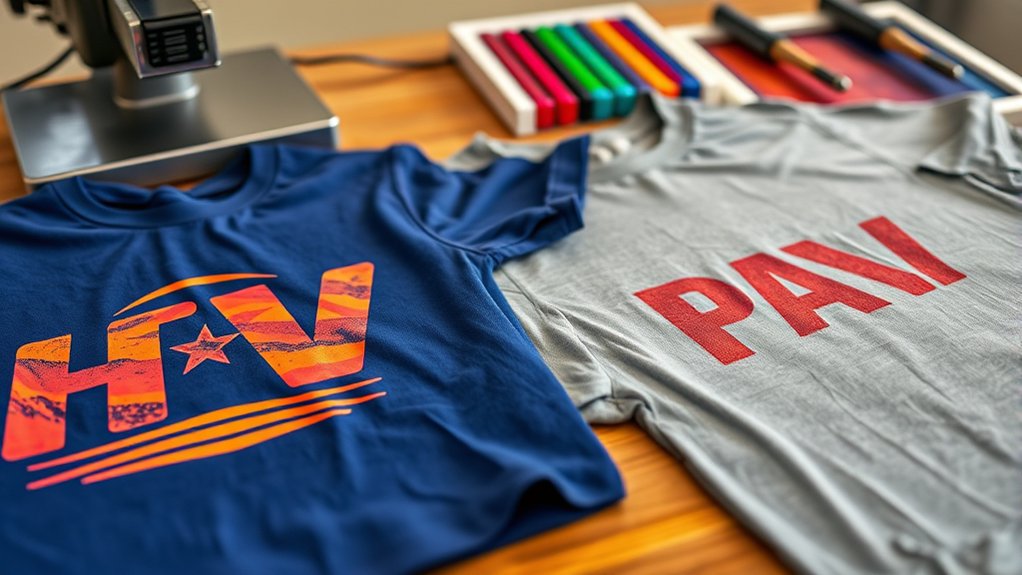
Although both Heat Transfer Vinyl (HTV) and screen printing create custom designs on fabric, they achieve it through very different processes that you can almost see unfolding before your eyes. With HTV, you carefully cut your design from a colored vinyl sheet, then use heat and pressure to press it onto the fabric.
This precise application technique guarantees the vinyl adheres smoothly, making it ideal for materials like cotton, polyester, or blends. Screen printing, on the other hand, involves pushing ink through a fine mesh screen stencil onto the fabric, building the image layer by layer.
This method offers versatility but depends heavily on the ink’s compatibility with the fabric type to avoid fading or cracking. Your choice hinges on understanding these application techniques and material compatibility for the desired effect.
Which Lasts Longer: Durability of HTV vs Screen Printing
When you wear a shirt with a design, you want it to stay vibrant and intact wash after wash. HTV longevity shines when you care for it properly. It resists cracking and peeling, especially on cotton blends, maintaining its smooth, glossy finish. However, repeated heat and rough washing can dull its shine over time.
On the other hand, screen printing durability is legendary; the ink seeps into fabric fibers, creating designs that withstand countless washes without fading or cracking. You’ll notice screen prints soften with wear, blending naturally into the fabric, while HTV often feels like a separate layer.
Ultimately, if you want a design that endures rough treatment with a lived-in look, screen printing’s durability edges out HTV longevity, which excels in bold, vivid detail for moderate use.
How Much Does HTV vs Screen Printing Cost?
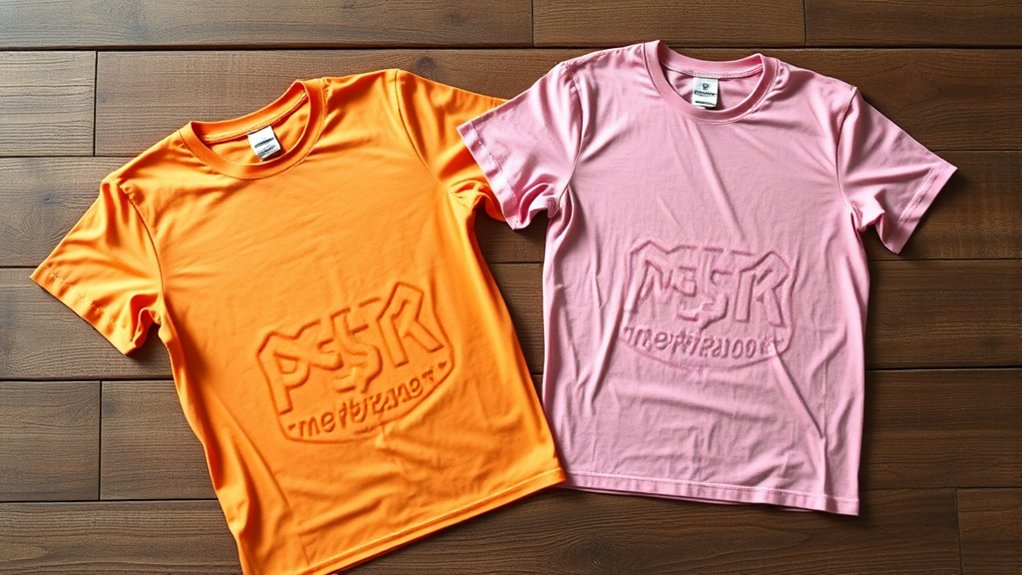
How much you’ll spend on Heat Transfer Vinyl versus screen printing depends largely on the complexity and quantity of your design. When weighing cost comparison, keep these budget considerations in mind:
- Setup Costs: Screen printing requires costly screens for each color, while HTV has minimal setup.
- Per-Unit Price: HTV tends to be pricier per piece for large runs; screen printing lowers cost as volume increases.
- Design Complexity: Intricate HTV designs might raise material costs; screen printing complexity mostly affects setup.
- Equipment Investment: HTV needs a vinyl cutter and heat press; screen printing demands presses and drying systems.
Design Flexibility and Color Options for HTV and Screen Printing
Because your design’s impact relies heavily on color vibrancy and detail, understanding the strengths of HTV and screen printing in these areas is essential. With HTV, you get impressive design versatility—you can layer multiple vinyl colors, create intricate shapes, and even add textures like glitter or metallic finishes. This gives your design a bold, tactile feel that really pops.
Screen printing, on the other hand, excels at producing vibrant, consistent colors across large runs. It handles gradients and fine details smoothly but can be limited by the number of colors due to setup complexity. If you want sharp, vivid hues and can work within a fixed palette, screen printing shines.
For more personalized, textured, and flexible color options, HTV offers a creative edge.
Which Method Should You Choose? A Practical Guide for Your Project
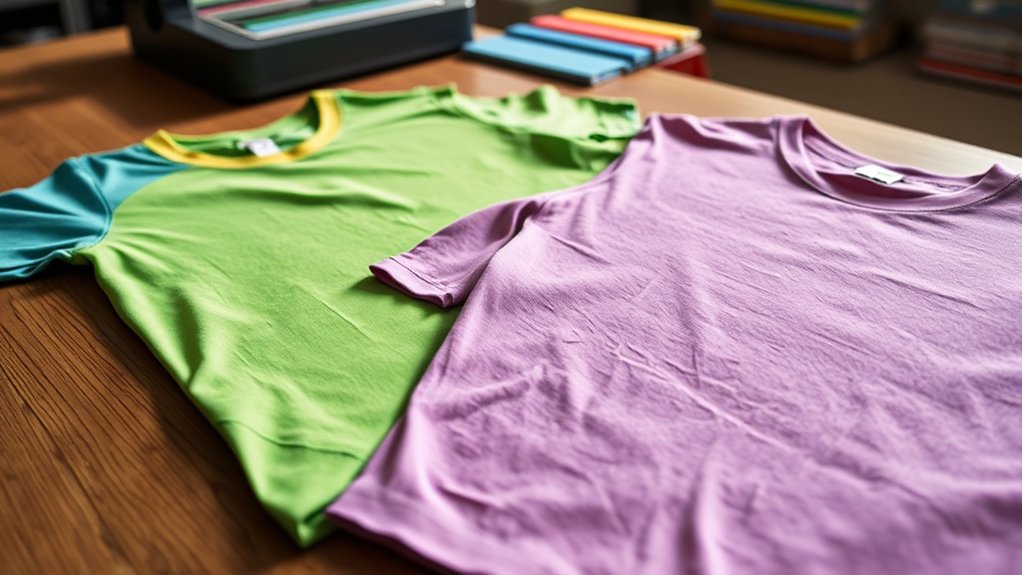
Wondering which printing method will bring your design to life best? Choosing between heat transfer vinyl and screen printing depends on your project suitability and desired application techniques. Here’s a practical guide to help you decide:
Deciding between heat transfer vinyl and screen printing? Consider your design’s needs and application style carefully.
- Durability Needs: Opt for screen printing if you want long-lasting, vibrant designs that endure frequent washes.
- Design Complexity: Choose HTV for intricate, multi-color designs with sharp edges and fine details.
- Quantity: Screen printing shines in bulk orders, reducing cost per unit, while HTV suits small batches or one-offs.
- Fabric Type: HTV works best on cotton, polyester, and blends; screen printing adapts well to diverse fabrics.
Frequently Asked Questions
Can HTV and Screen Printing Be Combined on One Garment?
Yes, you can combine HTV and screen printing on one garment, blending design flexibility with bold colors. Use HTV for intricate details and screen printing for durability, creating a visually striking, long-lasting, textured masterpiece you’ll love wearing.
Are There Environmental Concerns With HTV or Screen Printing?
Like a river carrying debris, ink disposal from screen printing can pollute waterways. HTV’s energy consumption during heat pressing adds up. You’ll want to balance these environmental impacts when choosing your method.
How Do Washing Instructions Differ for HTV and Screen Printed Garments?
You’ll want to turn garments inside out for both, but HTV needs cooler water and gentler cycles for washing durability. Screen prints handle warmer water but benefit from avoiding harsh detergents. Both demand careful care instructions to last vibrant.
Which Method Is Better for Small Batch or One-Off Orders?
You’ll find small order advantages with HTV, which is quick, cost-effective, and perfect for one-offs. Screen printing’s setup costs make it pricier for small batches.
HTV wins in both turnaround time and cost comparison for limited runs.
Can HTV or Screen Printing Be Applied to Non-Fabric Materials?
By Jove, you’ll find HTV applications excel on leather, wood, and plastics, while screen printing versatility lets you decorate glass, metal, and ceramics. Both methods adapt creatively, transforming surfaces beyond just fabric with vivid detail and lasting flair.
Conclusion
When choosing between Heat Transfer Vinyl and Screen Printing, it’s like picking the perfect brush for your canvas—both paint vibrant stories in different ways. If durability and bold, multi-color designs catch your eye, screen printing might be your go-to.
But if you crave sharp detail and quick, customizable flair, HTV shines. Coincidentally, your project’s personality will guide you, turning this choice into a seamless blend of art and function every time.
In the end, understanding the unique strengths of Heat Transfer Vinyl vs Screen Printing will help you create a final product that truly stands out.