
DTF vs Sublimation vs Screen Printing: choosing the right printing method depends on your project needs.
You’ll want to pick DTF for versatile fabrics and detailed designs with moderate setup costs, ideal for small runs.
Sublimation shines on polyester, delivering vibrant, fade-resistant colors but is limited to synthetic fibers.
Screen printing works best for high-volume orders with simple designs, offering durable, vivid prints but higher startup expenses.
Consider fabric type, design complexity, and budget to decide the right option.
Keep exploring to understand each method’s strengths and practical applications.
Key Takeaways
- DTF offers versatile fabric compatibility and detailed designs, ideal for small to medium runs on cotton, polyester, and blends.
- Sublimation provides vivid, permanent colors but only works on polyester or polymer-coated fabrics.
- Screen printing is cost-effective for large volumes with simple designs but less suitable for intricate, multi-color prints.
- Sublimation has superior fade resistance and wash durability compared to DTF, while screen printing offers robust durability with thick ink layers.
- Sublimation is more environmentally friendly with minimal waste, whereas screen printing consumes more energy and may produce harmful runoff.
Which Printing Method Is Right for You?
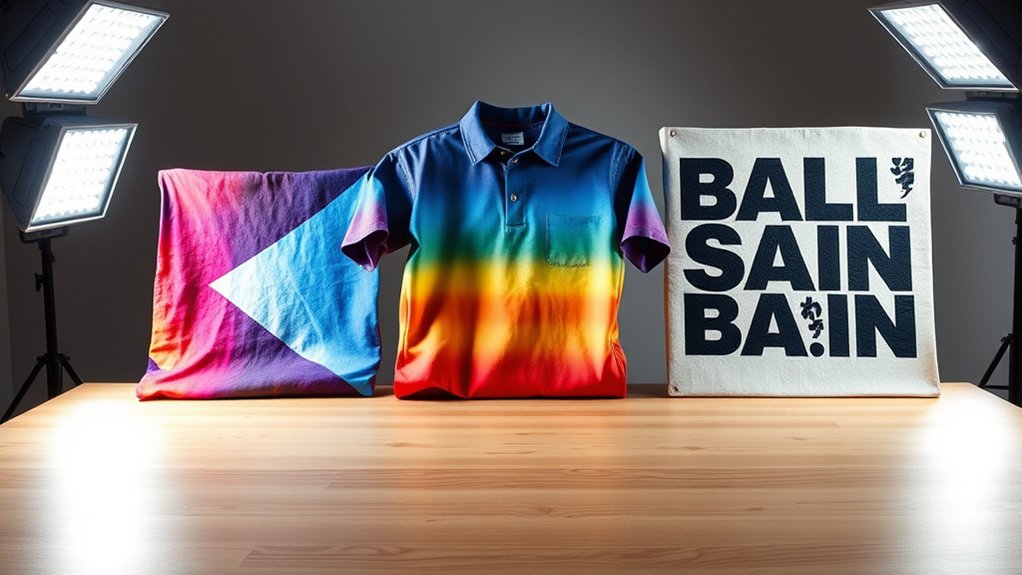
How do you determine the best printing method for your project? Start by analyzing your project requirements: fabric type, color complexity, order volume, and budget constraints. Consider your target audience’s preferences, whether they prioritize durability, vibrant colors, or eco-friendly options.
Direct-to-film (DTF) excels with diverse fabric compatibility and detailed designs, ideal for smaller runs. Sublimation offers brilliant, permanent colors but only works on polyester or polymer-coated surfaces. Screen printing is cost-effective for large batches and simple designs but less suited for intricate details or multiple colors.
How Does Each Printing Method Actually Work?
You’ll find that each printing method uses distinct processes to transfer designs onto materials, impacting both quality and durability. Understanding how DTF, sublimation, and screen printing operate helps you match the technique to your fabric type and project needs.
Let’s break down the mechanics and material compatibility for each method.
Printing Process Explained
Although each printing method serves the same purpose of transferring designs onto fabric, they operate through distinct technical processes. You start with a digital design, then apply specific printing technology tailored to each method’s mechanics.
| Method | Process Description | Key Technology |
|---|---|---|
| DTF | Prints design on film, applies adhesive powder, then heat-transfers onto fabric | Inkjet printer, heat press |
| Sublimation | Converts dye into gas, embedding it into polyester fibers under heat | Sublimation printer, heat press |
| Screen Printing | Pushes ink through a stencil screen onto fabric, layer by layer | Mesh screen, squeegee |
Understanding these differences helps you select the right method based on design complexity and fabric type.
Material Compatibility Differences
Since each printing method interacts differently with fabric fibers, understanding material compatibility is essential for achieving ideal results. You need to evaluate ink absorption rates and fabric types carefully:
- DTF printing uses a specialized adhesive that bonds well with most natural and synthetic fabrics, offering moderate ink absorption rates suitable for cotton, polyester, and blends.
- Sublimation printing requires polyester or polymer-coated fabrics because its dye sublimates into the fabric fibers, resulting in high ink absorption rates but limited to synthetic materials.
- Screen printing applies thick ink layers atop fabric surfaces, working best on cotton or cotton-rich blends with variable ink absorption depending on the fabric’s weave and texture.
Knowing these differences helps you select the right method to optimize print durability, color vibrancy, and fabric feel.
Print Quality and Color Options Compared
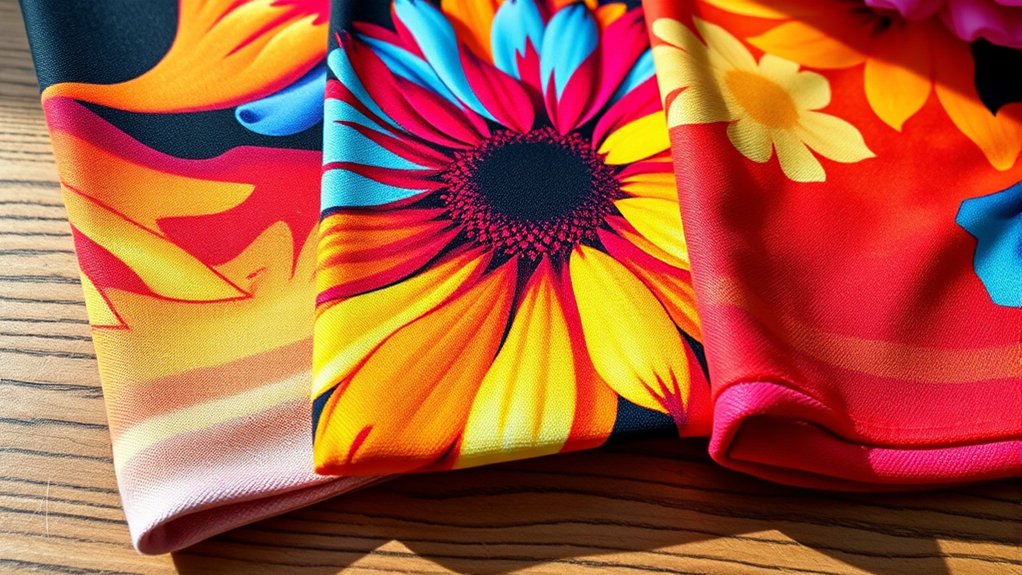
You’ll notice each printing method offers distinct color vibrancy and detail resolution that impact the final output. Understanding how ink durability varies between DTF, sublimation, and screen printing is essential for selecting the right technique.
Let’s compare these factors to determine which method meets your quality and color needs.
Color Vibrancy Differences
When comparing DTF, sublimation, and screen printing, understanding their color vibrancy is essential for achieving your desired print quality. Each method leverages different printing technology advancements that impact color saturation comparison and vibrancy.
- Sublimation embeds dyes into fabric fibers, delivering rich, vibrant colors with excellent saturation, especially on polyester blends.
- DTF uses specialized inks and films, providing strong color vibrancy with good saturation across various fabric types, benefiting from recent ink formulation improvements.
- Screen printing applies thick ink layers, producing solid and vivid colors, though color vibrancy can vary depending on ink type and fabric texture.
Detail and Resolution
Print quality hinges on detail and resolution, which vary greatly among DTF, sublimation, and screen printing. With DTF, you get excellent print clarity and image sharpness due to its fine inkjet technology, allowing intricate designs and gradients to reproduce accurately on various fabrics.
Sublimation excels on polyester substrates, offering vibrant colors with smooth gradients, but its detail and resolution depend on the printer’s DPI and fabric texture, sometimes slightly softening image sharpness.
Screen printing, while robust for solid colors, struggles with extreme detail and fine lines; its resolution is limited by mesh count and stencil precision, often sacrificing print clarity in complex designs. Choosing between these methods depends on your priority for image sharpness and the fabric type you’re printing on.
Ink Durability Comparison
Although ink durability varies considerably across DTF, sublimation, and screen printing, understanding their differences helps you select the best method for your project’s longevity and color retention. Each technique offers distinct levels of ink longevity and fade resistance:
- DTF (Direct to Film): Utilizes specialized inks with moderate fade resistance, providing solid ink longevity on various fabric types but slightly less than sublimation on polyester.
- Sublimation: Offers superior fade resistance and exceptional ink longevity by embedding dyes into polyester fibers, resulting in vibrant, long-lasting prints ideal for synthetic fabrics.
- Screen Printing: Delivers excellent ink longevity with plastisol or water-based inks, ensuring durable prints on cotton and blends, though color vibrancy may diminish over extended exposure to sunlight.
Choose based on your fabric type and required durability to maximize print performance.
Printing Costs and Setup Expenses
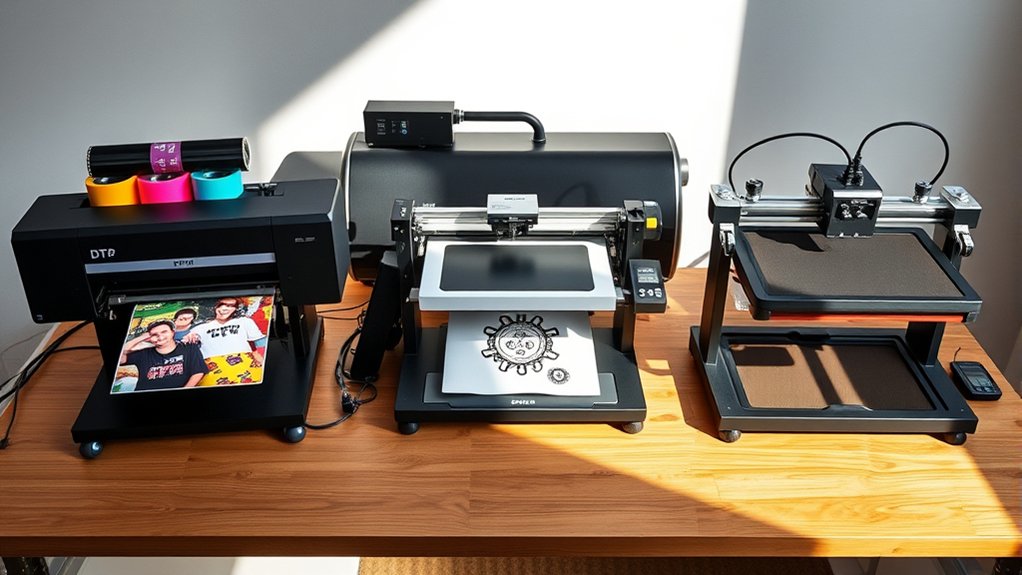
Since each printing method involves distinct equipment and materials, you’ll see significant differences in costs and setup expenses. Startup costs vary greatly, with screen printing demanding higher initial investment due to screens and presses. DTF and sublimation require specialized printers but have lower setup complexity.
Bulk order pricing favors screen printing, becoming more cost-effective as order volume rises. DTF offers moderate startup costs and flexible batch sizes. Sublimation suits polyester substrates but includes expenses for heat presses.
| Method | Startup Costs | Bulk Order Pricing | Notes |
|---|---|---|---|
| Screen Printing | High | Low per unit | Cost-effective for large runs |
| DTF | Moderate | Moderate | Ideal for small to medium runs |
| Sublimation | Moderate | Variable | Best for polyester substrates |
Best Fabrics for DTF, Sublimation, and Screen Printing
Choosing the right fabric directly impacts the quality and durability of your prints. Understanding fabric compatibility is essential for selecting the best fabric types for DTF, sublimation, and screen printing.
- DTF works best on cotton and cotton blends since its adhesive layer bonds well with natural fibers, ensuring vibrant, long-lasting prints.
- Sublimation requires polyester or poly-coated fabrics because the dye bonds chemically with synthetic fibers, providing vivid, permanent colors but limited fabric options.
- Screen Printing offers versatility, performing well on cotton, polyester, and blends due to its ink penetration and curing process, making it suitable for varied textures and materials.
Choosing fabric types aligned with each method’s chemical and physical requirements guarantees ideal print quality and fabric performance.
Durability: Which Printing Method Lasts the Longest?
When evaluating print longevity, you need to take into account how each method interacts with fabric fibers and withstands wear, washing, and environmental exposure. Sublimation excels in fade resistance and wash longevity, as the dye bonds chemically with polyester fibers, ensuring vibrant prints that rarely crack or peel. However, this durability is limited to synthetic fabrics.
Screen printing offers robust durability by depositing thick ink layers on fabric surfaces, delivering excellent wash longevity and fade resistance on various textiles, especially cotton. DTF prints, while versatile on multiple fabrics, use adhesive-based inks that may degrade faster under frequent washing and abrasion, showing less fade resistance over time compared to sublimation and screen printing.
Environmental Impact of DTF, Sublimation, and Screen Printing
Understanding the durability of DTF, sublimation, and screen printing helps highlight differences in their production processes, which directly affect their environmental footprints.
When evaluating the environmental impact, you need to take into account:
- Material Use: DTF often employs eco friendly materials like water-based inks, reducing harmful chemical runoff compared to traditional screen printing inks.
- Waste Generation: Sublimation produces minimal waste, as it uses precise digital printing without excess ink or screens, aligning well with sustainability practices.
- Energy Consumption: Screen printing typically requires more energy due to multiple steps and curing processes, increasing its carbon footprint.
Tips for Choosing DTF, Sublimation, or Screen Printing
How do you determine the best printing method for your project? Start by analyzing your project requirements carefully. Consider fabric type, color complexity, and quantity.
For vibrant, full-color prints on polyester, sublimation excels. Screen printing suits high-volume orders with simple designs, offering durability and cost-efficiency. DTF is versatile for various fabrics and detailed designs but may require special curing.
Design considerations include color gradients, fine details, and print placement. Sublimation demands polyester substrates, limiting fabric choices. Screen printing handles spot colors well but struggles with complex gradients. DTF accommodates intricate artwork but involves additional steps.
Evaluate turnaround time, budget constraints, and environmental impact alongside technical factors. By aligning these elements with your project requirements and design considerations, you can select a printing method that optimizes quality, cost, and efficiency effectively.
Frequently Asked Questions
Can DTF Printing Be Used on Dark Fabrics Without a White Base?
DTF printing can’t be used on dark fabrics without a white base because the white layer guarantees vibrant colors and opacity. Without it, prints on dark fabrics appear dull or transparent, compromising quality and visibility.
Is Sublimation Printing Suitable for Non-Polyester Materials?
Sublimation printing isn’t suitable for non-polyester materials due to sublimation limitations. Only polyester fibers bond with sublimation dyes. For alternative materials, you’ll need different printing methods like DTF or screen printing to guarantee durability and vibrancy.
How Long Does Screen Printing Ink Take to Dry Completely?
Screen printing ink drying time typically ranges from 24 to 48 hours, depending on ink type and environmental conditions.
You should use proper screen printing techniques, including curing with heat, to guarantee complete ink drying and durability.
Are There Any Health Risks Associated With DTF Printing Powders?
Oh, sure, you might enjoy inhaling tiny plastic clouds! But seriously, DTF printing powders carry health concerns if inhaled; you should always use safety measures like masks and ventilation to keep your lungs and sanity intact during printing sessions.
Can Sublimation Prints Be Washed at High Temperatures Without Fading?
You shouldn’t wash sublimation prints at high temperatures; despite sublimation durability, excessive heat can cause washability concerns like fading.
To preserve print quality, stick to cooler washes and avoid harsh detergents or prolonged drying cycles.
Conclusion
So, you’re still deciding between DTF, sublimation, and screen printing? Don’t worry—just pick the one that won’t make your wallet cry or your favorite shirt look like a toddler’s art project.
If you want vibrant colors, durability, and eco-friendliness all at once, good luck—because compromises are part of the game. Ultimately, choose based on fabric, budget, and how much patience you have for setup.
Easy, right? Welcome to printing perfection’s wild ride. When it comes down to it, understanding the differences between DTF vs sublimation vs screen printing will help you find the best fit for your needs.