
Block print vs screen print offers distinct artistic and practical benefits for fabric design.
You’ll find block printing delivers tactile, hand-carved designs with rich textures and artisanal charm, perfect for cotton or linen projects that embrace natural variations.
Screen printing, on the other hand, uses mesh stencils for sharp, consistent images and vibrant colors, ideal for large runs on diverse fabrics like polyester blends or canvas.
If you want precise detail and efficiency, screen printing excels; for unique, textured art, block printing shines.
Uncover how each technique suits different creative goals and workflows.
Key Takeaways
- Block printing uses hand-carved blocks for textured, artisanal prints; screen printing uses mesh stencils for sharp, consistent designs.
- Screen printing suits large runs with vibrant colors; block printing is ideal for small batches and unique, tactile patterns.
- Block printing works best on natural fibers like cotton, linen, and silk; screen printing suits cotton, polyester blends, and canvas.
- Screen printing requires higher setup costs but is faster; block printing has low startup costs but is labor-intensive and slower.
- Mastery in block printing focuses on carving precision; screen printing demands stencil preparation and ink application skills for vibrant results.
Block Printing Vs Screen Printing: Which Should You Choose?
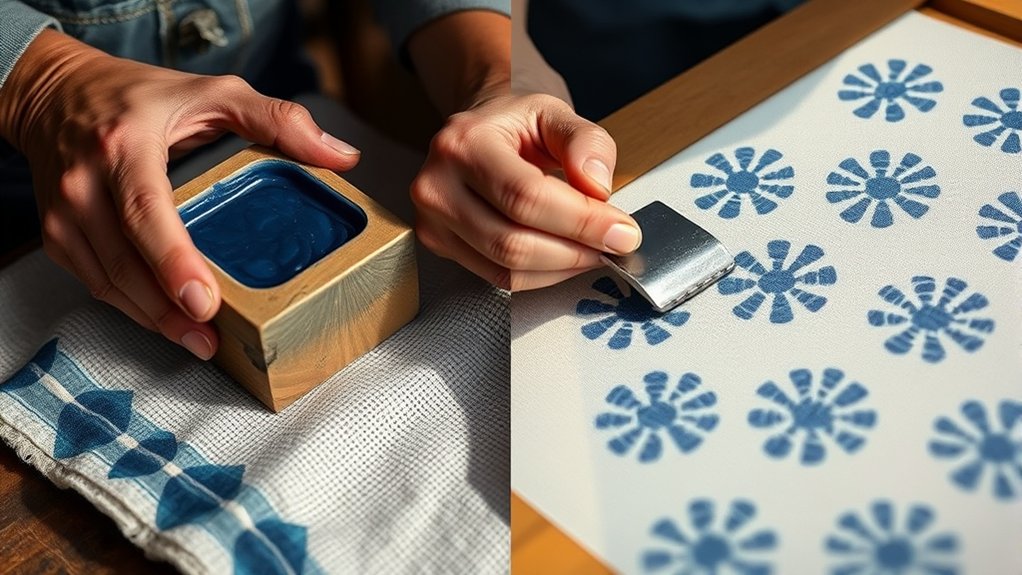
How do you decide between block printing and screen printing for your project? Start with a techniques comparison: block printing relies on carving designs into a wooden or linoleum block, offering tactile, textured results with bold lines.
Screen printing uses a mesh stencil to transfer ink, enabling precise, consistent layers and vibrant color saturation. If your project demands intricate detail and repeatability, screen printing excels with sharper edges and smooth gradients.
For projects emphasizing handcrafted, organic artistic expression, block printing delivers unique imperfections and a tactile quality that machines can’t replicate. Consider your material, desired finish, and production volume.
Block printing suits small runs with artisanal appeal, while screen printing thrives in larger batches with complex imagery. Your choice hinges on balancing precision versus the expressive, hands-on feel you want to convey.
How Block Printing Works: The Traditional Method
Choosing block printing means embracing a hands-on process rooted in tradition. You start with a wood block, carefully selecting a smooth, flat surface. Using precise wood carving tools, you carve the design into the block, removing areas that won’t hold ink. The raised parts form your print’s image.
Next, you apply ink—oil-based, water-based, or pigment inks—directly onto the carved surface with a roller or brush, ensuring even coverage without flooding the recessed areas. Place your fabric or paper on the block, then press firmly or use a baren to transfer the ink.
The result is a crisp, textured print reflecting the carved details. This tactile method highlights craftsmanship, demanding patience and skill in both carving and ink application.
How Screen Printing Works: Stencils And Screens Explained
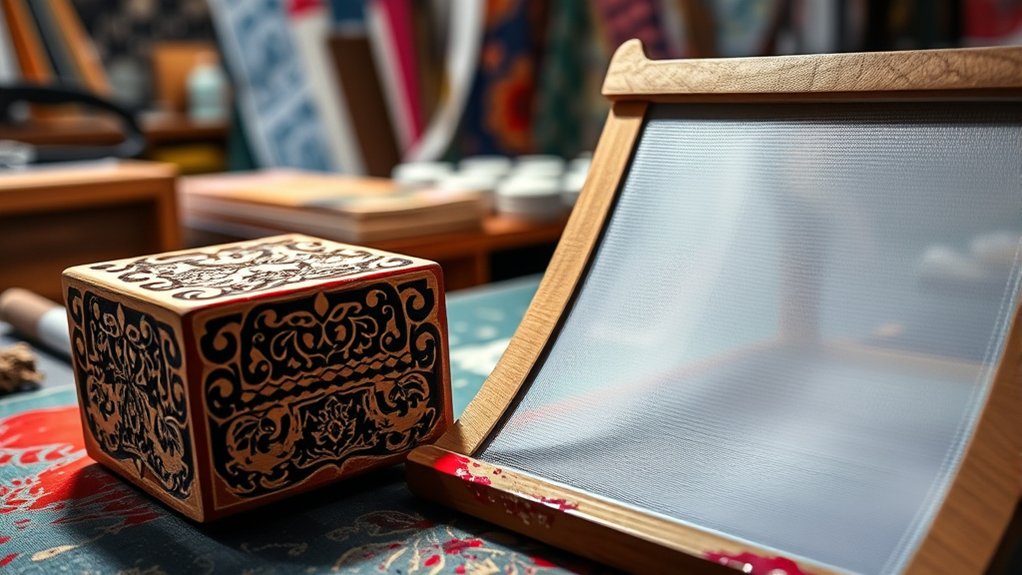
You start by creating a stencil that blocks out areas where ink shouldn’t pass through the screen mesh. Different mesh types control the ink flow and detail resolution, so choosing the right one is essential.
Then, you push ink across the screen, forcing it through the open areas of the stencil to transfer the design onto your surface.
Stencil Creation Process
Although screen printing involves multiple steps, the stencil creation process is central to defining your design’s sharpness and detail. You start by selecting appropriate stencil materials, commonly photo-emulsions or capillary films, which react precisely to light exposure.
Then, you apply stencil techniques to transfer your design onto the screen with accuracy.
- Coat the screen evenly with a light-sensitive stencil material.
- Place your film positive (design) on the screen and expose it to UV light.
- Rinse the screen with water to wash away unexposed areas, revealing your stencil.
- Dry the screen thoroughly to fix the stencil, guaranteeing crisp edges.
Mastering these steps guarantees your print’s lines stay clean and your design vibrant.
Screen Mesh Types
Three main types of screen mesh, woven polyester, stainless steel, and nylon, determine the detail and texture of your print. Each mesh type offers unique screen durability and impacts ink flow differently, influencing your final design. Choosing the right mesh type guarantees precision and longevity.
| Mesh Type | Key Characteristics |
|---|---|
| Woven Polyester | Flexible, affordable, medium durability, ideal for general use |
| Stainless Steel | High durability, resists corrosion, precise for fine details |
| Nylon | Lightweight, less durable, good for quick, low-volume prints |
| Mesh Count Range | Affects detail: 110-355+ threads per inch |
Understanding these mesh types helps you select the best screen for your stencil, balancing detail and durability for sharp, consistent prints.
Ink Application Techniques
When applying ink in screen printing, controlling its flow through the stencil is essential to achieving crisp, consistent designs. You must manage ink viscosity carefully; too thick and it clogs the mesh, too thin and it bleeds under the stencil edges. Proper ink application guarantees sharp lines and smooth color layering without muddiness.
Focus on these key techniques:
- Adjust ink viscosity to match fabric type and stencil detail.
- Use a squeegee at a consistent angle and pressure to evenly push ink through the mesh.
- Employ multiple passes for complex color layering, allowing ink to dry between layers.
- Clean and inspect screens regularly to avoid ink buildup that distorts prints.
Mastering these steps will help you produce precise, vibrant prints with clean edges every time.
Block Vs Screen Printing: Key Differences
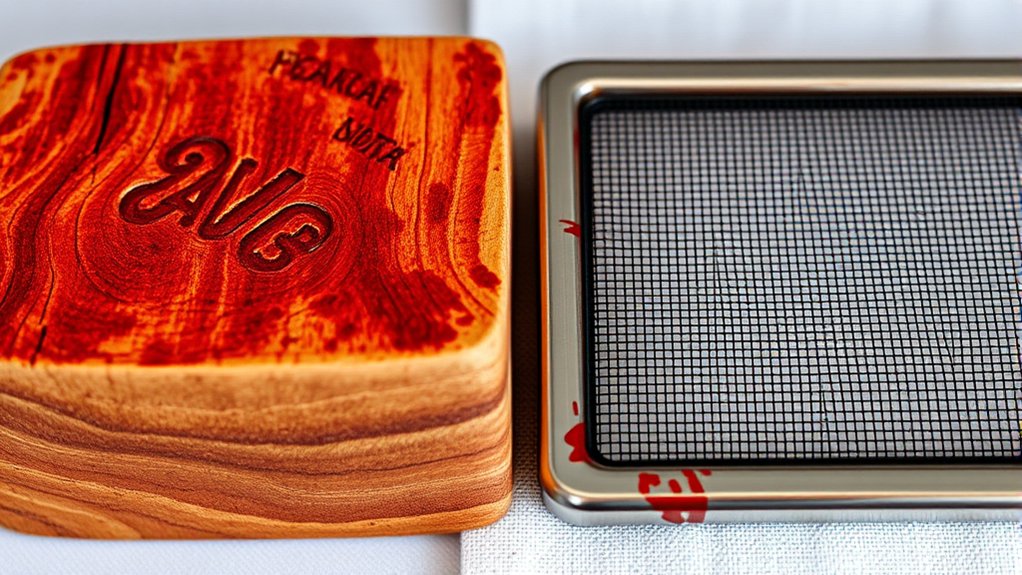
Because block printing and screen printing use distinct techniques, the resulting textures and details vary considerably. When you choose block printing, you’ll notice crisp, hand-carved patterns with slight variations. This is one of the block printing benefits, lending a unique, tactile quality to each piece.
In contrast, screen printing uses a stencil and mesh screen to apply ink evenly, delivering sharp, consistent designs with vibrant color saturation. The screen printing advantages include faster production and the ability to handle complex, multi-colored images with precision.
While block printing impresses with its artisanal charm and textured depth, screen printing excels in scalability and detail accuracy. Understanding these key differences helps you select the right method for your project’s aesthetic and technical demands.
Best Projects And Fabrics For Block Printing
You’ll get the sharpest block prints on natural fibers like cotton, linen, and silk, which absorb ink evenly and highlight intricate details. Projects like table linens, cushion covers, and lightweight apparel work best because the fabric’s texture complements the carved designs without distortion. Choosing the right fabric and project guarantees your block prints stay crisp and vibrant with every use.
Ideal Fabric Choices
Although block printing works on various materials, choosing the right fabric guarantees sharper patterns and longer-lasting designs. When selecting fabric types, focus on those with smooth, tight weaves; they hold the ink crisply and prevent bleeding. Texture considerations matter—you want minimal surface irregularities to maintain pattern integrity.
Here are ideal fabric choices for block printing:
- Cotton: A classic choice; its smooth texture absorbs ink well and produces clear impressions.
- Linen: Offers a slightly rough texture that adds character but demands precise stamping.
- Silk: Provides a luxurious sheen, but requires delicate handling due to its fine weave.
- Canvas: Durable and sturdy, perfect for bold designs but with a coarser texture that softens edges.
Choosing these fabrics optimizes your block print quality and durability.
Suitable Project Types
Selecting the right fabric sets the foundation for successful block printing projects. You’ll find that natural fibers like cotton, linen, and silk offer excellent project suitability due to their absorbency and texture, which retain crisp, detailed impressions.
Block printing excels with smaller-scale, artisanal items such as scarves, cushion covers, and tote bags, where you can embrace the handcrafted aesthetic. However, be mindful of creative limitations; intricate designs with fine lines may blur, and large, repetitive patterns can become time-consuming.
Unlike screen printing, block printing demands precision in alignment and pressure, making it ideal for projects that celebrate slight imperfections and texture. By choosing fabrics and project types aligned with these strengths, you’ll maximize both quality and artistic expression in your block-printed work.
Best Projects And Fabrics For Screen Printing
Where does screen printing truly shine in your creative projects? Mastering screen printing techniques and fabric selection reveals vibrant, durable results. You’ll want fabrics that absorb ink evenly without bleeding.
Consider these ideal choices:
- Cotton Its tight weave offers sharp, crisp edges and excellent ink adhesion.
- Polyester blends They work well with plastisol inks, providing vibrant color retention.
- Canvas Perfect for bold, graphic designs requiring heavy ink layers.
- Linen Offers texture but demands precise ink application to avoid uneven prints.
Cost And Time: Comparing Block And Screen Printing
Mastering fabric choices sets a solid foundation, but understanding the cost and time involved in block and screen printing can shape how you plan your projects.
When evaluating cost factors, block printing demands less upfront investment. Carving blocks is labor-intensive but inexpensive, ideal for small batches. Screen printing requires costly screens and setup, making it more economical for large runs due to lower per-unit costs.
Regarding time efficiency, block printing is slower; each impression requires manual alignment, limiting speed. Screen printing excels here, as automated presses can rapidly produce consistent prints.
You’ll find block printing suits artisanal, detailed work with flexible timing, while screen printing optimizes large-scale production where speed and uniformity are priorities. Balancing these cost and time factors guarantees your method aligns perfectly with your project’s scope and deadline.
Frequently Asked Questions
Can Block Printing Be Combined With Screen Printing Techniques?
You can definitely combine block printing techniques with screen printing collaboration to create layered textures and vibrant colors. By aligning stencils and carved blocks precisely, you’ll achieve detailed, multidimensional designs that stand out visually and technically.
What Are the Environmental Impacts of Block Vs Screen Printing?
Like a leaf gently falling, block printing uses fewer chemicals and embraces sustainability practices, while screen printing consumes more water and energy. You’ll want to choose eco-friendly materials to minimize environmental impact in both methods.
Which Printing Method Is Better for Small Batch Production?
You’ll find block printing better for small batches since it offers greater cost efficiency and quicker setup times. Its manual process speeds production, letting you create detailed, unique prints without extensive equipment or long waits.
How Do Color Limitations Differ Between Block and Screen Printing?
You’ll find block printing limits color mixing because each color requires a separate carved block, affecting print durability.
Screen printing lets you blend colors smoothly on screens, enhancing vibrancy and maintaining strong, durable prints across complex designs.
Are There Safety Concerns Unique to Block or Screen Printing?
You’ll find screen printing involves more toxic substances, demanding ventilation and protective gear, while block printing’s manual tools pose fewer chemical risks but risk cuts from sharp equipment.
Both require careful handling to guarantee safety.
Conclusion
Choosing between block and screen printing depends on your project’s needs. Did you know screen printing can produce up to 500 prints per hour, making it ideal for large runs?
Block printing, with its handcrafted precision, suits smaller, detailed designs on natural fabrics. If you want speed and scalability, go screen printing. For artistry and texture, block printing shines.
Understanding these technical differences helps you pick the perfect method for your creative vision. In conclusion, choosing between block print vs screen print comes down to whether you prioritize speed and volume or artistic detail and texture.