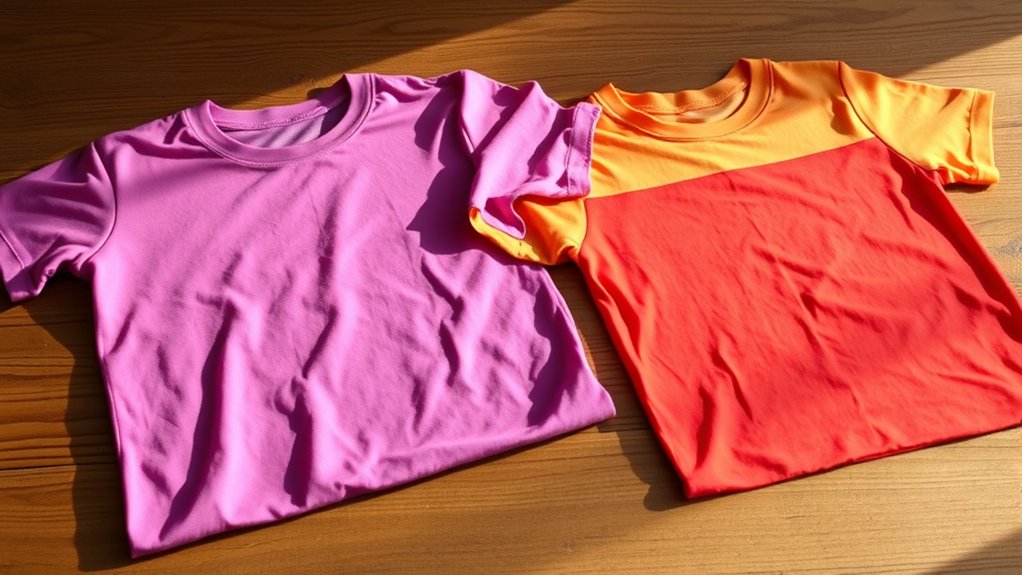

Iron on vs screen printing is a common debate when choosing the best method for custom designs.
If you want quick, vibrant custom designs on a few items, iron-on printing lets you experiment with colorful, detailed images using heat transfer paper.
But if you’re after long-lasting, sharp prints with rich colors for large batches, screen printing embeds ink into fabric for durability and consistency.
Iron-ons may fade or peel, while screen prints stay bold after many washes.
Choosing between speed and lasting quality depends on your project’s needs—keep exploring to see which fits best.
Key Takeaways
- Iron-on printing suits small batches and quick customization with lower setup costs but is less durable and prone to fading or peeling.
- Screen printing excels in large runs, offering vibrant, long-lasting prints embedded in fabric for superior durability and wash resistance.
- Iron-ons allow for vibrant colors but struggle with intricate details, while screen printing handles complex designs and subtle textures effectively.
- Screen printing involves higher initial costs but becomes cost-effective for large orders, whereas iron-on is economical for limited quantities.
- Choose iron-on for speed and simple designs; opt for screen printing when quality, durability, and color richness are priorities.
What Is Iron-On Printing and When Should You Use It?
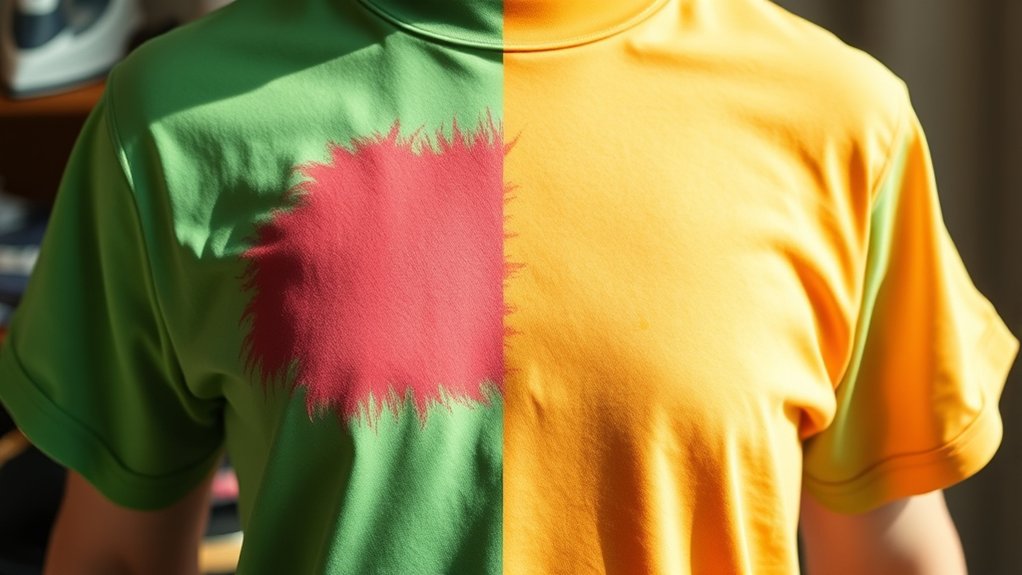
Although it might seem simple at first glance, iron-on printing transforms your plain fabric into a vibrant canvas by applying specially designed transfers with heat and pressure. You’ll work with heat transfer paper or vinyl, placing the design precisely where you want it.
Using a heat press or household iron, you apply consistent heat and pressure, activating the adhesive that bonds the image to the fabric. Mastering application techniques, like controlling temperature, timing, and pressure, ensures crisp edges and vivid colors.
This method suits small batches, custom gifts, or quick prototypes, letting you experiment with detailed, multicolored designs without complex setups. When you want fast, cost-effective customization with intricate visuals, iron-on printing offers a flexible, hands-on approach that brings your creative ideas to life on fabric.
What Is Screen Printing and When Should You Use It?
Screen printing transforms your fabric into a bold, lasting statement by pushing ink through a fine mesh stencil onto the material’s surface. You’ll notice how each vibrant layer of ink creates sharp, vivid designs that pop with clarity.
This method excels for large runs, thanks to its efficiency and ability to maintain consistent quality. When you explore screen printing techniques, you’ll find options like spot color, halftone, and multi-color processes tailored for different effects.
Screen printing applications suit everything from custom t-shirts and posters to tote bags and textiles, making it perfect when you want detailed, durable graphics. Use this method when your design demands precision, vibrant colors, and you need multiple copies without sacrificing quality or visual impact.
Durability and Quality: Iron-On vs Screen Printing
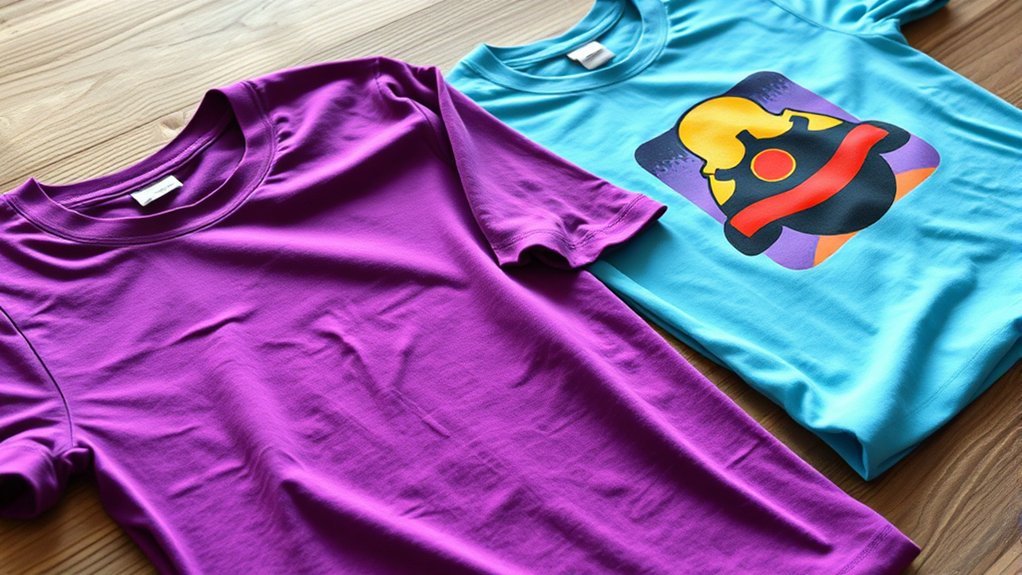
When you run your fingers over a screen-printed design, you’ll notice its smooth, vibrant colors that hold up wash after wash. Iron-on prints, while quick and easy, often fade or crack with time, losing their sharpness.
Let’s explore how each method stands up to wear and delivers detail that lasts.
Longevity of Prints
Because you want your custom prints to last through countless washes and wears, understanding the durability of iron-on versus screen printing is crucial. Iron-on transfers often have a shorter print lifespan; the adhesive layer can crack or peel after repeated washing, dulling the vividness you initially admired.
In contrast, screen printing embeds ink directly into the fabric fibers, enhancing wear resistance and maintaining vibrant colors over time. Imagine running your fingers over a smooth, integrated print versus a slightly raised, fragile patch. That tactile difference signals longevity.
If you’re after prints that endure daily wear, screen printing stands out by resisting fading and cracking. While iron-on offers quick customization, screen printing’s superior durability guarantees your design remains sharp and resilient, wash after wash.
Print Detail Quality
Beyond how long your prints last, the sharpness and intricacy of your design play a huge role in its overall impact. When you choose between iron-on and screen printing, consider how print clarity and image resolution affect your garment’s look.
- Iron-on transfers often struggle with fine details, causing edges to blur and colors to bleed.
- Screen printing excels at capturing sharp lines and vibrant hues, preserving intricate designs with striking precision.
- High image resolution in screen printing guarantees your artwork pops, maintaining crispness even after multiple washes.
If you want your design to stand out with vivid, detailed visuals, screen printing offers superior print detail quality. Iron-ons may be tempting for quick jobs, but they rarely match the clarity and finesse screen printing delivers.
Cost Comparison of Iron-On and Screen Printing Methods
Although both iron-on and screen printing offer unique advantages, their cost structures differ greatly depending on your project’s scale and complexity. When weighing budget considerations, iron-on transfers usually involve lower upfront material costs, making them ideal for small batches or one-offs.
Screen printing demands higher initial expenses due to setup and screens but becomes cost-effective as order volume rises.
| Factor | Iron-On Transfers | Screen Printing |
|---|---|---|
| Setup Cost | Low | High |
| Material Cost | Moderate | Low (bulk orders) |
| Best For | Small runs, customization | Large runs, durability |
Choosing the right method means balancing these costs against your project’s size and budget to achieve the best value.
Design Flexibility and Color Options for Iron-On vs Screen Printing
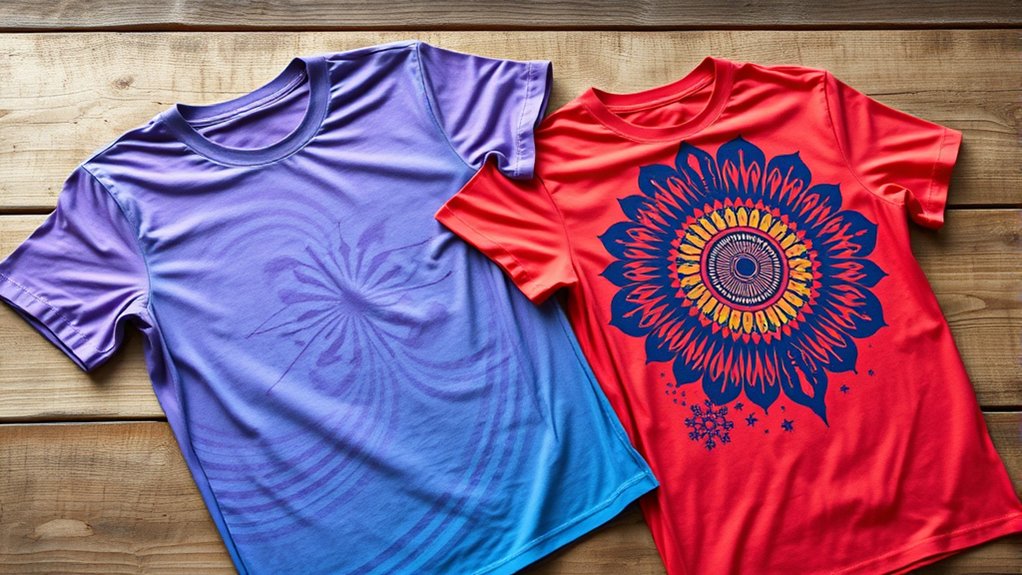
You’ll notice iron-on transfers offer a burst of colors but can struggle with intricate details, while screen printing lets you craft complex designs with vibrant, lasting hues.
When customizing, iron-ons give you quick, flexible options, but screen printing shines in creating sharp, multi-layered artwork.
Understanding these differences helps you pick the perfect method to bring your vision to life.
Color Range Comparison
When you explore the color possibilities of iron-on and screen printing, you’ll notice how each method paints your design in a distinct palette. Screen printing dazzles with unmatched color vibrancy, allowing rich, bold hues that pop against any fabric.
Its ability to master color layering means you can create intricate gradients and multi-dimensional effects with ease. In contrast, iron-on transfers offer a simpler color range, often limited by the transfer film’s capabilities.
Consider these emotional points:
- Screen printing’s vivid colors bring your vision to life with intensity.
- Iron-on’s straightforward palette lets you quickly express basic designs.
- The layering potential in screen printing invites creativity and depth.
Choosing between them depends on how much you want your colors to sing.
Design Complexity Limits
Because design complexity directly influences how your artwork translates onto fabric, understanding the limits of iron-on versus screen printing is essential. Iron-on transfers struggle with design limitations when it comes to intricate designs; fine lines and tiny details often blur or peel after washing.
You’ll notice that iron-ons tend to work best with bold, simple shapes and fewer colors. On the other hand, screen printing excels at capturing complex artwork with sharp edges and subtle textures. Its process allows layering of multiple inks, bringing intricate designs to life with vibrant precision.
However, screen printing requires separate screens for each color, which can restrict extremely detailed multicolor pieces. Knowing these design limitations helps you choose the method that preserves your artwork’s integrity and visual impact.
Customization Flexibility Options
Although both iron-on and screen printing offer customization options, their approaches to design flexibility and color range differ considerably. When you choose iron-on transfers, you get a quick way to apply vibrant, photo-quality images with unlimited color use. Screen printing, however, excels with solid, bold colors but limits you to a few shades per design due to its layering method.
Consider these key points to decide which suits your vision:
- Iron-on gives you a broader spectrum of colors and intricate custom design options, perfect for detailed images.
- Screen printing offers durability and vibrant hues but with fewer print material choices and color layers.
- Your choice will impact the texture and longevity of the final product, so think about your design’s complexity and fabric type.
Which Printing Method Is Right for Your Project?
How do you decide between iron-on transfers and screen printing for your project? Start by evaluating your project considerations: quantity, fabric type, and design complexity.
Iron-on transfers shine with small batches and intricate, multi-colored artwork, letting you apply vibrant images quickly using simple heat application techniques. On the other hand, screen printing excels in large runs, offering durable, vivid prints with a tactile feel.
Its application techniques involve layering ink through stencils, perfect for bold, solid colors. If you want fast customization with minimal setup, iron-on’s versatility suits you. But if long-lasting quality and cost-effectiveness for bulk orders matter, choose screen printing.
Visualize your end result and match it to these methods. Your project’s needs will guide you to the perfect printing choice.
Frequently Asked Questions
Can Iron-On Prints Be Reused on Different Garments?
You can’t usually reuse iron-on prints on different garments because iron-on durability fades after one application. The transfer’s adhesive bonds permanently, limiting transfer versatility and making it tough to peel off and reapply without damage.
How Long Does the Screen Printing Setup Process Take?
You’ll spend about 30 minutes to a few hours on screen printing setup, carefully aligning screens and mixing inks.
Though setup time feels long, your screen printing efficiency skyrocket once you start printing multiple garments.
Are There Eco-Friendly Options for Screen Printing Inks?
You’ll find eco-friendly alternatives in water-based and soy inks, offering vibrant, sustainable materials while reducing toxins. These inks create crisp, detailed designs, letting you print boldly while caring for the planet with every colorful stroke.
Can Iron-On Transfers Be Applied at Home Without Special Equipment?
Ever tried crafting your own custom tee right in your living room? You can easily do home application of iron-on transfers using just an iron.
Just remember, transfer durability might not match professional heat presses.
What Fabric Types Are Incompatible With Screen Printing?
You’ll want to avoid screen printing on silk fabrics and stretchy materials since the ink won’t adhere well or might crack. These delicate, smooth surfaces and flexible textures just don’t hold the print crisp and vibrant.
Conclusion
Choosing between iron-on and screen printing feels like picking between a quick splash of color and a lasting masterpiece. Iron-on gives you instant, vibrant results perfect for small runs or personal projects, but it might fade or crack over time.
Screen printing, on the other hand, promises durability and rich texture, ideal for bold, long-lasting designs. It’s a great choice when you want your artwork to stand the test of time without losing its impact.
So, whether you want speed or staying power, your choice between iron-on vs screen printing paints the story your project deserves.