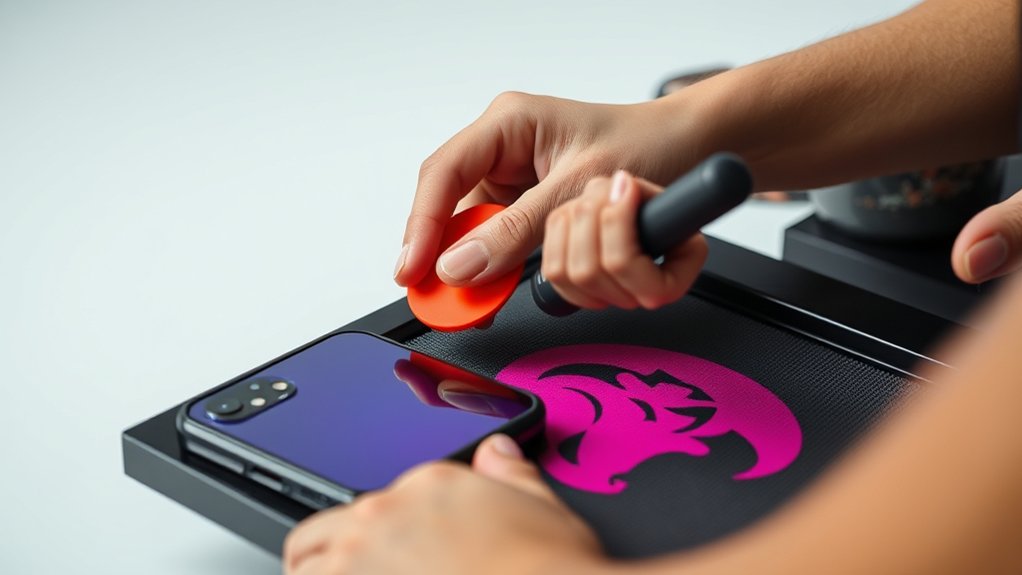

You’ll find pad printing excels on irregular, three-dimensional surfaces, delivering sharp, detailed images with quick setup and lower volume costs.
Pad printing is particularly effective when printing on complex shapes where precision is key.
Screen printing works best on flat or slightly curved substrates, offering richer color saturation and thicker ink layers for enhanced durability and large production runs.
It is ideal for projects requiring vibrant colors and long-lasting prints.
Material compatibility and design complexity also influence the choice between pad printing and screen printing.
If you want to understand how print quality, costs, and speed vary between these methods, keep exploring the key differences and applications.
Key Takeaways
- Pad printing excels on irregular, 3D, and curved surfaces, while screen printing is best for flat or slightly curved surfaces.
- Screen printing produces richer colors and thicker ink layers, enhancing durability compared to pad printing’s finer, thinner ink deposits.
- Pad printing supports diverse materials like plastics, metals, ceramics, and glass; screen printing suits textiles, paper, wood, and smooth plastics.
- Pad printing has lower setup time and cost for short runs. Screen printing is cost-effective for high-volume production due to screen preparation.
- Pad printing allows quick design changes with flexible plate swaps, whereas screen printing requires longer setup but is efficient for consistent large runs.
How Do Pad and Screen Printing Work?
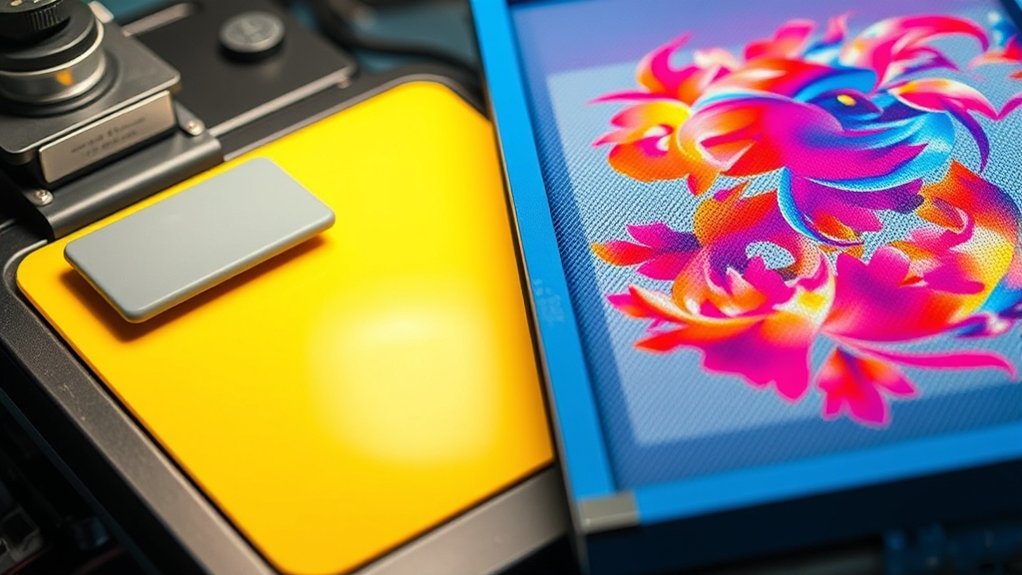
Although both pad and screen printing apply ink to surfaces, they use fundamentally different mechanisms to achieve precise image transfer. In the pad printing process, you start with an etched plate containing the image. Ink fills the etched areas, and a silicone pad picks up the ink by pressing onto the plate.
You then press the pad onto the target surface, transferring the ink accurately, even on irregular or curved objects. Conversely, the screen printing technique involves stretching a mesh screen over a frame. You place ink on the screen and use a squeegee to push it through the open mesh areas onto the substrate below.
This method suits flat or slightly textured surfaces, depositing ink layer by layer through the stencil areas on the screen. Both methods demand precise control for ideal results.
How Do Print Quality and Colors Compare?
When comparing print quality and color vibrancy, pad printing excels at producing fine details and sharp edges, especially on irregular or curved surfaces where precision is critical. You’ll notice pad printing delivers superior detail resolution due to its ability to transfer intricate designs accurately.
However, screen printing generally provides richer color vibrancy on flat surfaces, thanks to its thicker ink layers and higher pigment saturation. While screen printing’s color vibrancy is more intense and durable, its detail resolution can be limited by mesh size, making it less suitable for extremely fine lines.
Pad printing, conversely, uses silicone pads that conform to surfaces, preserving detail resolution but sometimes resulting in slightly less saturated colors. Your choice depends on whether you prioritize crisp detail or bold color vibrancy for your project.
Which Method Is Best for Irregular Surfaces?
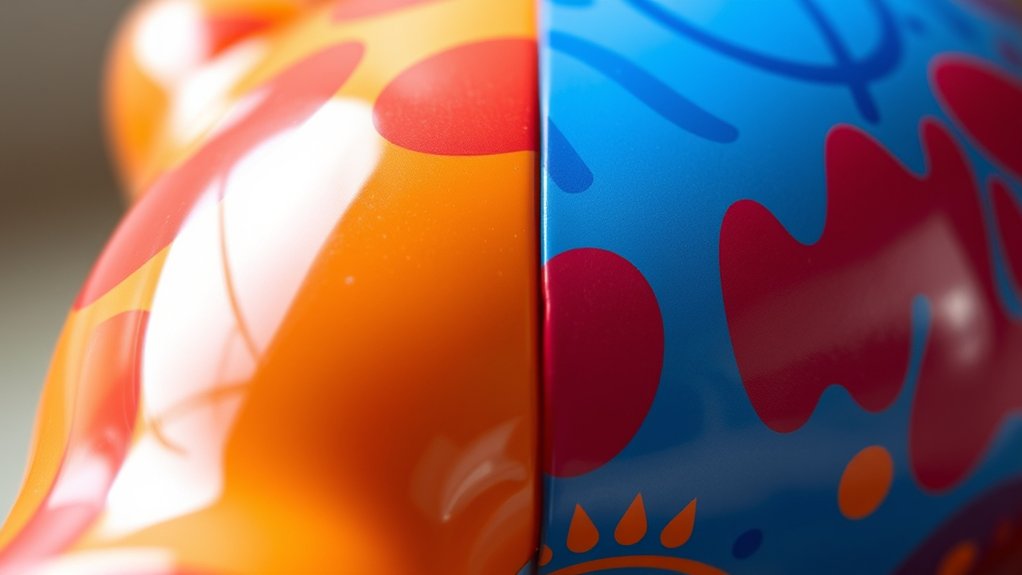
Since irregular surfaces pose unique challenges for ink application, choosing the right printing method is essential to guarantee consistent coverage and sharp detail.
Pad printing excels on irregular shapes by using flexible silicone pads that conform precisely to varied surface types, ensuring uniform ink transfer.
Screen printing, however, struggles with complex contours due to its flat mesh screen, making it less effective on uneven surfaces.
| Printing Method | Suitability for Irregular Shapes | Surface Types Handled |
|---|---|---|
| Pad Printing | High | Curved, textured, uneven |
| Screen Printing | Low | Mostly flat or gently curved |
| Recommendation | Best for complex 3D forms | Ideal for smooth surfaces |
You’ll find pad printing superior when working with challenging irregular shapes and diverse surface types.
What Materials Suit Each Printing Method?
You’ll find pad printing excels on irregular, textured, or curved surfaces like plastics, metals, and ceramics due to its flexible silicone pad. Screen printing suits flat or slightly textured materials such as textiles, glass, and wood, where ink adhesion and layering matter.
Understanding each method’s material compatibility and surface impact guarantees peak print quality and durability.
Compatible Surfaces
Different printing methods excel on specific materials due to their unique application techniques and ink properties. When working with pad printing surfaces, you’ll find it excels on irregular, curved, or textured objects like plastics, metals, ceramics, and glass.
Its silicone pad transfers ink precisely onto hard-to-reach areas, making it ideal for small, detailed designs on complex shapes. Conversely, screen printing surfaces typically include flat or slightly curved materials such as textiles, paper, wood, and smooth plastics.
Screen printing applies ink through a mesh stencil, allowing thick ink deposits suitable for bold, durable designs on fabric or rigid substrates. Understanding these compatible surfaces helps you select the right method for your project’s material, ensuring peak adhesion, clarity, and durability in your final print.
Material Flexibility
A key factor in choosing between pad printing and screen printing is understanding the material flexibility each method offers. Pad printing excels in substrate compatibility, allowing you to print on irregular, curved, and small surfaces like plastics, metals, ceramics, and glass with high precision.
Its design versatility accommodates fine details and multi-color applications on complex shapes. Conversely, screen printing suits flat or slightly textured substrates such as textiles, wood, and rigid plastics, enabling you to apply thicker ink layers for durability.
While screen printing is limited on highly contoured surfaces, it provides excellent adhesion on porous materials. By evaluating your project’s substrate type and required design complexity, you can select the printing method that optimizes material flexibility and achieves the desired print quality.
Texture Impact
Since surface texture directly affects ink adhesion and print clarity, understanding how pad printing and screen printing interact with various materials is essential. Pad printing excels on irregular or curved surfaces, adapting well to texture variation without compromising detail. Screen printing performs best on flat, smooth textures, enabling texture enhancement through thicker ink layers.
| Surface Texture | Pad Printing Suitability | Screen Printing Suitability |
|---|---|---|
| Smooth (glass, metal) | Moderate | High |
| Textured (leather, rubber) | High | Low |
| Curved/irregular (plastics) | High | Moderate |
You’ll find pad printing ideal for substrates requiring precise ink transfer over texture variations, while screen printing suits materials where texture enhancement via ink layering is desired.
Which Method Offers Better Durability?
When evaluating durability, focus on ink adhesion strength and resistance to wear and tear. You’ll find that pad printing excels on irregular surfaces but may have thinner ink layers, affecting longevity.
On the other hand, screen printing typically offers thicker ink deposits, enhancing durability on flat substrates.
Ink Adhesion Strength
Although both pad printing and screen printing can produce durable prints, the ink adhesion strength varies considerably depending on the substrate and ink type used. When you opt for pad printing, the flexibility of the silicone pad allows precise ink transfer onto irregular or curved surfaces, but achieving strong adhesion often hinges on meticulous surface preparation.
You’ll need to clean and treat the substrate to enhance ink bonding, especially with solvent-based or UV-curable ink types. Screen printing, conversely, deposits thicker ink layers, which can improve adhesion on flat surfaces if the right ink chemistry matches the substrate.
Proper surface preparation, such as abrasion or chemical priming, is essential for both methods. Ultimately, your choice affects adhesion strength, as it depends on matching ink types with substrate properties and executing thorough surface preparation protocols.
Wear And Tear Resistance
Determining which printing method offers better wear and tear resistance requires examining the durability of ink layers under mechanical stress and environmental exposure. When you evaluate ink longevity, screen printing generally excels due to its thicker ink deposits, which resist surface degradation more effectively over time.
The multilayer application in screen printing creates a robust barrier against abrasion and UV exposure. Conversely, pad printing applies a thinner ink layer, making it more vulnerable to scratching and fading under repeated friction or harsh conditions.
However, if your application involves complex or uneven surfaces, pad printing’s conformability is advantageous despite slightly reduced durability. Ultimately, if maximizing wear resistance and minimizing surface degradation are your priorities, screen printing offers superior ink longevity and durability compared to pad printing.
How Do Costs Compare: Pad vs Screen Printing?
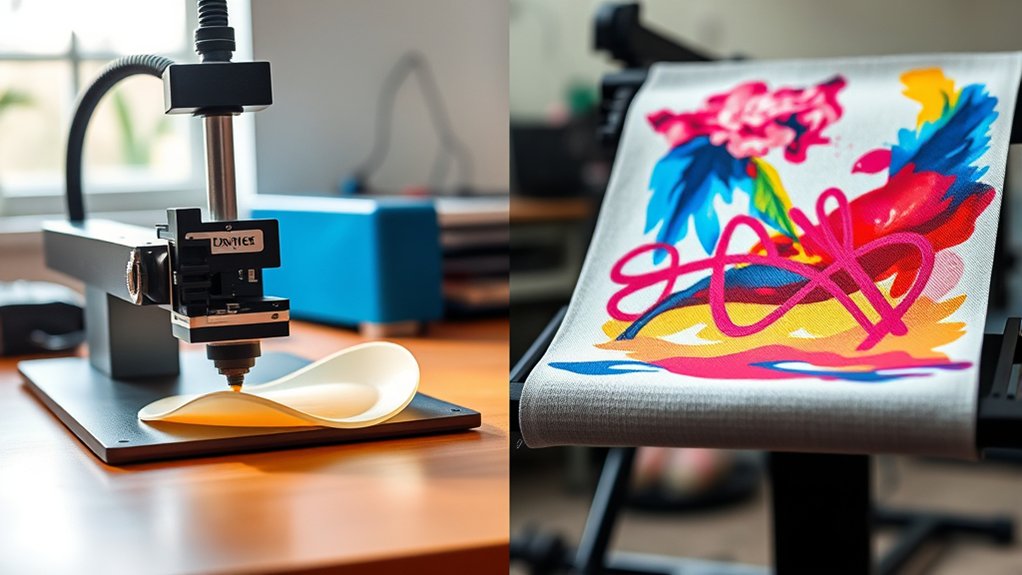
Since both pad printing and screen printing involve unique processes and materials, comparing their costs requires examining factors like setup time, production volume, and equipment expenses. In your cost analysis, you’ll find that pad printing generally incurs higher initial equipment costs due to specialized silicone pads and precision machinery.
However, it excels in low to medium production runs because of minimal setup complexity, which can reduce overall expenses. Screen printing demands a more substantial upfront investment in screens and setup, but it becomes more cost-effective as your production volume increases, given its faster throughput and reusable screens.
When considering budget considerations, factor in material costs—ink types vary by method—and labor intensity. Ultimately, your choice depends on balancing these variables against your specific project scale and precision needs.
How Fast Are Pad and Screen Printing Setups?
Understanding the cost dynamics between pad and screen printing sets the stage for evaluating how quickly each method can get your project underway. Setup speed directly impacts production efficiency, especially when turnaround times are tight.
Pad printing offers quicker setup since it involves fewer steps in plate preparation and alignment, making it ideal for short runs and frequent design changes. In contrast, screen printing requires meticulous screen creation and registration, which extends setup time but benefits high-volume runs with consistent output.
Consider these factors affecting setup speed and production efficiency:
- Pad printing’s flexible plate changes reduce downtime between jobs.
- Screen printing demands thorough screen drying and stencil preparation.
- Automated pad printing systems can further accelerate production cycles.
How to Choose the Right Printing Method for Your Project
How do you decide which printing method best fits your project’s requirements? First, analyze your project requirements: consider substrate type, image complexity, color count, and print area.
Pad printing excels on irregular, three-dimensional surfaces and fine details, while screen printing suits flat or slightly curved surfaces with larger, less intricate designs. Next, evaluate your printing budget.
Screen printing has higher setup costs but lower per-unit costs, ideal for large runs. Pad printing’s setup is quicker and less costly for short runs but can be pricier per piece. Also, factor in production speed and durability needs.
Frequently Asked Questions
Can Pad Printing Be Used for Multi-Colored Designs?
Yes, you can use pad printing for multi-colored designs, but color registration demands precision. It handles moderate design complexity well, though intricate or highly detailed multi-color work may challenge its accuracy and efficiency.
Is Screen Printing Eco-Friendly Compared to Pad Printing?
When it comes to eco-friendly practices, you’ll find screen printing often leads the pack due to better ink sustainability and reusable screens, reducing waste.
You won’t be throwing the baby out with the bathwater using this method.
What Maintenance Is Required for Pad Printing Equipment?
You’ll perform pad printing maintenance by regularly cleaning the pad, cliche, and ink cup, checking silicone pad condition, lubricating moving parts, and inspecting ink viscosity.
Consistent equipment care guarantees peak print quality and prolongs machine lifespan.
Can Screen Printing Be Automated for Large Production Runs?
Imagine a factory line humming like clockwork; yes, you can automate screen printing. Automated processes boost production efficiency by enabling consistent, high-speed runs, reducing manual labor, and ensuring precise ink application for large-scale print jobs.
Are There Limitations on Ink Types for Pad Printing?
Yes, you’ll face ink compatibility limitations in pad printing, as certain inks don’t adhere well to specific substrates. You must carefully match ink formulations to substrate restrictions to guarantee ideal adhesion and durability in your prints.
Conclusion
Choosing between pad and screen printing is like selecting the right tool for a craftsman’s task. Pad printing molds itself to curves and crevices with finesse, while screen printing lays down bold, vibrant layers on flat canvases. Each method offers distinct advantages in quality, durability, and cost.
By understanding their strengths, you’ll wield the perfect technique—ensuring your project’s design not only fits but thrives, like a key turning smoothly in its lock. Ultimately, knowing when to use pad printing vs screen printing will help you achieve the best results for your specific needs.