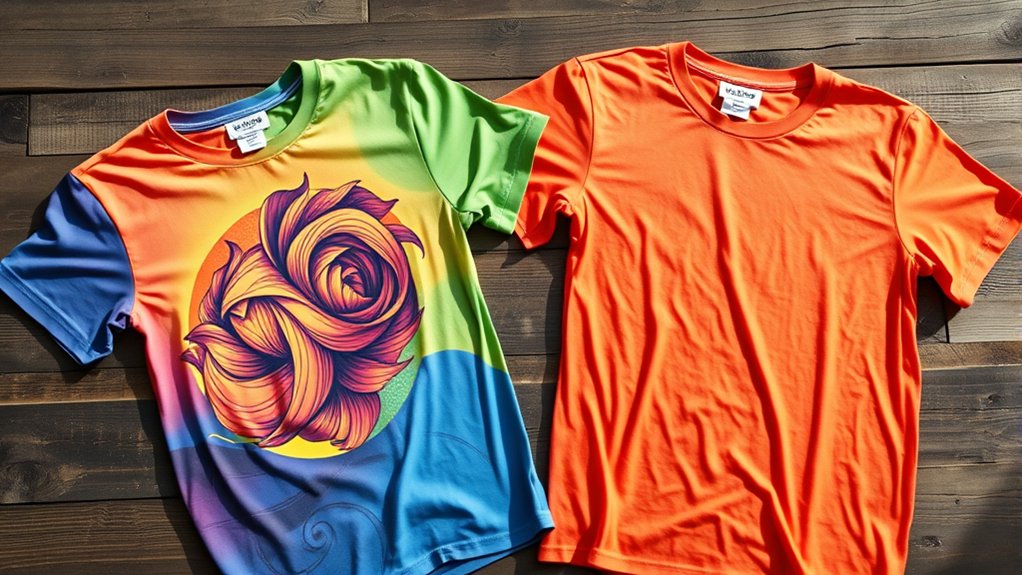

When choosing between digital print shirts vs screen print, it’s important to understand their unique strengths.
Digital printing excels with intricate, colorful designs and smaller batches. It uses specialized inks to create smooth gradients and fine details that stand out.
Screen printing, on the other hand, shines with bold, vibrant colors and thicker ink layers. It offers superior durability, especially for large orders where consistency and longevity are key.
Digital prints may fade faster, while screen prints last longer but require upfront setup.
Your choice depends on factors like design complexity, quantity, and how long you need the print to last.
There’s more to explore to find the right fit for your specific project needs.
Key Takeaways
- Digital printing excels in detailed, photographic designs with smooth color transitions, while screen printing suits bold, simple graphics and solid colors.
- Screen printing offers superior color vibrancy and durability, lasting over 5 years, whereas digital prints typically last 1-3 years with moderate fade resistance.
- Digital printing is cost-effective for small runs and complex designs, while screen printing becomes economical for large volumes due to stencil setup costs.
- Screen printing uses thick ink layers for intense saturation and cracking resistance. Digital printing uses pigment-based inks with moderate cracking resistance.
- Digital printing works well on cotton-polyester blends, providing fabric compatibility, while screen printing is versatile across many fabric types but requires compatibility checks.
Digital Print Vs. Screen Print: How Shirt Printing Works
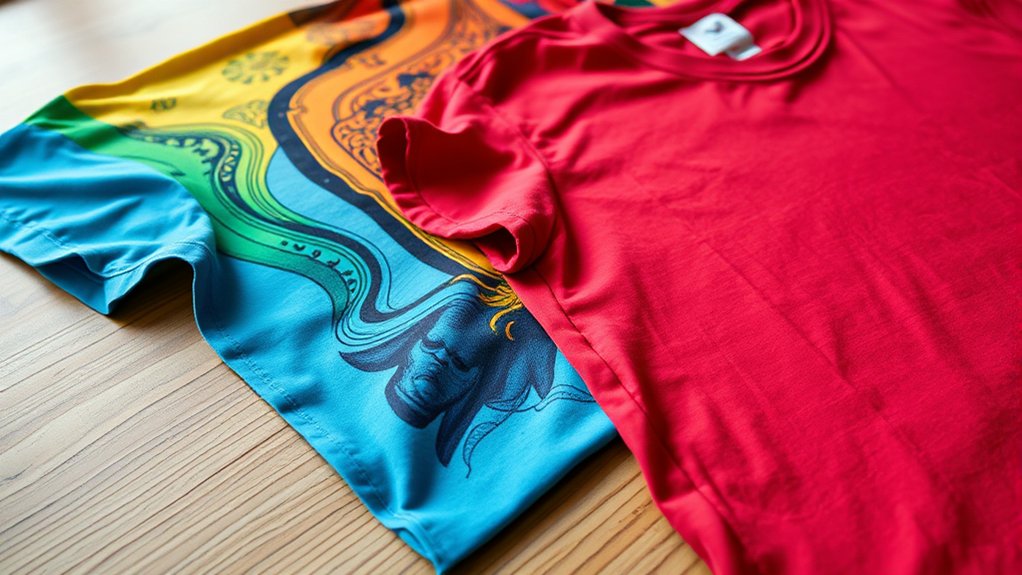
Although both digital printing and screen printing serve the same purpose of transferring designs onto shirts, they operate through distinct processes that affect the final output. When you use digital printing, ink technology involves jetting specialized pigment or dye-based inks directly onto the fabric, allowing for high-resolution details without the need for screens.
This method excels in fabric compatibility, especially with cotton and polyester blends, as the inks penetrate fibers for a soft, breathable finish. Screen printing, in contrast, pushes thick layers of plastisol or water-based inks through a stencil on a mesh screen, creating vibrant, durable designs.
However, it demands careful fabric compatibility checks, since heavier inks suit cotton best but may stiffen delicate materials. Understanding these differences helps you choose the right printing method for your shirt’s purpose and fabric type.
Color and Design Differences in Digital and Screen Printed Shirts
The distinct printing techniques directly influence how colors and designs appear on your shirt. With screen printing, you’ll notice intense color vibrancy thanks to thick ink layers that sit atop the fabric. This method excels with bold, simple graphics but struggles with gradients or intricate details.
Conversely, digital printing applies ink directly into the fibers, allowing for high design complexity and smooth color shifts. It reproduces fine lines and photographic images with precision, though the colors may appear less saturated compared to screen printing.
When choosing between the two, consider whether you prioritize vivid, solid hues or detailed, multi-colored artwork. Each technique shapes your shirt’s aesthetic differently, so understanding these differences guarantees your design looks exactly how you envision it.
Which Shirt Printing Method Lasts Longer?
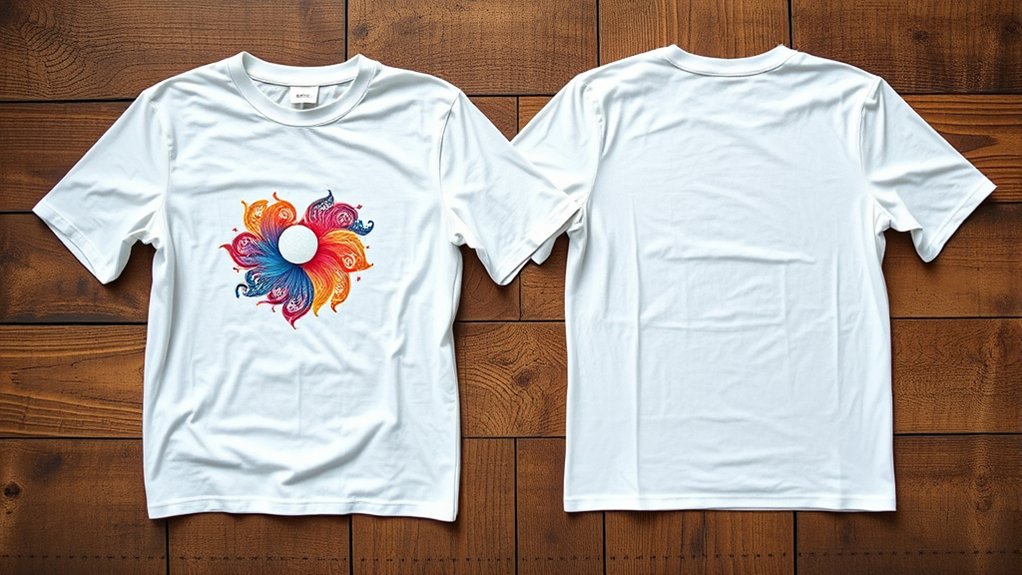
When you want your shirt’s design to withstand repeated wear and washing, durability becomes a key factor in choosing between digital and screen printing. Durability factors hinge on ink penetration, fabric compatibility, and resistance to fading or cracking.
Screen printing typically offers deeper ink saturation on compatible fabrics, enhancing longevity. Digital prints excel on complex, polyester blends but may fade faster on cotton.
| Durability Factors | Digital Print |
|---|---|
| Ink Penetration | Surface-level |
| Fabric Compatibility | Best on polyester blends |
| Resistance to Fading | Moderate |
| Resistance to Cracking | Lower |
| Longevity | 1-3 years |
| Durability Factors | Screen Print |
| Ink Penetration | Deep |
| Fabric Compatibility | Versatile, especially cotton |
| Resistance to Fading | High |
| Resistance to Cracking | High |
| Longevity | 5+ years |
Choosing screen printing generally guarantees longer-lasting designs on natural fabrics.
Cost Comparison of Digital Print and Screen Print Shirts
Durability often dictates which printing method suits your needs, but cost plays an equally important role in your decision. When comparing digital print shirts to screen print, consider how bulk orders impact pricing tiers.
Digital printing typically has a higher base cost per shirt due to the detailed inkjet process but requires minimal setup fees, making it economical for small runs. Screen printing, however, involves upfront costs for stencil creation, so it becomes more cost-effective as your order size increases and you reach higher pricing tiers.
If you plan large bulk orders, screen printing often offers considerably lower per-unit costs. Conversely, for smaller quantities or designs with many colors, digital printing saves you money by eliminating complex setup.
Understanding these cost dynamics helps you optimize your budget for any project size.
How to Choose the Best Printing Method for Your Shirt Project
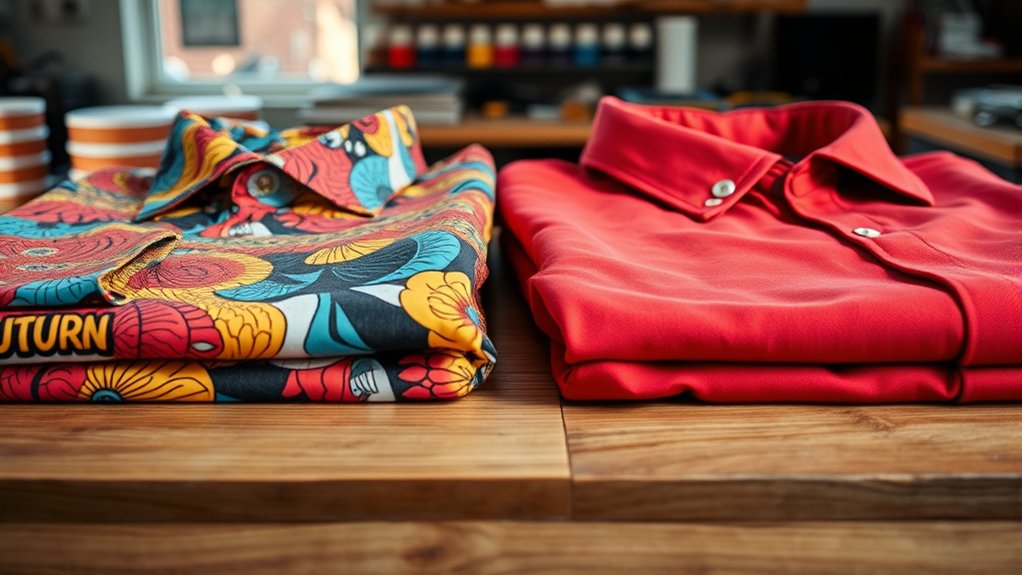
How do you determine which printing method best suits your shirt project? Start by evaluating design complexity and fabric compatibility. Digital printing handles intricate, multicolor designs with ease, while screen printing excels with bold, limited-color graphics on various fabrics.
Consider your production scale and durability needs too.
| Factor | Digital Print | Screen Print |
|---|---|---|
| Design Complexity | Ideal for detailed, multicolor art | Best for simple, solid colors |
| Fabric Compatibility | Works well on cotton blends | Compatible with diverse fabrics |
| Production Volume | Suited for small to medium runs | Cost-effective for large orders |
| Durability | Moderate longevity | High durability, vibrant colors |
Evaluate these factors against your project requirements to select the best printing technique.
Frequently Asked Questions
Can Digital Printing Handle Metallic or Neon Inks?
You can’t achieve true metallic effects or neon vibrancy with standard digital printing, as it lacks specialty inks. For those vivid finishes, you’ll need screen printing or hybrid methods that handle specialty metallic and neon inks.
Is Screen Printing More Eco-Friendly Than Digital Printing?
You want less waste, you want ink sustainability, you want a lower environmental impact. Screen printing often wins due to reusable screens and eco-friendly inks. Digital printing cuts water use and energy, balancing eco benefits carefully.
How Do Washing Instructions Differ Between Digital and Screen Printed Shirts?
You’ll notice washing durability varies: digital prints require gentler care guidelines, such as cold water and inside-out washing. Screen prints withstand hotter washes and harsher detergents, making their durability superior if you follow proper maintenance precisely.
Can Digital Printing Print on Darker Fabrics Without Underbase?
Like painting on a black canvas, digital printing techniques usually need an underbase for darker fabrics to guarantee vibrant colors. Without it, fabric compatibility issues arise, causing dull or washed-out prints you’ll want to avoid.
Which Method Is Better for Small Batch or One-Off Orders?
You’ll find digital printing offers superior cost efficiency and order flexibility for small batch or one-off orders, eliminating setup fees and allowing quick design changes. It is the smarter, more agile choice for limited runs.
Conclusion
When choosing between digital and screen printing, consider that digital prints can reproduce over 16 million colors with incredible detail, perfect for complex designs. This method allows for vibrant, photo-quality images that stand out on any shirt. Additionally, digital printing is ideal for small runs or custom orders since it requires less setup time.
However, screen printing offers superior durability, lasting up to 50 washes without significant fading. It is an excellent choice for bulk orders and simple designs with limited colors. Screen prints tend to have a thicker, more textured feel compared to digital prints.
Knowing these facts helps you pick the best method for your project—whether you prioritize vibrant detail or long-term wear. Ultimately, understanding each technique’s strengths guarantees your shirt looks sharp and lasts as long as you need it to. When deciding between a digital print shirt vs screen print, consider your design complexity, quantity, and desired durability to make the best choice.