
Silk screen printing vs heat transfer is a common choice for custom apparel.
If you want bold, vibrant colors that truly pop and last wash after wash, silk screen printing is your go-to. It presses thick ink layers into fabric, capturing sharp details and rich hues, but it takes longer to set up and shines with bulk orders.
Heat transfer printing offers quick, flexible designs with intricate details, perfect for smaller runs. Though it may peel or crack over time, heat transfer is ideal when speed and customization matter.
Keep exploring to see which fits your project best.
Key Takeaways
- Silk screen printing offers richer color vibrancy and sharper design details compared to heat transfer printing.
- Heat transfer printing is cost-effective and efficient for small runs with minimal setup time.
- Silk screen printing produces durable, wash-resistant designs that resist cracking and fading.
- Heat transfer designs sit on fabric surface and may peel or crack after multiple washes.
- Silk screen printing suits large orders due to lower per-unit cost and scalable production efficiency.
How Silk Screen Printing Works
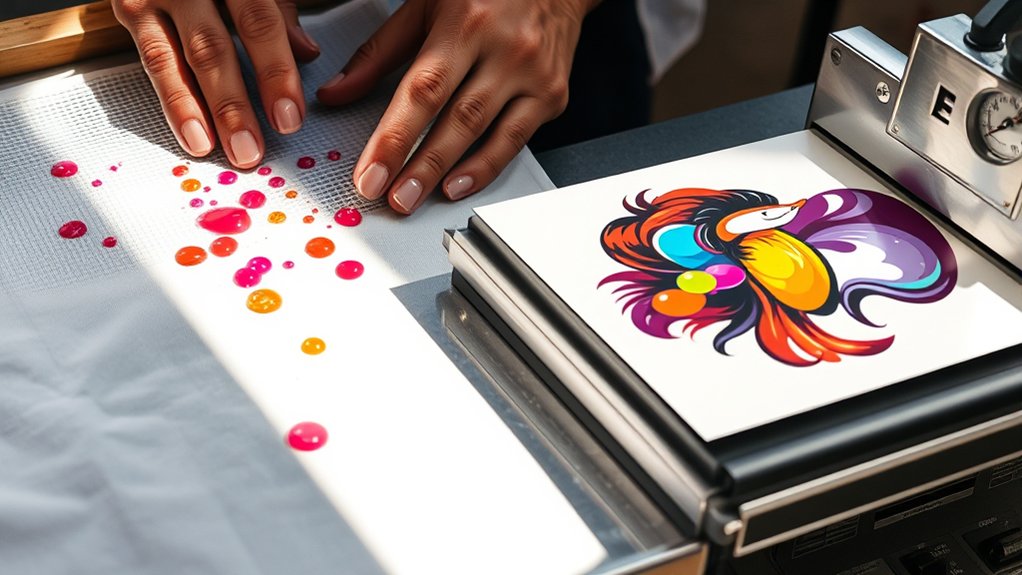
Silk screen printing starts with a fine mesh screen stretched tightly over a frame, creating a stencil for your design. You’ll notice the mesh count plays an essential role; it determines the screen’s detail and ink flow. A higher mesh count means finer detail but less ink, perfect for intricate designs.
When you choose ink, think about the fabric and effect you want. Plastisol inks offer vibrant colors and durability, while water-based inks give a softer feel. As you push ink through the open areas of the stencil with a squeegee, the design transfers onto your material with precision.
Each step, from mesh count to ink selection, influences the final print, making silk screen printing both a technical and artistic process you can truly control.
How Heat Transfer Printing Works
Anyone looking to create vibrant, detailed designs on fabric will find heat transfer printing a straightforward and versatile method. You start by selecting the right heat transfer materials, such as specialized films or vinyl sheets printed or cut with your design.
Using precise transfer techniques, you position the design onto the fabric and apply heat and pressure with a heat press machine. This heat activates the adhesive in the transfer materials, bonding the design firmly to the fabric’s surface.
You’ll notice how the heat causes the colors and textures to meld seamlessly, producing a crisp, durable image. This process lets you experiment with intricate patterns and multiple colors without worrying about complex setup, making heat transfer printing a flexible, creative way to personalize textiles quickly and efficiently.
Color Vibrancy and Design Detail: Screen Printing vs Heat Transfer
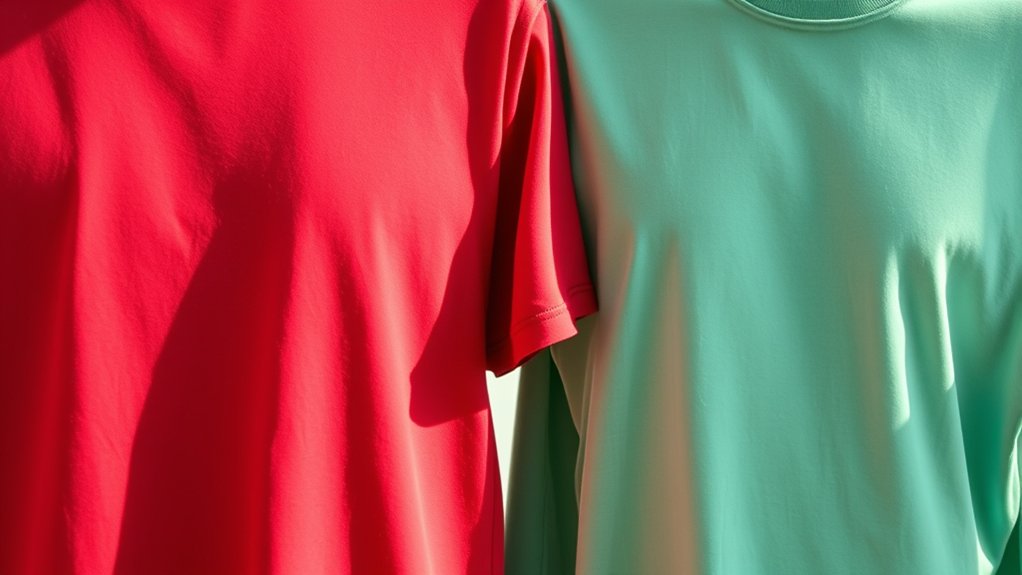
While heat transfer printing offers flexibility and ease, comparing it to screen printing reveals distinct differences in color vibrancy and design detail. When you look closely, screen printing delivers unmatched color richness, with inks layering to produce bold, vivid hues that pop against fabric.
This method excels at capturing fine design intricacy, allowing you to see every sharp edge and subtle gradient with clarity. Heat transfer, on the other hand, can reproduce complex images but often lacks the depth and punch of screen-printed colors.
The design intricacy might blur slightly due to its reliance on printable films. So, if you want artwork with striking vibrancy and crisp details that stand out visually, screen printing usually outshines heat transfer, giving your designs a more professional and impactful appearance.
Durability and Washability of Each Printing Method
When you pick up a freshly printed garment, its longevity quickly becomes a top priority. In the durability comparison, silk screen printing impresses with its thick, ink-layered designs that embed deeply into the fabric, resisting cracking and fading even after countless washes.
Washability testing reveals how screen prints maintain their vibrancy and texture, standing up to harsh detergents and tumbling dryers. On the other hand, heat transfer designs, while sharp and detailed, often sit atop the fabric, making them prone to peeling and color loss over time.
Repeated laundering can cause the transfer to crack or lift, especially if you skip gentle cycles. So, if durability and washability are your focus, silk screen printing typically offers longer-lasting results that keep your design looking fresh wash after wash.
Cost Differences Between Silk Screen and Heat Transfer Printing
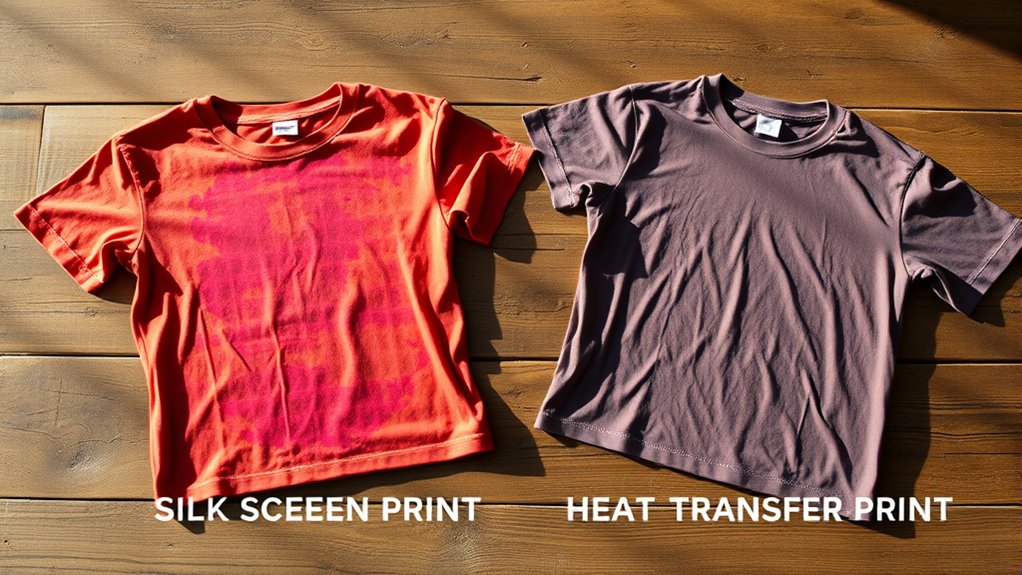
Although both silk screen and heat transfer printing create vibrant designs, the costs behind each method can vary considerably depending on your project’s scale and complexity. When you’re weighing a price comparison, budget considerations become essential. Silk screening shines with larger runs, while heat transfer suits smaller, detailed jobs.
| Aspect | Silk Screen Printing | Heat Transfer Printing |
|---|---|---|
| Setup Cost | Higher (screens, prep) | Lower (digital files) |
| Cost per Unit | Lower for bulk orders | Higher, ideal for small runs |
| Design Complexity | Limited colors raise cost | Handles full-color easily |
Choosing smartly means balancing upfront costs and run size to fit your budget perfectly.
Which Printing Method Is Best for Different Projects?
You’ll want to match your project’s style and scale to the right printing method, whether that’s the vibrant, durable silk screen or the quick, flexible heat transfer.
Think about how many pieces you need and how detailed your design is, since cost and efficiency shift with each approach. Let’s explore which method brings your vision to life best without breaking the budget.
Project Type Suitability
Anyone planning a custom apparel project will find that choosing between silk screen printing and heat transfer hinges on the specific demands of the design and fabric. If your project objectives include bold, vibrant colors on bulk orders, think team uniforms or event giveaways, silk screen printing shines with its durability and color richness.
For intricate, multi-colored graphics aimed at a fashion-forward target audience, heat transfer excels by capturing fine details and gradients on-demand. Heat transfer also suits smaller runs or personalized items, allowing you to tailor each piece without setup delays.
Consider the fabric type too: silk screen bonds beautifully with cotton, while heat transfer adapts well to polyester and blends. Aligning your method with your project’s goals and audience guarantees your final product not only looks sharp but feels just right.
Cost and Efficiency
When weighing cost and efficiency, each printing method paints a distinct picture for your project’s budget and timeline. Silk screen printing shines with bulk discounts, lowering per-unit costs as quantities rise, perfect for large runs. Heat transfer excels in quick production timelines and low minimums, ideal for small batches or custom designs. Your choice hinges on volume and speed needs.
| Aspect | Silk Screen Printing | Heat Transfer |
|---|---|---|
| Setup Cost | Higher upfront | Lower upfront |
| Cost per Unit | Decreases with volume | Generally stable |
| Bulk Discounts | Significant | Limited |
| Production Timeline | Longer due to setup | Faster, near-instant |
| Best For | Large orders | Small/custom orders |
How Order Size Influences Your Printing Choice
When you’re ordering a small batch, heat transfer lets you move quickly without heavy setup. But if you’re printing large volumes, silk screen spreads out the cost, making each piece more affordable.
Understanding how setup time shapes your order size helps you pick the smartest method for your project.
Small Batch Efficiency
Although both silk screen printing and heat transfer offer unique benefits, the size of your order dramatically shapes which method serves you best. When working with a small batch, printing efficiency becomes essential.
Silk screen printing demands setup time for each color, which can slow you down on limited runs. Heat transfer, however, lets you jump straight to printing without extensive prep, ideal for quick, detailed designs in small quantities.
| Factor | Small Batch Efficiency |
|---|---|
| Setup Time | Longer for silk screen, minimal for heat transfer |
| Cost per Unit | Higher for silk screen in small runs |
| Design Complexity | Great for bold colors in silk screen |
| Turnaround Speed | Faster with heat transfer |
| Customization Ease | Easier with heat transfer |
Pick heat transfer for speed and detail, silk screen for durability.
Large Volume Cost
As your order size grows, the cost dynamics between silk screen printing and heat transfer shift dramatically. With silk screen printing, bulk pricing becomes your best ally; each additional shirt reduces the cost per unit considerably. Its production scalability shines when you’re dealing with hundreds or thousands of items, allowing you to spread the initial setup costs over a vast quantity.
Heat transfer, however, doesn’t benefit as much from large quantities since each print is applied individually, keeping costs relatively steady regardless of volume. If you’re looking at massive orders, silk screen’s ability to efficiently scale production translates into noticeable savings and consistent quality.
Choosing the right method hinges on understanding how your order size interacts with these cost structures to optimize both budget and output quality.
Setup Time Impact
Because setup time varies considerably between silk screen printing and heat transfer, your order size directly shapes which method suits you best. When you’re handling bulk orders, silk screen printing shines with its superior setup efficiency, allowing fast production speed once the screens are ready. For smaller batches, heat transfer offers minimal setup, letting you jump straight into printing.
Consider these factors to decide:
- Silk screen requires detailed screen preparation, ideal for large runs
- Heat transfer excels in quick setup for limited quantities
- Production speed picks up in silk screen after initial setup
- Heat transfer’s setup efficiency makes it perfect for diverse, small runs
Choosing wisely guarantees smooth workflow and cost-effective results tailored to your order size.
Equipment Needs and Setup Time for Each Printing Method
Setting up for silk screen printing requires a collection of specialized tools: screens, squeegees, inks, and a sturdy frame. These demand careful alignment and preparation before you can begin. You’ll need to coat screens with emulsion, expose your design under UV light, and guarantee perfect registration for each color.
Silk screen printing demands precise alignment and preparation with specialized tools for flawless multi-color designs.
This intricate process impacts your equipment requirements and setup efficiency, making the initial setup time longer but ideal for bulk runs.
In contrast, heat transfer printing calls for a heat press machine and transfer paper, creating a more straightforward and quicker setup. You simply print your design onto transfer paper, align it on your garment, and press.
While the equipment is less complex, this method shines in fast turnaround times and small batches, giving you flexibility without sacrificing quality.
Frequently Asked Questions
Can Silk Screen Printing Be Used on Materials Other Than Fabric?
Yes, you can use silk screen applications on alternative materials like wood, glass, and metal.
You’ll see vibrant, precise designs pop with every press, making your creative projects truly stand out beyond just fabric.
Is Heat Transfer Printing Environmentally Friendly?
Imagine painting leaves with sunlight. Heat transfer printing can be eco-friendly when you use sustainable materials and eco-friendly inks. You’ll reduce waste and keep nature’s palette vibrant, making your prints a green masterpiece.
How Do These Methods Affect the Feel of the Fabric?
You’ll feel silk screen printing’s vibrant texture blend seamlessly with the fabric, offering superior printing durability.
Heat transfer adds a slightly raised, plastic-like layer, altering fabric texture and sometimes reducing softness and breathability over time.
Can Both Methods Be Used for Multi-Layer Designs?
You can absolutely use layering techniques in both methods, but silk screen printing excels with intricate, multi-layer designs, letting you build vivid, textured colors. Heat transfer suits simpler, bold layers for sharp, vibrant visuals with less complexity.
What Are the Common Mistakes to Avoid With Each Printing Method?
Don’t let 70% ink wastage fool you; with ink selection, avoid thick layers causing smudges. For design preparation, steer clear of complex gradients in heat transfer or colors bleeding in screen printing. Details matter for crisp prints every time.
Conclusion
Choosing between silk screen printing and heat transfer is like picking the perfect brush for your masterpiece—each brings its own vibrant flair and texture. If you want bold, lasting colors and durability, silk screen’s your go-to.
But for detailed designs and smaller runs, heat transfer shines bright. Understanding your project’s needs lets you paint with precision, turning every print into a vivid statement that lasts.
So, which will you choose to bring your vision to life? When it comes down to making the best choice, silk screen printing vs heat transfer is all about matching the right method to your creative goals.