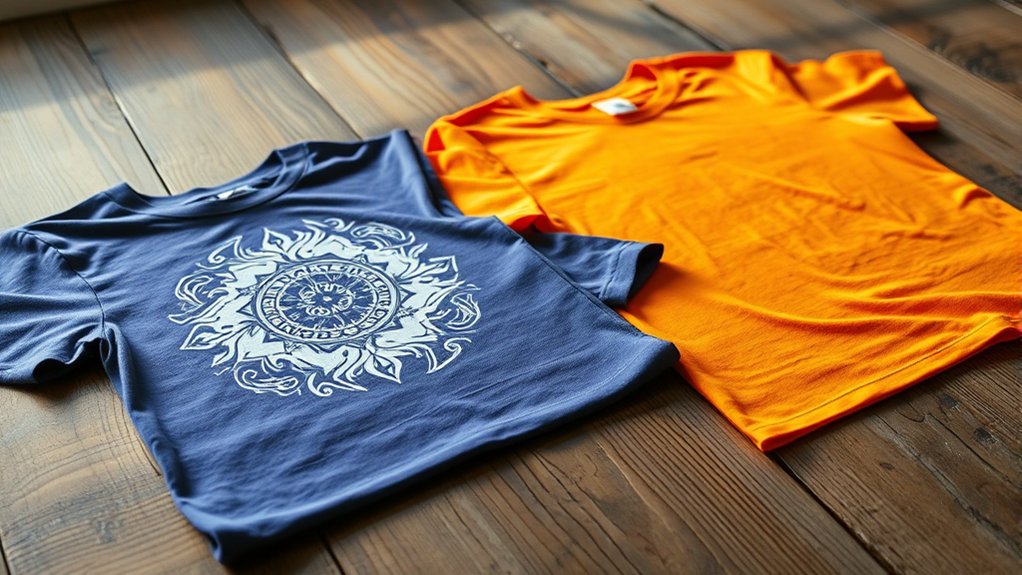

When choosing between Direct to Film (DTF) and screen printing, understanding the strengths of each method is crucial.
DTF uses digital inkjet technology to create detailed, multicolor designs quickly with less setup. This makes it ideal for small runs and varied fabrics.
Screen printing, on the other hand, excels in durability and vibrant, opaque colors, especially on cotton. It is cost-effective for large orders with simpler designs.
Your choice depends on factors like design complexity, fabric type, volume, and longevity needs.
Keep exploring to uncover how each method suits your specific project requirements and workflow.
Key Takeaways
- Direct to Film (DTF) uses digital inkjet printing on PET film, enabling complex, multi-colored designs without screens.
- Screen printing requires stencils for each color, ideal for bold, vibrant prints with fewer colors.
- Screen printing generally offers superior durability and wash resistance compared to DTF prints.
- DTF has lower setup costs and faster turnaround, suitable for small to medium runs and intricate designs.
- Screen printing is cost-effective for large orders on cotton-rich fabrics and simpler designs.
Understanding the Printing Processes Behind DTF and Screen Printing
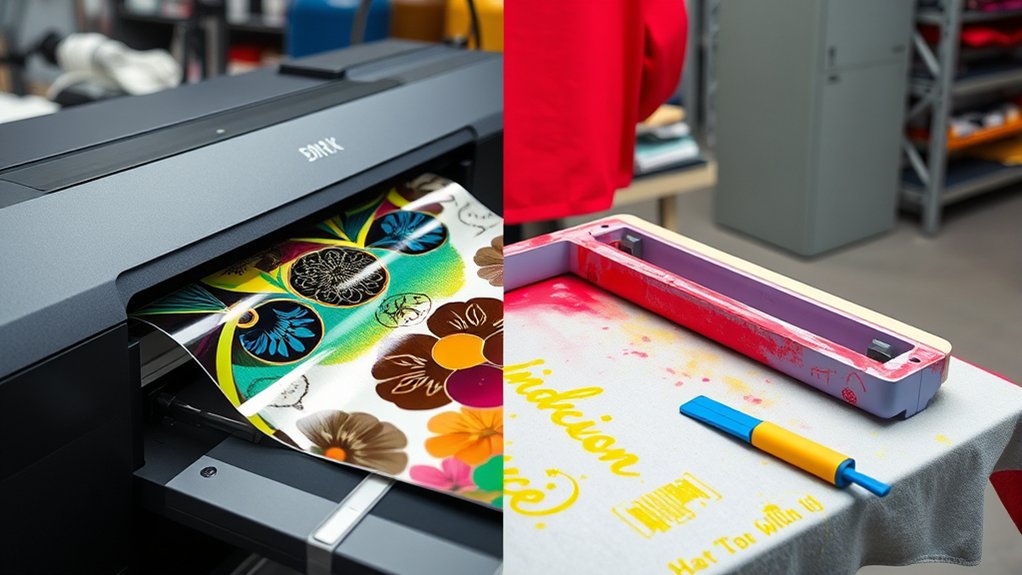
While both Direct to Film (DTF) and screen printing produce vibrant designs on textiles, their underlying processes differ markedly. DTF uses a digital inkjet printer to deposit specialized inks onto a PET film, which you then powder with adhesive before heat pressing onto fabric.
This printing technique offers high design flexibility, allowing complex, multi-colored images without additional setup. Conversely, screen printing requires you to create individual stencils for each color, forcing ink through mesh screens onto fabric sequentially.
This limits design flexibility to simpler, fewer-color graphics but excels in producing consistent, bold prints. Understanding these printing techniques helps you select the right method based on design complexity and production scale, optimizing efficiency without compromising visual impact.
Which Printing Method Offers Better Apparel Printing Quality and Durability?
How does the quality and durability of Direct to Film (DTF) compare to screen printing for apparel? When evaluating print quality, screen printing provides vibrant, opaque colors with excellent opacity on dark fabrics, thanks to thicker ink layers.
DTF offers fine detail and smooth gradients, ideal for complex designs, but the print layer is thinner, which can affect longevity. In a durability comparison, screen printing generally outperforms DTF due to its robust ink adhesion and resistance to multiple wash cycles without significant fading or cracking.
DTF prints, while flexible and soft, may show wear sooner, especially under frequent laundering. Ultimately, if you prioritize vibrant, long-lasting prints, screen printing holds a slight edge. However, for detailed, intricate images, DTF provides superior print quality but may require more careful garment care.
Cost and Setup Time Differences Between DTF and Screen Printing
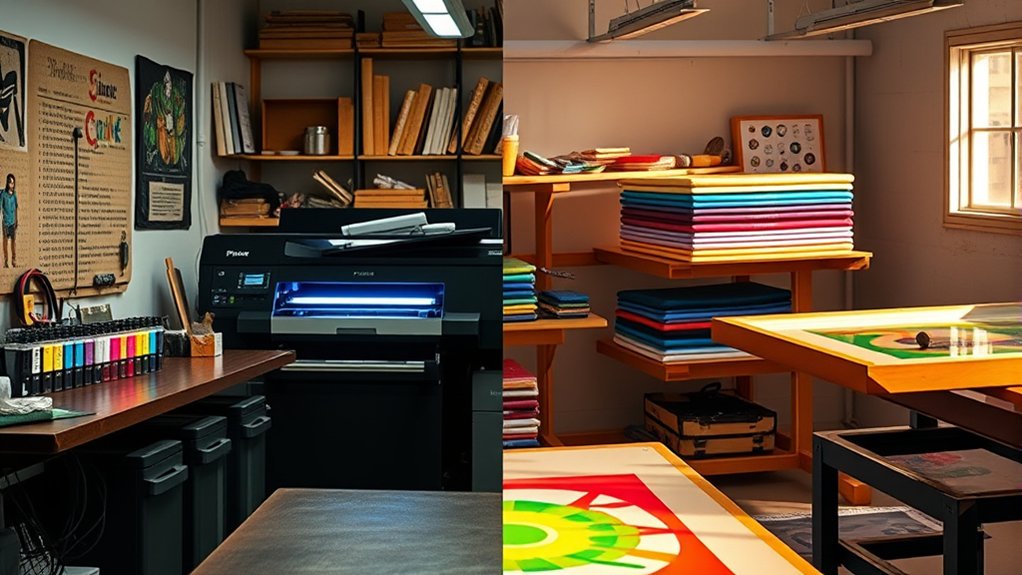
Beyond print quality and durability, understanding the cost and setup time differences between Direct to Film (DTF) and screen printing is key for efficient production planning. In a cost analysis, DTF generally requires less initial investment since it eliminates screens and extensive manual setup.
You’ll save on materials and labor, especially for short runs or complex, multi-color designs. Screen printing, however, demands more time upfront to prepare screens and align colors, impacting setup efficiency negatively.
Yet, its per-unit cost decreases considerably with higher volume runs, making it more economical for large orders. DTF excels in rapid turnaround and minimal setup, while screen printing benefits bulk production with lower variable costs.
Selecting between them hinges on balancing your production volume, setup efficiency, and overall cost considerations.
Which Fabrics and Projects Suit Each Printing Method Best?
When choosing between Direct to Film (DTF) and screen printing, consider the fabric type and project requirements to confirm superior results. DTF offers excellent fabric compatibility, adhering well to cotton, polyester, blends, and even synthetic materials without compromising detail or vibrancy. It suits small to medium runs, custom orders, and complex, multi-color designs with photographic quality.
Screen printing excels in projects demanding durability and large volume production, particularly on 100% cotton or cotton-rich fabrics, where ink penetration guarantees longevity. It’s ideal for simpler designs with fewer colors due to the setup involved. By evaluating fabric compatibility and project suitability, such as design complexity, order size, and intended use, you’ll select the method that maximizes print quality and efficiency for your specific application.
How to Choose Between DTF and Screen Printing
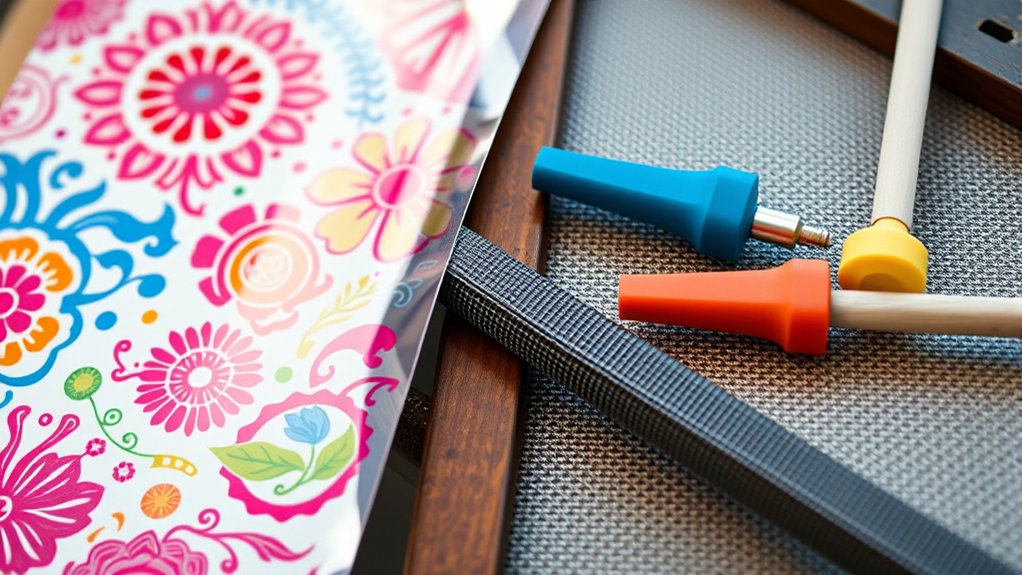
Choosing the right printing method depends on balancing factors like fabric type, design complexity, order size, and durability needs. You’ll want to take into account design flexibility and production volume when choosing between DTF and screen printing.
DTF excels in intricate designs with multiple colors and small runs, while screen printing thrives in large orders with simple designs for cost efficiency and durability.
| Factor | DTF | Screen Printing |
|---|---|---|
| Design Flexibility | High, supports complex, multi-color | Moderate, best for simple, limited colors |
| Production Volume | Low to Medium | High |
| Durability | Good, moderate wash resistance | Excellent, highly durable |
| Setup Time | Short | Longer |
| Cost Efficiency | Better for small runs | Better for large runs |
Frequently Asked Questions
Can DTF and Screen Printing Be Combined for Hybrid Designs?
You can combine DTF and screen printing using hybrid techniques, expanding design possibilities. This approach leverages screen printing’s durability with DTF’s color vibrancy.
It enables intricate, multi-textured prints that optimize both methods’ strengths for superior results.
What Environmental Impacts Do DTF and Screen Printing Have?
You’ll find screen printing generates up to 50% more water waste than DTF.
To adopt sustainable practices, you must focus on waste reduction by recycling inks, minimizing solvent use, and optimizing resource efficiency in both methods.
Are There Health Risks Associated With Inks Used in DTF and Screen Printing?
Yes, you’ll face health risks from ink composition if exposure’s uncontrolled. Both DTF and screen printing inks contain chemicals regulated by health regulations.
You must use proper ventilation and protective gear to minimize hazards.
How Do Washing Instructions Differ for Garments Printed With DTF Vs Screen Printing?
You’ll find DTF prints require gentler care to maintain washing durability, using cold water and inside-out washing. Screen printed garments tolerate warmer washes and harsher detergents, but both need avoiding bleach to preserve print quality.
Can Both Methods Be Used for Printing on Non-Apparel Items?
Yes, you can use both methods on non-apparel items, but DTF offers greater non-apparel versatility due to better material compatibility. Screen printing requires specific surface preparation and works best on flat, rigid materials.
Conclusion
Choosing between DTF and screen printing isn’t just about tech—it’s about your project’s soul. If you need vibrant detail and flexibility, DTF shines; for durability and cost-efficiency in bulk, screen printing wins. Consider fabric type, print longevity, and setup time carefully.
Like a craftsman picking tools, your choice shapes the final product’s quality and lifespan. So, which printing process will you trust to bring your design to life? Ultimately, understanding the strengths of Direct to Film vs screen printing will help you make the best decision for your project.