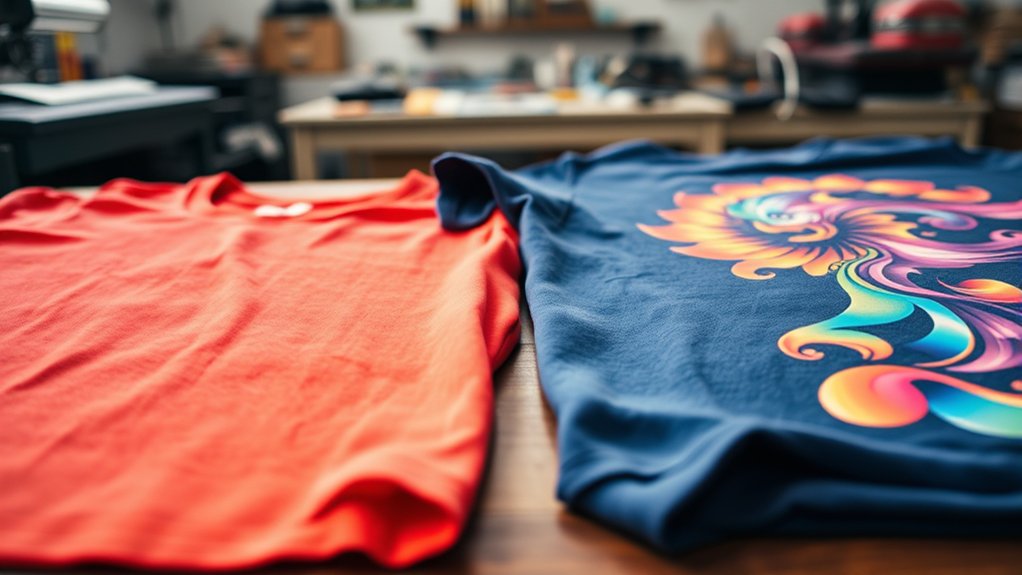

Screen printing vs digital printing are two popular methods to consider when choosing how to produce your designs.
If you want vibrant, durable prints and plan large orders with simple designs, screen printing is your go-to. It uses thick ink layers and excels in bold colors but requires setup time and costs.
Digital printing, on the other hand, lets you craft intricate details and gradients quickly on small batches with minimal setup. This method is ideal for flexible, complex visuals.
Each method shines under different conditions, and understanding these nuances will help you make the smartest choice for your project’s needs and timeline.
Key Takeaways
- Screen printing uses mesh stencils for each color, best for bold, simple designs and large volume orders due to higher setup costs.
- Digital printing sprays ink droplets, allowing detailed, multi-color designs with quick turnaround and low setup costs, ideal for small runs.
- Screen printing offers vibrant, thick ink layers with superior durability and wash resistance compared to digital printing’s thinner, less fade-resistant inks.
- Digital printing maintains consistent per-unit costs regardless of quantity, while screen printing becomes more cost-effective as order size increases.
- Choosing between methods depends on design complexity, order volume, durability needs, and turnaround time requirements.
Screen Printing Vs Digital Printing: How They Work
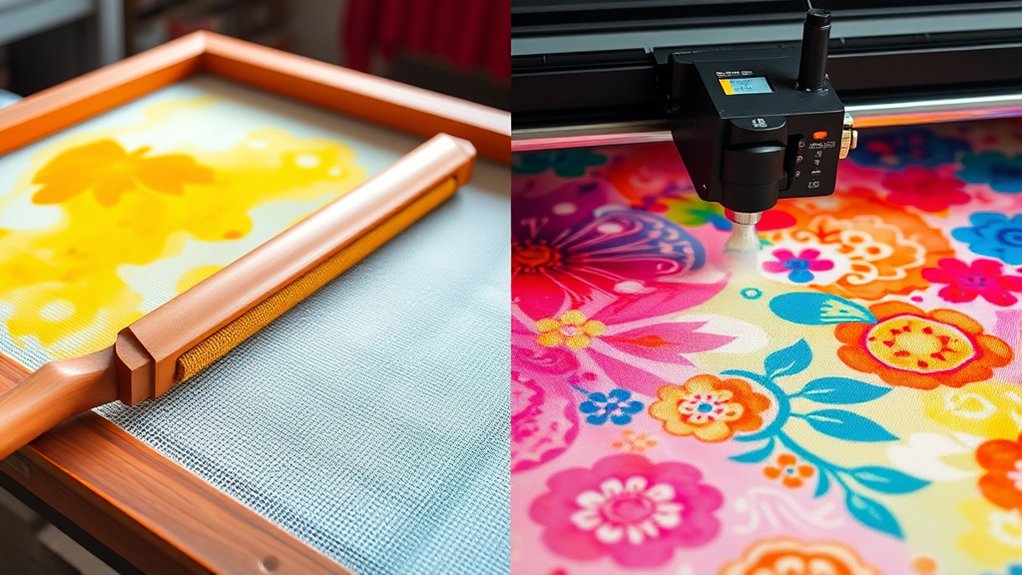
Although both screen printing and digital printing serve the same purpose of transferring designs onto materials, they operate through fundamentally different processes. In screen printing, you push ink through a fine mesh screen stencil, ensuring precise ink transfer onto the substrate.
This method excels in producing vibrant, durable prints but offers limited design flexibility because each color requires a separate screen. Digital printing, on the other hand, uses inkjet technology to spray microscopic droplets of ink directly onto the material.
This grants you immense design flexibility, allowing complex, multi-colored images to be printed without additional setup. While screen printing relies on physical stencils and manual layering, digital printing’s automated process lets you swiftly alter designs. Understanding these mechanisms helps you choose the best method based on your project’s requirements and intricacies.
Print Quality and Color Options Compared
When deciding between screen printing and digital printing, understanding how each method handles print quality and color options can make all the difference. Screen printing excels in color vibrancy, layering thick inks that create bold, saturated hues ideal for simple designs.
Its print resolution is steady but limited by mesh fineness, making it less suited for intricate details. Digital printing, however, offers superior print resolution, capturing fine details and gradients with precision thanks to advanced inkjet technology.
It handles complex images and subtle color shifts effortlessly, though its color vibrancy may not match the punch of screen printing’s inks. So, if you want sharp, detailed prints with a wide color gamut, digital printing is your go-to. For vivid, durable colors on simpler designs, screen printing stands out.
Cost Differences Between Screen and Digital Printing
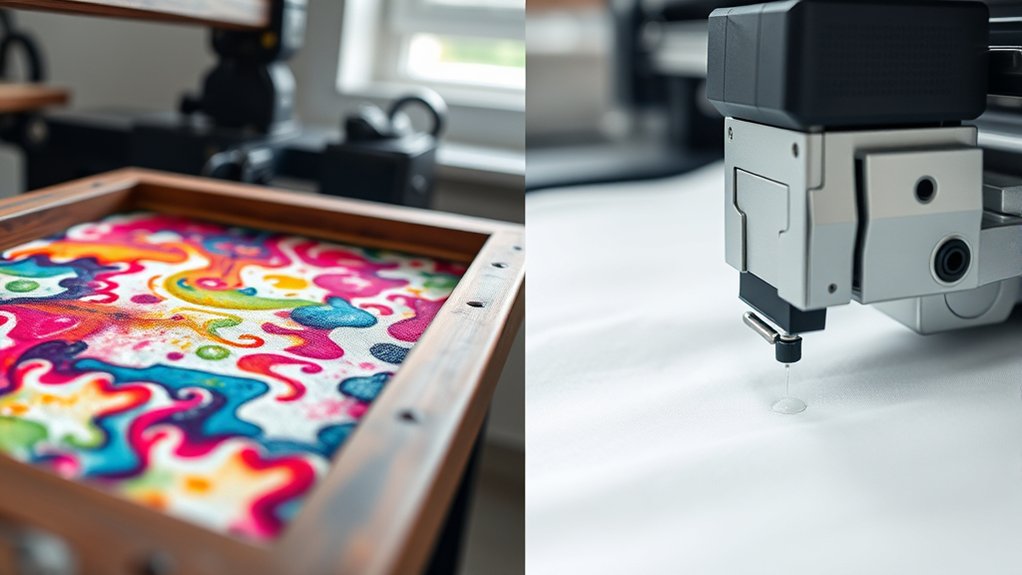
Understanding the cost differences between screen printing and digital printing can save you both time and money on your next project. Screen printing demands upfront setup costs for each color, making it more economical as you increase bulk orders.
Its pricing tiers favor large quantities, so the more units you print, the less you pay per item. On the other hand, digital printing charges per piece without complex setup, so it’s cost-effective for small runs or designs with many colors.
However, as your order size grows, digital’s per-unit price remains steady, which can add up quickly. By analyzing your order volume and design complexity, you can choose the printing method that aligns best with your budget and project goals.
Durability and Washability: Which Lasts Longer?
You’ll notice screen printing often outlasts digital when it comes to print longevity, thanks to its thicker ink layers bonding with fabric. However, how you wash your garments plays an essential role in preserving any print’s clarity and vibrancy.
Let’s explore how different washing methods impact the durability of both printing styles.
Print Longevity Comparison
Although both screen printing and digital printing offer vibrant designs, their durability and washability differ markedly, impacting how long your prints stay fresh. Screen printing uses thicker layers of ink, which resist ink fading and hold up better under repeated washing.
This technique demands less print maintenance, ensuring your design remains bold and crisp over time. Digital printing, however, applies thinner ink layers, making it more susceptible to gradual ink fading, especially without careful upkeep.
While digital prints excel in fine detail and color gradients, they require attentive print maintenance to prolong longevity. Ultimately, if you prioritize durability and minimal fading, screen printing generally outperforms digital printing.
But with proper care, both methods can deliver lasting results that keep your graphics looking sharp.
Impact of Washing Methods
Because washing methods directly affect print durability, choosing the right technique can extend the life of your screen or digital prints. When you apply gentle washing techniques, like cold water cycles and mild detergents, you minimize stress on ink adhesion and fabric fibers.
Screen prints, with their thicker ink layers, often resist fading better under careful fabric care, but harsh washing can cause cracking or peeling. Digital prints, though more delicate, benefit immensely from inside-out washing and air drying to prevent premature wear.
Avoid bleach and high heat, which degrade both print types. By mastering these fabric care nuances, you control how long your designs stay vibrant and intact. Essentially, your washing habits play a pivotal role in maximizing the longevity of either printing method.
When to Choose Screen Printing or Digital Printing
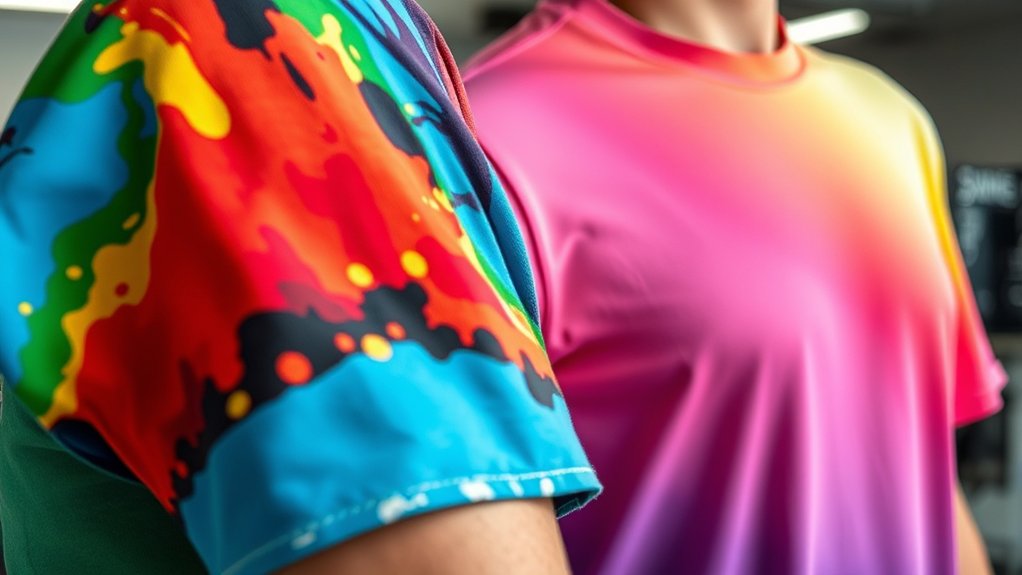
When should you opt for screen printing over digital printing, or vice versa? The decision hinges on your design preferences and production speed needs. Screen printing excels with bold, vibrant colors and large runs, while digital printing shines for intricate designs and quick turnarounds.
- Choose screen printing for simple, multi-color designs requiring durable ink coverage.
- Opt for digital printing when your artwork involves complex gradients or photographic detail.
- Screen printing suits high-volume orders, maximizing cost-efficiency as production speed increases.
- Digital printing is ideal for small batches or personalized items where fast delivery matters most.
Making the Right Choice for Your Project
You’ll want to weigh cost implications, balancing upfront expenses against long-term durability for your specific design. Consider how the quality demands align with your project’s size. Small runs might favor digital precision, while larger batches benefit from screen printing’s efficiency. Pinpointing these factors guarantees you pick the method that delivers the best value and performance.
Cost Comparison Analysis
Choosing between screen printing and digital printing often hinges on understanding their cost structures. When you’re evaluating pricing, consider how each method scales with your project size and complexity.
Screen printing excels with bulk orders due to fixed setup costs spread over many items, making per-unit costs drop as quantity rises. Digital printing, with minimal setup, suits small runs but can get expensive per piece as volume grows.
- Screen printing involves upfront screen preparation, raising initial costs.
- Digital printing’s pricing structures charge per print, favoring short runs.
- Bulk orders dramatically reduce screen printing’s average price per unit.
- Complex, multi-color designs may increase screen printing costs due to multiple screens.
Knowing these nuances helps you choose the most cost-effective method tailored to your project’s scale and design.
Quality And Durability
Print quality and durability often dictate the success of your project, especially when longevity and visual impact matter. With screen printing, you get superior ink adhesion that bonds deeply with the fabric, making it ideal for materials with varied fabric compatibility, especially cotton and blends.
The thick ink layers create vibrant, long-lasting prints resistant to fading and cracking. Digital printing, however, excels in fine detail and color gradients but often relies on surface-level ink deposition. While it supports synthetic fabrics well, its durability may wane with frequent washing, as ink adhesion is less robust.
Choosing between these methods means balancing your need for vivid, enduring prints against fabric type and usage. By understanding these nuances, you guarantee your design stays sharp and your investment pays off.
Project Size Considerations
When tackling a project, the size often dictates which printing method suits you best. For large orders, screen printing shines with its cost-efficiency and consistent quality across thousands of prints. Small runs, however, favor digital printing due to minimal setup and faster turnaround.
Consider these points:
- Setup Costs: Screen printing has higher setup costs, making it ideal for large orders.
- Speed: Digital printing accelerates production for small runs without compromising detail.
- Color Complexity: Screen printing handles spot colors well; digital excels with complex, multi-color designs.
- Flexibility: Digital printing adapts quickly to design changes, perfect for small, varied runs.
Frequently Asked Questions
Can Screen Printing Be Used on Materials Other Than Fabric?
Yes, you can use screen printing versatility to print on alternative materials like wood, glass, metal, and plastic. It’s a precise, technical process that adapts well to diverse surfaces beyond fabric, expanding your creative possibilities considerably.
Is Digital Printing More Environmentally Friendly Than Screen Printing?
You’ll find digital printing uses up to 90% less water, addressing sustainability concerns with eco-friendly ink types. Its precision reduces waste, making it a smarter choice if you want to lower your environmental footprint creatively and efficiently.
How Long Does It Take to Set up a Screen Printing Job?
You’ll spend about 30-60 minutes on screen preparation time, carefully coating and drying your stencil. Ink drying times add another 10-20 minutes, depending on ink type and environmental conditions, so plan accordingly for precision.
Can Digital Printing Handle Photographic Images Accurately?
Yes, digital printing handles photographic clarity superbly, capturing intricate details with high image resolution. You’ll see sharp gradients and vibrant colors, making it perfect for complex, photo-realistic designs that demand precision and depth.
Are There Any Size Limitations for Screen Printing Designs?
You’ll find screen printing design dimensions can be quite flexible, but print scalability hits limits with very large or intricate designs. Precision decreases as size grows, so balancing detail and scale is key to quality prints.
Conclusion
Choosing between screen printing and digital printing is like picking your brush for a masterpiece—each offers unique strokes.
Screen printing, with its bold durability and vibrant hues, suits bulk projects needing lasting impact. Digital printing, precise and versatile, excels in detailed, colorful designs with quick turnaround.
By understanding their strengths, you’ll craft prints that don’t just decorate but tell your story. Blending art and technology to bring your vision vividly to life, both screen printing and digital printing have their perfect place in your creative toolkit.