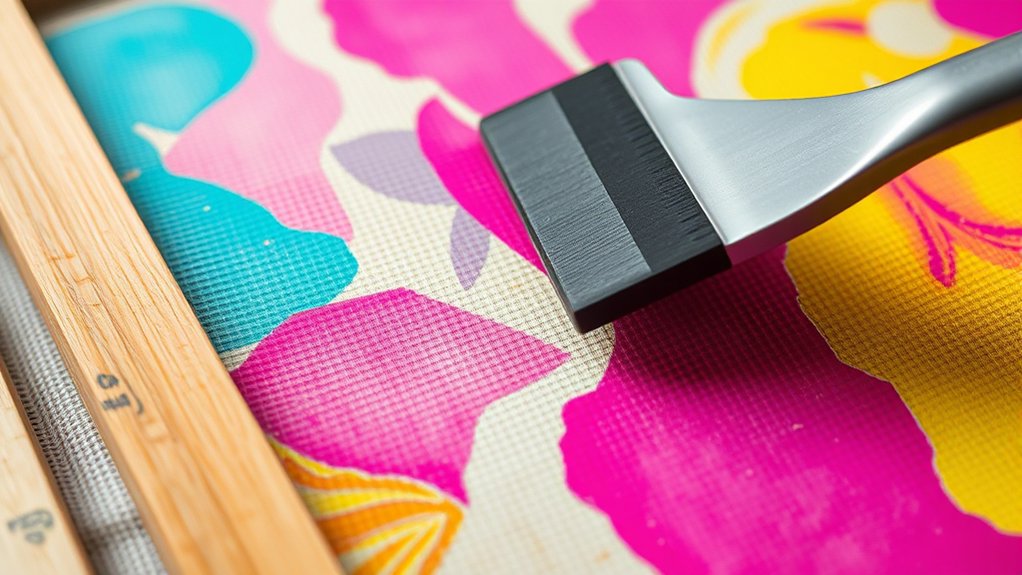

A screenprint is an image you create by pushing ink through a mesh screen covered with a stencil. This popular printing technique allows you to produce vibrant, sharp designs on various surfaces.
You place the screen over your surface—like fabric or paper—and drag a squeegee across it, forcing ink through open areas to form your image. The result is a bold, durable print that withstands washing or wear.
If you want to master screenprinting, you’ll learn how different materials, steps, and unique inks come together to make each print stand out.
This method excels in creating vivid colors and long-lasting designs.
Key Takeaways
- A screenprint is an image created by pressing ink through a mesh screen stencil onto a surface.
- It uses a squeegee to force ink through open mesh areas blocked by a stencil.
- Screenprinting produces vibrant, durable prints with thick ink layers on various materials.
- The process involves transferring a design onto a stencil, securing it on a mesh screen, and applying ink.
- Screenprinting is widely used for apparel, posters, signage, and art due to its color vibrancy and longevity.
What Is Screenprinting and How Does It Work?
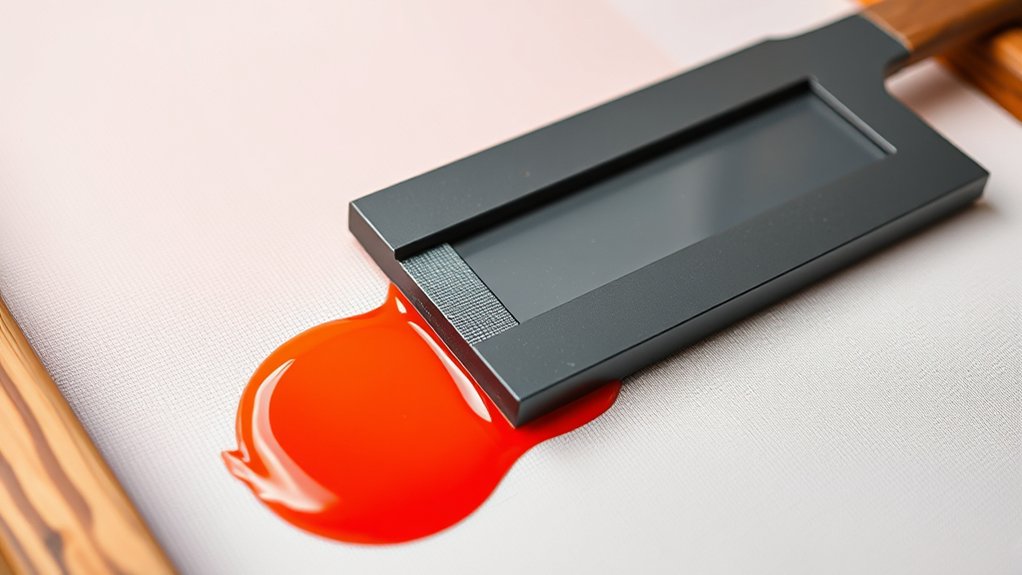
Screenprinting uses a mesh screen to transfer ink onto a surface, except in areas blocked by a stencil. You position the stencil on the screen, allowing ink to pass only through the open mesh sections.
Screenprinting transfers ink through a mesh, blocked only where a stencil prevents passage.
This method forms the basis of various screenprinting techniques, each tailored for specific materials and designs. Unlike other printing processes, screenprinting forces ink through the mesh with a squeegee, creating vivid, durable prints.
You can work with multiple layers and colors by preparing separate screens for each. The precision relies on the stencil’s design and mesh tension, ensuring clean edges and consistent ink flow.
Screenprinting techniques excel in producing sharp, high-contrast images on textiles, paper, and other substrates, making them essential in commercial and artistic printing processes.
How to Make a Screenprint, Step by Step
To create a screenprint, you’ll first prepare your design and transfer it onto a stencil that fits your screen mesh. Next, secure the stencil onto the screen frame, ensuring it’s taut.
Position the screen over your printing surface, then pour ink at the top edge. Using a squeegee, pull the ink firmly across the screen, pressing it through the stencil openings.
Lift the screen carefully to reveal your print. Allow the ink to dry completely before applying additional layers or colors, using registration marks for alignment.
This method highlights essential screenprint techniques, such as stencil preparation and controlled ink application. By mastering these steps, you open up diverse creative applications, from bold graphics to intricate patterns, making screenprinting a versatile medium for artistic and commercial projects.
The Materials You’ll Need for Screenprinting
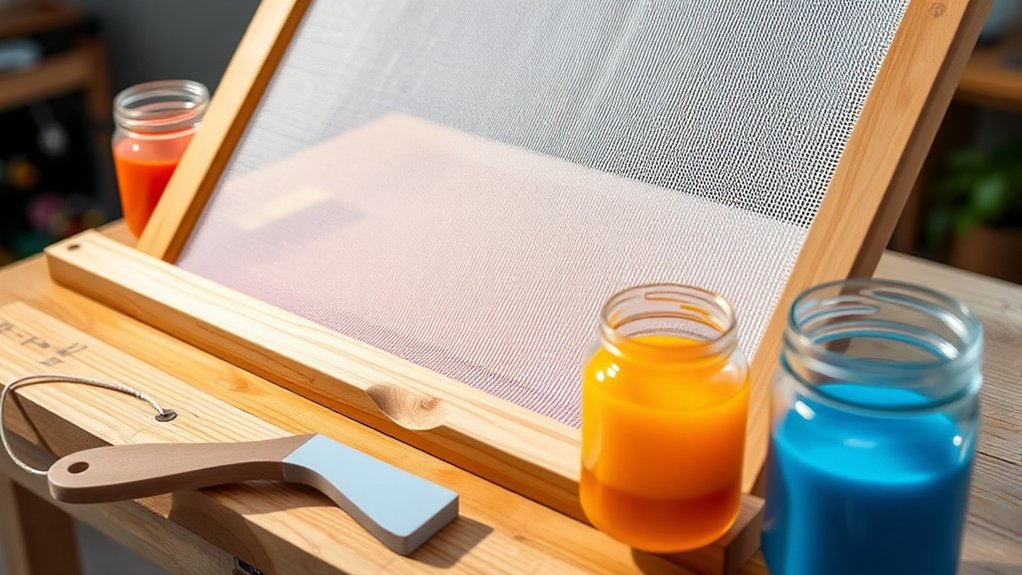
A sturdy screen frame, quality mesh, and the right stencil material form the foundation of your screenprinting setup. Choose a wooden or aluminum frame for durability. Select mesh count based on detail level; higher counts suit fine designs.
For the stencil, use photo emulsion or vinyl cutouts depending on your method. Screen preparation requires cleaning and degreasing the mesh to guarantee ink adheres properly.
You’ll also need a squeegee with a firm rubber blade to push the ink through the mesh evenly. Select screenprinting inks compatible with your substrate: plastisol for textiles, water-based for paper.
Have a light source for emulsion exposure, and a drying rack to cure prints. These materials collectively guarantee precise, vibrant screenprints every time.
Advantages of Screenprinting vs. Other Printing Methods
While other printing methods offer speed or complexity, screenprinting excels at producing bold, vibrant colors with exceptional durability. You’ll notice how its thick ink layers create unmatched color vibrancy, making designs pop on various surfaces.
Compared to digital printing, screenprinting’s cost efficiency shines when producing large runs, since setup costs spread out over many prints. The inks used resist fading and cracking, ensuring longevity even after repeated washings or exposure.
Plus, screenprinting handles specialty inks, like metallics, fluorescents, or textures, that other methods struggle with. Though it takes longer to set up, you gain precision and robustness in every print. So, if you want visually striking, long-lasting results without escalating costs for bulk orders, screenprinting stands out as a superior choice.
Popular Uses for Screenprints Today
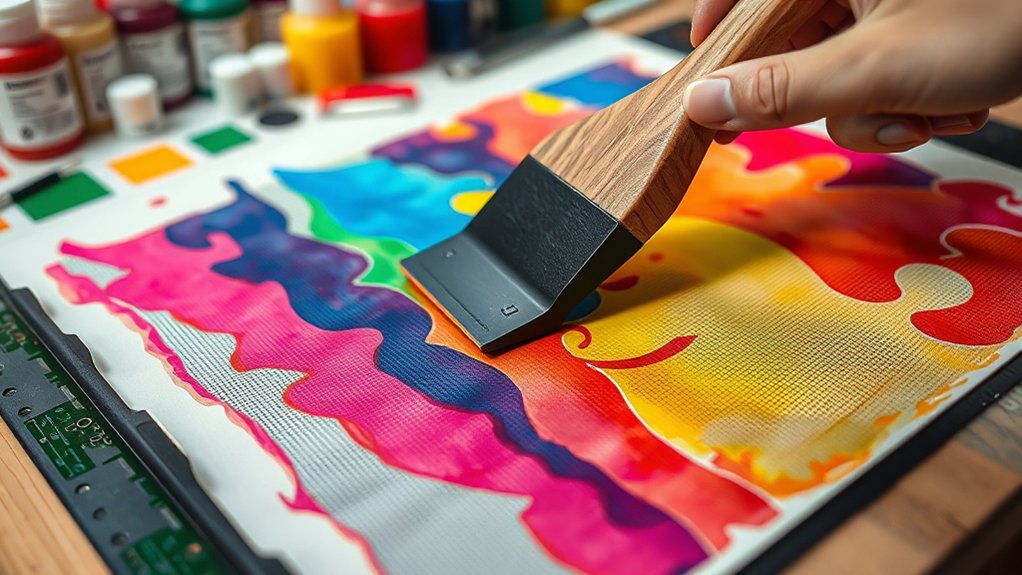
Screenprints appear everywhere, from bold graphic tees and promotional posters to vibrant signage and product packaging. You’ll find them dominating fashion apparel with crisp, durable fabric patterns that stand out.
When creating promotional products, screenprinting offers vivid colors and sharp detail, making your custom merchandise memorable. Art prints benefit from the technique’s ability to layer inks precisely, producing rich textures and depth.
Home decor items leverage screenprints to add unique visuals on textiles and wall art. Event signage uses screenprinting for eye-catching, high-visibility displays that hold up outdoors.
Even educational materials utilize screenprints to deliver clear, engaging visuals on various surfaces. Screenprinting’s versatility and quality guarantee your designs retain vibrancy and detail, no matter the application.
The History Behind Screenprinting
Although the exact origins remain debated, screenprinting dates back thousands of years, evolving from ancient stenciling techniques in Asia. You can trace its roots to finely woven silk stretched over frames, where artisans pressed ink through stencils to create patterns.
This method held deep cultural significance, serving ceremonial and decorative purposes in China and Japan. As you explore screenprinting’s history, you’ll notice how these ancient techniques laid the groundwork for modern processes.
In the early 20th century, the technique migrated westward, integrating synthetic materials and mechanized presses. Today, understanding this evolution helps you appreciate how screenprinting blends tradition with innovation, maintaining its relevance in art, fashion, and industry while honoring its rich historical and cultural legacy.
Frequently Asked Questions
How Durable Are Screenprints on Different Fabrics?
You’ll find screenprint durability varies with fabric types; cotton offers strong print longevity, while polyester may fade faster. Proper curing and washing extend lifespan, ensuring vibrant, lasting prints on different textiles you choose.
Can Screenprinting Be Done at Home Without Professional Equipment?
You can DIY screenprinting at home with supplies like mesh, frames, and ink, like painting through a stencil. Using simple techniques, you’ll create sharp designs without professional gear.
Master the craft with patience and precision.
What Environmental Impacts Does Screenprinting Have?
You’ll face environmental impacts like improper ink disposal causing toxic chemical runoff, harming ecosystems. Managing waste carefully and using eco-friendly inks reduces damage, so you should prioritize responsible disposal to protect waterways and soil during screenprinting.
How Much Does a Professional Screenprint Typically Cost?
A professional screenprint typically costs $5 to $15 per item. Screenprint pricing depends on cost factors like design complexity, number of colors, print volume, and garment type, so you’ll want to take these into account before ordering.
Are There Any Health Risks Associated With Screenprinting Inks?
Yes, ink exposure can cause skin irritation or respiratory issues. You should wear gloves, use proper ventilation, and follow safety measures to minimize risks while screenprinting.
Always handle inks with care and store them safely.
Conclusion
Now that you’ve uncovered the layers behind screenprinting, you see it’s more than ink on fabric—it’s art meeting precision. Like a master conductor guiding each stroke, you control the flow, creating vivid, lasting impressions.
Whether you’re crafting posters or apparel, screenprinting lets your vision come alive with sharp detail and bold color.
So, why settle for ordinary when you can print with purpose and punch? Your creativity deserves this powerful tool called screenprinting.