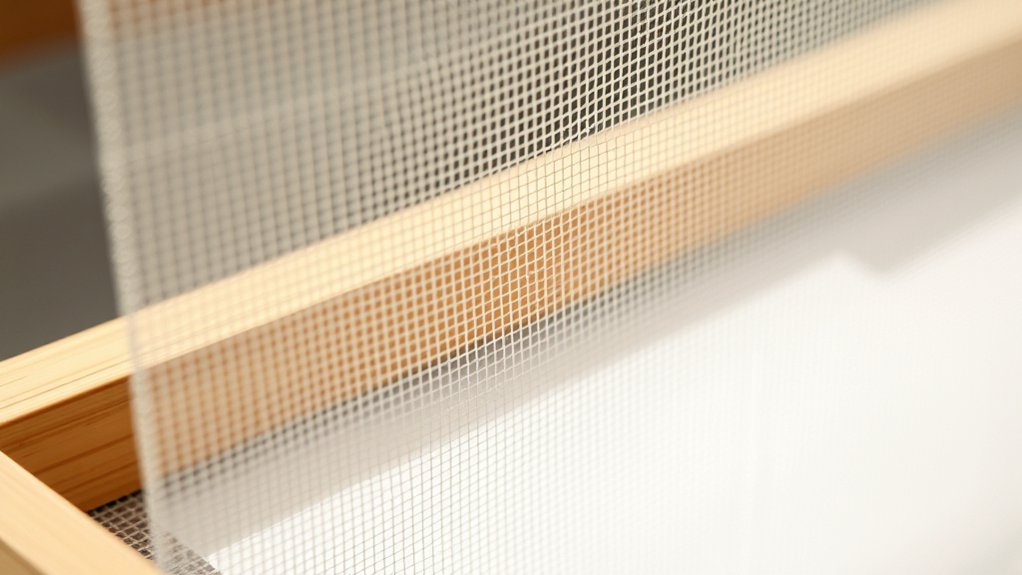

Traditionally, silk has been used as the primary material in the screen printing process because of its fine weave and durability. This choice offers superior ink control and sharp detail reproduction, making it ideal for high-quality prints.
Silk’s minimal stretch and strong mesh help maintain consistent tension, resulting in clear, accurate prints.
While cotton mesh has been less effective due to its coarser texture, modern alternatives like polyester now provide added durability.
Keep exploring to understand how these materials impact print quality and longevity.
Key Takeaways
- Silk was the traditional material used due to its fine weave and durability for precise ink control.
- Its tight mesh allowed for sharp detail reproduction in early screen printing.
- Silk’s minimal stretch ensured accurate and consistent prints in manual processes.
- The strong and durable nature of silk supported industrial-scale screen printing growth.
- Historically, silk provided reliable, repeatable results critical to the evolution of screen printing.
Which Material Was Traditionally Used for Screen Printing?
Traditionally, silk served as the primary material for screen printing due to its fine weave and durability. When you examine historical techniques, you’ll find silk was favored because its tight mesh provided excellent ink control and sharp detail reproduction.
Although cotton fabrics were widely available, their coarser texture made them less suitable for detailed screen printing. Using silk allowed for consistent ink flow, which was essential in early manual processes.
Cotton’s coarse texture hindered detail, while silk ensured smooth, consistent ink flow in early screen printing.
If you’re working with cotton fabrics, you’ll notice they absorb more ink, reducing print clarity and increasing drying time. So, when you study the evolution of screen printing, silk’s properties made it the material of choice, ensuring precise, reliable results before synthetic meshes emerged.
Understanding this helps you appreciate how material selection impacts print quality and durability.
Why Silk Became the Preferred Screen Printing Material
Because silk offers a fine, consistent mesh with minimal stretch, it became the preferred material for screen printing. You’ll appreciate silk’s unique properties. Its smooth texture and strength guarantee precise ink control and sharp image details.
Historically, silk’s availability and durability made it the logical choice for early printers seeking reliable, repeatable results.
| Silk Properties | Historical Significance |
|---|---|
| Fine mesh consistency | Widely available historically |
| Minimal stretch | Key to early print accuracy |
| Strong and durable | Enabled industrial growth |
Understanding these silk properties helps you grasp why it dominated screen printing for decades. Its historical significance lies in bridging artisanal and industrial printing, making it a foundational material in the craft’s evolution.
How Screen Materials Affect Print Quality and Durability
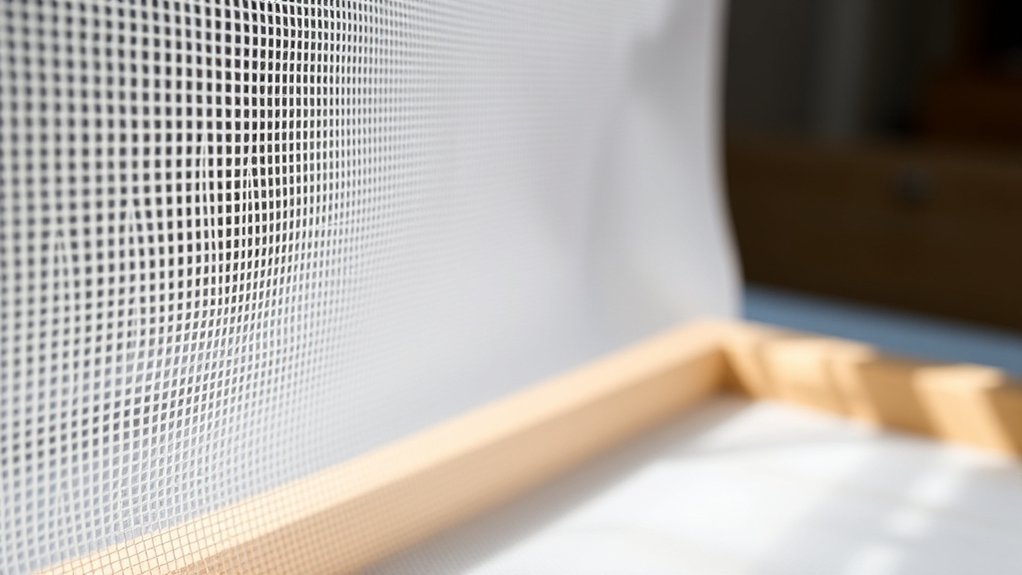
Silk’s fine mesh and strength set a high standard, but the choice of screen material directly impacts both print quality and durability. When you select a screen, its mesh count influences print resolution; finer meshes produce sharper details by controlling ink flow precisely.
Additionally, material stiffness affects how evenly you can apply pressure, which in turn impacts ink adhesion to the substrate. A screen that maintains tension consistently prevents distortion during printing, preserving image integrity over multiple runs.
If the material degrades quickly, print quality declines as mesh irregularities cause inconsistent ink distribution. By choosing a screen material that balances mesh fineness with durability, you guarantee both high-resolution prints and sustained ink adhesion, maximizing the lifespan of your screen and the quality of your final product.
Modern Alternatives to Silk Screens for Screen Printing
While silk screens have long been the industry benchmark, advances in synthetic materials now offer screen printers enhanced durability, consistent tension, and improved resistance to chemicals and wear. Today, polyester and nylon meshes dominate as modern alternatives, providing greater dimensional stability and longer service life.
You’ll find eco friendly options using recycled polyester, minimizing environmental impact without compromising performance. Additionally, these synthetic meshes integrate seamlessly with digital printing workflows, enabling precise stencil creation and faster turnaround times.
Unlike natural silk, synthetic materials resist moisture and contaminants, ensuring consistent print quality. Embracing these alternatives allows you to optimize production efficiency while maintaining high standards.
Tips for Preparing and Maintaining Your Screen Printing Screens
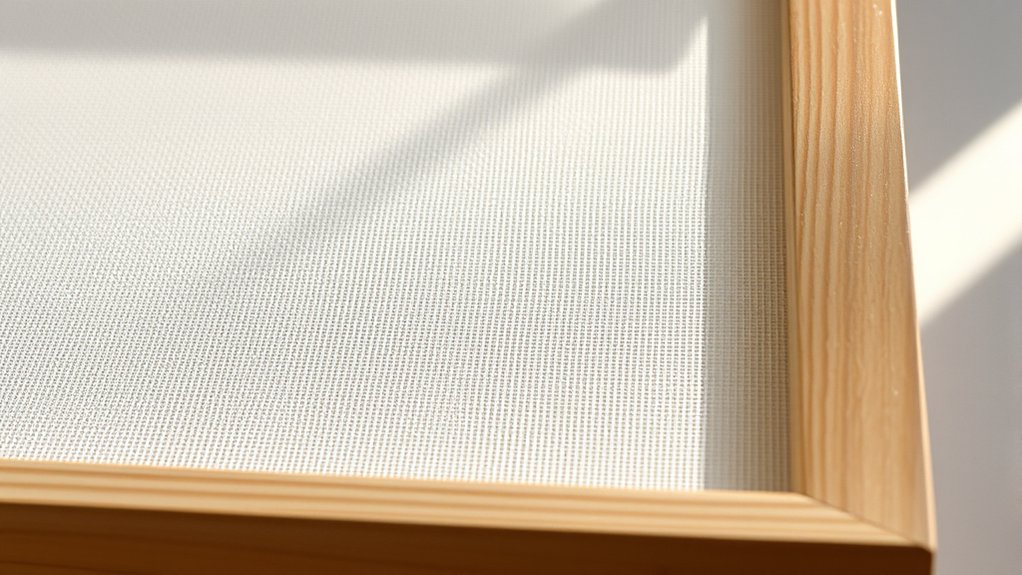
Choosing the right synthetic mesh is just the beginning; proper preparation and maintenance of your screen printing screens directly affect print quality and screen longevity. For effective screen preparation, thoroughly degrease and clean the mesh to remove oils and contaminants, ensuring ideal emulsion adhesion. Apply emulsion evenly, avoiding bubbles or streaks, then dry your screen in a dust-free, dark environment.
After exposure, rinse screens promptly to prevent emulsion residue buildup. Screen maintenance requires routine inspection for pinholes or tears, which can compromise print integrity. Clean screens immediately after use with appropriate solvents to prevent ink drying in the mesh.
Store screens vertically in a dry, ventilated area to avoid warping. Consistent screen preparation and screen maintenance practices will extend your screens’ lifespan and maintain consistent print results.
Frequently Asked Questions
Can Screen Printing Be Done on Materials Other Than Fabric?
Yes, you can do screen printing on paper and wood. You’ll adjust ink types and mesh to suit these surfaces, ensuring proper adhesion and detail. This makes screen printing versatile beyond just fabric applications for your projects.
What Types of Inks Are Best for Traditional Screen Printing?
You’ll find that inks with medium ink viscosity, like plastisol, excel in traditional screen printing; they facilitate precise color mixing and maintain sharp details. This is essential since 75% of print clarity depends on consistent ink flow and density control.
How Long Does a Traditional Silk Screen Last With Regular Use?
A traditional silk screen lasts about 500 to 1,000 prints with regular use. You’ll extend screen longevity by cleaning immediately after use, avoiding harsh chemicals, and storing it properly to prevent mesh damage.
Is Screen Printing Environmentally Friendly Compared to Other Printing Methods?
You’ll find screen printing 30% more eco friendly than digital methods when using sustainable materials and eco friendly practices.
What Are Common Errors to Avoid When Using Silk Screens?
Avoid common mistakes like improper emulsion coating, incorrect exposure times, and misaligned screens when using the silk screen technique. You’ll guarantee sharp prints by maintaining clean screens, consistent squeegee pressure, and proper ink viscosity throughout.
Conclusion
You’ve learned that silk was traditionally used in screen printing due to its fine weave and durability, which allowed for sharp, detailed prints.
While modern materials like polyester have largely replaced silk, understanding its qualities helps you appreciate how screen material impacts print quality and longevity.
By choosing and maintaining your screens wisely, you’ll guarantee consistent, high-quality results in your projects, blending tradition with today’s practical advances.
This knowledge highlights why silk remains a significant material in the screenprinting process.