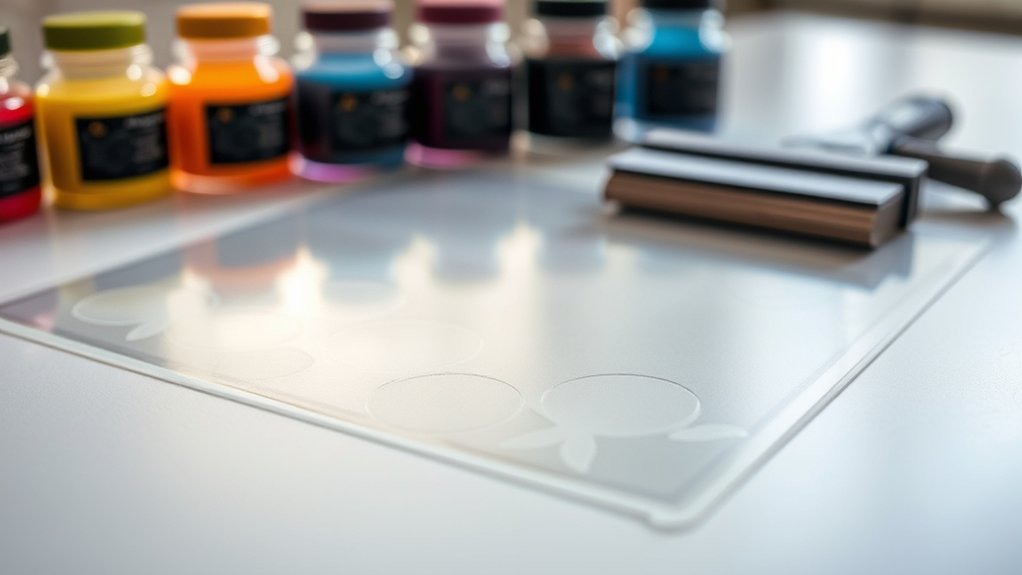

To block areas from ink in screenprinting, you use materials like photo emulsions, blocking tapes, and screen fillers.
Photo emulsions create sharp, detailed masks by hardening under UV light, while tapes—vinyl, paper, or polyester—seal edges and small areas.
Screen fillers cover large solid zones efficiently.
Choosing the right blocker depends on your design’s detail and project needs.
Mastering these techniques helps you control ink flow precisely and avoid bleed issues, setting the foundation for higher-quality prints.
Key Takeaways
- Photo emulsions create light-sensitive stencils that harden to block ink in specific screen areas.
- Blocking tape, such as vinyl or paper tape, seals edges or small sections to prevent ink seepage.
- Screen fillers and blockout solutions provide opaque barriers for large or complex areas on the mesh.
- Liquid block or frisket liquids offer high-precision, removable masking for fine detail designs.
- Stencil films with adhesive layers enable direct application of precise ink-blocking patterns on the screen.
How Blocking Controls Ink Flow in Screenprinting
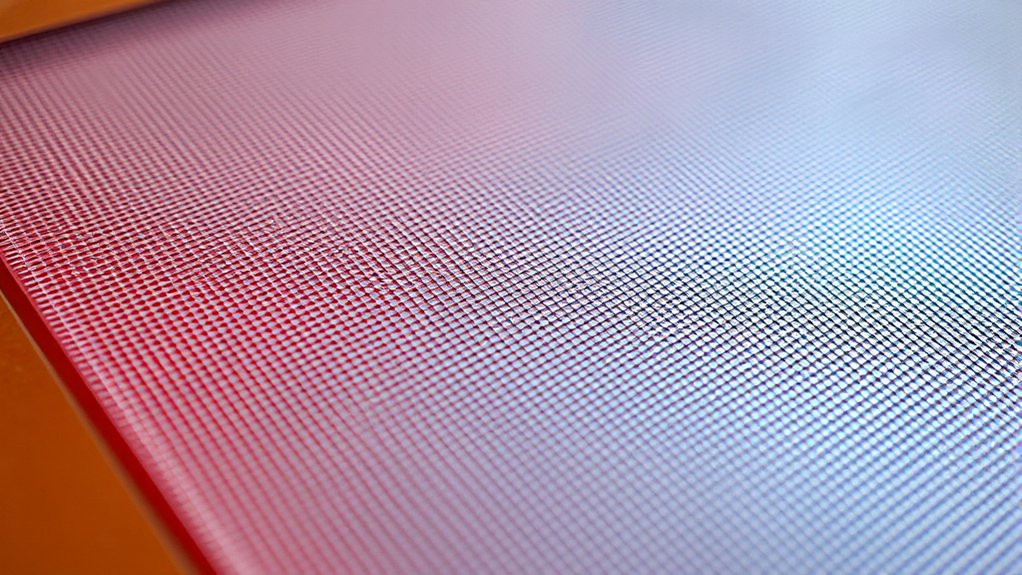
When you control blocking in screenprinting, you directly manage how ink passes through the screen mesh. Blocking selectively restricts ink flow by covering specific areas of the mesh, preventing ink from reaching the substrate. This precise control is vital for achieving sharp, detailed prints.
You must also consider screen tension, as it affects the mesh’s openness and ink flow consistency. Higher screen tension guarantees uniform contact between the screen and substrate, reducing ink bleed near blocked regions.
Improper blocking combined with inconsistent screen tension can cause unwanted ink seepage, compromising print quality. By mastering blocking techniques alongside maintaining ideal screen tension, you guarantee controlled ink flow, enabling you to reproduce intricate designs accurately and efficiently while minimizing defects and wasted materials.
Common Materials for Blocking Ink in Screenprinting
You’ll work with several materials to block ink effectively during screenprinting, including stencil films and emulsions that create precise designs. Blocking tape is essential for covering screen edges or small areas to prevent ink seepage.
Additionally, resist liquids and pastes provide targeted ink barriers for complex patterns or corrections.
Stencil Films and Emulsions
Stencil films and emulsions serve as essential barriers that control ink flow during screenprinting. When you engage in stencil creation, you rely on these materials to define precise printing areas by blocking ink where it’s not wanted.
Emulsion application involves coating a screen with a light-sensitive liquid that hardens when exposed to UV light, forming a durable stencil on the mesh. After exposure, you wash out the unexposed emulsion, leaving open areas for ink to pass through.
Stencil films, on the other hand, provide a pre-made, adhesive layer that you can cut into specific designs and apply directly onto the screen. Both methods offer you precise control over ink flow, ensuring sharp, high-resolution prints by effectively blocking undesired sections on the mesh.
Blocking Tape Uses
Several types of blocking tape play an essential role in controlling ink flow during screenprinting by sealing off unwanted areas on the screen. You’ll find blocking tape materials such as vinyl, paper, and polyester each offer specific advantages. Vinyl provides durability and flexibility, paper tapes are cost-effective for temporary use, and polyester tapes resist ink bleed-through.
When applying blocking tape, precise blocking tape techniques matter; you must guarantee edges adhere firmly to prevent ink seepage. Cut the tape cleanly and press it down evenly to create sharp boundaries. Using blocking tape correctly lets you modify your design quickly without altering the stencil or emulsion.
Resist Liquids and Pastes
Although blocking tape offers a quick solution for sealing areas on your screen, resist liquids and pastes provide more versatile and durable options for blocking ink in screenprinting. These materials form effective liquid barriers that prevent ink penetration where you don’t want it.
You apply resist liquids or pastes directly onto the mesh, creating precise ink resistance zones that withstand multiple print runs. Their chemical composition guarantees strong adhesion to the screen fibers, maintaining integrity under pressure and exposure to solvents.
Unlike tape, resist materials conform to intricate designs and fine details, offering superior control. After printing, you can wash them off with appropriate solvents or water, depending on the formula.
This makes resist liquids and pastes indispensable for high-precision, repeatable screenprinting projects requiring reliable ink blocking.
Photo Emulsions for Precise Ink Masking
Photo emulsions play a critical role in screenprinting by creating sharp, detailed masks that control ink application with high accuracy. When you apply photo emulsion to the mesh, it forms a light-sensitive coating that hardens upon exposure to ultraviolet light, defining the printable areas.
Understanding photo emulsion types, such as diazo, dual-cure, and photopolymer, is vital, as each offers different durability and sensitivity levels. You’ll need to adjust exposure times precisely; underexposure leaves the emulsion soft and prone to washing out, while overexposure can reduce stencil detail.
Tape and Stencils as Blocking Techniques
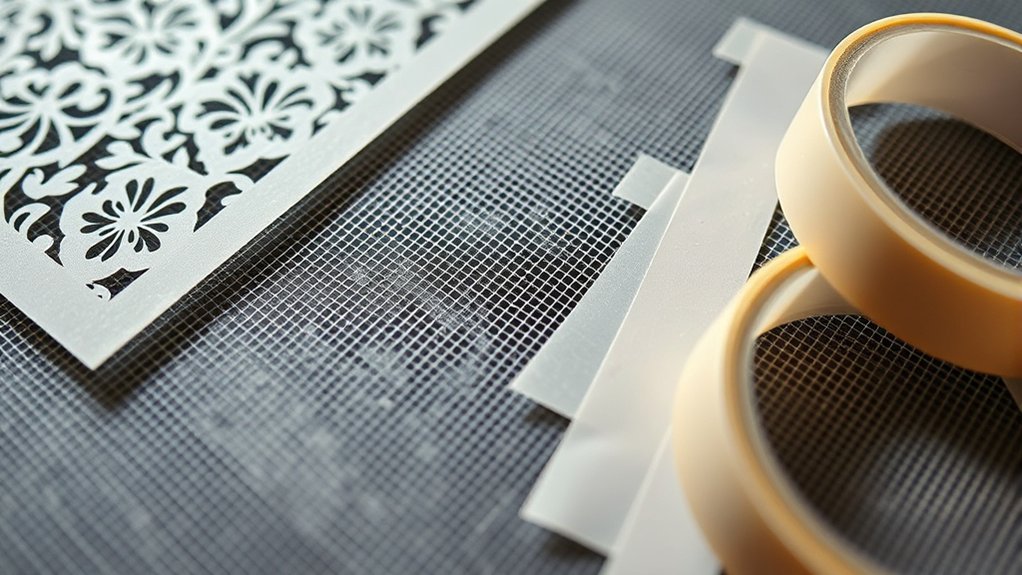
You’ll find various types of screenprinting tape designed to block ink precisely without damaging the mesh. When creating stencils, choose materials that offer clean edges and durability to maintain sharp designs.
Combining tape with stencils allows you to achieve complex patterns and control ink flow effectively.
Types Of Screenprinting Tape
Screenprinting tape plays an essential role in defining clean edges and protecting areas of the screen during printing. When exploring screenprinting techniques, understanding different tape types optimizes your tape applications. Each tape type offers unique adhesion, flexibility, and residue properties suited for specific tasks.
- Vinyl Tape: Durable and flexible, ideal for curved surfaces; provides sharp lines without bleeding.
- Paper Tape: Economical and easy to tear; best for temporary masking on flat screens.
- Polyester Tape: Heat-resistant and low-residue; perfect for high-temperature curing processes.
Selecting the right tape guarantees precise ink blocking and enhances print quality. By mastering tape types, you control ink flow effectively, preventing unwanted penetration and maintaining the integrity of your design edges throughout the print run.
Creating Effective Stencils
Mastering two primary blocking techniques, tape application and stencil creation, ensures sharp, clean prints with minimal ink bleed. When creating effective stencils, focus on precise stencil design and careful material selection.
Choose materials that withstand ink exposure and maintain sharp edges, like mylar or vinyl sheets. Your stencil should align perfectly with the artwork, preventing ink seepage.
| Technique | Material | Key Advantage |
|---|---|---|
| Tape Application | Masking Tape | Easy to reposition |
| Stencil Cutting | Mylar | Durable, reusable |
| Stencil Printing | Vinyl | High precision edges |
Combining Tape With Stencils
Combining tape with stencils offers two distinct blocking methods that enhance print sharpness and prevent ink bleed. When you integrate tape application with your stencil design, you gain precise control over blocked areas. Use tape to cover intricate edges or gaps where the stencil alone might allow ink seepage. This dual approach improves print fidelity and durability.
Key advantages include:
- Enhanced edge definition by reinforcing stencil boundaries with tape application.
- Flexibility in adjusting blocked zones without creating new stencils.
- Efficient correction of stencil imperfections through targeted tape placement.
Blockout Solutions for Custom Ink Masks
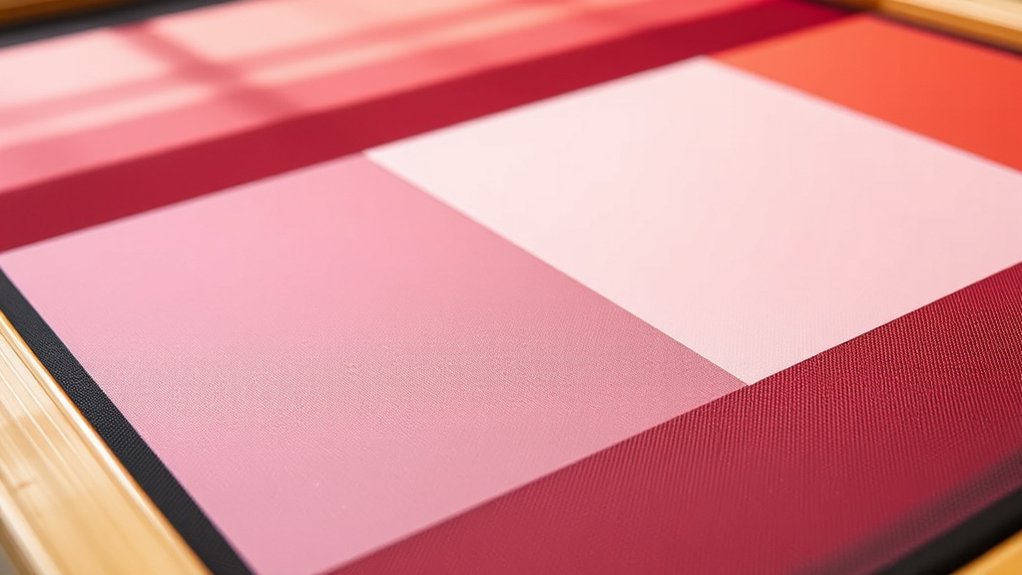
A reliable blockout solution plays an essential role when creating custom ink masks, allowing you to selectively prevent ink from reaching certain areas of your screen. Blockout materials, such as specialized screen fillers or opaque liquids, provide a precise barrier that adheres firmly to the mesh.
When applied, these substances effectively seal off unwanted portions, ensuring clean ink masking and sharp print edges. You’ll find that choosing the right blockout material depends on factors like mesh count, ink type, and project complexity.
Proper application technique, using brushes or spatulas, ensures uniform coverage without compromising screen tension. By mastering blockout solutions for custom ink masks, you maintain control over your design’s negative space, enhancing print accuracy and minimizing cleanup time.
When to Use Screen Fillers in Screenprinting
Screen fillers come into play in several key situations during screenprinting, especially when you need to block out areas of the mesh that aren’t part of your design. You’ll find screen filler applications essential when precise coverage is required without using photo emulsion. These blocking techniques provide a quick, effective solution to seal unwanted mesh openings.
Consider using screen fillers when:
- Modifying a screen for multiple runs with different designs.
- Temporarily blocking areas during test prints or adjustments.
- Repairing small mesh damages before coating with emulsion.
Choosing the Right Blocking Method for Your Project
How do you determine the best blocking method for your specific screenprinting project? You’ll want to evaluate block selection strategies based on material compatibility, detail precision, and reusability.
Project-specific techniques matter: intricate designs often require liquid block or frisket for accuracy, while larger solid areas benefit from screen fillers or tape.
| Project Type | Blocking Method | Key Benefit |
|---|---|---|
| Fine Detail | Liquid Block | High precision |
| Large Solid Areas | Screen Filler | Efficient coverage |
| Repetitive Prints | Adhesive Tape | Easy application |
| Temporary Masks | Frisket | Removable option |
Troubleshooting Ink Bleeding and Masking Problems
Prevent ink bleeding and masking issues by identifying common causes such as improper stencil thickness, incorrect ink viscosity, or inadequate drying time. Effective screen preparation is vital to guarantee ideal ink adhesion and precise masking.
When you encounter problems, focus on these key troubleshooting steps:
- Adjust stencil thickness to match ink type; too thin stencils allow ink to seep under the mask.
- Verify ink viscosity; overly fluid inks increase bleeding risk, while too thick inks hinder adhesion.
- Allow sufficient drying time between layers to prevent smudging and improper mask setting.
Frequently Asked Questions
Can Blocked Areas Be Reused for Multiple Prints?
Yes, you can reuse blocked areas if you use reusable stencils designed for high print durability. Proper care and cleaning maintain stencil integrity, allowing multiple prints without compromising image quality or causing ink bleed on subsequent uses.
How Does Temperature Affect Blocking Materials?
Think of blocking materials as delicate guardians; they can’t withstand harsh suns. You’ll find heat sensitivity essential because temperature variations can warp or degrade them. Controlling heat guarantees your blocked areas remain precise and effective during screenprinting.
Are There Eco-Friendly Blocking Options Available?
Yes, you can use eco-friendly blocking materials compatible with eco-friendly inks, supporting sustainable practices. These options reduce environmental impact while maintaining precision in screenprinting.
This ensures your prints remain sharp without compromising your commitment to sustainability.
Can Blocking Materials Damage the Screen Mesh?
Yes, some blocking materials can damage your screen mesh if applied or removed improperly. To guarantee mesh integrity and effective screen preservation, always choose compatible blockers and follow manufacturer guidelines for application and cleaning.
How Long Do Blocking Materials Typically Last on Screens?
Blocking longevity typically ranges from a few prints to several weeks, depending on material type and usage. You should monitor blocking durability regularly and perform proper screen maintenance to guarantee consistent print quality and extend your screen’s lifespan.
Conclusion
In screenprinting, selecting the suitable substance to stop ink is significant for sharp, spotless results. Whether you choose photo emulsions, tape, stencils, or blockout solutions, each method masterfully manages mask material to minimize mistakes.
By balancing blocking basics with your project’s particular parameters, you’ll prevent pesky problems like ink bleeding and guarantee efficient, effective execution.
Remember, meticulous masking makes the masterpiece—so choose wisely and control your craft with confidence. Using the right material to block areas from ink is essential for achieving clean, professional screenprinting results.